Oregano is a useful perennial herb for a sunny border, raised bed or pot. Its aromatic leaves suit tomato dishes, grilled vegetables and sauces, while summer flowers attract visiting insects. This guide centres on Origanum vulgare and its culinary forms, including Greek oregano. Choose a plant for its flavour as well as its appearance, then give it sunlight and roots that can drain freely.
Perennial culinary herb
Sun and good drainage
Suitable for pots
Harvest May to October
Flowers for pollinators
| Main botanical name | Origanum vulgare |
| Family | Lamiaceae |
| Common alternative name | Wild marjoram |
| Greek culinary form | Origanum vulgare subsp. hirtum |
| Different herb | Sweet marjoram is Origanum majorana |
| Life cycle | Perennial |
| Usual height | About 15 to 60cm, depending on form |
| Usual spread | About 30 to 50cm; some clumps spread further |
| Position | Full sun preferred |
| Soil | Freely drained; rich soil is unnecessary |
| Soil pH | Tolerant; neutral to alkaline soils suit many forms |
| Seed sowing | March and April indoors |
| Seed covering | Surface sow; do not bury the tiny seed |
| Germination warmth | Around 20°C |
| Typical germination time | One to three weeks |
| Main planting season | May and June |
| Plant spacing | At least 20 to 30cm; more for larger forms |
| Main leaf harvest | May to October, while growing actively |
| Flowering season | Summer into early autumn |
| Main winter risk | Waterlogging; check hardiness of the chosen form |
| Plant name | Crop type | Spacing |
Sow indoors
Plant outdoors
Harvest
Polytunnel | |||||||||||
|---|---|---|---|---|---|---|---|---|---|---|---|---|---|---|
| Jan | Feb | Mar | Apr | May | Jun | Jul | Aug | Sep | Oct | Nov | Dec | |||
| Oregano | Herbs | Single 30cm, In row 30cm, Row gap 40cm; allow 45cm or more for larger forms | No activity recorded | No activity recorded | Sow indoors | Sow indoors | Plant outdoors, Harvest | Plant outdoors, Harvest | Harvest | Harvest | Harvest | Harvest | No activity recorded | No activity recorded |
Sow indoors: March, April. Plant outdoors: May, June. Harvest: May, June, July, August, September, October. Polytunnel: no months recorded.
March and April mean indoor seed sowing. May and June are the main planting months, with indoor raised seedlings hardened off after the last frost. Established nursery plants can also be planted at other suitable times. The May to October harvest band means active leafy growth, not a guaranteed winter supply or immediate harvest from small seedlings. Hardy common oregano does not need a polytunnel, so that band is blank.
Oregano suits gardeners who want a lasting herb without rich feeding or constant watering. A plant near the kitchen door is convenient, provided the position has enough sunlight and does not trap winter rain.
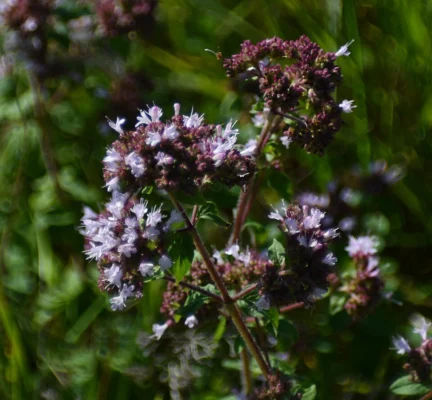
Choose an open sunny position. A shaded, crowded corner can produce weak stems and less satisfying growth, even when the plant survives.
If your ground remains wet, use a raised bed or drained container rather than trying to force oregano into a soggy border. Avoid placing the crown in a hollow where water collects.
For one young plant, a pot at least 15cm wide and deep is a starting point; a larger pot gives an established clump more room. Use peat free loam based compost with grit mixed through it and clear drainage holes.
Give the plant space beside neighbours with similar requirements. Vigorous mint is better in its own pot, and thirsty vegetables should not shade or smother a low oregano clump.
Photo: Tomwsulcer, CC0. Resized and optimised; cropped for display.
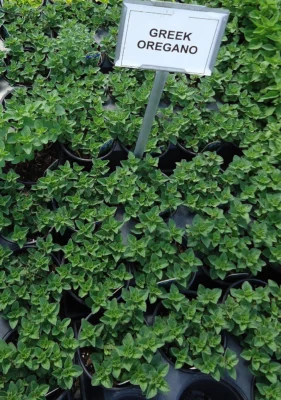
A labelled nursery plant gives the quickest start and lets you choose a known flavour. Seed is useful for raising several common oregano plants, while divisions or cuttings preserve a particular selection.
1.
Choose culinary Origanum vulgare or a clearly labelled culinary form. Check its expected size and hardiness, especially when buying an unfamiliar species sold under the broad name oregano.
2.
For seed growing, fill a small pot or modules with damp peat free seed compost in March or April. Firm the surface lightly before sowing.
3.
Scatter the tiny seeds thinly across the surface without burying them. Cover the container with a clear lid or bag and keep it bright at around 20°C.
4.
Check daily and keep the surface lightly moist. Once seedlings appear, increase ventilation and give them good light so they do not become thin and drawn.
5.
Move seedlings into individual small pots when they have several leaves. Handle them gently and avoid leaving roots crowded in wet compost.
6.
Gradually acclimatise indoor raised plants to outdoor conditions. Plant them in late spring or early summer once frost risk has passed and the ground is workable.
7.
Set each plant at its previous growing depth. Allow at least 20 to 30cm to neighbours, increasing that space for a form expected to spread 45cm or more.
8.
Water after planting and check during dry spells while roots establish. Start picking lightly once growth is strong rather than stripping a newly planted seedling.

Watering
New plants need watering while establishing. Once settled into suitable ground, oregano copes well with dry weather and usually needs little additional water.
Pots dry more quickly than borders, so check the compost in warm spells. Water when needed, then let excess drain away; do not leave the pot standing in a full saucer.

Feeding
Plants in ordinary garden soil generally do not need extra fertiliser. Avoid treating oregano like a hungry summer vegetable with repeated strong feeds.
A clump kept in the same pot for more than a year can benefit from a modest general feed in late spring or early summer. Follow the label, and refresh or replace tired compost when dividing or repotting.

Pruning
Snipping leafy shoots regularly encourages a bushier plant. In spring, once new growth is visible, remove dead or straggly stems and tidy the clump without cutting blindly into an apparently dormant crown.
After flowering, trim back spent flower stems to encourage fresh leafy growth. Leave some flowers for insects during summer and remove unwanted seedlings before they spread into neighbouring plants.

Winter care
Hardy common oregano normally stays outdoors, but winter foliage varies with the form and weather. Reduced or absent top growth does not automatically mean the plant has died.
Protect roots from persistent winter wet. Move pots into a sheltered rain shadow with good light and airflow, and check the label before assuming that every oregano species shares the hardiness of common O. vulgare.
Common oregano carries small paired oval leaves on branching stems, with clusters of tiny pinkish flowers in summer. Greek oregano usually has white flowers and a strong aroma; its foliage can be softly hairy.
The names oregano and marjoram overlap in everyday use. Wild marjoram is O. vulgare, but sweet marjoram is the less hardy O. majorana. Mexican oregano and ornamental oregano selections may also be sold under similar names, so retain a botanical label.
Photo: Pawelmb, CC BY-SA 3.0. Resized and optimised; cropped for display. Adapted image under the same licence.
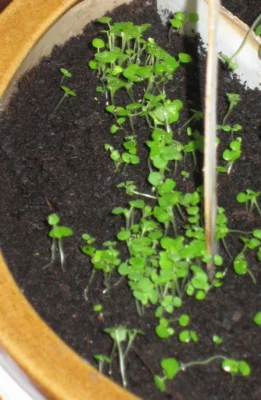
A sunny southern patio or a freely drained border is usually a straightforward place to grow oregano. Containers are useful where the garden soil is heavy or the sunniest space is paved.
In northern and exposed gardens, choose a hardy form and prioritise drainage. Greek oregano selections can be less winter hardy than some common oregano cultivars, so local nursery advice is useful.
Wet winters often cause more trouble than a short dry summer. Keep fallen leaves from smothering the crown, maintain airflow and avoid burying the plant under a thick damp mulch.
Photo: Kolforn, CC BY-SA 4.0. Resized and optimised; cropped for display. Adapted image under the same licence.
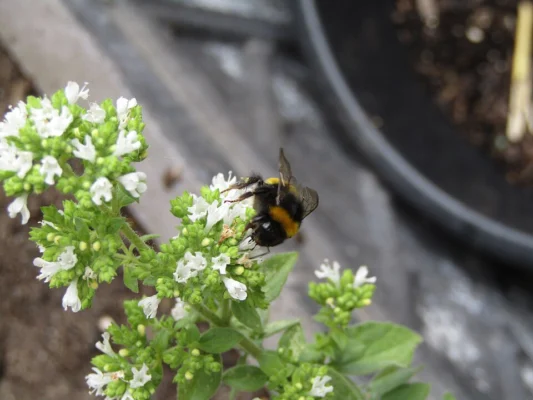
Persistent wetness can cause roots and the crown to rot. Check drainage and watering, remove failing material and retain healthy sections only if the crown is still sound. Replanting into the same wet hollow is unlikely to solve the problem.
Damping off is favoured by crowded, damp conditions. Use clean containers and fresh seed compost, sow thinly, ventilate after emergence and avoid keeping seedlings continually saturated.
Mint rust can affect oregano and related herbs. Remove affected growth and avoid using diseased shoots for propagation. A badly affected persistent clump may need replacing with healthy stock in a fresh position.
Leafhoppers can cause mottled foliage. Check leaf undersides for small jumping insects. Established plants often tolerate modest damage, so improve growing conditions and avoid unnecessary treatment of a regularly harvested herb.
Mint moth caterpillars sometimes feed on oregano. Minor feeding is usually tolerable and the adult moths are part of the garden’s wildlife. Inspect before acting rather than assuming every damaged leaf needs a spray.
Divide a healthy established clump in spring, or after flowering while conditions remain mild. Replant rooted sections promptly and water them during establishment; this is also a way to renew a crowded pot.
Take softwood cuttings from non flowering shoots in summer, or separate naturally rooted stems around the edge. These methods preserve a named variety more reliably than saving seed from several different oregano plants grown together.
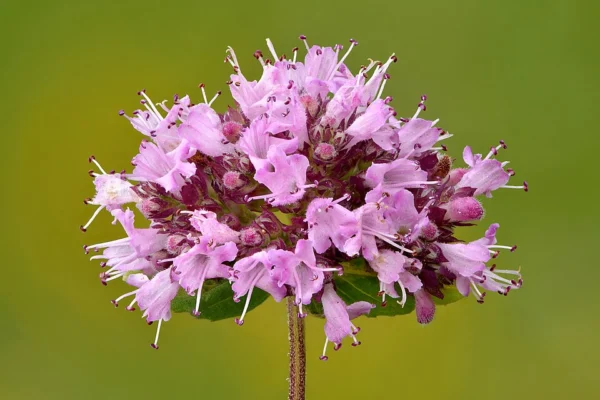
Common oregano
Origanum vulgare is also known as wild marjoram and is native in Britain. It combines aromatic leaves with summer flowers and can suit a wildlife friendly herb bed, though seed raised plants vary in flavour strength.
Common oregano flowers, identified as Origanum vulgare.
Photo: Ivar Leidus, CC BY-SA 4.0. Resized and optimised; cropped for display. Adapted image under the same licence.
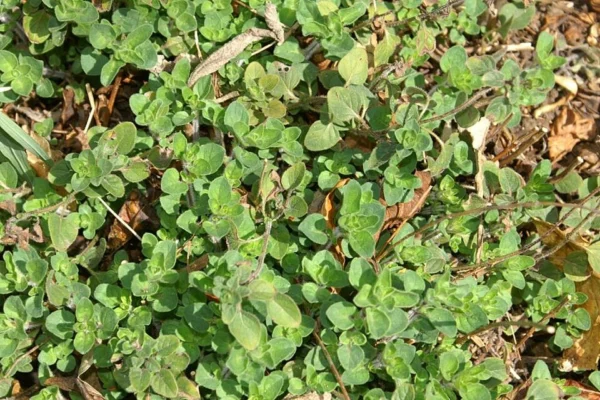
Greek oregano
Origanum vulgare subsp. hirtum is a strong tasting culinary choice with white flowers. It is useful when flavour is the priority. Allow roughly 45cm for a mature clump and check the hardiness of the selection offered.
Greek oregano identified as Origanum vulgare subsp. hirtum.
Photo: Photo by David J. Stang, CC BY-SA 4.0. Resized and optimised; cropped for display. Adapted image under the same licence.
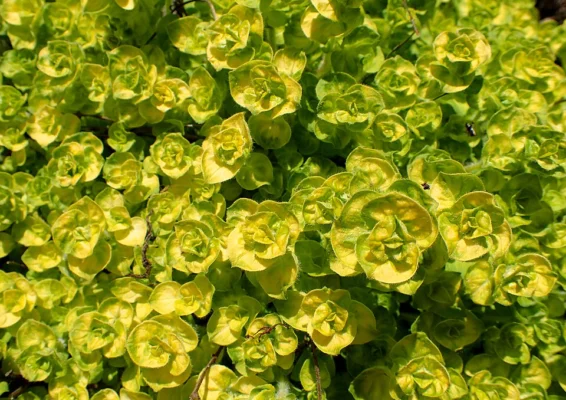
Aureum
Golden oregano makes a bright foliage patch and supplies aromatic leaves with a warm flavour. It usually reaches about 30cm tall, with pale pink flowers later in the season. Keep the plant freely drained like green leaved forms.
Golden oregano identified as Origanum vulgare Aureum.
Photo: Krzysztof Ziarnek, Kenraiz, CC BY-SA 4.0. Resized and optimised; cropped for display. Adapted image under the same licence.
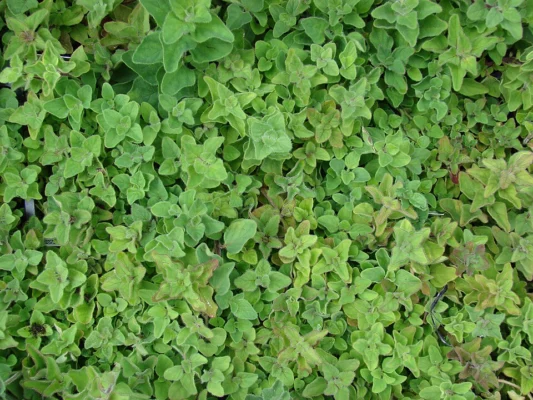
Compactum
A lower growing form that makes a small mound, useful beside a path or in a pot. Its small leaves are strongly aromatic and purple pink flowers appear in summer. Give the clump space rather than packing it tightly against other herbs.
Illustrative oregano foliage; this Greek oregano photograph does not depict Compactum.
Photo: Forest & Kim Starr, CC BY 3.0. Resized and optimised; cropped for display. Forest & Kim Starr
Look for a culinary plant with a clear botanical name, and compare aroma, mature size and hardiness. A named plant or division is useful when you want predictable flavour; seed is a good option for raising a larger patch.
Oregano flowers attract bees, butterflies and other visiting insects. Let part of the clump flower, or grow a second plant so harvesting and flowering can continue together.
Small amounts of leaf feeding rarely spoil the value of an established plant. Avoid unnecessary insecticides and keep other flowering plants nearby to provide food before and after oregano’s main flowering period.
Published by Buy From Farmers Direct. Growing guidance reviewed 6 October 2026. The seasonal timeline uses the shared BFFD Growers Calendar record; adjust timings to your variety and local conditions.
No. Common oregano is Origanum vulgare, also called wild marjoram. Sweet marjoram is O. majorana and is less reliably hardy in the UK. Common names overlap, so the botanical label is the clearest guide.
Hardy O. vulgare and suitable cultivars usually can, provided their roots drain well. Other oregano species and some selections need more protection. Check the plant label and protect potted plants from prolonged winter saturation.
Pick young leafy shoots during active growth, mainly May to October. Established plants give the earliest useful supply; small seedlings need time to fill out. For a batch to dry, collect leafy shoots just before flowers open.
Use clean healthy sprigs and dry them in small airy bunches in a dark, well ventilated place. Once leaves are fully dry and crumble readily, strip them from the stems and store in a clean airtight jar away from light.
Flavour varies between species, cultivars and seed raised plants. Choose a culinary form such as Greek oregano and give it sun. An ornamental oregano selected for flowers may not provide the kitchen flavour you wanted.
A very bright windowsill can support a young plant for a time, but established oregano generally performs better outdoors in sun and fresh air. Poor winter light encourages weak growth, so do not expect continuous heavy indoor harvesting.
Give oregano sunshine, space and reliable drainage, then pick little and often while it grows. With some flowers left for insects and a few sprigs dried for winter, one clump can earn its place in a small garden.
Want to get food independence, support your local grower, get better prices and shop more privately?
Local food isn’t just something you find. It’s something you protect. A free account helps keep local supply visible, supported, and resilient.

….it takes 30 seconds for food lovers and 5 minutes for suppliers
We built this for people who care where their food comes from. For people who want to remain food secure. For Farmers to get to the local people, who deserve a better income and to deliver a better price for you. For the environmentally conscious and the privacy-conscious. An account simply helps us make the map and supplier reach more useful to you, without changing how open it is. You’re always in control.


Find local food. Stay connected to it. Create a free account to support local producers and be part of a growing food network.


