A few well spaced lettuce plants can supply a small salad without being cut down at every harvest. This guide focuses on picking outer leaves from individual loose leaf rosettes while the centre continues to grow. Start with a modest planting, keep replacement seedlings coming and let each plant recover between visits.
Pick outer leaves
Keep the centre intact
Space individual plants
Sow in small batches
Water consistently
| Botanical name | Lactuca sativa |
| Family | Asteraceae |
| Crop type | Individual loose leaf rosettes |
| Harvest method | Pick selected outer leaves |
| Main sowing | March to July |
| Earlier start | February under suitable protection |
| Sowing depth | About 0.5 to 1cm; check packet |
| Plants per module | One strong seedling |
| Final spacing | Usually 20 to 30cm |
| Row spacing | About 30cm |
| Position | Sun, with light shade in hot weather |
| Soil | Fertile and moisture retentive |
| Containers | Broad pots with drainage |
| Watering | Keep roots evenly supplied |
| First leaves | When plants are established and leafy |
| Main harvest | Late spring to autumn |
| Picking frequency | According to regrowth |
| Replacement crops | Small successive sowings |
| Winter crop | Requires suitable varieties and timing |
| Key risk | Heat and drought can encourage bolting |
| Plant name | Crop type | Spacing |
Sow indoors
Plant outdoors
Harvest
Polytunnel | |||||||||||
|---|---|---|---|---|---|---|---|---|---|---|---|---|---|---|
| Jan | Feb | Mar | Apr | May | Jun | Jul | Aug | Sep | Oct | Nov | Dec | |||
| Lettuce (Loose Leaf 1) | Salad & leaves | 20 to 30cm between individual rosettes | No activity recorded | Sow indoors, Polytunnel | Sow indoors, Plant outdoors, Polytunnel | Sow indoors, Plant outdoors, Harvest, Polytunnel | Sow indoors, Plant outdoors, Harvest | Sow indoors, Plant outdoors, Harvest | Sow indoors, Plant outdoors, Harvest | Plant outdoors, Harvest | Harvest, Polytunnel | Harvest, Polytunnel | No activity recorded | No activity recorded |
Sow indoors: February, March, April, May, June, July. Plant outdoors: March, April, May, June, July, August. Harvest: April, May, June, July, August, September, October. Polytunnel: February, March, April, September, October.
The main programme is spring and summer sowing for leaves into autumn. February is an optional protected start, followed by planting under suitable cover in early spring. Outdoor timings vary with weather. Later protection may extend a healthy crop, but the schedule does not promise winter production from ordinary summer varieties.
Choose this approach if you usually need a handful of leaves rather than a whole lettuce. Spaced rosettes are easy to inspect and let you choose clean, tender leaves at each harvest. Different colours add variety without needing a large bed.
This is not the same as densely sowing a tray for clipping as baby leaves. Each plant needs room to rebuild its foliage. Too many plants crowded together produce a damp tangle that is harder to pick and keep healthy.
Image from the BFFD media library.
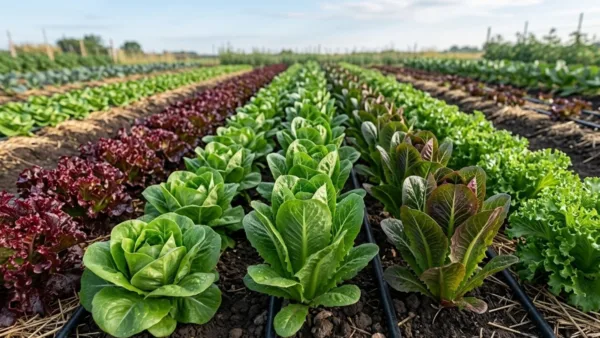
Use an accessible bed or container close enough to check regularly. Small frequent harvests are more likely when the plants are easy to reach rather than hidden at the back of a crowded plot.
Prepare fertile soil that holds moisture but drains freely. Add mature compost where needed and remove perennial weeds. Lettuce roots should not compete with an established patch of grass or thirsty shrubs.
Allow about 20 to 30cm between plants, following the cultivar's expected size. Space rows so you can reach leaves without stepping on the roots or crushing neighbouring rosettes.
Use a broad container with adequate drainage and peat free compost. In summer, light afternoon shade can help prevent rapid drying. Avoid a small dark pot against a hot wall.
Photo: 4028mdk09, CC BY-SA 3.0. Resized and optimised; cropped for display. Adapted image under the same licence.
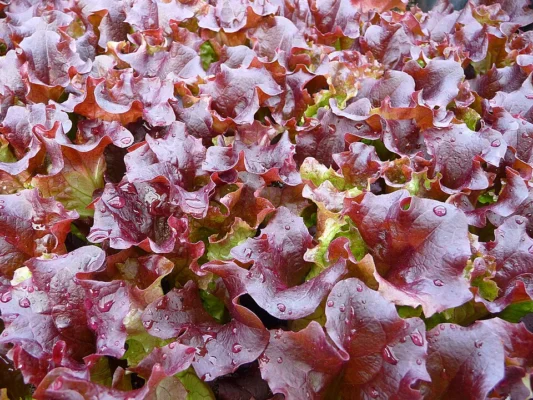
Raise individual plants and establish them before beginning repeated picking. A second small batch is useful insurance against slugs, bolting or a sudden increase in what the kitchen needs.
1.
Choose a loose leaf lettuce such as an oak leaf or Lollo type, checking its sowing season. Mix colours for variety, but label each cultivar so you can compare performance.
2.
Sow a small amount into moist peat free seed compost or a prepared outdoor drill. Cover lightly, approximately 0.5 to 1cm deep according to the packet.
3.
Keep germinating seed evenly moist. In hot weather, choose a cooler bright position with some shade rather than adding heat. Fresh seed helps avoid disappointing emergence.
4.
Thin or prick out to one strong seedling per module. Handle by a leaf rather than crushing the delicate stem, and avoid leaving roots exposed while working.
5.
Gradually accustom sheltered seedlings to outdoor conditions. Plant while young and sturdy, keeping the growing centre above soil level.
6.
Set plants roughly 20 to 30cm apart and firm gently around their roots. Water in, then protect vulnerable young leaves from slugs where necessary.
7.
Let plants establish enough foliage before picking. Take a few good outer leaves from several rosettes rather than stripping one plant almost bare.
8.
Sow another small batch as the first develops. Replace tired, damaged or bolting plants with fresh ones rather than expecting the original planting to supply the entire season.

Watering
Keep the root zone evenly moist, especially while plants establish and replace harvested leaves. Check pots in drying weather even if a neighbouring border still feels damp.
Water the soil in the morning where practical. Avoid keeping foliage continually wet beneath covers, and let excess drain freely. Both drought stress and waterlogged roots can weaken the crop.

Feeding
Prepared garden soil or fresh potting compost often supports the first harvest period without additional feeding. Moisture, light and healthy roots should be checked before interpreting pale growth as hunger.
Longer cropped containers may benefit from suitable liquid feed at the product's recommended rate. Feeding cannot make an ageing or bolting plant young again, so retain a replacement plan.

Pruning
Pick the oldest good leaves from around the outside, leaving the centre and plenty of younger foliage. Work gently at each leaf base so the plant stays rooted and the growing point remains undamaged.
Remove decaying lower leaves separately and keep them out of the salad bowl. If the centre stretches into a flowering stalk, use remaining worthwhile leaves and replace the plant.

Winter care
Ordinary summer varieties should not be assumed to survive or crop well through winter. Choose a specifically suitable variety and separate sowing schedule for that purpose.
If extending autumn picking beneath cover, ventilate on suitable days and harvest lightly as regrowth slows. Keep leaves clear of cold wet coverings and remove rotting material promptly.
Loose leaf lettuce forms an open rosette rather than the compact heart expected from an iceberg or cos crop. Outer leaves stay accessible while new leaves develop in the centre.
Oak leaf types have lobed foliage, while Lollo types carry frilly edges. Colour varies from green to red. Choose a named variety with the leaf form and sowing season that suit your plans.
Photo: Salix, CC BY-SA 3.0. Resized and optimised; cropped for display. © Salix / Wikimedia Commons
In cooler districts, the first outdoor planting may establish later than a protected crop in the south. Use the calendar as a planning range and avoid transplanting into saturated or unsuitable ground.
Hot southern gardens may need light shade and more frequent watering. If germination fails in a hot tray, resow a small batch in cooler conditions rather than soaking the same tray repeatedly.
Damp western conditions make spacing and hygiene especially valuable. Pick from several plants so each retains healthy foliage, and stop harvesting leaves that are decayed or heavily affected by disease.
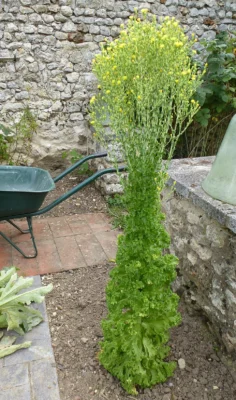
Image from the BFFD media library.
The plant may be bolting through heat, drought or age. Harvest worthwhile leaves promptly and replace it. Removing the flower stalk will not reliably restore a young rosette.
Look for slugs and snails, particularly in damp weather and beneath covers. Inspect vulnerable plants often and use appropriate protection rather than assuming poor seed was responsible.
High temperatures can inhibit lettuce germination. Try fresh seed in cooler conditions with steady moisture. Extra heat is usually the wrong response to a summer failure.
Downy mildew can affect lettuce. Remove affected material, improve airflow and avoid constant wetness. Keep replacement plants healthy and do not transfer decaying foliage between batches.
Review how much foliage you remove, water supply and plant age. Give lightly picked plants time to recover. Replace exhausted rosettes rather than increasing the harvest pressure.
Use successive seed sowings for replacement plants. A small, clearly labelled tray is easier to manage than a large batch that reaches maturity together.
Seed saving is possible from a healthy open pollinated plant allowed to flower. Choose one that performed well rather than the first to bolt. F1 seedlings may not retain their parent's characteristics.
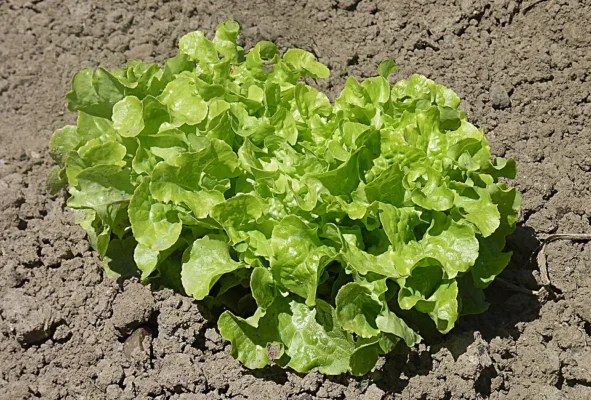
Green oak leaf forms
Lobed leaves are easy to pick individually from a well spaced rosette. The photograph illustrates this leaf type; it does not confirm a particular named green oak leaf cultivar.
Photo: Jamain, CC BY-SA 3.0. Resized and optimised; cropped for display. Adapted image under the same licence.
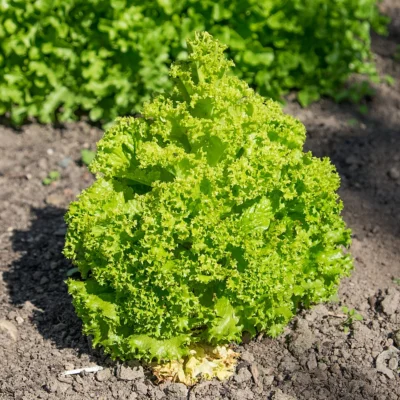
Lollo Bionda
The pale green frilly lettuce shown is identified as Lollo Bionda in the source. Its texture provides a useful contrast beside smoother leaves. Check your seed supplier's seasonal guidance.
Photo: DeFacto, CC BY-SA 4.0. Resized and optimised; cropped for display. Adapted image under the same licence.
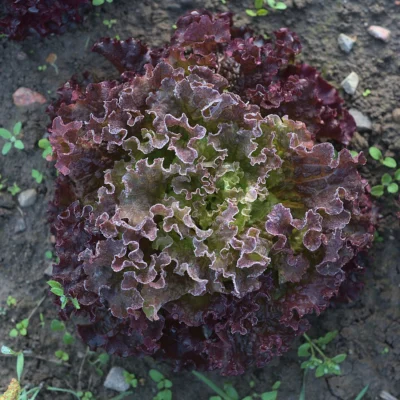
Lollo Rosso
Red edged curly foliage adds colour to mixed pickings. The source identifies the pictured lettuce as Lollo Rosso. Keep plants individually spaced rather than crowding them merely for colour.
Photo: August Geyler, CC BY-SA 4.0. Resized and optimised; cropped for display. © August Geyler / Wikimedia Commons
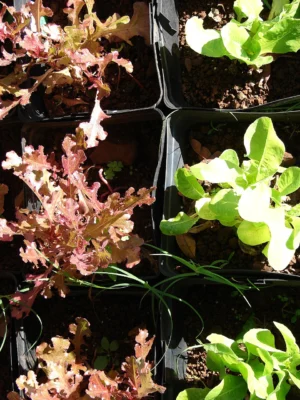
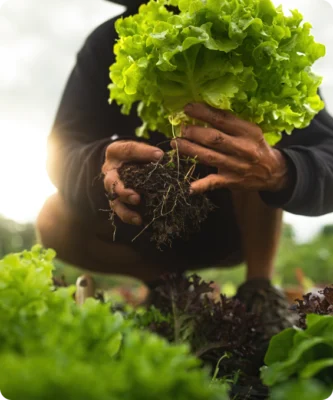
A small mixed planting
Young green and red oak leaf lettuces illustrate a useful varied batch. Keep individual plants labelled; appearance alone may not distinguish similar cultivars or their seasonal strengths.
Photo: Forest and Kim Starr, CC BY 3.0 us. Resized and optimised; cropped for display. Forest & Kim Starr
Start with a few rosettes in contrasting colours. Note how much they produce, then adjust the next sowing rather than filling the bed with more plants than you can use.
Slugs and other grazers are part of the garden, but young lettuce can need focused protection. Keep plants visible for inspection and avoid unnecessary disturbance to the wider bed.
Inspect leaves for aphids and their predators before acting. Small populations do not always require treatment. Secure covers carefully and check that wildlife cannot become trapped.
Take a few good outer leaves while leaving the growing centre and plenty of younger foliage. Pick from several plants, then allow regrowth before returning.
Usually about 20 to 30cm for individual rosettes, depending on variety. Follow the packet and leave room to reach the outer leaves without damaging neighbours.
A healthy plant may provide several weeks of picking, but age and weather eventually reduce quality. Small successive sowings give a more dependable supply.
Not for this method. It relies on selective outer leaf picking. Dense baby leaf crops can be clipped differently, provided their growing points are left intact.
Yes. Use a broad drained container with enough compost to hold moisture, give each plant room and check watering regularly. Avoid prolonged summer overheating.
Heat, drought and the move towards flowering can reduce leaf quality. Maintain steady growth and replace bolting plants rather than waiting for their flavour to recover.
A few spaced rosettes, gently picked and regularly replaced, can provide fresh leaves close to the kitchen. Keep the centre growing and let the next sowing take over before quality declines.
Want to get food independence, support your local grower, get better prices and shop more privately?
Local food isn’t just something you find. It’s something you protect. A free account helps keep local supply visible, supported, and resilient.

….it takes 30 seconds for food lovers and 5 minutes for suppliers
We built this for people who care where their food comes from. For people who want to remain food secure. For Farmers to get to the local people, who deserve a better income and to deliver a better price for you. For the environmentally conscious and the privacy-conscious. An account simply helps us make the map and supplier reach more useful to you, without changing how open it is. You’re always in control.


Find local food. Stay connected to it. Create a free account to support local producers and be part of a growing food network.


