Buy From Farmers Direct began with a simple concern: Britain has become increasingly disconnected from the people who produce its food.
For generations, food was naturally closer to home. Farmers, growers, butchers, bakers, dairies, markets and local producers were familiar parts of everyday life. People did not necessarily understand every detail of agriculture, but they knew more about where their food came from, who produced it and what was in season.
That relationship has changed.
Modern food systems have delivered extraordinary convenience and choice, but they have also created distance. Supply chains have become longer and more complex. Supermarkets have become the dominant route between producer and consumer. Ingredient lists have grown harder to understand. Independent producers often struggle for visibility, while families trying to buy locally can find the process surprisingly difficult.
Buy From Farmers Direct was created in response to that growing disconnect. The ambition is not to recreate the past or pretend modern food retail has no value. It is to build a better connection between the convenience people expect today and the provenance, knowledge and human relationships that food once naturally carried with it.
Buy From Farmers Direct was created in response to that growing disconnect. The ambition is not to recreate the past or pretend modern food retail has no value. It is to build a better connection between the convenience people expect today and the provenance, knowledge and human relationships that food once naturally carried with it.
The origins of BFFD stretch back long before the website existed.
Founder Tom Claypole first experienced farming as a child, spending time working around farms from the age of eight and later cultivating from his early teens.
Those years created an understanding of food that is difficult to acquire from a supermarket shelf. That understanding continued into later life, offering a broader view of how food moves from production to consumption — and, importantly, how much happens before a customer ever sees the finished product.
First experience working around farms.
Began cultivating and growing.
Studied at the Royal Agricultural University.
Experience across food and consumer businesses including G’s Fresh, Gousto and Superdry Gin.
Food begins with work.
It depends on land, weather, timing, knowledge, risk and people willing to take responsibility for producing something another person will eventually eat.
Tom’s experience across food and consumer businesses revealed everything that stands between a field and a finished product on a shelf:
Specifications
Buyers
Margins
Transport
Packaging
Logistics
Consumer expectations
Commercial pressures
Behind that process are farmers and producers carrying much of the physical and financial risk — often for food someone else will sell, and someone else again will eat.
The further that journey was explored, the clearer one thing became: the people producing food were becoming invisible to the people buying it.
Most consumers understandably experience food from the final few metres of its journey. They see the product, the packaging, the price and perhaps a country of origin. What they rarely see is everything that happened before it arrived there.
Farmers may have spent months or years producing it. Growers have dealt with weather, soil, pests and unpredictable yields. Producers have invested in equipment, labour and compliance. Food may have travelled through processors, wholesalers, distribution centres and retailers before reaching the customer.
Along the way, perfectly edible produce can be rejected because it falls outside commercial specifications. Farmers can face difficult margins despite carrying substantial production costs. Producers can lose control over the relationship with the people ultimately buying what they make.
None of this means the entire food system is broken, nor that large retailers are inherently the enemy. Supermarkets have transformed access to food and provide a level of convenience that millions of households rely upon.
The question is whether they should be the only realistic route.
Perhaps the greatest challenge facing local food is not a lack of public support.
Most people already believe British farmers deserve support. Many would like to buy more food locally. They want good farm shops, independent butchers, thriving markets and producers who can earn a fair return for what they create.
The problem is what happens when the weekly shop begins.
If one supermarket provides almost everything a household needs in a single visit, while local food requires several searches, a telephone call, opening times buried on social media and uncertainty about what is available, convenience usually wins.
A farm shop can be producing excellent food only a few miles away and remain almost invisible to the people searching for it. A grower might sell directly to the public but rely on a Facebook page that has not appeared in somebody’s search results. A cheesemaker, baker or butcher may have exactly what a local customer wants without any effective route connecting the two.
BFFD exists to remove as much of that friction as possible.
Supporting local food should not require detective work.
Alongside the growing distance between producer and consumer, another change has been taking place. Food itself has become increasingly complicated.
Many modern products are the result of remarkable food science and manufacturing. That is not inherently negative. Processing can improve safety, longevity, accessibility and affordability.
But there is also a growing appetite among consumers for something simpler. People want to know what they are eating. They want to understand ingredients. They want to know where their meat was raised, where their vegetables were grown, how their bread was made and whether there is an independent producer nearby offering an alternative.
That desire reflects something larger than a passing food trend. It reflects a growing discomfort with the distance between people and one of the most important things they consume every day.
Food should not be mysterious. It should be possible to understand where it came from and who was responsible for producing it.
The concern behind BFFD is ultimately about direction.
Food production is becoming increasingly centralised. Technology is becoming more deeply embedded in commerce and daily life. Large organisations can understand consumer behaviour with extraordinary precision, while many small producers still struggle simply to make themselves visible online.
At the same time, practical food knowledge is becoming less commonplace.
Fewer people grow food themselves. Seasonality can be difficult to recognise when almost everything is available throughout the year. Traditional skills such as preserving, fermenting, baking and cooking from basic ingredients can feel specialist rather than ordinary.
None of these changes happened overnight.
That is precisely why they matter.
Societies rarely wake up one morning and discover that something fundamental has disappeared. Knowledge, businesses and habits tend to fade gradually, often replaced by something more convenient.
The concern is not some dramatic dystopian prediction.
It is the quieter possibility that Britain could become increasingly dependent on fewer routes to food while gradually losing the producers, skills and local relationships that provide genuine alternatives.
BFFD is being built because those alternatives are worth protecting.
At its most practical level, Buy From Farmers Direct is designed to help people find food produced closer to home:
Farmers
Farm Shops
Farmers Markets
Growers
Bakers
Butchers
Beekeepers
Cider Makers
Smallholders
Cheesemakers
Independent and specialist food producers
The objective is to bring these businesses into a platform that makes them easier to discover, understand and support.
But BFFD is being built to become much more than a directory. The wider project is about creating a national resource around British food.
Explaining seasonality and provenance.
Helping people understand different foods and production methods.
Documenting useful knowledge from farmers and producers themselves.
Creating resources for households, retailers, hospitality and anyone buying British food more directly.
Over time, the platform will also allow BFFD to build something the sector badly needs: better information. Structured producer data can help reveal where independent food businesses are concentrated, which regions have gaps in access, what people are producing, how seasonal availability changes and how Britain’s local food economy is evolving.
The more that can be understood, the more useful BFFD can become.
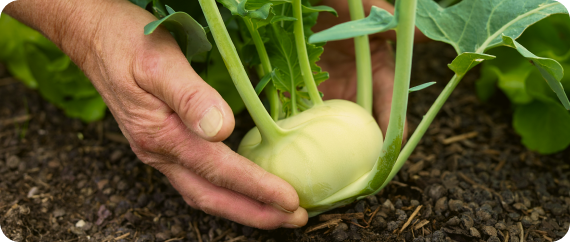
It is easy to talk about food as products: milk, beef, bread, cheese, vegetables, honey, apples, cider.
But every one of those products has a person behind it.
Common buying routes include:
That human connection is one of the things modern food systems can obscure. BFFD wants to put it back.
When people know who produces their food, the conversation changes. Price still matters, but so do quality, trust, provenance, skill and the value of keeping that producer in business.
Food becomes something more than a transaction. It becomes part of a community.
This is where the story becomes personal, but not only to the person who founded BFFD.
Food sits at the centre of family life for almost everyone. Some of our earliest memories involve it: a Sunday lunch. Something cooked by a grandparent. Fruit picked from a garden. A bakery visited for years. A recipe that belongs to the family rather than a cookbook.
Food carries culture and memory in a way few other things do. That is why the future of food matters.
The question is not simply whether Britain can continue producing enough food. It is whether future generations will retain a meaningful connection with how that food is produced, the people responsible for it and the skills that allow families and communities to become more resilient.
BFFD wants:
Most of all, it wants those choices to remain available for the generations that follow.
Supporting local food does not require rejecting progress. Britain does not need to dismantle modern agriculture, abandon supermarkets or romanticise a period when food was often less secure and considerably harder to obtain.
The opportunity is to take the best of modern life and reconnect it with what should never have been lost:
Convenience and provenance do not have to be opposites. That is the space BFFD intends to occupy: a modern platform built around an old and remarkably durable idea — people should be able to know where their food comes from.
Buy From Farmers Direct is still at the beginning of its story. The vision is to create one of Britain’s most useful independent resources for discovering local food and understanding the people behind it.
That means building a comprehensive directory of producers across the country. It means creating practical food guides, original research, location resources, seasonal information and support for farmers and independent food businesses.
It also means listening. The greatest expertise within British food does not sit inside BFFD. It sits on farms, in orchards, bakeries, dairies, butcher shops, fisheries, kitchens, market gardens and production rooms across the country.
Those people carry generations of practical knowledge. BFFD can provide the infrastructure to help more people find them, learn from them and buy from them.
That is what makes the project exciting.
BFFD was created because the relationship between people and food can be better than it is today. That change does not require every household to abandon the supermarket or completely change the way it eats.
It can begin much more simply:
Discover a farm shop nearby.
Buy eggs from a local producer.
Visit a farmers market.
Ask where your meat came from.
Choose British produce while it is in season.
Learn how something is grown.
Grow something yourself.
Speak to the person who made the food you are buying.
Those choices may appear small, but collectively they determine what survives. Every customer who discovers an independent producer makes that producer slightly more viable. Every farm shop that becomes easier to find strengthens another local food network. Every child who learns where food comes from carries that understanding forward.
That is the story BFFD wants people to become part of. Not a campaign against everything modern. Not nostalgia for a world that no longer exists. A practical effort to make British food more visible, understandable and connected to the people responsible for producing it.
Farming, food and family were at the beginning of Buy From Farmers Direct. The future is about making sure they remain connected — and that future is still ours to shape.
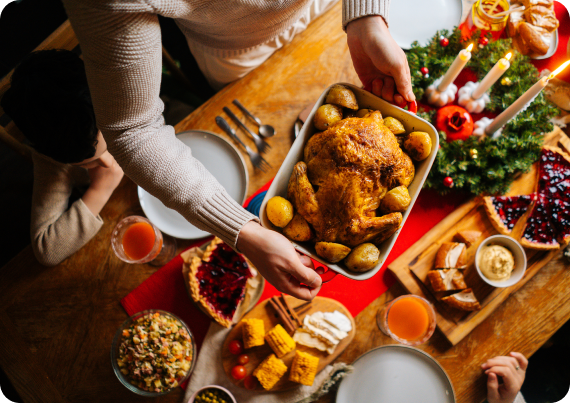
BFFD stands for practical change in British local food: better access, clearer information, stronger producer visibility and communities that understand the food around them. Whether you are a shopper, supplier, patron or partner, you can help make local food easier to find and easier to support.


