A small patch of young lettuce leaves can make a fresh salad long before full rosettes develop. This guide uses closer sowing for baby leaves, followed by careful clipping above the growing points. Expect a limited run of good pickings, then replace the crop. A succession of small batches keeps quality higher than one tired tray.
Sow for baby leaves
Useful in containers
Clip above growing points
Limited repeat harvests
Replace with fresh batches
| Botanical name | Lactuca sativa |
| Family | Asteraceae |
| Crop type | Young loose leaf lettuce |
| Method | Closer sowing for early cutting |
| Main sowing | March to August |
| Early option | February under suitable protection |
| Sowing depth | Light covering, about 0.5 to 1cm |
| Space between seeds | Roughly a finger width initially |
| Row spacing | About 10 to 15cm for baby leaves |
| Transplanting | Not required for the default method |
| Position | Good light, avoiding excessive heat |
| Compost | Suitable peat free growing compost |
| Containers | Broad and well drained |
| Watering | Maintain even moisture |
| First picking | Often around 4 to 6 weeks in good conditions |
| Cold weather | Slower growth and regrowth |
| Cutting height | Above the growing point, often about 2.5cm |
| Repeat cuts | A limited number; assess quality |
| Harvest storage | Keep cool and use promptly |
| Replacement | Sow small batches every few weeks |
| Plant name | Crop type | Spacing |
Sow indoors
Plant outdoors
Harvest
Polytunnel | |||||||||||
|---|---|---|---|---|---|---|---|---|---|---|---|---|---|---|
| Jan | Feb | Mar | Apr | May | Jun | Jul | Aug | Sep | Oct | Nov | Dec | |||
| Lettuce (Loose Leaf 2) | Salad & leaves | Seeds about a finger width apart; rows 10 to 15cm | No activity recorded | Sow indoors, Polytunnel | Sow indoors, Polytunnel | Sow indoors, Harvest | Sow indoors, Harvest | Sow indoors, Harvest | Sow indoors, Harvest | Sow indoors, Harvest | Harvest, Polytunnel | Harvest, Polytunnel | No activity recorded | No activity recorded |
Sow indoors: February, March, April, May, June, July, August. Plant outdoors: no months recorded. Harvest: April, May, June, July, August, September, October. Polytunnel: February, March, September, October.
The main sowing range is March to August, with February available for an appropriately protected early batch. This guide defaults to sowing where the young leaves will be cut, so there is no separate transplanting band. Late protected harvests depend on variety, light and weather. Ordinary summer lettuce is not automatically a reliable winter crop.
Baby leaf growing suits containers, small beds and households wanting a mix of tender leaves rather than full lettuces. It is particularly useful when the space will soon be needed for another crop, because the first harvest comes while plants are young.
Closer sowing shortens the useful life of a batch. You are not giving each plant room to become a mature rosette. Plan fresh sowings and remove exhausted crops instead of expecting a densely filled tray to regenerate indefinitely.
Image from the BFFD media library.
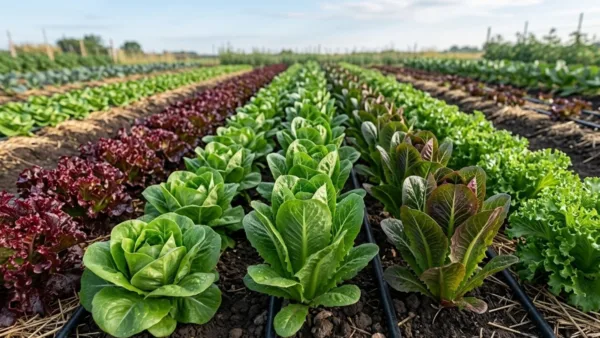
Choose a bright accessible spot where you can inspect and cut leaves easily. Avoid the splash zone beneath dirty paths or places where compost is repeatedly knocked onto the crop.
In beds, make a fine level surface and remove weeds before sowing. Short rows help you distinguish lettuce from unwanted seedlings and make harvesting less awkward than an uneven scattered patch.
Use roughly 10 to 15cm between baby leaf rows, with seeds initially about a finger width apart. Thin any congested patches. This spacing is for young leaves, not full sized heads.
For containers, choose a broad pot or trough with drainage and enough compost to retain moisture. Fresh peat free growing compost is useful; very shallow trays require more frequent attention during warm weather.
Photo: 4028mdk09, CC BY-SA 3.0. Resized and optimised; cropped for display. Adapted image under the same licence.
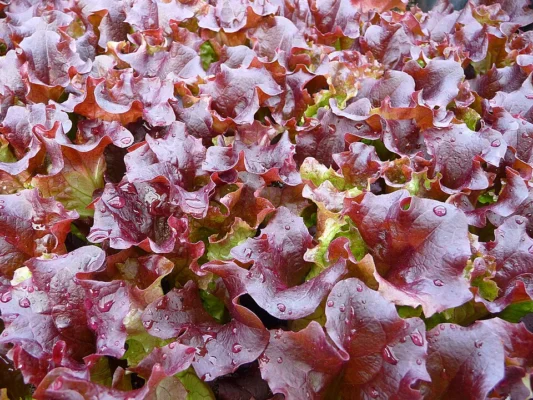
Sow a manageable area directly in its bed or final container. Reserve room for another batch so it can establish while the first is being harvested.
1.
Choose loose leaf lettuce seed or a mix containing lettuce varieties suited to the season. Check ingredients: mixed salad packets may also include other species with different flavours and timing.
2.
Prepare a fine seedbed or fill a drained container with suitable compost. Moisten it before sowing so the seeds begin in contact with damp material.
3.
Sow thinly in short rows or evenly across a small container. Leave roughly a finger width between seeds rather than pouring on a dense layer.
4.
Cover lightly, usually about 0.5 to 1cm according to the packet. Label the date and mixture. Water gently without washing seed into clumps.
5.
Keep the surface moist through germination. In hot weather, use a cooler lightly shaded position; avoid leaving a covered tray in intense sun.
6.
Thin congested seedlings early and remove weeds while they are easy to identify. Check for slugs, especially around pot rims and beneath temporary covers.
7.
When leaves reach a useful tender size, cut a small section with clean scissors above the central growing points. A height around 2.5cm is a guide, not a reason to cut through visible young centres.
8.
Water as needed to support recovery and judge the next growth before cutting again. Remove the crop when regrowth becomes weak, bitter or crowded, and bring the next batch into use.

Watering
Maintain even moisture from sowing through each picking. Closely spaced seedlings and broad leaf cover can use water quickly. Check beneath the surface rather than judging only the colour of the top layer.
Water carefully at soil level where possible, preferably early enough for splashed leaves to dry. Avoid leaving a dense cut crop soaked overnight or allowing its roots to stand in water.

Feeding
A short first crop in suitable fresh compost usually needs little extra feeding. Keep sowing density, light and watering right before assuming slow growth reflects a lack of nutrients.
If reusing containers, refresh depleted compost or follow appropriate feeding guidance before another batch. Do not use strong fertiliser to keep an exhausted, overcrowded crop going beyond useful quality.

Pruning
Clip only leaves suitable for eating and keep the scissors clear of compost. Preserve the growing centres and some healthy foliage where practical. Remove damaged material separately from the harvested leaves.
Expect only a limited number of good cuts, often two or three before replacement is sensible. Actual recovery depends on variety, weather and cutting height. Stop when texture or flavour deteriorates.

Winter care
Autumn protection can extend a suitable crop, but lower light means slower regrowth. Cut lightly and keep air moving beneath covers rather than treating the crop as a summer tray.
For winter production, choose a specifically suitable variety and sow early enough to establish it. A last minute winter sowing cannot be expected to replace a productive summer batch quickly.
Baby lettuce leaves show the colours and shapes of their varieties at a young stage. Oak leaf forms have lobed edges, while Lollo types become frillier as they grow.
The photographs include mature rosettes and nursery plants to illustrate lettuce forms. Baby leaves are harvested younger and at closer spacing. Do not wait for a full sized lettuce before taking the first tender picking.
Photo: Salix, CC BY-SA 3.0. Resized and optimised; cropped for display. © Salix / Wikimedia Commons
In a cool spring, allow extra time before the first cut. Protected sowing can help establishment, but young leaves still need strong light and ventilation rather than a hot, dim windowsill.
During warm southern summers, move containers out of intense afternoon heat where practical. Keep sowings small enough to manage and pause if repeated heat and drought are producing poor crops.
Pick in the cooler part of the day and harvest only what you need. Rinse leaves in clean water before use, remove damaged pieces and keep the harvest cool. Tender baby leaves wilt faster than intact mature plants.
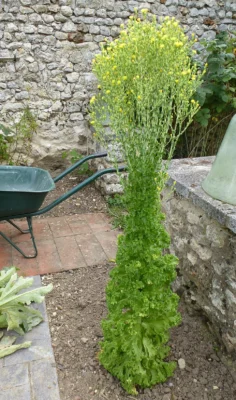
Image from the BFFD media library.
Overcrowding, wet compost and poor airflow can encourage damping off. Remove affected patches, improve conditions and start a fresh small sowing in clean equipment if necessary.
The growing points may have been removed, or plants may be exhausted or stressed. Cut higher next time and keep moisture steady. Replace a failed batch rather than waiting indefinitely.
Heat, drought and age can bring bolting. Harvest any remaining useful leaves and clear the crop. Repeated clipping does not prevent all plants from eventually flowering.
Inspect rims, covers and nearby hiding places. Protect the vulnerable sowing and keep it accessible for regular checks. A small patch can lose many seedlings in one night.
Remove affected material and improve airflow. Avoid permanently wet foliage and crowded regrowth. Do not include decayed leaves in a harvest or leave them lying on healthy seedlings.
Successive seed sowing is the practical way to renew a baby leaf crop. Keep seed cool and dry and retain variety labels so you can repeat mixtures that suit your taste.
Use a separate well spaced plant if saving seed. The closely cut baby leaf patch is poorly suited to selecting a mature seed parent. Choose healthy plants that resisted premature flowering.
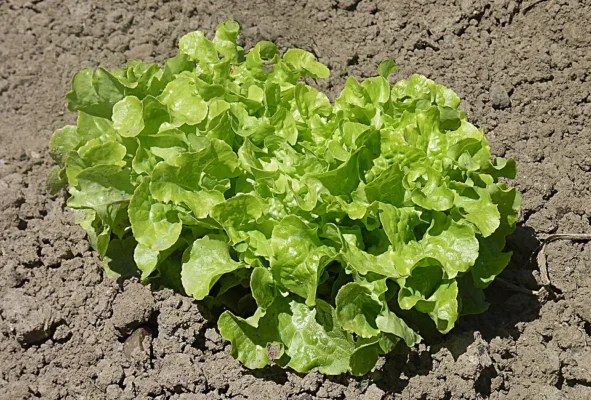
Green oak leaf lettuce
The lobed green foliage shown offers one texture for a lettuce only mix. The photograph illustrates the type rather than confirming a named cultivar. Harvest young leaves before the full rosette develops.
Photo: Jamain, CC BY-SA 3.0. Resized and optimised; cropped for display. Adapted image under the same licence.
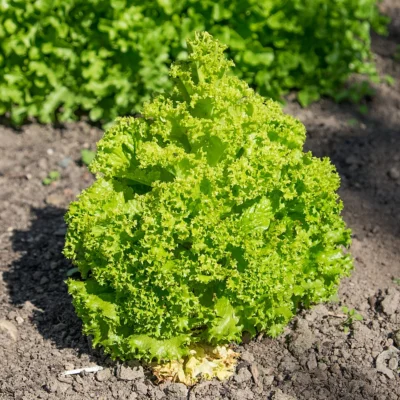
Lollo Bionda
This identified pale green frilly lettuce can add texture to a young leaf harvest. Keep the seed packet's seasonal guidance and avoid overcrowding the developing leaves.
Photo: DeFacto, CC BY-SA 4.0. Resized and optimised; cropped for display. Adapted image under the same licence.
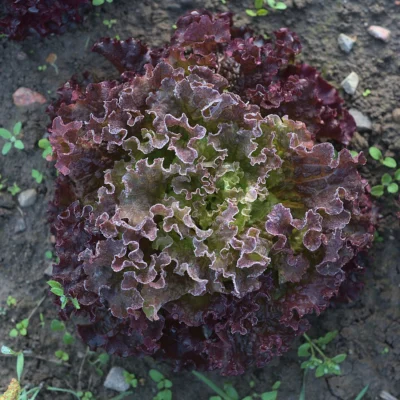
Lollo Rosso
The identified red edged lettuce adds colour alongside green forms. A young mixed crop is attractive, but colour does not remove its need for adequate light and water.
Photo: August Geyler, CC BY-SA 4.0. Resized and optimised; cropped for display. © August Geyler / Wikimedia Commons
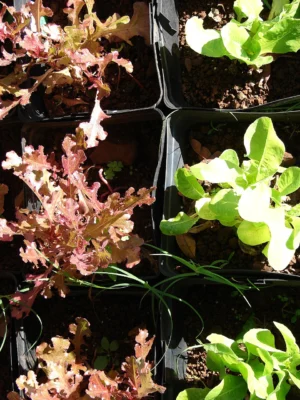
Red and green mixtures
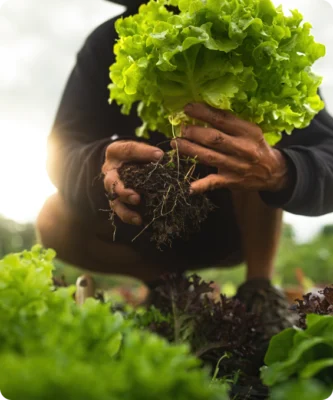
These nursery lettuces illustrate contrasting leaf colours. For direct baby leaf sowing, choose a mix with compatible growth and harvest timing rather than assuming every salad species behaves alike.
Photo: Forest and Kim Starr, CC BY 3.0 us. Resized and optimised; cropped for display. Forest & Kim Starr
Sow enough for a few meals, then repeat while conditions remain favourable. Two small containers at different stages are easier to use well than one enormous crop.
A few minor leaf marks do not necessarily spoil the whole crop. Inspect carefully and manage genuine losses rather than treating every insect as a pest.
Use any protective cover with airflow and regular checks. Keep netting secured without loose loops, and avoid trapping beneficial insects around a crop harvested so frequently.
Start with seeds about a finger width apart and rows roughly 10 to 15cm apart, then thin crowded patches. This is closer than spacing for mature rosettes, but not a solid carpet of seed.
Cut above the growing points, often about 2.5cm above the base. Look at the plants as you cut: preserving their young centres matters more than following a fixed measurement.
Often two or three useful pickings are realistic, sometimes more in good conditions. Replace the crop when regrowth weakens or quality drops. It is not an endless harvest.
No. Direct sowing into its final bed or container is the default here. Raising and transplanting individual plants is another method better suited to larger rosettes.
Check cutting height, water supply, crowding and plant age. Growing points may have been damaged or the crop may be exhausted. Keep a fresh sowing ready to replace it.
Yes, but those are different crops with their own seasons and pest issues. Read the mixture's instructions. This guide's default is young lettuce leaves, so do not assume every salad mix has identical needs.
Sow thinly enough for healthy young leaves, cut above their centres and replace tired crops promptly. Small batches make it easier to enjoy baby lettuce at its freshest.
Want to get food independence, support your local grower, get better prices and shop more privately?
Local food isn’t just something you find. It’s something you protect. A free account helps keep local supply visible, supported, and resilient.

….it takes 30 seconds for food lovers and 5 minutes for suppliers
We built this for people who care where their food comes from. For people who want to remain food secure. For Farmers to get to the local people, who deserve a better income and to deliver a better price for you. For the environmentally conscious and the privacy-conscious. An account simply helps us make the map and supplier reach more useful to you, without changing how open it is. You’re always in control.


Find local food. Stay connected to it. Create a free account to support local producers and be part of a growing food network.


