Marguerite daisies bring a generous summer display to pots and sunny borders, with fresh divided foliage beneath white, pink or yellow flowers. These Argyranthemum are woody perennials from a warmer climate, often grown as seasonal bedding in Britain. Start with a healthy plant, keep its roots evenly supplied with water and plan winter shelter before autumn arrives.
Sunny summer colour
Excellent in patio pots
Protect from frost
Deadhead for more flowers
Keep cuttings as insurance
| Botanical genus | Argyranthemum |
| Main species | Argyranthemum frutescens and garden hybrids |
| Family | Asteraceae, the daisy family |
| Plant type | Evergreen woody perennial, often used as bedding |
| Origin of the main species | Canary Islands |
| Usual garden height | About 30cm to 1m, according to selection |
| Usual spread | About 30cm to 1m, according to selection |
| Flower colours | White, pink and yellow, with varied centres |
| Flower form | Single, semi double or double |
| Main display | Late spring to autumn in favourable conditions |
| Position | Full sun |
| Soil | Moderately fertile and freely drained |
| Outdoor planting | Usually late May to June after frost |
| Working spacing | About 45cm for compact bedding plants |
| Container suitability | Very good with drainage and regular watering |
| Winter treatment | Bright frost free shelter for retained plants |
| Propagation | Softwood or semi ripe cuttings |
| Seed route | Possible for suitable seed strains, not all cultivars |
| Routine maintenance | Water, deadhead and lightly shape |
| Food use | An ornamental plant, not a food crop |
| Plant name | Crop type | Spacing |
Sow indoors
Plant outdoors
Harvest
Polytunnel | |||||||||||
|---|---|---|---|---|---|---|---|---|---|---|---|---|---|---|
| Jan | Feb | Mar | Apr | May | Jun | Jul | Aug | Sep | Oct | Nov | Dec | |||
| Marguerite Daisy | Not recorded | Single 45cm, In row 45cm, Row gap 45cm | Polytunnel | Polytunnel | Polytunnel | Polytunnel | Plant outdoors | Plant outdoors, Harvest | Harvest | Harvest | Harvest | Harvest, Polytunnel | Polytunnel | Polytunnel |
Sow indoors: no months recorded. Plant outdoors: May, June. Harvest: June, July, August, September, October. Polytunnel: January, February, March, April, October, November, December.
The May and June planting band means setting hardened plants outside after the final local frost. The sowing row is left blank because this guide prioritises bought plants and cuttings. If growing a seed strain, follow its own supplier instructions rather than applying a universal sowing date. June to October in the harvest row means cutting ornamental flowers, not an edible crop. The October to April cover band is winter protection for plants or rooted cuttings and may need extending in cold districts. A tunnel without heating is not necessarily frost free. The 45cm spacing suits compact bedding selections; give large shrubs their labelled mature width.
Choose marguerites when you want a rounded plant that keeps producing flower heads through summer. One healthy specimen can carry a patio display, while a small group can soften the front of a mixed border. Their relatively fine foliage also sits comfortably beside bolder leaves.
They are a good choice for gardeners willing to water containers and remove faded flowers regularly. If you have no bright frost free space, enjoy them as summer bedding and replace them the following year. A label promising perennial growth does not mean the plant will survive every British winter.
Photo: Krzysztof Ziarnek, Kenraiz, CC BY-SA 4.0. Resized and optimised; cropped for display. Adapted image under the same licence.
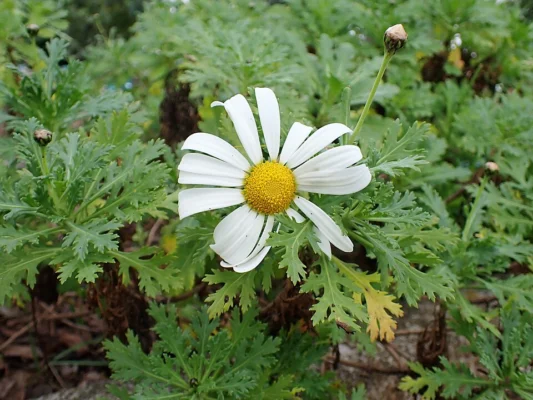
Give plants an open sunny position. A shaded doorstep may look convenient but tends to produce a thinner plant with fewer flowers. Shelter is useful for standard trained specimens, whose stems and heavy heads are vulnerable to gusts.
The root area should drain freely after rain while retaining enough moisture for summer growth. Avoid a depression that fills with water. Improve the whole planting area where necessary, or use a pot if the garden remains wet for long periods.
Choose a container with clear drainage holes and sufficient weight to support the mature plant. Fresh peat free potting compost is suitable for a seasonal display. A more substantial loam based mix can suit a plant that will stay in its pot for several seasons.
Keep enough room around each plant to reach the centre for deadheading and watering. Marguerites may tolerate coastal air, but that does not make every cultivar winter hardy. Salt exposure, cold wind and a wet rootball can still damage a container plant.
Photo: Eric Polk, CC BY-SA 4.0. Resized and optimised; cropped for display. Adapted image under the same licence.
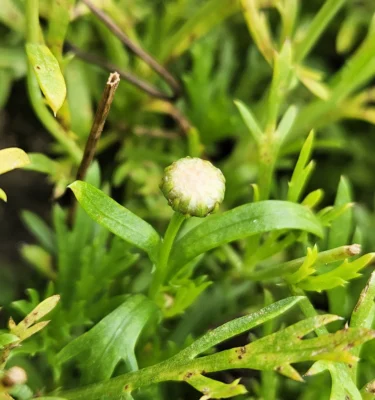
Young plants establish best when warm weather is dependable and their roots have room to grow.
1.
Buy a labelled plant with fresh leaves, a balanced shape and firm roots. Check whether it is a compact bedding selection or a larger shrub, and inspect leaf undersides before bringing it into a greenhouse.
2.
Grow small plugs on in individual pots until their roots hold the compost together. Give them good light and room between plants rather than keeping a crowded tray on a warm windowsill for weeks.
3.
Gradually harden plants off before outdoor planting. Start with sheltered daytime conditions, bringing them back inside during cold nights. Delay final planting if the forecast still includes frost.
4.
Clear perennial weeds and loosen the planting area without leaving a water holding pocket. Set out the pots first, allowing roughly 45cm for compact plants and more for vigorous selections.
5.
Water each rootball before planting. Remove the pot carefully and set the plant at its previous compost level, with the roots spread naturally and the woody base above persistently wet material.
6.
Backfill and firm lightly with your hands, then water slowly around the roots. Keep a small clear space around the base so you can see where to water and spot any developing decay.
7.
For containers, leave a watering gap below the rim. Do not crowd a young marguerite with so many companions that its roots have no space or its lower foliage becomes permanently shaded.
8.
Check moisture daily during the first warm spells. Pinch a few soft shoot tips if a young plant needs to branch, but remember that removing tips carrying flower buds postpones that part of the display.

Watering
Check container compost with a finger before watering. When the upper layer is drying, water thoroughly and let the excess escape. A plant can wilt from either a dry rootball or damaged wet roots, so check the compost rather than responding to wilt alone.
In the ground, water during establishment and prolonged dry weather. Aim at the root area, keeping flowers as dry as practical. Small pots in wind may need much more frequent attention than established plants in a sheltered bed.

Feeding
Use the nutrient supply already present in fresh compost before adding extra fertiliser. Once that supply is declining and the plant is actively flowering, use a suitable liquid flowering plant feed at the labelled rate. More concentrated feed is not a shortcut to extra flowers.
Plants in ordinary garden soil usually need less feeding than a busy pot display. Very lush leaves with few buds can reflect too much nitrogen or too little sun. Check both conditions before adding another feed.

Pruning
Remove faded heads and their short stalks as you work around the plant. This keeps the display tidy and prevents old wet petals collecting among new buds. Cut back to a healthy leaf or side shoot rather than leaving a forest of bare stalks.
Lightly trim uneven leafy growth when necessary, allowing the plant time to recover. Avoid treating an old woody specimen like a vigorous deciduous hedge. If it is bare and tired, healthy young cuttings often make a better replacement than a drastic cut into old stems.

Winter care
Move selected plants under bright frost free cover before damaging cold arrives. Check for insects first, remove decaying flowers and provide ventilation when conditions allow. Water sparingly enough to prevent the compost drying completely, without keeping inactive roots saturated.
Small rooted cuttings use less winter space than a large flowering pot. Keep them in good light and inspect them regularly. In very mild coastal gardens a sheltered specimen may survive outside, but a backup cutting is sensible and fleece alone cannot guarantee survival.
Argyranthemum has a branching woody base and noticeably divided leaves. The familiar white flowers have a central yellow disc surrounded by ray florets; garden selections add different colours, petal arrangements and plant sizes.
Several unrelated plants are sold with daisy or marguerite in their common name. Shasta daisies and oxeye daisies have different growth and winter behaviour. Check for Argyranthemum on the label before using this calendar, rather than identifying a plant from white petals alone.
Photo: Eric Polk, CC BY-SA 4.0. Resized and optimised; cropped for display. Adapted image under the same licence.
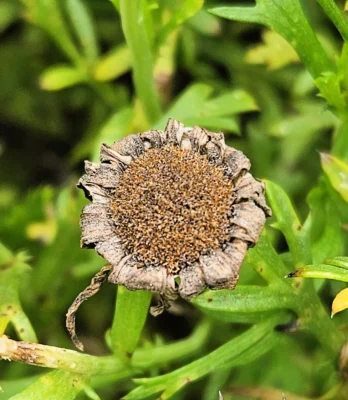
Planting dates depend on the garden rather than the shop display. A flowering pot bought early in spring may have been grown under protection. Keep it sheltered until local nights are reliably mild, even if daytime sunshine feels warm.
For cutting, choose a few fresh stems and put them promptly into clean water. Remove leaves that would sit below the waterline. Keep plenty of blooms on the plant if the pot is intended as a continuous garden display.
Record which colours and habits work well in your own space. A compact selection may be easier to overwinter and water than a large standard. Renewing plants from healthy cuttings gives you younger growth without repeatedly increasing the size of the original pot.
Photo: Forest and Kim Starr, CC BY 3.0 us. Resized and optimised; cropped for display. Forest & Kim Starr

Check sunlight and crowding first. Plants kept in shade or fed heavily with nitrogen can make plenty of leaf growth but disappoint in flower. Improve light, use feeding appropriate to the compost and remove faded heads consistently.
A dry pot can lose water rapidly during warm wind. Check the whole rootball, water slowly and allow drainage. If the compost is already wet, inspect roots and drainage rather than adding more water to a struggling plant.
Leaf miner larvae feed within leaves. A few marked leaves are usually a cosmetic issue. Remove badly affected leaves when practical, keep the plant growing well and avoid stripping all healthy foliage in an effort to achieve a perfect appearance.
Inspect tender growth and nearby buds. Small colonies can be rubbed off or removed with a gentle jet of water. Encourage natural predators and keep affected plants separate from young cuttings while you check the rest of the collection.
Cold damage, low light and excessive root moisture can all contribute. Keep retained plants bright and frost free, remove decaying material and review watering. Do not assume a plant that survived one mild winter will cope with a colder one.
Take short non flowering shoots from healthy plants in spring or summer. Trim below a node, remove lower leaves and insert the cuttings into a suitable free draining propagation mix. Keep them bright but out of strong scorching sun while roots develop.
Use a cover where needed to reduce moisture loss, but ventilate it and remove fallen leaves promptly. Pot rooted cuttings individually, label their source and grow them on steadily. Seedlings may differ from their parents, so cuttings are the practical choice when you want to retain a particular flower colour and habit.
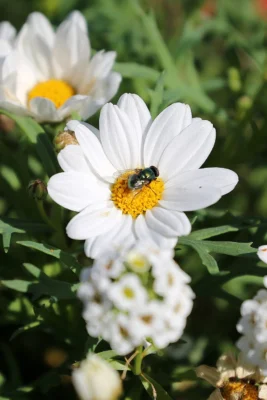
White single flowers
The classic daisy appearance combines white rays with a visible yellow disc. It works in mixed colour schemes and makes it easy to see visiting insects. Choose a plant by its mature size as well as its flower colour.
White Argyranthemum flowers; no named cultivar is claimed.
Photo: W. Bulach, CC BY-SA 4.0. Resized and optimised; cropped for display. Adapted image under the same licence.
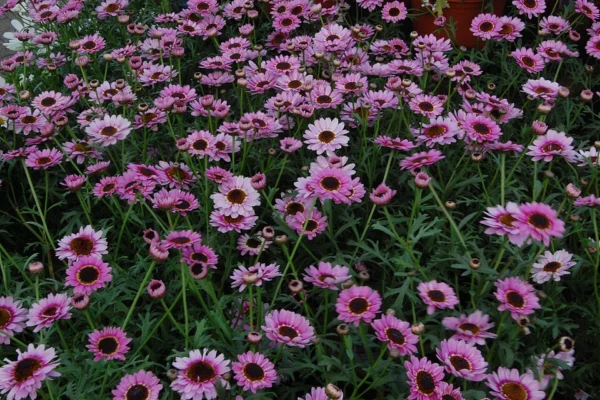
Pink flowered selections
Pink marguerites can be pale or richly coloured, sometimes changing as flowers age. Buy a clearly labelled selection if colour consistency matters. The same sunny position and careful winter treatment apply to these garden forms.
Pink marguerite flowers illustrate a colour group rather than a named cultivar.
Photo: Andy Mabbett, CC BY-SA 3.0. Resized and optimised; cropped for display. Adapted image under the same licence.
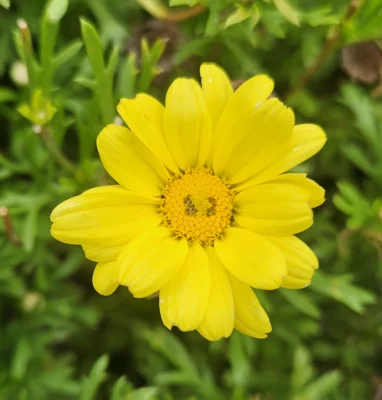
Yellow flowered selections
Yellow marguerites can give a softer effect than orange bedding plants. Check the label for height and growth habit because a photograph of flowers alone cannot tell you how much border or container space the plant will need.
Yellow marguerite blooms shown as a flower colour example.
Photo: Eric Polk, CC BY-SA 4.0. Resized and optimised; cropped for display. Adapted image under the same licence.
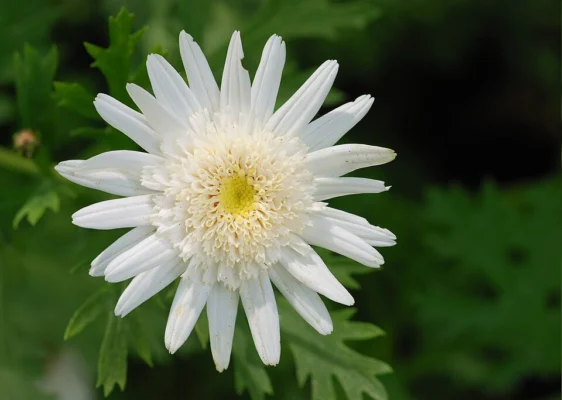
Double flowered selections
Extra petals give some selections a fuller flower head. Compare them with open single flowers if visiting insects are a priority, and check the mature size on the label. A double flower does not identify a particular cultivar on its own.
A white double Argyranthemum flower; no cultivar identity is assumed.
Photo: Alvesgaspar, CC BY-SA 3.0. Resized and optimised; cropped for display. Adapted image under the same licence.
Look for a healthy labelled plant, match its mature size to the pot or border and decide how you will handle winter. A little regular deadheading and careful watering will help keep the summer display fresh.
Open single flowers offer an accessible central disc for visiting insects. If wildlife value is a priority, choose these alongside other flowers with different shapes and seasons rather than relying on a single container for the whole garden.
Observe visitors before treating an insect problem. Light damage seldom justifies disrupting a flowering display. Leave some fresh flowers when cutting stems and keep sprays away from blooms being visited by pollinators.
Published by Buy From Farmers Direct. Growing guidance reviewed 7 October 2026. The seasonal timeline uses the shared BFFD Growers Calendar record; adjust timings to your variety and local conditions.
Argyranthemum are woody perennials, but frost limits their outdoor survival in much of Britain. They are commonly grown as seasonal bedding or kept under bright frost free cover through winter. Check the specific plant label and local conditions.
Plant hardened specimens out after the final local frost, usually in late May or June. Plants flowering in a shop during early spring may have been grown under cover and still need protection on cold nights.
Check for faded heads, shade, a dry rootball and excessive nitrogen feeding. Remove old flowers, keep roots evenly moist and provide good sun. A badly stressed plant may need time to recover before producing fresh buds.
Yes. Choose a container with drainage holes, fresh suitable compost and enough root space. Check watering regularly in warm weather, feed according to the compost and product instructions, and plan winter shelter if you want to keep it.
Root healthy non flowering cuttings and keep the young plants frost free over winter. Seed does not reliably preserve every named selection, whereas cuttings retain the parent plant’s characteristics.
No. This guide covers Argyranthemum. Oxeye daisies and Shasta daisies belong to Leucanthemum and have different growth and winter needs. The botanical name on the label is the safest starting point.
Give marguerites sun, room to branch and steady care through summer. Decide early whether to keep the plant or a few young cuttings for next year, and enjoy the flowers while they are at their best.
Explore more growing guides: Lavender, Marigold, Mexican Sunflower.
Want to get food independence, support your local grower, get better prices and shop more privately?
Local food isn’t just something you find. It’s something you protect. A free account helps keep local supply visible, supported, and resilient.

….it takes 30 seconds for food lovers and 5 minutes for suppliers
We built this for people who care where their food comes from. For people who want to remain food secure. For Farmers to get to the local people, who deserve a better income and to deliver a better price for you. For the environmentally conscious and the privacy-conscious. An account simply helps us make the map and supplier reach more useful to you, without changing how open it is. You’re always in control.


Find local food. Stay connected to it. Create a free account to support local producers and be part of a growing food network.


