Miscanthus gives a border height, movement and a long autumn display. Its arching leaves build through summer, followed by silky flower plumes on many varieties. The dry stems often remain attractive through winter. Most garden selections are forms of Miscanthus sinensis: choose a size that fits, give the clump sun and avoid a permanently wet root zone.
Ornamental perennial grass
Best in a sunny position
Late summer and autumn interest
Cut back in spring
Choose by mature size
| Botanical genus | Miscanthus |
| Family | Poaceae, the grass family |
| Main garden species | Miscanthus sinensis |
| Plant type | Clump forming perennial ornamental grass |
| Foliage | Deciduous in the familiar garden cultivars |
| Typical height | About 1 to 2.5m, depending on cultivar |
| Typical spread | About 0.5 to 1.5m, depending on cultivar |
| Best position | Full sun |
| Suitable soil | Moderately fertile, moist but well drained |
| Soil reaction | Many cultivars tolerate acid, neutral or alkaline soil |
| Main planting window | April to June |
| Flowering season | Late summer and autumn, varying by cultivar |
| Winter interest | Dry foliage and persistent flower plumes |
| Hardiness example | Morning Light and Zebrinus are rated H6 |
| Pruning window | Spring, before fresh leaves lengthen |
| Propagation | Division in spring |
| Seed route | Optional for species; offspring may vary |
| Container suitability | Compact types in large, stable pots |
| Main caution | Excessive winter wet |
| Harvest meaning | Optional ornamental stems, not a food crop |
| Plant name | Crop type | Spacing |
Sow indoors
Plant outdoors
Harvest
Polytunnel | |||||||||||
|---|---|---|---|---|---|---|---|---|---|---|---|---|---|---|
| Jan | Feb | Mar | Apr | May | Jun | Jul | Aug | Sep | Oct | Nov | Dec | |||
| Miscanthus | Not recorded | Single 100cm, In row 100cm, Row gap 100cm | No activity recorded | No activity recorded | Sow indoors | Sow indoors, Plant outdoors | Sow indoors, Plant outdoors | Plant outdoors | No activity recorded | Harvest | Harvest | Harvest | No activity recorded | No activity recorded |
Sow indoors: March, April, May. Plant outdoors: April, May, June. Harvest: August, September, October. Polytunnel: no months recorded.
The April to June planting band gives this warm season grass time to root into warming ground. March to May sowing is an optional species seed route under suitable protected conditions; division is preferable for a named cultivar. August to October harvest means cutting ornamental plumes, when available, not an edible harvest. Flowering depends on variety and summer warmth. The 100cm spacing is a starting point for a medium garden cultivar, so adjust to its labelled spread. Established hardy plants need no routine polytunnel season.
Use miscanthus where a tall, soft outline will complement sturdier shrubs and summer perennials. A clump looks particularly effective with light shining through the leaves. Leave enough room to see its fountain shape instead of wedging it into the last narrow gap.
A compact selection can grow in a large patio container, although pots require much closer attention to water. This is a seasonal screen: the foliage becomes dry in winter and is removed in spring, so it cannot provide permanent privacy.
Photo: Stefan.lefnaer, CC BY-SA 4.0. Resized and optimised; cropped for display. Adapted image under the same licence.
Give the plant a genuinely sunny position. Strong growth and good flowering depend on light and summer warmth; a cool, shaded corner is unlikely to show it at its best. Remember that nearby trees may cast more shade as they grow.
Aim for soil that retains some moisture while allowing surplus rain to drain away. Miscanthus is not a remedy for a waterlogged hollow. Where drainage is persistently poor, choose a grass suited to those conditions or improve the planting area before buying.
Check both height and spread on the label. Leaves arch beyond the base of the clump, and flower stems may rise above the foliage. Set plants back from paths so the leaves do not brush everyone who passes.
Choose a stable container with drainage holes for a compact cultivar. Use suitable peat free loam based compost, and allow room for watering below the rim. Tall, narrow pots are easily toppled by a mature grass in a gust.
Photo: Kurt Stueber, CC BY-SA 3.0. Resized and optimised; cropped for display. Source: biolib.de; CC BY-SA 3.0 licence migration recorded on the file page.
Start with a healthy labelled plant, and plan for the mature clump rather than the size of its nursery pot.
1.
Check the botanical and cultivar name before buying. Most familiar border selections belong to Miscanthus sinensis; giant biomass types and more spreading species are not interchangeable with a compact ornamental choice.
2.
Plant during spring to early summer when the ground is workable and warming. Give small plants time to establish before winter. Delay the job if the soil is saturated, even when the calendar says it is planting season.
3.
Remove persistent weeds from the whole planting area. Their roots become difficult to extract once a dense grass crown has formed. Loosen compacted ground without creating a deep sump in heavy soil.
4.
Set out the pots before digging. A medium cultivar may suit approximately 100cm spacing, but a broad selection needs more. Leave space between the eventual foliage and adjacent plants rather than measuring only between stems.
5.
Water the rootball before removing the pot. Dig a hole wider than the roots and no deeper than their existing compost level. Gently loosen tightly circling roots without tearing the crown apart.
6.
Place the crown at its previous depth, refill and firm gently. Water thoroughly so soil settles around the roots. Do not bury the base beneath a mound of compost or allow loose soil to cover emerging shoots.
7.
For container planting, leave drainage holes clear and water until excess escapes. Lift the pot slightly if needed to maintain drainage. Position it where you can reach the compost to check moisture during hot weather.
8.
Keep the plant weed free and check water regularly through its first summer. A new grass may build its root system before producing an impressive top. Retain the label so future division and replacements remain correctly named.

Watering
During establishment, check the soil below the surface and water the root area when it begins to dry. A thorough watering is more useful than repeatedly sprinkling the leaves. Continue to check after light rain, which may not reach a large nursery rootball.
Established border plants usually need less intervention, but prolonged drought can reduce growth and spoil leaf tips. Containers dry much faster and need regular checking. Let surplus water drain away, and reduce watering when the plant is dormant.

Feeding
Avoid treating miscanthus like a hungry bedding display. In reasonable garden soil, repeated feeding is rarely necessary and can produce a soft, untidy clump. Investigate shade, drought or poor drainage before assuming weak growth is a fertiliser problem.
Potted plants depend on a smaller reserve of nutrients. Refresh the upper compost in spring and use a modest suitable feed if needed, following its label. Repot or divide a crowded plant rather than trying to compensate indefinitely with more feed.

Pruning
Leave sound dry stems standing through winter if you enjoy their shape. In spring, after the worst weather and before fresh leaves lengthen, cut the dead growth back to roughly 10cm. Adjust the cut if new shoots have already emerged.
Wear gloves and long sleeves when gathering sharp edged leaves. Tie a large clump loosely before cutting if that makes it easier to handle. Check for wildlife at the base first, and remove cut stems without dragging them across tender shoots.

Winter care
The familiar hardy Miscanthus sinensis cultivars normally remain outdoors. Their brown winter foliage is part of the seasonal cycle, not a sign that the roots have died. The persistent framework can be retained until the spring tidy.
Drainage matters particularly around recently planted crowns and containers. Keep pot holes clear and avoid standing water. Shelter a pot from repeated saturation and severe exposure where necessary, while retaining ventilation and access for moisture checks.
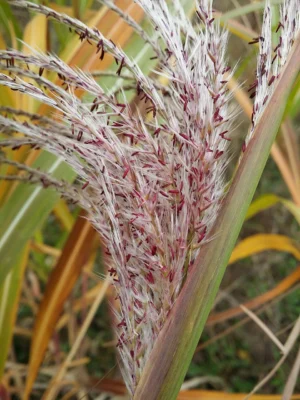
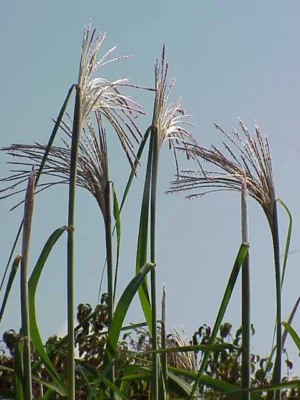
Miscanthus has upright stems and long, narrow leaves that arch outwards from a substantial base. Many forms carry a pale central leaf stripe. The airy flower panicles become silky as they mature, changing the outline of the clump.
Do not identify a cultivar from a generic photograph alone. Fine white leaf margins, transverse yellow bands and contrasting plume colours distinguish some selections, but similar plants exist. Buy labelled stock when matching an established planting.
Photo: 松岡明芳, CC BY 3.0. Resized and optimised; cropped for display.
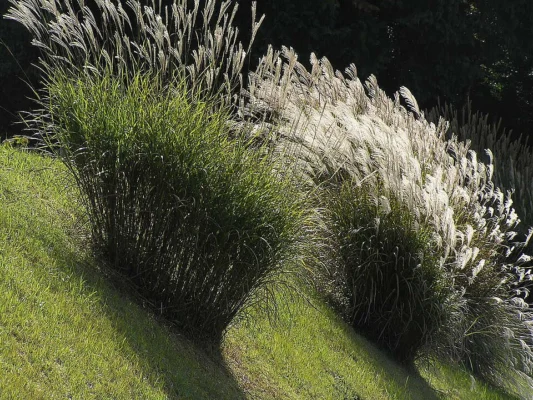
A hot summer generally encourages flowering, while some late selections may produce few plumes in a cooler location. Choose for foliage as well as flowers so the plant still earns its space in an indifferent year.
In a mixed border, combine the summer grass with plants that offer earlier interest. Keep vigorous neighbours far enough away that they do not shade the crown or make spring cutting awkward. You should be able to reach the base safely.
For dried arrangements, cut a few sound plumes in late summer or autumn when they look attractive and are dry. Test a small bunch first, as some heads shed readily. Leave the remainder to provide structure in the garden.
Photo: あおもりくま,(Aomorikuma), CC BY-SA 4.0. Resized and optimised; cropped for display. Adapted image under the same licence.

Miscanthus starts later than many spring perennials. Look for new shoots as conditions warm before deciding it has died. A firm crown may simply be dormant; a soft, rotten base suggests drainage trouble and needs closer inspection.
Check shade, excessive feeding and whether the plant has outgrown its allotted space. A discreet support can help temporarily, but improving the site or dividing an ageing clump is more useful than repeatedly tying a large plant into a tight bundle.
Older clumps may lose vigour in their centre. Divide in spring, retaining healthy outer sections with roots and shoots. Discard dead material, prepare the soil and replant at a sensible spacing rather than keeping the exhausted centre.
Dry soil, wind and a crowded pot can all damage tips. Check the roots and moisture before watering or feeding. Already browned leaves will not turn green again, but better conditions should protect the next growth.
Cultivar, age, sunshine and the warmth of the summer all affect flowering. A newly planted clump may need time. Avoid moving it immediately after one poor season; assess the site and choose an earlier flowering type if flowers are the priority.
Divide in spring as growth resumes. Water the day before if the ground is dry, lift manageable clumps and separate healthy rooted sections with suitable tools. Large old crowns can be heavy and tough, so work in sections and obtain help if needed.
Replant divisions promptly and water while they establish. This preserves the characteristics of a named cultivar. Species seed can be sown in pots in spring following supplier instructions, but seedlings vary and are not a reliable way to reproduce a particular selection.
Gracillimus
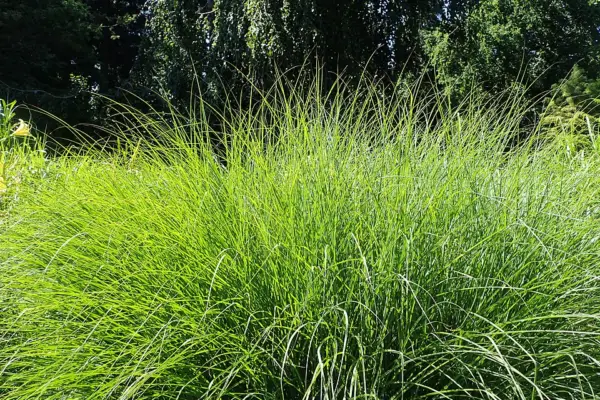
A fine leaved Miscanthus sinensis selection with an elegant arching outline. It needs room to develop and is often chosen for foliage rather than guaranteed early flowers. Check the expected dimensions with the nursery before positioning it.
Gracillimus identified in the source photograph.
Photo: Krzysztof Ziarnek, Kenraiz, CC BY-SA 4.0. Resized and optimised; cropped for display. Adapted image under the same licence.

Morning Light
Narrow leaves with pale margins give this selection a silvery appearance. It is a useful choice for a bright border where the foliage can catch the light. Autumn flowers are a bonus and can depend on the season.
Miscanthus foliage illustration; this photograph does not identify Morning Light.
Photo: Photo by David J. Stang, CC BY-SA 4.0. Resized and optimised; cropped for display. Photo by David J. Stang, first published at ZipcodeZoo.com.

Zebrinus
This zebra grass has yellow bands across its green leaves. Its bold pattern suits a place where it can be seen clearly against quieter planting. Allow for the arching foliage instead of placing it directly on a path edge.
Miscanthus species illustration, not a confirmed photograph of Zebrinus.
Photo: Tomomarusan, CC BY 2.5. Resized and optimised; cropped for display.

Malepartus
A substantial selection grown for autumn colour and reddish flower plumes that fade towards silver. It suits a generous border with a sunny outlook. Give its mature height and spread the same consideration as a medium shrub.
Miscanthus flower plumes illustrating the genus, not the named cultivar.
Photo: Miya.m, CC BY-SA 3.0. Resized and optimised; cropped for display. Adapted image under the same licence.
Look for healthy labelled miscanthus, check its eventual dimensions and decide whether leaf pattern, autumn colour or flowering matters most. A well placed clump is easier to enjoy and maintain than a vigorous selection squeezed into a small space.
Standing grass foliage creates sheltered spaces among other garden plants. Keep some dry material through winter where practical and inspect it before the spring tidy. A mixed planting with several kinds of cover is more useful than a bare bed around one clump.
Miscanthus is wind pollinated, so do not rely on its plumes as a nectar source for bees. Pair it with suitable flowering perennials that offer nectar and pollen across the seasons, while keeping sufficient space for each plant to grow well.
Published by Buy From Farmers Direct. Growing guidance reviewed 7 October 2026. The seasonal timeline uses the shared BFFD Growers Calendar record; adjust timings to your variety and local conditions.
Cut dead foliage and stems in spring, after the worst winter weather and before new leaves become long. Leave roughly 10cm of stubble, adjusting to protect any fresh shoots already emerging.
Most familiar Miscanthus sinensis garden cultivars are deciduous. The leaves turn brown but may remain standing through winter. Fresh green growth replaces them in spring after the old stems are removed.
Yes, choose a compact cultivar and a large stable container with drainage holes. Check moisture regularly in summer and plan to divide or repot when the roots become crowded.
Some cultivars flower late and need a warm summer. Shade, youth and local conditions also matter. Choose a sunny site and value the foliage as part of the display rather than expecting identical flowering every year.
About 100cm is a useful starting point for a medium cultivar. Check its mature spread and allow more for broad selections. Container size at purchase does not indicate how much space the established grass will need.
Yes, divide in spring and retain healthy rooted outer sections. Old crowns can be very tough, so use suitable tools and work safely. Water new divisions until their roots are growing into the surrounding soil.
Give miscanthus a sunny place with room to move, then let its changing foliage carry the border through summer, autumn and winter. A careful spring cut and occasional division keep the display manageable.
Explore more growing guides: Lavender, Monarda, Mock Orange.
Want to get food independence, support your local grower, get better prices and shop more privately?
Local food isn’t just something you find. It’s something you protect. A free account helps keep local supply visible, supported, and resilient.

….it takes 30 seconds for food lovers and 5 minutes for suppliers
We built this for people who care where their food comes from. For people who want to remain food secure. For Farmers to get to the local people, who deserve a better income and to deliver a better price for you. For the environmentally conscious and the privacy-conscious. An account simply helps us make the map and supplier reach more useful to you, without changing how open it is. You’re always in control.


Find local food. Stay connected to it. Create a free account to support local producers and be part of a growing food network.


