Mock orange fills early summer with white flowers and, in many selections, a rich sweet scent. Philadelphus is a hardy deciduous shrub that becomes a quiet leafy backdrop after flowering. Choose its mature size carefully and prune at the right time to keep the next season’s flowering wood.
Fragrant summer flowers
Hardy deciduous shrub
Sun or light shade
Prune after flowering
Choose size carefully
| Botanical name | Philadelphus species and garden hybrids |
| Family | Hydrangeaceae |
| Plant type | Deciduous flowering shrub |
| Typical height | 75cm–3m, according to cultivar |
| Typical spread | 1–3m, according to cultivar |
| Light | Sun or light shade |
| Soil | Fertile, well drained soil |
| Main interest | Scented white flowers in early summer |
| Best starting point | Labelled container or dormant bare root shrub |
| Working spacing | Single 200cm, In row 200cm, Row gap 200cm |
| Flower colour | White, sometimes with coloured centres |
| Flower form | Single or double |
| Main flowering | June–July, by selection |
| Winter appearance | Bare woody framework |
| Planting priority | Autumn or spring |
| Bare root planting | Dormant season in workable soil |
| Pruning time | Immediately after flowering |
| Propagation | Early summer cuttings |
| Typical problem | Aphids on young growth |
| Not this plant | Choisya or Citrus |
| Plant name | Crop type | Spacing |
Sow indoors
Plant outdoors
Harvest
Polytunnel | |||||||||||
|---|---|---|---|---|---|---|---|---|---|---|---|---|---|---|
| Jan | Feb | Mar | Apr | May | Jun | Jul | Aug | Sep | Oct | Nov | Dec | |||
| Mock Orange | Not recorded | Single 200cm, In row 200cm, Row gap 200cm | No activity recorded | No activity recorded | Plant outdoors | Plant outdoors | No activity recorded | Harvest | Harvest | No activity recorded | No activity recorded | Plant outdoors | Plant outdoors | No activity recorded |
Sow indoors: no months recorded. Plant outdoors: March, April, October, November. Harvest: June, July. Polytunnel: no months recorded.
March–April and October–November are preferred planting windows for container plants; bare root plants can be planted through the dormant season when soil is neither frozen nor waterlogged. The sowing row is blank because named plants are normally bought or propagated by cuttings. June–July harvest means optional ornamental flowering stems, not edible fruit. There is no routine polytunnel requirement. The 2m spacing is an example for a medium shrub; allow the cultivar’s mature width.
Choose Philadelphus where you can enjoy its scent near a seating area without crowding the branches. Start with a realistic amount of space and a plant you can reach easily for routine care. A small, well placed group is easier to establish than a crowded display that needs constant correction.
Its main display lasts weeks rather than all summer. Combine it with later flowering neighbours instead of expecting it to provide continuous colour. Look at the garden through the whole year before buying. Space that seems empty in spring may already belong to a neighbouring plant by midsummer, while the winter conditions can be very different from a sheltered shop display.
Photo: Ввласенко, CC BY-SA 3.0. Resized and optimised; cropped for display. Adapted image under the same licence.
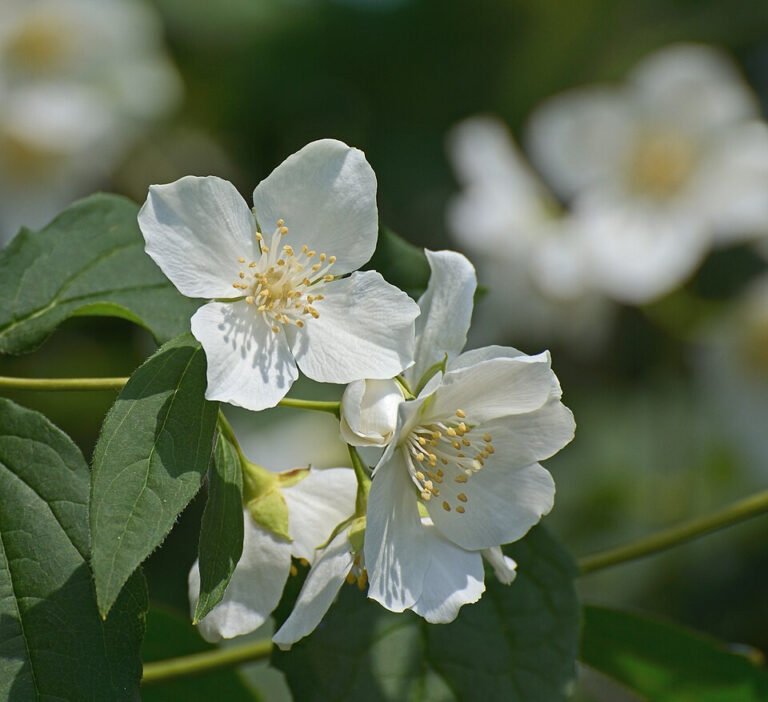
Sun encourages flowering, though light shade is acceptable. Give golden leaved forms protection from harsh sun that can scorch their foliage. Check how the light moves across the proposed position, including shade cast by fences and nearby trees. The amount of direct sun at midday alone does not describe the whole growing site.
Most ordinary garden soils work when fertility and drainage are reasonable. Avoid prolonged saturation around the roots. Clear persistent weeds before planting. Working around established roots later is slower and risks damage, so this is a useful stage to deal with bindweed, couch grass or other unwanted growth.
Only genuinely compact selections are sensible long term container choices. Use a large stable pot and a substantial peat free potting mix. Make drainage holes accessible and allow water to escape freely. Check the pot after heavy rain as well as during dry weather; a blocked outlet can undo otherwise careful watering.
Place a large selection toward the back of a border, keeping its arching stems clear of paths and smaller plants. Leave practical access for inspection and maintenance. Think about the mature outline rather than filling every visible gap around a newly bought plant. Its neighbours will also be growing into the available space.
Photo: Didier Descouens, CC BY-SA 4.0. Resized and optimised; cropped for display. Adapted image under the same licence.
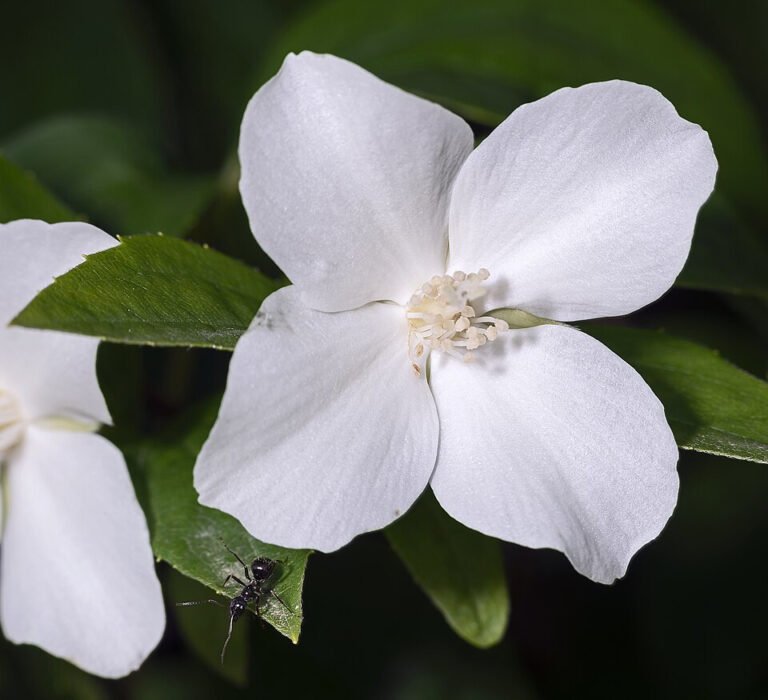
Plant with room for the shrub’s natural framework rather than planning to shear it into a small ball. Prepare everything before removing plants from their pots or opening a seed packet, so roots and seedlings are not left exposed while you look for tools.
1.
Choose a named selection with a stated height and spread. Smell flowering plants if fragrance is your main reason for buying. Keep the label and record the planting date. That small record makes it much easier to understand differences in growth and to replace a successful selection accurately.
2.
Clear a broad planting area and loosen compacted ground without leaving a deep water holding pocket. Avoid working saturated soil: squeezing and treading it while wet can leave a compacted planting area. Wait for a workable day if the surface smears rather than crumbles.
3.
Water a container shrub before planting; keep bare roots moist and plant them promptly after arrival. Work with clean containers and fresh suitable compost where pots are involved. Reusing a container is fine after cleaning it, but a crust of old compost can conceal pests and obstruct drainage.
4.
Plant in autumn or spring when possible, postponing work in frozen or waterlogged soil. Use the forecast alongside the calendar. A warm afternoon does not cancel a cold night, and a printed month should never take priority over the conditions in your own garden.
5.
Make a hole wide enough for the roots and set the old soil mark level with the surrounding ground. Work carefully rather than rushing to fill the space. Check the intended depth and spacing before finishing, because corrections are easier now than once growth is established.
6.
Backfill with prepared soil, firm gently and water well; mulch the surrounding area while keeping the stem bases clear. Water gently enough to avoid washing compost away. If the surface settles, top it up to the intended level without burying the base more deeply than planned.
7.
Water during dry spells in the first growing season and remove weeds competing around the base. Look again after the first windy or very wet spell. A plant that has rocked loose or a newly exposed rootball needs attention before the problem becomes established.
8.
Allow the young framework to develop and assess its flowering before making major pruning decisions. Review growth after a few weeks and adjust care to what you see. Regular observation is more useful than repeatedly adding fertiliser to a plant whose main problem is light, moisture or space.

Watering
New shrubs need watering while roots establish, especially after spring planting. Check the original rootball during dry weather because it may dry sooner than the surrounding soil.
Established shrubs usually need little extra water except during prolonged drought on dry soil. Container plants remain dependent on regular checks and should never be left standing in trapped water.

Feeding
A spring mulch of well rotted organic matter helps soil condition and reduces competition. Keep it away from the woody bases rather than piling it against the stems.
Use a general fertiliser at the labelled rate only where growth or poor soil justifies it. Excess feeding cannot compensate for deep shade or pruning away the flower bearing shoots.

Pruning
Prune after flowering, shortening selected flowered stems to strong lower growth. Remove dead, damaged or crossing branches and keep the centre reasonably open rather than clipping every shoot uniformly.
Renew an established shrub gradually by removing a few of its oldest stems near the base. Avoid routine winter shearing, which can remove the wood that would carry the next flowers.

Winter care
Most garden Philadelphus are hardy and need no winter cover in the ground. Leaf loss is normal. Check newly planted shrubs after strong winds and firm any loosened rootball gently.
Protect container roots from severe exposure where necessary and keep drainage clear. Winter is useful for assessing structure, but leave routine flowering related pruning until after the summer display.
Philadelphus has opposite leaves and white flowers on a woody deciduous shrub. Many forms are strongly scented, but scent and flower doubleness vary between selections.
Buy for eventual size. A small nursery plant can become a broad shrub, while compact cultivars can be useful at the front of a border.
Do not deadhead expecting a second full flowering season. The main annual display is brief, and pruning correctly afterward is more useful than removing every spent petal.
Cut a few flowering stems for decoration without stripping the shrub. Keep the branches’ natural balance and enjoy the remaining flowers in the garden.
Photo: KENPEI, CC BY-SA 3.0. Resized and optimised; cropped for display. Adapted image under the same licence.
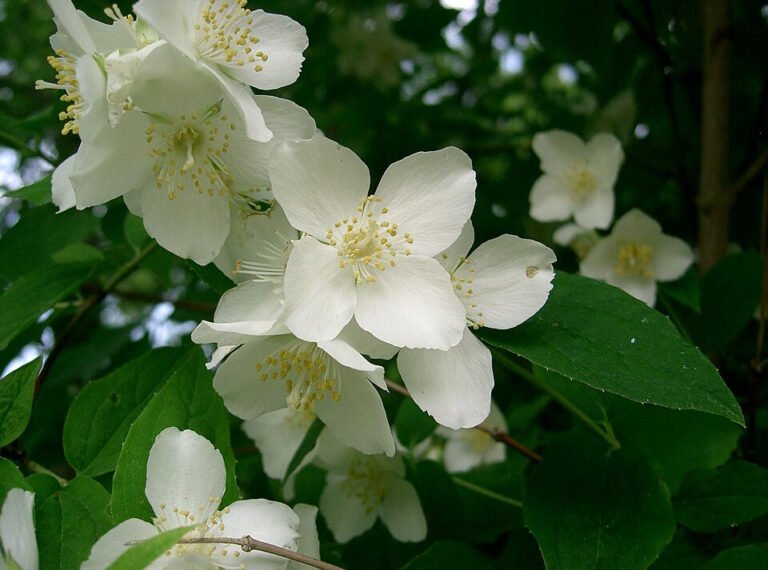
Check whether winter pruning removed flowering shoots. Deep shade and a very young plant can also reduce the display.
Aphids may gather on new growth. Inspect for predators and tolerate small colonies or remove them gently.
Move a young golden leaved plant to gentler light where practical and keep moisture steady during establishment.
Thin selected old stems after flowering rather than repeatedly shearing the outside.
Check rootball moisture and planting depth. Both drying and prolonged saturation can prevent establishment.
Take softwood cuttings from healthy non flowering shoots in early summer. Insert them into suitable propagation compost and keep them humid but ventilated, away from scorching sun.
Pot rooted cuttings on individually and grow them into sturdy young shrubs before planting out. Cuttings retain the parent’s characteristics; seedlings are less predictable and need time to reach flowering size.
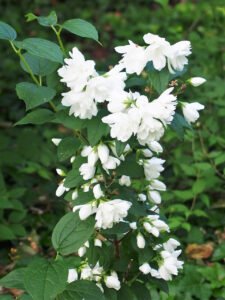
Compact double forms
Selections such as Manteau d’Hermine suit smaller spaces better than vigorous species shrubs. Check the label and allow for their eventual spread.
Double flowered Snowbelle mock orange, identified in the source.
Photo: Agnieszka Kwiecień, Nova, CC BY-SA 4.0. Resized and optimised; cropped for display. Adapted image under the same licence.
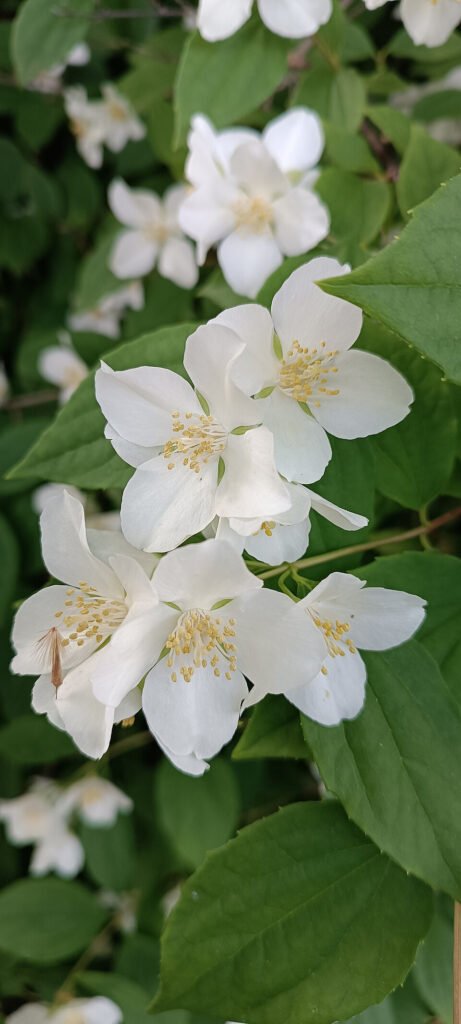
Single scented forms
Open flowers show their centres clearly and can be richly scented. Belle Etoile is a familiar example, but scent is best assessed from a living plant.
Single Philadelphus coronarius flowers, identified in the source.
Photo: Bigmanbaloo, CC BY-SA 4.0. Resized and optimised; cropped for display. Adapted image under the same licence.
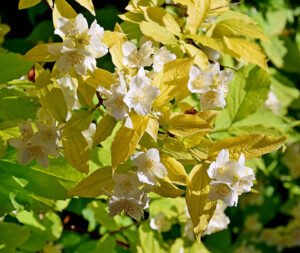
Golden foliage forms
Philadelphus coronarius Aureus adds leaf colour beyond flowering. Give it suitable light because harsh sun can damage pale foliage.
Golden foliaged Philadelphus coronarius Aureus, identified in the source.
Photo: Krzysztof Golik, CC BY-SA 4.0. Resized and optimised; cropped for display. Adapted image under the same licence.
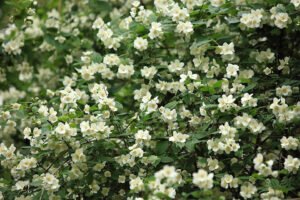
Larger border shrubs
Vigorous selections make useful backgrounds in substantial borders. Leave room for their arching framework and renew old stems gradually after flowering.
Flowering Philadelphus shrub in a planted park; the exact cultivar is not established.
Photo: Javier Perez Montes, CC BY-SA 4.0. Resized and optimised; cropped for display. Adapted image under the same licence.
Choose fragrance, mature size and flower form together. A shrub that fits its space will need less corrective pruning and can carry its flowers naturally.
Open flowers offer more accessible centres than very full doubles. Mix the shrub with other flowering plants so early summer scent accompanies a broader season of garden forage.
A mature shrub provides cover and branching habitat. Check carefully for active nests before pruning and postpone work around any occupied nest.
Published by Buy From Farmers Direct. Growing guidance reviewed 11 October 2026. The seasonal timeline uses the shared BFFD Growers Calendar record; adjust timings to your variety and local conditions.
Philadelphus is deciduous and loses its leaves in winter.
Prune soon after flowering. Winter shearing can remove the next flowering wood.
Check pruning timing, shade and plant age before adding feed.
A compact cultivar can suit a large container with regular watering and feeding.
No. It is an ornamental shrub named for its flower scent.
It normally flowers once each year. Deadheading does not create a second full season.
Give mock orange enough room and save the secateurs until flowering has finished. Its early summer scent is the reward for letting the right branches mature.
Explore more growing guides: Marguerite Daisy, Marigold, Miscanthus.
Want to get food independence, support your local grower, get better prices and shop more privately?
Local food isn’t just something you find. It’s something you protect. A free account helps keep local supply visible, supported, and resilient.

….it takes 30 seconds for food lovers and 5 minutes for suppliers
We built this for people who care where their food comes from. For people who want to remain food secure. For Farmers to get to the local people, who deserve a better income and to deliver a better price for you. For the environmentally conscious and the privacy-conscious. An account simply helps us make the map and supplier reach more useful to you, without changing how open it is. You’re always in control.


Find local food. Stay connected to it. Create a free account to support local producers and be part of a growing food network.


