A dwarf nectarine offers smooth skinned summer fruit on a tree that can fit a patio or small greenhouse. Its compact size makes blossom protection and harvesting easier, but the crop still needs warmth, light and steady care. Choose a naturally small cultivar and plan its seasonal home before buying the pot.
Compact stone fruit
Sunny sheltered site
Large container suitable
Self fertile
Protect early blossom
| Botanical name | Prunus persica var. nectarina |
| Plant type | Deciduous fruit tree |
| Growth choice | A naturally compact cultivar |
| Typical use | Patio pot or small protected space |
| Final dimensions | Check the cultivar and supplied rootstock |
| Light | Full sun with good ventilation under cover |
| Warmth | Important for dependable ripening |
| Container | At least 45cm wide and deep |
| Compost | Loam based peat free potting compost |
| Drainage | Free drainage essential |
| Planting | Autumn to spring preferred |
| Blossom | Pink flowers in early spring |
| Pollination | Self fertile; hand pollination useful |
| Harvest | Usually July to September by cultivar |
| Fruit spacing | Thin to about 15cm apart |
| Watering | Regular moisture checks in pots |
| Feeding | Container feed during active growth |
| Pruning | Little for naturally dwarf cultivars |
| Pruning season | Dry spring or summer weather |
| Main concern | Blossom frost and peach leaf curl |
| Plant name | Crop type | Spacing |
Sow indoors
Plant outdoors
Harvest
Polytunnel | |||||||||||
|---|---|---|---|---|---|---|---|---|---|---|---|---|---|---|
| Jan | Feb | Mar | Apr | May | Jun | Jul | Aug | Sep | Oct | Nov | Dec | |||
| Nectarine (Dwarf) | Orchard fruit | Allow the named compact cultivar's mature canopy width and access around its pot | Plant outdoors, Polytunnel | Plant outdoors, Polytunnel | Plant outdoors, Polytunnel | Polytunnel | Polytunnel | No activity recorded | Harvest | Harvest | Harvest | No activity recorded | Plant outdoors, Polytunnel | Plant outdoors, Polytunnel |
Sow indoors: no months recorded. Plant outdoors: January, February, March, November, December. Harvest: July, August, September. Polytunnel: January, February, March, April, May, November, December.
The planting band covers the preferred dormant season, while harvest varies between cultivars and growing conditions. The November to May protected band refers to rain exclusion and vulnerable blossom; in cool districts the tree may also benefit from a ventilated greenhouse through summer.
A good option when you want one manageable fruit tree and can give its pot regular attention. A compact canopy keeps flowers and fruit within reach for protection, pollination and thinning.
Less suitable for a shady balcony or a container that will be left dry for long periods. Small size does not remove the nectarine's need for warmth, and a young ordinary tree will not necessarily remain a patio miniature.
Photo: Ibrahim Echchaffani, CC BY-SA 4.0. Resized and optimised; cropped for display. Adapted image under the same licence.
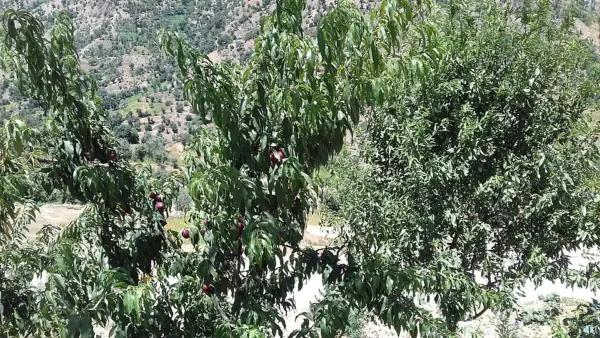
Choose a sunny sheltered patio with room around the canopy. Avoid placing the pot beneath dense overhanging plants that intercept light and compete for the same sheltered corner.
A bright unheated greenhouse can provide a useful spring refuge and improve ripening conditions in cooler districts. Allow for ventilation before hot weather, and keep the tree accessible for hand pollination.
In the ground, choose fertile soil that holds useful moisture but drains freely. Confirm the cultivar's eventual spread before fitting it between permanent shrubs.
Plan any move into cover before the container becomes heavy. A stable trolley can help, but a safe route and a sufficiently wide doorway matter just as much as the pot itself.
Photo: Photo by David J. Stang, CC BY-SA 4.0. Resized and optimised; cropped for display. Adapted image under the same licence.
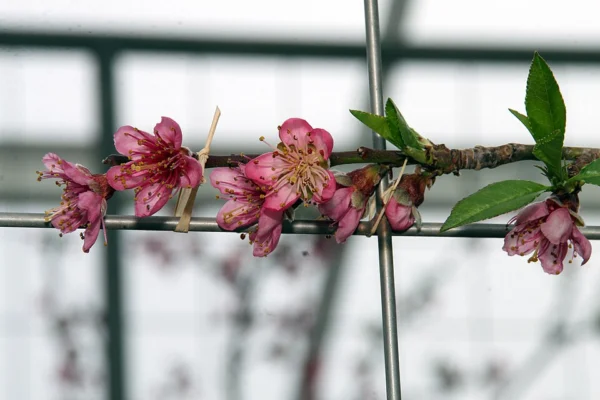
Check the plant label for a named compact cultivar, such as Nectarella or Garden Beauty, and retain its rootstock details. A pot is a growing environment, not a substitute for choosing the right tree.
1.
Ask the nursery to confirm expected height and spread in a container. The common St Julien A rootstock does not by itself prove that a nectarine is naturally dwarf.
2.
Choose a substantial stable pot at least 45cm wide and deep, with clear drainage holes. Set it where excess water can escape rather than collecting in a full saucer.
3.
Use a suitable loam based peat free compost. Water the nursery rootball before planting so it is evenly moist and comes out of its container without unnecessary disturbance.
4.
Place the tree at its original depth, keeping the graft union above the compost surface. Leave space below the rim so irrigation can soak in rather than immediately spill over.
5.
Backfill around the roots and firm gently. Avoid tightly compressing the mix or leaving gaps that channel water past a dry rootball.
6.
Water thoroughly and watch the drainage. Support the tree if its rootball or trunk rocks, using a tie that holds it securely without rubbing bark.
7.
Put the tree in a bright sheltered position and check moisture frequently while it settles. Allow it to adjust gradually if its previous nursery conditions were much more protected.
8.
Keep the first crop light. A young tree benefits from developing roots and healthy growth before carrying a demanding load of fruit.

Watering
Check below the compost surface during active growth, particularly as fruit swells. Water thoroughly when needed and let excess drain; a little water sprinkled around the trunk may leave much of the rootball dry.
A sheltered pot can miss rainfall even during a wet week. Continue occasional checks in winter, when demand is much lower, and avoid leaving cold compost continuously saturated.

Feeding
Follow the instructions for a fertiliser suitable for container fruit trees during active growth. Account for nutrients already present in fresh compost rather than combining several feeds without a reason.
Poor growth may reflect root crowding, dryness or poor drainage. Inspect those conditions before adding more fertiliser, and refresh or replace compost as the tree's needs develop.

Pruning
Naturally compact nectarines usually need little cutting. Remove damaged or awkward growth selectively in dry spring or summer weather; do not adopt a routine of hard winter pruning.
Most fruit forms on shoots made during the previous season. Preserve healthy young growth rather than shearing the whole crown into a tight ball, and use the cultivar's natural habit as a guide.

Winter care
The resting tree tolerates cold far better than its open flowers. Protect reachable blossom on frosty nights with a supported cover, removing it when suitable daytime conditions allow light and insect access.
Plan rain exclusion before spring leaves emerge to reduce peach leaf curl. A clear, ventilated shelter or greenhouse can protect the tree from late autumn through the vulnerable spring period; ordinary fleece is not a rainproof replacement.
Nectarines are peaches with smooth skin, not a cross between a peach and a plum. They share narrow leaves and pink blossom, while fruit flesh may be white or yellow according to cultivar.
Dwarf describes growth, not a separate miniature fruit. Photographs of nectarines cannot establish whether the parent tree was compact; use the nursery label and growing specification to confirm that detail.
Photo: jjron, CC BY-SA 3.0. Resized and optimised; cropped for display. Adapted image under the same licence.
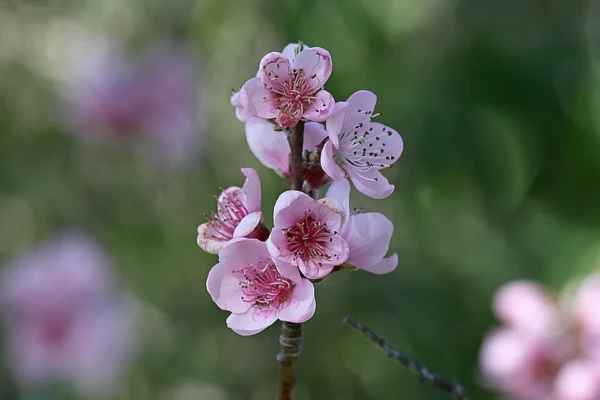
In a cooler district, keep a protected growing option available because nectarines need generous summer warmth. Ventilate an enclosed space whenever conditions require it rather than trying to retain maximum heat throughout the day.
Use a soft brush between open flowers over several dry days, especially under cover. Once fruitlets reach roughly walnut size, thin crowded groups to leave about 15cm between retained nectarines, with fewer on a weak or newly planted tree.
Pick in stages as fruit develops its expected colour and softens near the stalk. Cup each nectarine and lift gently. Use ripe fruit promptly for its best flavour, without squeezing every fruit repeatedly to test it.
Image from the BFFD media library.
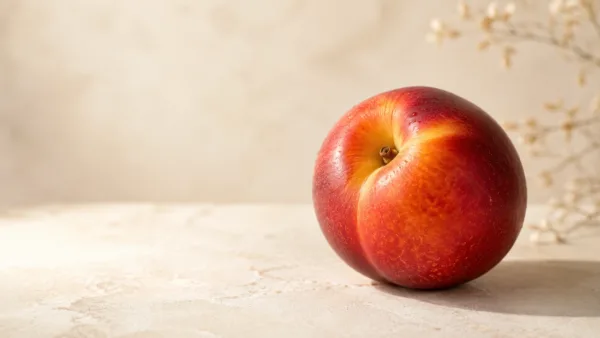
Peach leaf curl also affects nectarines. Improve rain protection before the next vulnerable growth period and keep the affected tree watered sensibly rather than assuming extra feed will prevent infection.
Check frost and pollen transfer. A self fertile tree can still lose flowers to cold or receive too few insect visits, especially in an enclosed greenhouse.
Review water supply and crop load. A compact tree can set more fruit than it can develop well; thinning and consistent root care help it support the remaining crop.
Insufficient warmth, shade or an excessive crop can delay the harvest. Reassess the growing position and ventilation rather than expecting fertiliser to compensate for a cool site.
Remove affected nectarines promptly and keep crowded fruits from rubbing. Pick gently and check for insects or birds before choosing an appropriate protective measure.
A named nursery tree offers a known compact growth habit and fruit type. Grafting or budding preserves the chosen cultivar while the rootstock contributes to its vigour and growing requirements.
Growing a stone is not a reliable way to reproduce a dwarf nectarine. The seedling may take years to fruit and can differ substantially in size and eating quality from its parent.
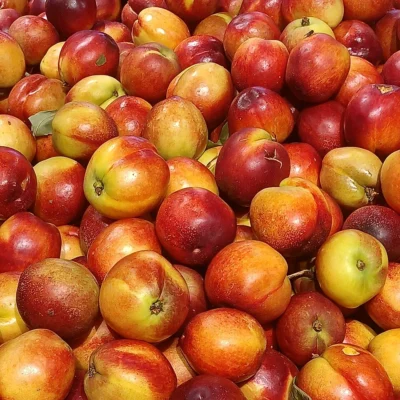
Choose the complete tree
Compare cultivar and rootstock together, and ask for dimensions in the growing conditions you can provide. The pictured nectarines illustrate fruit appearance and do not identify a particular dwarf cultivar.
Photo: Fumikas Sagisavas, CC0. Resized and optimised; cropped for display.

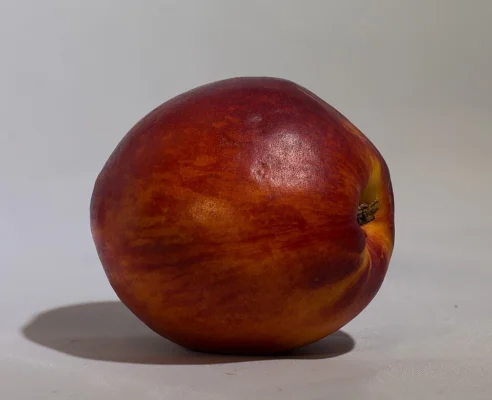
Nectarella
A naturally compact nectarine commonly offered for container growing. Give it a substantial pot and spring protection. The accompanying fruit photograph is illustrative and is not confirmed as Nectarella.
Photo: CostaPPPR, CC BY-SA 4.0. Resized and optimised; cropped for display. Adapted image under the same licence.
Garden Beauty
Another naturally dwarf selection to discuss with a fruit nursery, with pink blossom and yellow flesh. This photograph shows a nectarine but does not establish that cultivar identity.
Photo: Rhododendrites, CC BY-SA 4.0. Resized and optimised; cropped for display. Adapted image under the same licence.
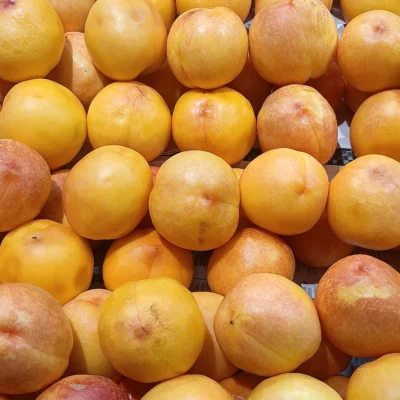
Flavour and flesh colour
Consider how you want to eat the fruit as well as the tree's dimensions. Yellow skin alone does not identify a cultivar, so use the nursery description rather than a general fruit photograph.
Photo: Fumikas Sagisavas, CC0. Resized and optimised; cropped for display.
Describe your summer position and available spring shelter to a nursery. Ask which compact nectarine is likely to perform well locally and what care its container will require.
Allow pollinating insects access to blossom when conditions permit, and avoid unnecessary sprays around open flowers. Hand pollination can support the crop while the tree is enclosed.
Use taut secure netting or individual fruit protection if wildlife takes the crop. Inspect it regularly and remove it after harvest so loose material does not remain around the tree.
Yes, with a naturally compact cultivar, a substantial drained container and regular care. Its compost, root space and watering needs will change as the tree matures.
No. Nectarines are self fertile, but pollen still needs transferring. A soft brush is useful under cover or during spring weather with few insect visits.
Thin developing nectarines to roughly 15cm apart once fruitlets are around walnut size. Leave a lighter crop on a young or struggling tree.
Avoid routine winter pruning. Naturally dwarf trees need relatively little cutting, and necessary work belongs in suitable dry spring or summer conditions.
No. It is a smooth skinned form of peach. Its cultivation is similar, although generous warmth is particularly helpful for ripening nectarines in Britain.
A heated room is not its normal permanent home. Use a suitable outdoor position with seasonal greenhouse or other appropriate protection as needed.
A good dwarf nectarine starts with the right cultivar and a practical place to grow it. Keep the rootball dependable, protect spring growth and let a modest crop ripen fully within easy reach.
Want to get food independence, support your local grower, get better prices and shop more privately?
Local food isn’t just something you find. It’s something you protect. A free account helps keep local supply visible, supported, and resilient.

….it takes 30 seconds for food lovers and 5 minutes for suppliers
We built this for people who care where their food comes from. For people who want to remain food secure. For Farmers to get to the local people, who deserve a better income and to deliver a better price for you. For the environmentally conscious and the privacy-conscious. An account simply helps us make the map and supplier reach more useful to you, without changing how open it is. You’re always in control.


Find local food. Stay connected to it. Create a free account to support local producers and be part of a growing food network.


