Pansies provide expressive flower faces in pots, borders and seasonal bedding, with different selections suited to spring, summer or the cooler months. They prefer steady moisture and cooler growing weather to a baking dry position. Buy plants for the season you want, keep fading blooms removed and give the roots drainage even when a winter container needs little watering.
Choose the right flowering season
Good for pots and edging
Cool conditions suit growth
Deadhead regularly
Avoid winter waterlogging
| Botanical name | Viola × wittrockiana |
| Family | Violaceae |
| Plant type | Short-lived perennial commonly grown as seasonal bedding |
| Typical height | About 15 to 25cm |
| Typical spacing | About 15 to 25cm; trailing types differ |
| Flowers | Five petals, often with a contrasting face or blotch |
| Main use | Ornamental seasonal colour |
| Light | Sun or light shade |
| Summer position | Some relief from intense midday heat is useful |
| Soil | Fertile, moist but drained |
| Spring planting | March to May in suitable conditions |
| Autumn planting | September to October for winter and spring selections |
| Spring seed sowing | February to April under suitable protection |
| Summer seed sowing | June to July for later bedding |
| Propagation | Usually seed or purchased plugs |
| Winter flowering | Variety and weather dependent |
| Routine care | Remove faded flowers and seed pods |
| Container needs | Drainage and regular moisture checks |
| Common problems | Slugs, leaf spots and root decline |
| Food harvest | Not part of this ornamental guide |
| Plant name | Crop type | Spacing |
Sow indoors
Plant outdoors
Harvest
Polytunnel | |||||||||||
|---|---|---|---|---|---|---|---|---|---|---|---|---|---|---|
| Jan | Feb | Mar | Apr | May | Jun | Jul | Aug | Sep | Oct | Nov | Dec | |||
| Pansy | Not recorded | Usually 15 to 25cm apart; follow the selection’s spread | No activity recorded | Sow indoors, Polytunnel | Sow indoors, Plant outdoors, Polytunnel | Sow indoors, Plant outdoors, Polytunnel | Plant outdoors | Sow indoors | Sow indoors | No activity recorded | Plant outdoors | Plant outdoors | No activity recorded | No activity recorded |
Sow indoors: February, March, April, June, July. Plant outdoors: March, April, May, September, October. Harvest: no months recorded. Polytunnel: February, March, April.
February to April sowing is an optional protected route for suitable spring or summer strains; June and July sowing is for later bedding, according to packet directions. March to May planting and September to October planting refer to different seasonal selections. Winter flowers pause in severe weather, and no food harvest is implied. The protected band is propagation, not a requirement to keep established winter pansies in a tunnel.
Pansies suit low borders, window boxes and containers where their flowers can be seen close up. A small number of matching colours can give a clear display without a large bed. Check that a hanging basket is reachable for watering and removing old blooms.
Choose a seasonal selection rather than expecting one planting to look perfect indefinitely. Winter pansies may flower less during the darkest coldest weeks and recover in spring. Summer plants often tire in heat, especially when roots repeatedly dry in a shallow pot.
Photo: Kudak, CC BY-SA 4.0. Resized and optimised; cropped for display. Adapted image under the same licence.

Use sun or light shade, adjusting for season. Winter plants benefit from available light; a hot summer container may do better with some midday shade. Avoid deep shade beneath dense shrubs, where flowers become sparse and leaves stay damp.
Prepare fertile drained soil and remove weeds before planting. A surface that stays wet around the crown encourages decline. In heavy soil, choose a raised or improved area rather than pressing small bedding plants into a saturated hollow.
Fill containers with fresh suitable peat free potting compost and make sure water can escape. Old exhausted summer compost may already be compacted or full of roots; refresh it properly before replanting a winter display.
Keep enough air between plants as they grow. A newly planted container can look slightly open and still fill attractively. Crowding every gap at purchase makes watering, deadheading and checking for slugs much harder later.
Photo: Екатерина Борисова, CC BY-SA 4.0. Resized and optimised; cropped for display. Adapted image under the same licence.
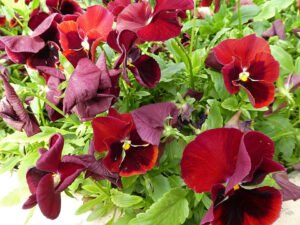
Buy compact plants with healthy roots and fresh foliage, or raise a suitable seed strain. Select the flowering season first, then colour and habit, so the display matches the months you need it.
1.
Choose winter and spring bedding plants for autumn planting, or a suitable spring and summer strain for spring planting. Keep labels because a flower colour does not identify its intended season.
2.
For seed, follow the packet’s sowing depth and temperature. Pansy seed can germinate poorly in excessive heat, so a cool suitable propagation position is more useful than the hottest greenhouse shelf.
3.
Prick seedlings out carefully or pot plugs on before roots become tightly bound. Keep them in good light, with enough ventilation to avoid soft stretched growth and constantly wet leaves.
4.
Harden protected young plants before moving them into the garden. Well grown winter stock tolerates cold better than newly forced soft plugs; avoid an abrupt move from warm shelter into severe weather.
5.
Prepare a weed free bed or a clean drained container. Water rootballs before planting, and set out the spacing from the label, commonly around 15 to 25cm for compact upright plants.
6.
Plant at the previous compost level, keeping the crown clear. Firm lightly around roots and water the surrounding soil so the rootball makes good contact without being buried.
7.
For a mixed pot, combine plants with similar moisture and seasonal needs. Leave a practical watering rim and avoid trapping pansy crowns under the leaves of a much larger companion.
8.
Check frequently during establishment for drying, slug damage and plants lifted by frost. Remove dead flowers and seed pods as the display develops, and replace failed plants only after checking why they declined.

Watering
Keep establishing plants evenly moist, watering the soil rather than repeatedly soaking the flowers. A small rootball can dry even when surrounding soil looks damp, so check the plant itself through the first weeks after planting.
Containers need checks in dry or windy weather throughout the year. Winter demand is lower, but a sheltered window box may receive little rain. Let surplus escape and never assume a wilting plant needs more water without checking whether the compost is already saturated.

Feeding
Prepare the soil sensibly before planting and follow the compost’s initial feeding guidance. Pansies do not benefit from indiscriminate heavy nitrogen applications that produce leafy growth at the expense of a balanced display.
Feed containers modestly during active growth once their compost reserve is used, following a suitable product’s label. Pause or reduce feeding when winter growth slows. Poor roots, low light and disease will not be corrected by increasing the concentration.

Pruning
Remove faded flowers with their stalks and developing seed pods, rather than pulling off only the coloured petals. Work through the pot regularly so decaying blooms do not sit on healthy foliage and the plant continues directing growth into its display.
Trim a few straggling stems lightly if healthy growth remains below them. Do not cut a weak, wet or badly diseased plant to a bare stump and expect an instant revival. Seasonal replacement is reasonable once a planting has exhausted its useful display.

Winter care
Use selections sold for winter and spring bedding and plant them in autumn before soil becomes persistently cold. Established plants tolerate ordinary cold conditions, but flowering slows in darkness, frost or snow. A winter label does not promise open blooms every week.
Raise pots enough to keep drainage holes clear and remove rotten foliage after thawing. Check small plants for frost heave and firm them gently when conditions allow. Avoid sealing foliage in a damp cover; light and air remain important through the cooler season.
Garden pansies have broad five-petalled flowers, often with darker blotches or fine lines radiating from the centre. Leaves are green, oval to rounded and carried on short branching stems. Trailing selections spread further than compact upright bedding types.
Pansies are complex hybrids and overlap visually with smaller-flowered violas. A large flower is a useful impression, not a complete botanical diagnosis. Retain the plant label, especially when distinguishing seasonal bedding selections or considering any use beyond ornamental display.
Photo: Екатерина Борисова, CC BY-SA 4.0. Resized and optimised; cropped for display. Adapted image under the same licence.
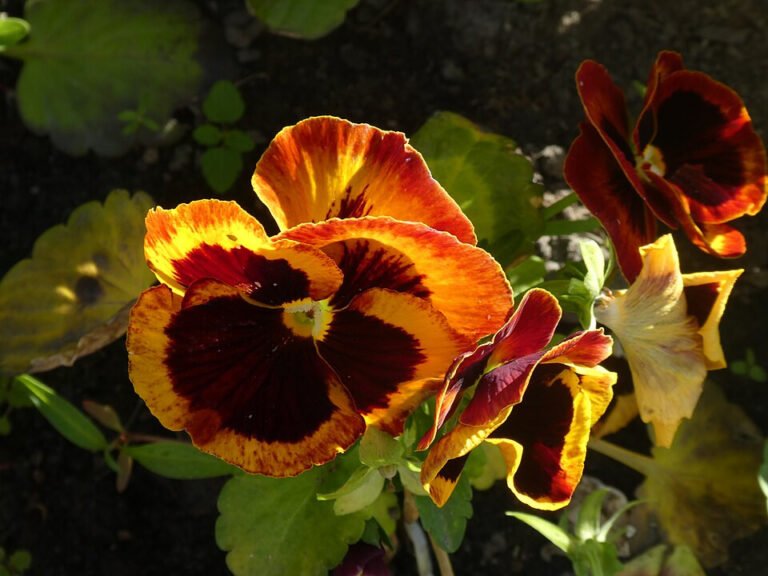
Autumn planting gives winter and spring selections time to root before conditions become cold. In wet western districts, drainage and removing decaying flowers are particularly useful; in exposed inland gardens, shelter from drying winds helps maintain the foliage.
A frost can flatten flowers temporarily without killing an established plant. Wait for milder conditions before judging it, and avoid handling frozen growth. If roots are firm and crowns remain sound, a spring recovery is possible even after a quiet winter display.
In summer, watch small containers closely as heat increases. Remove tired blooms, keep moisture steady and accept that a seasonal plant may eventually need replacing. Persistently feeding an exhausted heat-stressed planting is less effective than refreshing the display at the appropriate season.
Photo: Екатерина Борисова, CC BY-SA 4.0. Resized and optimised; cropped for display. Adapted image under the same licence.
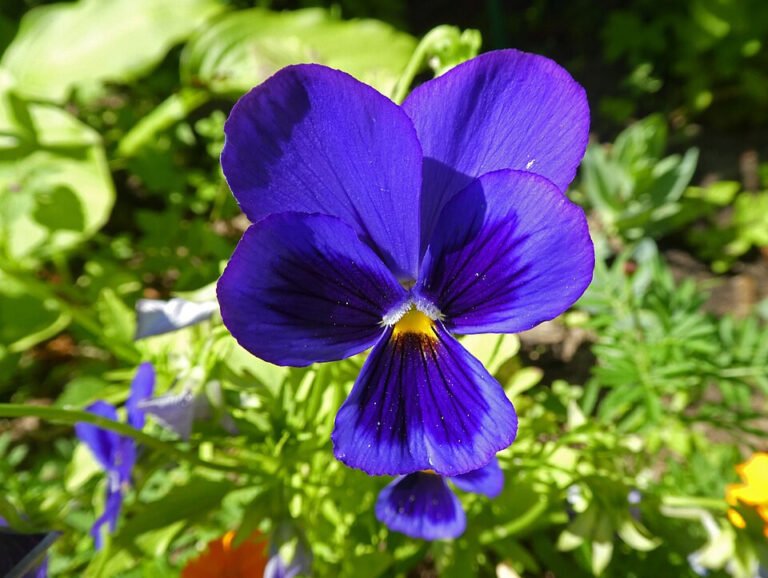
Slugs and snails often feed on young pansies. Inspect after dark or under pots, protect small plants and remove hiding debris immediately around vulnerable plugs. Confirm the culprit before treating the whole display.
Several pansy leaf-spot diseases can cause marks. Remove badly affected material, avoid repeatedly wetting leaves and improve spacing. If problems recur, replace diseased plants with healthy stock and fresh compost rather than keeping the same declining planting.
Check whether growth is crowded and airless, and seek a diagnosis if downy or powdery growth is persistent. Improve conditions and remove badly affected plants where necessary. Do not assume every pale leaf needs a feed.
Root or crown damage can follow poor drainage. Check the container base and planting depth before watering again. Remove rotted plants, correct the water problem and replant only when the remaining compost and site are suitable.
Heat, shade, exhausted compost and missed deadheading can all contribute. Adjust the site and care if the plant remains healthy, but accept that old seasonal bedding may need renewal rather than repeated strong feeding.
Pansies are most often grown from seed, with sowing time chosen for the intended display. Use clean trays and suitable compost, keep germination conditions within the packet’s range and pot seedlings on before crowding limits their growth.
Seed collected from hybrid pansies may produce mixed offspring and will not reliably preserve a named colour pattern. Buy fresh named seed or labelled plants when uniformity matters. Specialist vegetative propagation is possible, but ordinary bedding displays are usually simpler to renew from young stock.
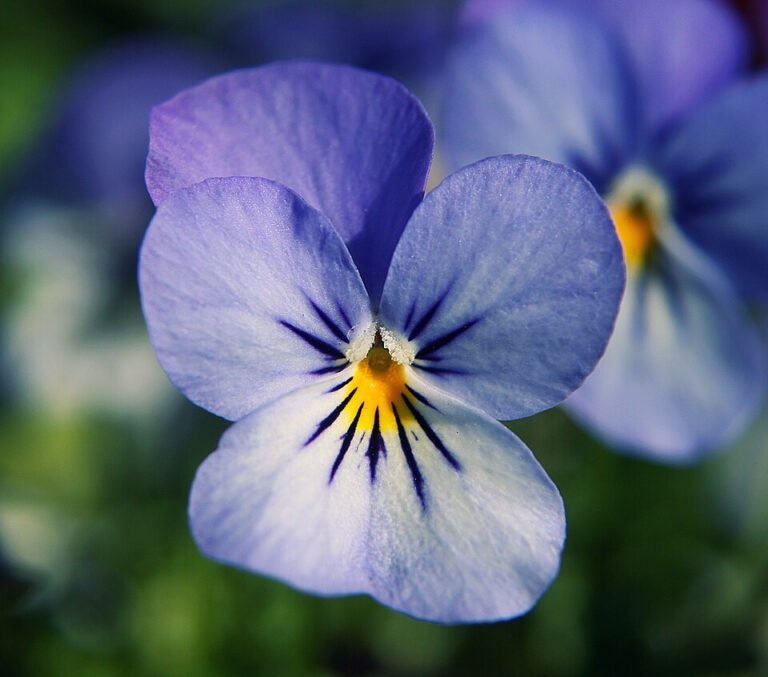
Compact winter selections
Choose a series explicitly supplied for autumn planting and winter into spring performance. Flowering will still pause in severe weather. Compact plants fit edging and small containers where close-up flower detail matters.
Blue garden pansy comparison photograph; a named winter series is not established.
Photo: Noumenon, CC BY-SA 3.0. Resized and optimised; cropped for display. Adapted image under the same licence.
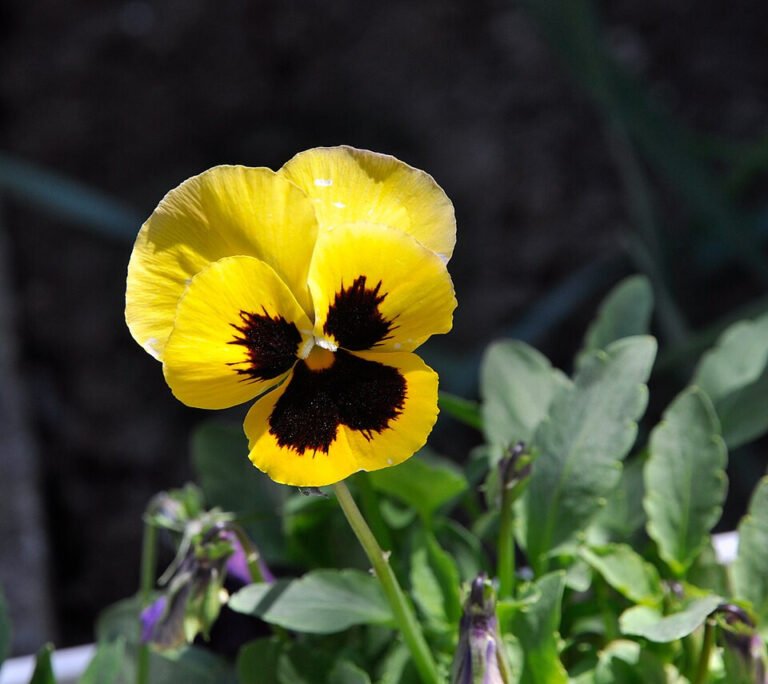
Large-flowered spring pansies
These provide bold faces when the weather suits them. Give them a position with steady moisture and avoid forcing a spring display through intense summer heat. Check the expected season rather than choosing solely by flower size.
Large yellow garden pansy flower; the exact spring series is not established.
Photo: MrPanyGoff, CC BY-SA 3.0. Resized and optimised; cropped for display. Adapted image under the same licence.
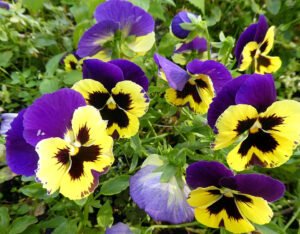
Trailing selections
Spreading series such as Cool Wave can soften container edges. They need more room than a compact upright plant and a basket large enough to maintain moisture. Do not use the tightest bedding spacing automatically.
Garden pansy planting shown for comparison; trailing habit and the Cool Wave series are not verified.
Photo: Екатерина Борисова, CC BY-SA 4.0. Resized and optimised; cropped for display. Adapted image under the same licence.
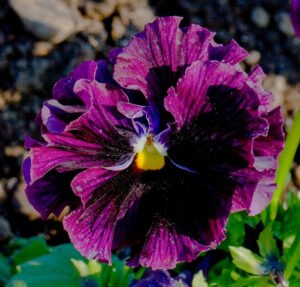
Frilled selections
Frizzle Sizzle and similar selections add ruffled petals and varied colour patterns. Buy the specific named strain when you want that effect. Weather and seed mixtures can give individual variation, so a catalogue image is not an exact promise for every flower.
Visibly ruffled garden pansy flower; the exact Frizzle Sizzle strain is not established.
Photo: Diego Delso, CC BY-SA 3.0. Resized and optimised; cropped for display. Adapted image under the same licence.
Check the botanical name, mature size and seasonal requirements before buying. Choose healthy labelled plants or fresh seed, prepare their final position and keep the label so future care follows the selection you actually planted.
Single accessible flowers may be visited by insects during mild weather, but pansies should form one part of a varied planting. Include other early and late flowering plants rather than relying on a winter bedding pot as the only seasonal resource.
Check under pots and among leaves before treating feeding damage. Slugs and other garden animals have ecological roles, so focus on protecting vulnerable young plants. Avoid routine sprays over a flowering display and keep any protective mesh secure.
Published by Buy From Farmers Direct. Growing guidance reviewed 11 October 2026. The seasonal timeline uses the shared BFFD Growers Calendar record; adjust timings to your variety and local conditions.
Winter selections can flower through mild spells, but cold, darkness and snow reduce or pause the display. Established plants often recover strongly in spring if their roots and crowns remain healthy.
September and October are useful autumn planting months, while soil still allows rooting. Use well grown seasonal stock and avoid waterlogged conditions. Soft tiny plugs need growing on before a harsh outdoor move.
They tolerate light shade, especially in summer, but deep shade reduces flowering. Winter plants benefit from available light, while a scorching summer pot may appreciate some midday shelter.
Seed development diverts growth from the flower display. Remove the whole faded flower stalk and forming pod regularly, taking care not to damage nearby buds.
This guide treats them as ornamentals and includes no food harvest. Do not assume a nursery bedding plant has been grown with treatments suitable for edible flowers. Use separately sourced, correctly identified food-grown material for culinary purposes.
Some plants persist, but pansies are usually managed as seasonal bedding for reliable display. Survival and future flowering vary, so renew tired plants when needed rather than relying on every one as a permanent perennial.
Match the plant to its position, establish it carefully and respond to the season in front of you. A little attention at the right time makes the display easier to maintain.
Want to get food independence, support your local grower, get better prices and shop more privately?
Local food isn’t just something you find. It’s something you protect. A free account helps keep local supply visible, supported, and resilient.

….it takes 30 seconds for food lovers and 5 minutes for suppliers
We built this for people who care where their food comes from. For people who want to remain food secure. For Farmers to get to the local people, who deserve a better income and to deliver a better price for you. For the environmentally conscious and the privacy-conscious. An account simply helps us make the map and supplier reach more useful to you, without changing how open it is. You’re always in control.


Find local food. Stay connected to it. Create a free account to support local producers and be part of a growing food network.


