A dwarf pear can bring spring blossom and a useful fruit harvest to a smaller garden. The important detail is beneath the graft: a suitable rootstock restricts growth without making the pears themselves miniature. Choose the cultivar, rootstock and pollination arrangement together, then give the tree enough root space, sunshine and support to develop a balanced crown.
Compact fruit tree
Choose a dwarfing rootstock
Sunny and sheltered
Large pots possible
Autumn harvest
| Botanical name | Pyrus communis |
| Plant type | Deciduous European pear |
| Growth form | Compact bush tree in this guide |
| Common rootstocks | Quince C or Quince Eline |
| Typical height | Around 2.5 to 3m on these dwarfing rootstocks |
| Final size | Depends on cultivar, soil and management |
| Position | Sunny and sheltered |
| Soil | Fertile, moisture retentive and well drained |
| Container | A stable pot about 45 to 50cm wide and deep |
| Compost | Loam based peat free compost |
| Planting season | November to March preferred |
| Support | Follow nursery advice; Quince C needs lasting support |
| Flowers | White spring blossom |
| Pollination | Check for a compatible different pear |
| Harvest | Usually August to October |
| Ripening | Pick firm and finish indoors |
| Routine pruning | Dormant season for a bush tree |
| Watering | Regular checks, especially in a pot |
| Feeding | Use container feed at the product rate |
| Propagation | Named grafted nursery trees |
| Plant name | Crop type | Spacing |
Sow indoors
Plant outdoors
Harvest
Polytunnel | |||||||||||
|---|---|---|---|---|---|---|---|---|---|---|---|---|---|---|
| Jan | Feb | Mar | Apr | May | Jun | Jul | Aug | Sep | Oct | Nov | Dec | |||
| Pear (Dwarf) | Orchard fruit | Allow the cultivar and rootstock's mature crown spread; commonly around 2.5 to 3m | Plant outdoors | Plant outdoors | Plant outdoors | No activity recorded | No activity recorded | No activity recorded | No activity recorded | Harvest | Harvest | Harvest | Plant outdoors | Plant outdoors |
Sow indoors: no months recorded. Plant outdoors: January, February, March, November, December. Harvest: August, September, October. Polytunnel: no months recorded.
Dormant planting from November to March is the preferred route. Trees sold in containers allow other suitable planting dates with careful aftercare. August to October covers typical picking, rather than the entire eating season. Seed sowing and polytunnel growing are not part of the usual grafted garden pear routine.
A dwarf bush pear suits a sunny small garden where there is room for a modest spreading crown. Choose it when you want a branching tree rather than a trained stem.
A large pot is possible when regular watering and feeding are realistic. Think carefully before choosing one for a balcony that becomes very windy or a patio left unattended through summer: a small root system cannot draw on moisture from surrounding ground.
Photo: Ввласенко, CC BY-SA 3.0. Resized and optimised; cropped for display. Adapted image under the same licence.
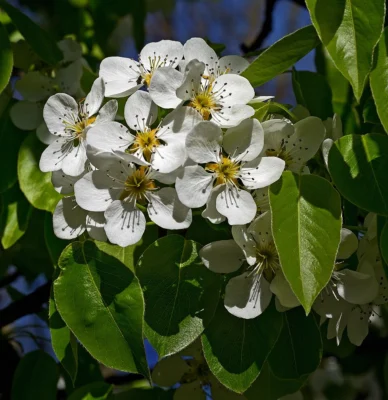
Give the canopy clear light and enough space to develop without continual hard cutting. A dwarf rootstock does not create a tabletop plant. Check mature spread before planting.
Choose shelter from strong winds without enclosing the tree in deep shade. Blossom is vulnerable to spring frost, so a low hollow where cold air collects is less useful than a slightly raised, airy position.
For a patio tree, use a stable container with open drainage holes and watering space. A pot around 45 to 50cm wide and deep is a useful starting point for the right dwarfing tree, not permission to ignore future root growth.
In the ground, clear a generous circle around the tree and keep grass away while it establishes. Nearby lawns and shrubs can compete strongly for water.
Photo: Thoslee, CC BY-SA 4.0. Resized and optimised; cropped for display. Adapted image under the same licence.
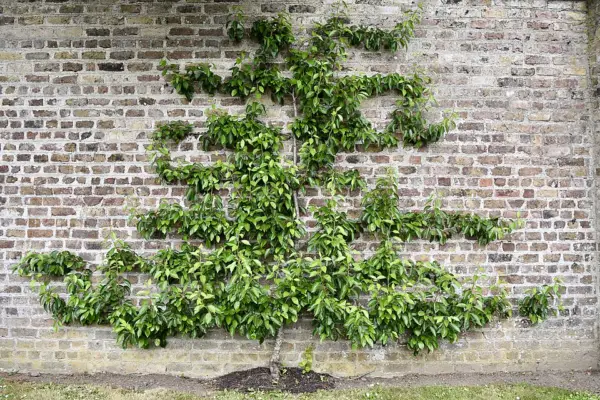
Read the label beyond the word dwarf. Record both cultivar and rootstock, ask about the likely crown size and confirm how the flowers will be pollinated. This guide follows a compact bush tree; cordons and espaliers need their own training routine.
1.
Choose a healthy grafted tree with a clear cultivar and rootstock label. Quince C and Quince Eline are common dwarfing options. Ask the nursery whether permanent support and a particular soil condition are needed.
2.
Check for a compatible different pear flowering nearby, or plan a partner. Two identical cultivars do not provide different pollen.
3.
Prepare the ground or container before unwrapping the roots. Avoid frozen or waterlogged soil; use a suitable loam based peat free compost for a permanent pot rather than ordinary garden soil packed tightly into it.
4.
Water a container tree well before lifting it out. Keep bare roots moist and spread them naturally in a sufficiently wide planting hole. Do not fold roots into a narrow hole.
5.
Position the tree at its previous soil level and keep the graft above the finished surface. Install the appropriate stake or support without driving it through the rootball.
6.
Backfill gently, firming enough to remove large gaps without compacting the soil heavily. Leave watering space beneath a container rim.
7.
Water thoroughly and fit a soft tree tie. Mulch a ground planted tree with well rotted organic matter, keeping the material away from its trunk and graft.
8.
Retain the labels and note the planting date. Check moisture, ties and stability through the first season, and follow the nursery's formative pruning advice rather than cutting a young crown to an arbitrary height.

Watering
Water newly planted trees during dry spells for the first few seasons. Check beneath the surface: light showers may leave the root zone dry.
Container trees need closer attention during warm or windy weather and while pears swell. Soak the compost evenly when needed, allow excess water to escape and avoid leaving the base standing in a full saucer.

Feeding
For a tree in the ground, maintain a clear root area and renew the spring mulch. Extra feed is not automatically necessary on fertile soil. Poor fruit set may reflect frost or missing pollination rather than a lack of nutrients.
A pot has a limited nutrient reserve. Feed during active growth as the product directs, refresh surface compost when practical and review the rootball as the tree matures. More feed cannot correct poor drainage.

Pruning
Prune an established dwarf bush tree while dormant, normally between November and early March. Remove damaged, rubbing and badly placed growth, aiming for light and air between the main branches rather than a dense ball of small shoots.
Keep useful young side shoots so they can develop fruiting wood, and make each cut for a clear reason. Heavy shortening stimulates regrowth. If a tree repeatedly outgrows its space, reconsider the growing arrangement instead of cutting every branch hard each winter.

Winter care
Inspect the stake, tie and trunk guard, allowing space for the stem to thicken. Remove rotten hanging pears and check stored fruit regularly. Inspect the framework while it is visible.
Ensure containers drain freely and protect an exposed rootball during prolonged severe freezing. The dormant tree tolerates winter far better than its open blossom tolerates a late frost, so keep materials ready for temporary spring protection.
A dwarf bush pear has a short trunk supporting a branching crown, white spring flowers and oval green leaves. Its leaves and fruit need not be miniature.
The graft is the join between the named pear and its rootstock. Shoots arising below it are not the chosen cultivar and should not be allowed to take over. Keep the label: height alone cannot establish rootstock identity.
Photo: Forest and Kim Starr, CC BY 3.0 us. Resized and optimised; cropped for display. Forest & Kim Starr
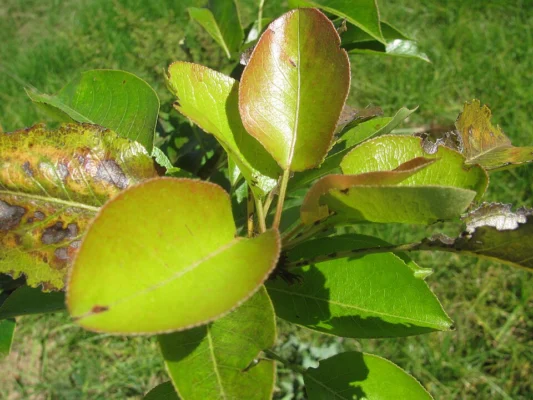
Match the harvest season to local conditions. An earlier cultivar is often a more practical choice in a cooler district than a late pear demanding a particularly warm autumn. Compact trees still need sunshine.
Protect reachable blossom temporarily on frosty nights and uncover it when conditions permit insect access. After natural early summer fruit drop, thin an excessive crop so clusters are not crowded and the small framework is not overloaded.
Pick mature European pears while firm, using a gentle lift and twist to test readiness. Store only sound fruit and ripen a few at a time indoors. Press lightly beside the stalk to judge eating readiness rather than squeezing the whole pear.
Image from the BFFD media library.
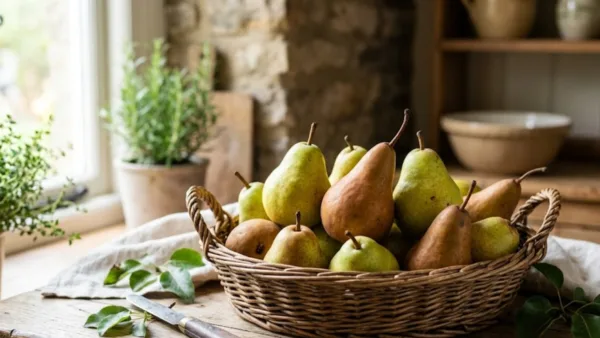
Check whether water reaches the centre of the rootball and whether roots have filled the container. Move beyond surface splashes: soak appropriately, reassess pot size and arrange dependable holiday care.
Review frost at flowering and the availability of compatible pollen before changing the feeding programme. A young tree may also need time to establish. A dwarf label does not guarantee a crop in its first season.
Pear rust is a possible cause. Monitor the tree and avoid removing so much foliage that growth suffers. Its wider disease cycle means cutting down one nearby juniper is not a guaranteed cure.
Remove rotting fruit promptly and avoid letting crowded pears rub together. Brown rot can enter damaged fruit and spread between touching pears. Keep bruised or affected fruit out of storage.
Severe winter cutting can encourage vigorous regrowth. Preserve a balanced framework and prune moderately. Check that the tree really has the rootstock ordered before treating continual excessive growth as a feeding problem.
A nursery grafted tree combines the desired pear with a rootstock selected for growth control. That combination is the basis of a dependable dwarf tree, so retain both names when recording what you have planted.
Growing a pip is an interesting experiment but will not reliably reproduce the fruit, mature size or cropping behaviour of its parent. Allow a seedling separate space rather than using it to replace a carefully chosen patio pear.
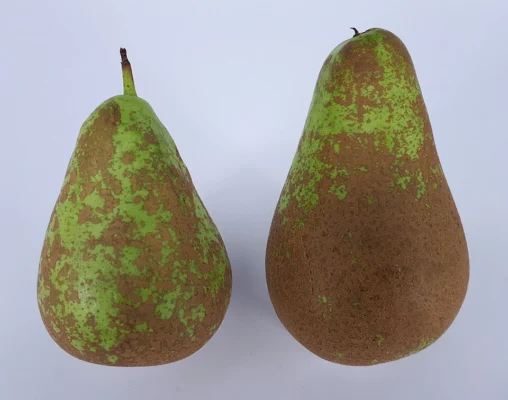
Conference
Conference is a familiar dessert pear with elongated, often russeted fruit. Buy it on the intended dwarfing rootstock; the cultivar name alone does not establish size. The photograph illustrates labelled Conference pears rather than a dwarf tree.
Photo: Fructibus, CC0. Resized and optimised; cropped for display.
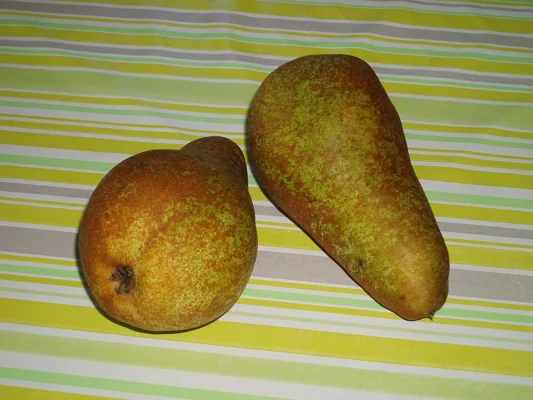
Concorde
Concorde is worth comparing for a relatively compact dessert pear, with rootstock still central to the final result. Ask about local cropping and a suitable pollination partner. The photograph shows labelled Concorde fruit.
Photo: Queeste, CC BY-SA 4.0. Resized and optimised; cropped for display. Adapted image under the same licence.
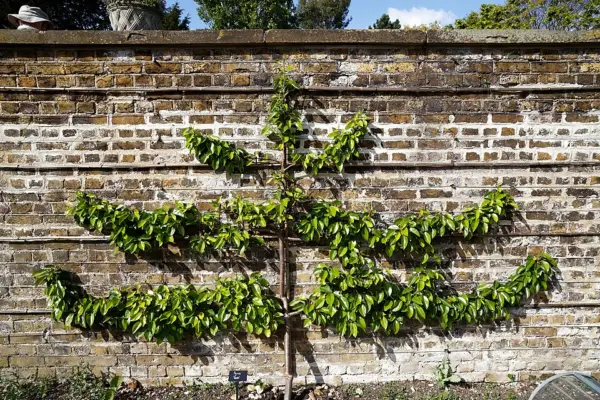
Beth
Beth offers an earlier eating season and is a useful cultivar to discuss for a small garden. This photograph shows a labelled tree trained as an espalier. A bush tree on dwarfing stock will have a different crown and pruning routine.
Photo: Acabashi, CC BY-SA 4.0. Resized and optimised; cropped for display. Adapted image under the same licence.
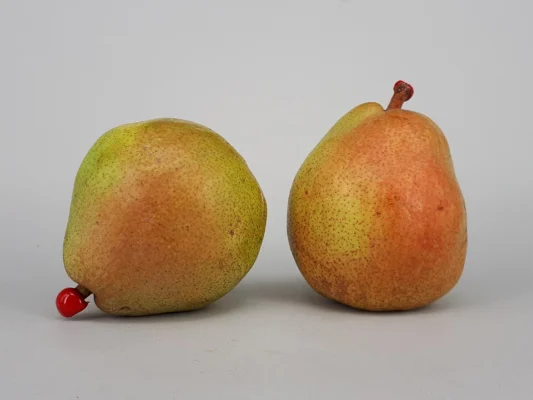
Doyenné du Comice
Comice is prized for rich, juicy flesh when ripened properly, but its warm site preference and less generous cropping deserve consideration. The pictured fruit is cultivar illustration, not evidence of a compact rootstock or a guaranteed patio harvest.
Photo: Fructibus, CC0. Resized and optimised; cropped for display.
Take your available space, sun exposure and container plans to a specialist nursery. Choose the named rootstock, rather than judging size from a young tree on display.
Spring blossom attracts visiting insects, which help transfer pollen between compatible pears. Keep the tree accessible on mild days and include other flowering plants so the garden offers food beyond this short blossom period.
Inspect fruit regularly before reaching for protective netting. If birds begin taking the ripening crop, use a securely fitted arrangement and check it often. Loose mesh around a small tree can entangle wildlife.
Quince C and Quince Eline commonly produce trees around 2.5 to 3m tall. Cultivar, soil, container conditions and pruning affect the result, so confirm the nursery's expected height and spread.
Yes, with the right rootstock, a substantial stable container and ongoing care. Watering, feeding, compost renewal and eventual root management remain necessary as the tree matures.
Dwarf describes the tree's growth, not a separate miniature fruit. Cultivar, crop load, light and watering determine the pears that develop. An overloaded tree may need thinning.
Most pears crop more reliably with a compatible different cultivar flowering at the same time. A suitable tree nearby may help. Check the cultivar rather than assuming every dwarf pear is self fertile.
For the bush form covered here, routine pruning is in the dormant season. A dwarfing rootstock can also support a cordon or espalier, but those trained forms have different summer pruning requirements.
European pears are normally harvested before eating ripeness. Mature fruit finishes ripening indoors; the delay varies with cultivar and storage conditions. Check regularly for gentle softening near the stalk.
A dwarf pear succeeds through a well chosen rootstock and ordinary care delivered consistently. Give its roots enough room, keep the crown balanced and plan pollination from the start, then follow the fruit from firm autumn picking to the moment it is ready to eat.
Want to get food independence, support your local grower, get better prices and shop more privately?
Local food isn’t just something you find. It’s something you protect. A free account helps keep local supply visible, supported, and resilient.

….it takes 30 seconds for food lovers and 5 minutes for suppliers
We built this for people who care where their food comes from. For people who want to remain food secure. For Farmers to get to the local people, who deserve a better income and to deliver a better price for you. For the environmentally conscious and the privacy-conscious. An account simply helps us make the map and supplier reach more useful to you, without changing how open it is. You’re always in control.


Find local food. Stay connected to it. Create a free account to support local producers and be part of a growing food network.


