A large pear tree earns its place over many seasons, with spring blossom, summer shade and fruit to ripen indoors as autumn arrives. Give it room to mature and choose the variety and rootstock together. Good establishment, compatible pollination and restrained annual pruning matter more than encouraging the biggest possible canopy.
Long lived fruit tree
Sunny sheltered site
Check pollination
Dormant season pruning
Late summer and autumn harvest
| Botanical name | Pyrus communis |
| Plant type | Deciduous European pear |
| Suitable form | Bush, half standard or standard |
| Light | Full sun for best cropping |
| Position | Sheltered and outside frost pockets |
| Soil | Fertile soil that retains moisture and drains well |
| Rootstock | Select for the intended mature size |
| Quince A height | Often about 3 to 4.5m |
| More vigorous trees | May reach 6m or more |
| Spacing | Match nursery advice for rootstock and form |
| Planting season | Preferably November to March |
| Flowers | White blossom in spring |
| Pollination | Usually a compatible different cultivar |
| First cropping | Varies with tree age, cultivar and rootstock |
| Harvest season | Usually August to October |
| Eating ripeness | Generally follows picking indoors |
| Main pruning | During winter dormancy |
| Young trees | Need formative pruning and establishment care |
| Support | Stake as required by rootstock and site |
| Container suitability | Choose a dwarf tree instead |
| Plant name | Crop type | Spacing |
Sow indoors
Plant outdoors
Harvest
Polytunnel | |||||||||||
|---|---|---|---|---|---|---|---|---|---|---|---|---|---|---|
| Jan | Feb | Mar | Apr | May | Jun | Jul | Aug | Sep | Oct | Nov | Dec | |||
| Pear (Large) | Orchard fruit | Quince A trees often need 3.5 to 5.5m apart; vigorous rootstocks need individual nursery guidance | Plant outdoors | Plant outdoors | Plant outdoors | No activity recorded | No activity recorded | No activity recorded | No activity recorded | Harvest | Harvest | Harvest | Plant outdoors | Plant outdoors |
Sow indoors: no months recorded. Plant outdoors: January, February, March, November, December. Harvest: August, September, October. Polytunnel: no months recorded.
The planting window is for dormant trees and the harvest row covers a range of cultivars. Pears may need further time indoors before eating. A vigorous rootstock does not follow a separate harvest calendar simply because its tree grows larger.
A good choice for a generous garden or small orchard with room around the mature canopy. Think about access for harvesting and pruning as well as how the tree looks in its first year.
Less suitable beside a narrow path, directly against a building or where its future shade will affect vegetable beds. A dwarf tree or trained form offers a different way to grow pears in limited space.
Photo: Ввласенко, CC BY-SA 3.0. Resized and optimised; cropped for display. Adapted image under the same licence.
Choose a sunny site with shelter from strong winds. A tree may grow vigorously in a cool position yet disappoint at harvest, so consider fruit ripening rather than survival alone.
Avoid ground where cold air collects during spring. Pears flower early enough for late frost to affect fruit set, and covering the blossom of a mature large tree is rarely practical.
Allow for the actual rootstock. Quince A gives a moderately large garden tree, while more vigorous pear rootstocks can produce much larger specimens that need substantially more space.
If planting into lawn, clear a generous circle of grass around the young tree. Keep future mowing and machinery away from the trunk so establishing bark is not repeatedly damaged.
Photo: Thoslee, CC BY-SA 4.0. Resized and optimised; cropped for display. Adapted image under the same licence.
A large pear is a long term planting decision. Decide how much space you can give its mature crown, which compatible tree will provide pollen, and how you will manage its crop before choosing a young specimen.
1.
Ask the nursery for cultivar, rootstock and expected mature dimensions. Confirm whether the young tree has been trained as a bush or a taller form, since trunk height affects future access.
2.
Check for a compatible pear nearby or plant a suitable partner. Two trees of the same cultivar do not provide the genetic difference normally sought for cross pollination.
3.
Plant while dormant where possible, postponing the job if soil is frozen or saturated. Keep exposed roots moist and sheltered until they are safely in the ground.
4.
Remove grass and perennial weeds, then dig a hole wide enough to spread the roots without folding them. Avoid working wet soil into a compacted, smeared planting pit.
5.
Water a potted tree before removing its container, or soak bare roots briefly. Install a stake where needed before roots make it difficult to do so without damage.
6.
Set the tree at its original planting depth with the graft union clearly above ground. Refill around the roots and firm gently without stamping the soil into a hard ring.
7.
Water thoroughly, attach a flexible tie and mulch the cleared ground. Keep mulch away from the trunk and make sure the tie holds the rootball steady without rubbing.
8.
Label the cultivar and rootstock and start the appropriate formative pruning plan. Inspect soil moisture, support and new growth through the first seasons rather than leaving the tree to establish unaided.

Watering
Water young trees deeply during dry spells, particularly through their first couple of years. Moisture must reach the root area; wetting only the grass or surface mulch gives little help.
Established pears in good soil are more resilient, but prolonged drought during fruit swelling can still matter. Assess the soil and crop before watering, and avoid leaving the root zone persistently saturated.

Feeding
Apply well rotted organic matter around the tree in spring, leaving the trunk clear. A regularly mulched tree in fertile soil may need little additional fertiliser.
Treat feeding as a response to the tree's condition, not an automatic cure for poor fruiting. Strong leafy growth with little crop can reflect pruning or pollination problems rather than a shortage of nutrients.

Pruning
Prune established bush and standard pears during dormancy, usually from November to early March. Begin with dead, damaged and crossing growth, then open crowded areas while retaining well placed young shoots and productive fruiting wood.
Use restraint: routine pruning generally removes only a modest share of the canopy. Hard cutting encourages vigorous upright shoots and may reduce fruiting. Do not shorten every young side shoot automatically, and seek skilled help for large limbs or work beyond safe reach.

Winter care
Check stakes and ties before windier weather, and remove or adjust supports according to the tree's establishment and rootstock needs. Guards should protect the trunk without becoming tight or trapping debris.
Remove rotten fruit left hanging after harvest and examine stored pears regularly. Winter also reveals the crown clearly, making it easier to plan gradual improvements than to make hurried cuts through a leafy canopy.
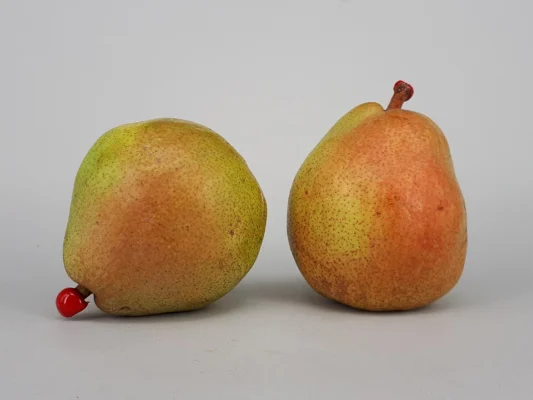
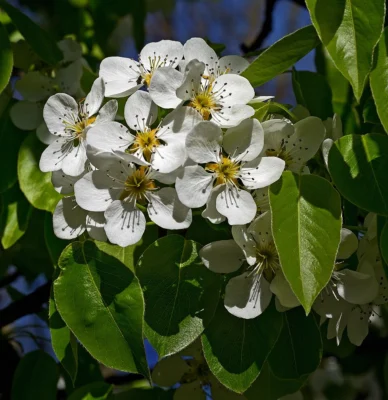
European pears have oval leaves and clusters of white flowers. Fruit may be elongated or rounded, with green, yellow, russeted or flushed skin; colour and shape alone rarely identify a cultivar with confidence.
The graft union joins the chosen fruiting cultivar to its rootstock. Growth from below that union belongs to the stock and should not be mistaken for a useful replacement branch of the named pear.
Photo: Forest and Kim Starr, CC BY 3.0 us. Resized and optimised; cropped for display. Forest & Kim Starr
Choose earlier ripening cultivars for cooler gardens and reserve more demanding late fruit for warm sheltered sites. Local experience can be valuable when two apparently similar varieties perform differently in neighbouring districts.
After natural early summer fruit drop, thin overcrowded clusters if the crop remains heavy. Reduce pressure on young branches and favour sound, well spaced fruit; a newly established tree should carry less than a mature one.
Pick European pears when mature but still firm. Lift and turn a sample gently to test whether it releases, then harvest in stages. Store only sound fruit in cool airy conditions and bring manageable batches indoors to finish ripening.
Image from the BFFD media library.
Check its age, pollination partner, blossom frost history and pruning pattern. A vigorous crown does not prove that flowers were pollinated or that the right fruiting wood has been retained.
Heavy cutting can stimulate a thicket of strong new growth. Avoid repeating the same severe treatment; spread corrective work over time and reassess the tree's structure.
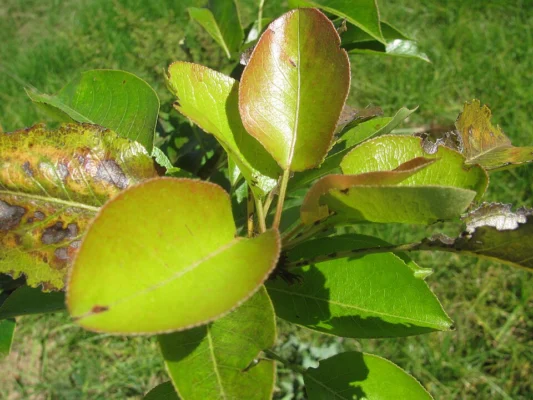
Pear rust is a possible cause and involves junipers as an alternative host. Confirm the diagnosis and avoid stripping the tree bare, which can weaken it more than leaving some affected leaves.
Scab can mark and crack pears, while brown rot spreads through damaged fruit. Remove infected debris as appropriate, handle the crop carefully and exclude damaged pears from storage.
Several problems can cause dieback, including fireblight. Seek a prompt diagnosis where blossom or shoots collapse, especially with ooze, rather than assuming the tree simply needs watering or fertiliser.
Grafting or budding preserves a named pear variety while a selected rootstock controls vigour. Some cultivar and quince combinations need an intermediate graft, making specialist nursery advice worthwhile.
A pear grown from seed is variable and can become a large tree before producing fruit of uncertain quality. It is an experiment rather than a dependable substitute for a labelled orchard tree.
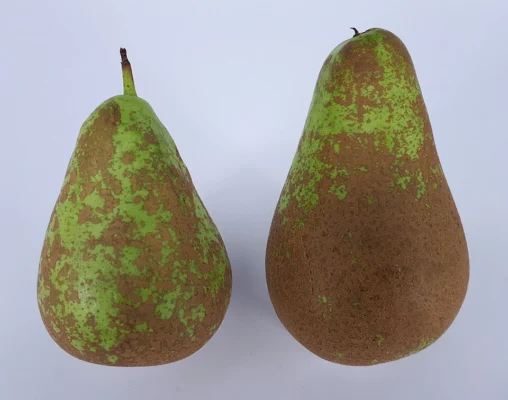
Conference
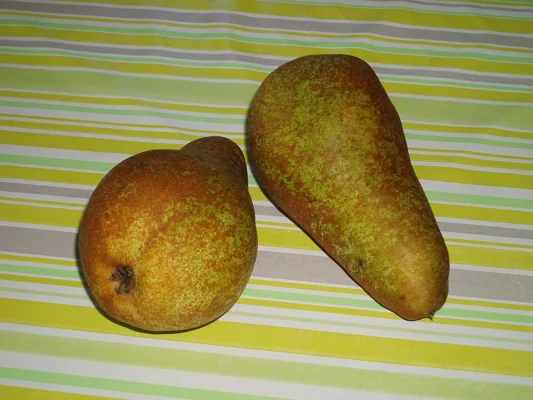
Concorde
A useful dessert pear to compare for cropping reliability and comparatively compact growth. The rootstock still determines much of its eventual scale, so select the whole tree combination.
Photo: Queeste, CC BY-SA 4.0. Resized and optimised; cropped for display. Adapted image under the same licence.
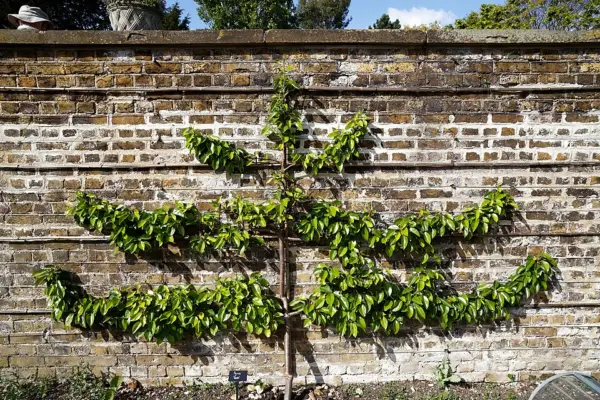
Beth
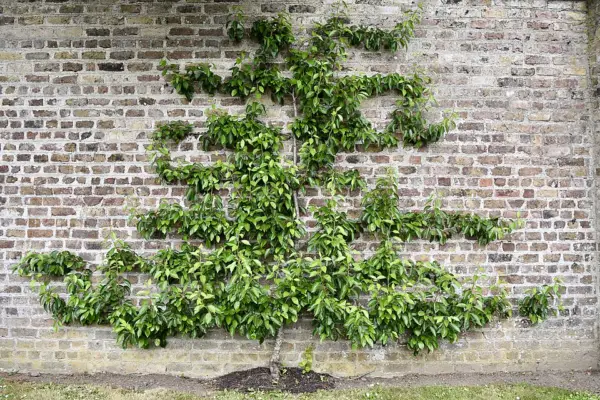
An earlier choice with small sweet pears, worth considering where the growing season is shorter. The photograph shows Beth as an espalier; the same cultivar can be sold on different rootstocks and trained in other forms.
Photo: Acabashi, CC BY-SA 4.0. Resized and optimised; cropped for display. Adapted image under the same licence.
Discuss soil, space and pollination with a fruit nursery before ordering. Ask how the recommended cultivar and rootstock perform locally and what mature size you should plan around.
A mature pear offers blossom, shelter and a changing habitat through the seasons. Encourage visiting insects with other flowers around the garden, while keeping the immediate establishment area free from competition.
Collect excess windfalls where they obstruct paths and share or preserve sound surplus fruit. If using protective netting, keep it secure and inspect it regularly so birds cannot become caught.
The rootstock, cultivar, soil and training all matter. Quince A often produces a tree around 3 to 4.5m high, while vigorous pear rootstocks can grow substantially larger.
Not necessarily. Age, propagation, rootstock and establishment influence the wait. A vigorous young tree may invest heavily in growth before cropping well.
Most benefit from a compatible different cultivar flowering at the same time. A suitable nearby tree may provide pollen, but confirm compatibility rather than relying on any pear in the area.
Severe cutting can produce strong regrowth and remove useful fruiting wood. Plan gradual work, with expert advice for a large neglected tree or substantial branches.
European pears normally finish ripening after harvest. Pick at the correct maturity for the cultivar, then check stored fruit regularly rather than leaving every pear on the tree until soft.
No. Established bush and standard trees follow a dormant pruning routine. Espaliers and cordons require specific training and summer maintenance to retain their restricted shape.
Plant a large pear for the space it will occupy and the crop you can use. Patient establishment, an effective pollination partner and thoughtful pruning give it a better future than repeated attempts to contain the wrong tree.
Want to get food independence, support your local grower, get better prices and shop more privately?
Local food isn’t just something you find. It’s something you protect. A free account helps keep local supply visible, supported, and resilient.

….it takes 30 seconds for food lovers and 5 minutes for suppliers
We built this for people who care where their food comes from. For people who want to remain food secure. For Farmers to get to the local people, who deserve a better income and to deliver a better price for you. For the environmentally conscious and the privacy-conscious. An account simply helps us make the map and supplier reach more useful to you, without changing how open it is. You’re always in control.


Find local food. Stay connected to it. Create a free account to support local producers and be part of a growing food network.