Rhododendrons can give a remarkable spring display where the root conditions suit them. Most need acid soil, moisture and shelter from drying winds, so checking the soil is the first useful step. On alkaline ground, a compact plant in an ericaceous container is usually a more manageable choice than trying to remake a whole garden bed.
Check soil acidity first
Shallow roots
Moisture with drainage
Dappled shade and shelter
Match the cultivar’s mature size
| Botanical name or group | Rhododendron species and garden hybrids |
| Family | Ericaceae |
| Garden life cycle | Evergreen or deciduous shrub, depending on type |
| Typical height | From 30cm dwarfs to shrubs several metres high |
| Typical spread | Use the cultivar’s mature spread; commonly 1–3m for garden shrubs |
| Position | Light dappled shade with shelter |
| Soil | Acid, humus-rich, moist but well-drained soil, usually pH 5–6 |
| Flowering season | Mainly spring to early summer; cultivar dependent |
| Foliage | Often leathery evergreen leaves; azaleas may be deciduous |
| Hardiness | Many are hardy; check the individual cultivar |
| Main planting window | March, April or October in suitable ground |
| Seed route | Optional seed route; follow the packet for the particular species or strain |
| Propagation | Layering a low flexible shoot is an accessible way to preserve a named plant, although rooting can take a long time. |
| Watering priority | Use collected rainwater where practical, especially in hard-water districts. |
| Feeding approach | Modest feeding according to soil and container conditions |
| Pruning priority | Most plants need little pruning beyond dead or damaged wood and optional careful deadheading. |
| Best garden role | Woodland-style borders and sheltered acid-soil gardens |
| Container suitability | Compact cultivars suit large pots of peat-free ericaceous compost |
| Harvest interpretation | Ornamental flowers only; no food harvest |
| Key distinction | Azaleas belong within Rhododendron; habit and hardiness vary |
| Plant name | Crop type | Spacing |
Sow indoors
Plant outdoors
Harvest
Polytunnel | |||||||||||
|---|---|---|---|---|---|---|---|---|---|---|---|---|---|---|
| Jan | Feb | Mar | Apr | May | Jun | Jul | Aug | Sep | Oct | Nov | Dec | |||
| Rhododendron | Not recorded | Use the cultivar’s mature spread; commonly 1–3m for garden shrubs | No activity recorded | No activity recorded | Plant outdoors | Plant outdoors | No activity recorded | No activity recorded | No activity recorded | No activity recorded | No activity recorded | Plant outdoors | No activity recorded | No activity recorded |
Sow indoors: no months recorded. Plant outdoors: March, April, October. Harvest: no months recorded. Polytunnel: no months recorded.
March, April and October are the main planting windows. Seed raising is specialist and does not reproduce named cultivars, so no general seed band is set. Hardy garden choices normally remain outdoors, with no routine polytunnel season. Flowering varies by cultivar. Harvest is empty because all plant material is ornamental and harmful if eaten.
Choose a rhododendron for a sheltered garden with naturally suitable acid soil and room for its eventual spread.
Compact cultivars offer a container option where soil is alkaline, but the pot brings a continuing watering and compost-care commitment.
Photo: Sherri Frantz, CC BY-SA 2.0. Resized and optimised; cropped for display. Adapted image under the same licence.
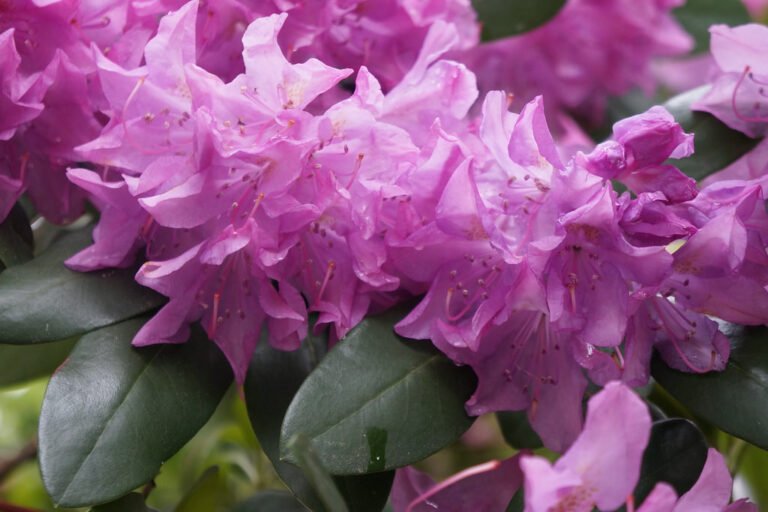
Use light dappled shade and shelter from cold drying wind; avoid deep shade beneath an impenetrable tree canopy. Watch the proposed spot at different times of day before committing it. A bright place in early spring may become substantially shadier once surrounding shrubs and trees are in full leaf.
Test soil acidity before planting. Filling one hole with ericaceous compost does not permanently change an alkaline surrounding bed. Check what happens after heavy rain as well as during dry weather. The appearance of the surface on planting day cannot tell you whether roots will remain saturated for long periods in winter.
Keep the shallow root area free of competing weeds without deep hoeing close to the shrub.
For containers, choose a stable drained pot and suitable peat-free ericaceous compost, leaving room to water without burying the stem base.
Photo: Jim, the Photographer, CC BY 2.0. Resized and optimised; cropped for display.
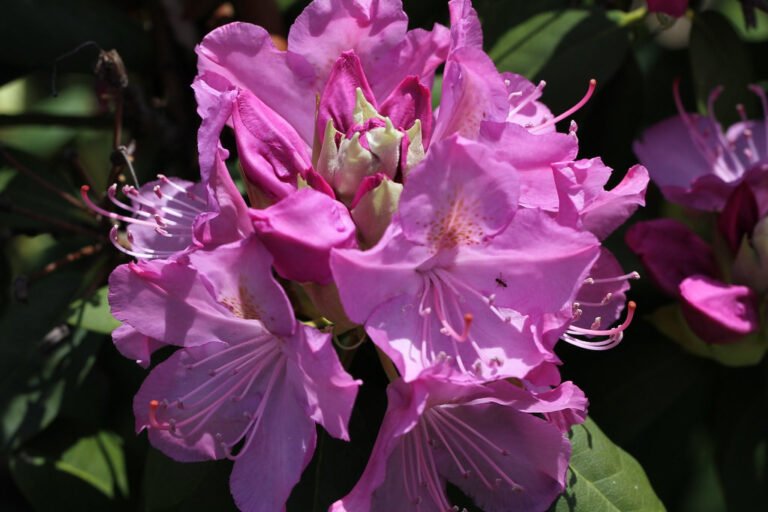
Begin with correctly labelled rhododendron and prepare its permanent position before planting. The following sequence keeps the needs of the roots, the eventual spacing and the first season's care together.
1.
Select a healthy labelled cultivar with a mature size and hardiness suitable for the space. Retain the label and record the planting date. This helps distinguish a genuine problem from normal seasonal behaviour and keeps future decisions tied to the plant you actually bought.
2.
Plant in March, April or October when soil is workable and roots can establish. Work when the growing medium is manageable. Avoid compressing very wet soil, and prepare any necessary support or container before taking the plant from its nursery pot or opening the seed packet.
3.
Prepare a broad shallow rooting area and remove weeds gently. Clear only the area needed and check levels before proceeding. Good preparation should improve the whole rooting area rather than creating one isolated pocket that behaves differently from the surrounding bed.
4.
Space shrubs by their mature spread rather than the width of the nursery pot. Set out the intended positions before final planting. Stand back to check the mature spacing and the relationship with neighbouring growth; moving an empty pot is easier than moving an established root system.
5.
Set the rootball shallowly at its previous level; do not bury the surface roots under deep soil. Handle roots gently and keep them from drying in wind or sunshine. Have the prepared growing medium close by so young material spends as little time exposed as possible.
6.
Water thoroughly and add an airy acidic mulch around the root zone, clear of the stems. Firm lightly enough to make contact without turning the root area into a compacted block. Add a durable label where it can be read without pushing hands through later growth.
7.
Check moisture regularly through the first summer and during later bud formation. Check again after the first thorough watering, as loose compost or soil may settle. Correct any exposed roots or low hollows promptly rather than burying the plant deeper with each subsequent top-up.
8.
Keep the label and inspect the root area before any future underplanting or cultivation. Review progress regularly through establishment. Judge watering and protection from the plant, soil and weather together; a calendar date cannot account for every exposed, shaded or sheltered UK garden.

Watering
Use collected rainwater where practical, especially in hard-water districts. Check moisture with a finger or small probe rather than relying on surface colour alone. Water the root area slowly enough for it to absorb moisture, and allow surplus to drain before considering another application.
If rainwater runs out, short-term tap-water use is better than allowing the plant to collapse from drought. Pots and recently planted specimens need more frequent observation than established plants in open ground. Check again after wind or warm weather, especially where a wall or dense neighbouring foliage prevents rainfall reaching the roots.

Feeding
Established plants in good acid soil often need little additional fertiliser. Read the product label and measure the stated amount. More fertiliser is not automatically better, and a weak plant may be responding to shade, damaged roots or unsuitable drainage rather than a shortage of nutrients.
Containers can need an ericaceous feed at the stated rate; overfeeding can damage fine roots. Keep any mulch away from the immediate base and check that the original planting depth remains visible. In containers, consider how long the compost has been in use before choosing a feeding or repotting routine.

Pruning
Most plants need little pruning beyond dead or damaged wood and optional careful deadheading. Use clean, sharp tools and take time to locate the living growth before cutting. Remove material carefully so nearby shoots are not pulled loose, and inspect it for resident insects before disposal.
If reducing size, identify the plant and plan the cut carefully; repeated shearing removes flower buds and does not solve poor siting. A light tidy and a major reduction are different operations. If the plant is unfamiliar, begin with clearly dead or spent material and use its observed growth to guide any further work.

Winter care
Hardy cultivars usually remain outside, although pots and exposed foliage are more vulnerable. Keep drainage holes and surface outlets clear of debris. Wet roots and trapped airless foliage can cause damage even during a relatively mild winter, so inspect the growing position after prolonged heavy rain.
Cold-weather leaf droop can be temporary; assess recovery in milder conditions before assuming the whole shrub has died. Adjust the plan to local exposure rather than the county name alone. A windy raised pot, a sheltered courtyard and an open garden bed can experience quite different conditions on the same night.
Rhododendrons carry clusters of funnel-, bell- or tubular flowers, with leaf shape and surface texture varying widely across the genus.
Evergreen broad-leaved hybrids and deciduous azaleas belong to the same genus but do not share one size, leaf habit or identical care requirement.
Photo: Hanna Sörensson, CC BY-SA 2.0. Resized and optimised; cropped for display. Adapted image under the same licence.
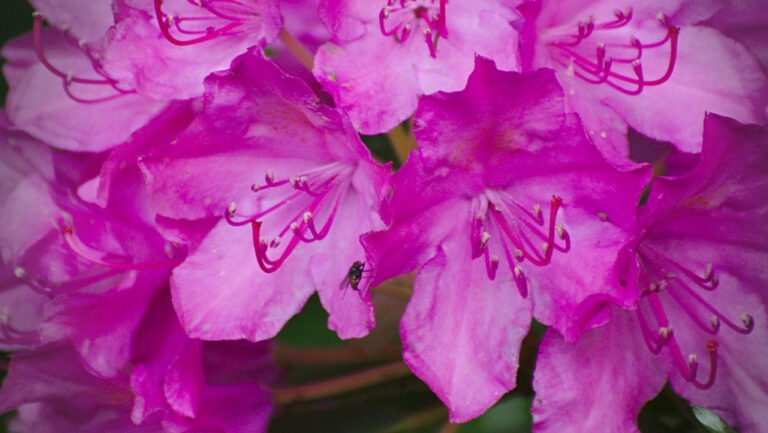
High-rainfall acid-soil districts often suit them well, while dry areas need more deliberate summer watering.
Moisture from midsummer matters because flower buds for the next season develop during this period.
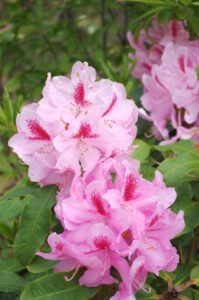
Unsuitable pH can limit nutrient uptake. Test soil and review compost and watering before adding random fertilisers.
Summer dryness, frost or bud disease can contribute. Check the pattern and season rather than assigning one cause automatically.
Drought, wind exposure, root damage or saturation can all be involved. Inspect the root environment.
Vine weevil may be present, particularly in pots. Confirm by inspection before choosing a response.
Check the cultivar’s natural size and consider selective renovation or relocation; constant trimming may sacrifice flowering.
Layering a low flexible shoot is an accessible way to preserve a named plant, although rooting can take a long time.
Semi-ripe cuttings or grafting are used for cultivars, while seed is mainly a species or breeding route. Do not expect seed from a garden hybrid to repeat the parent.
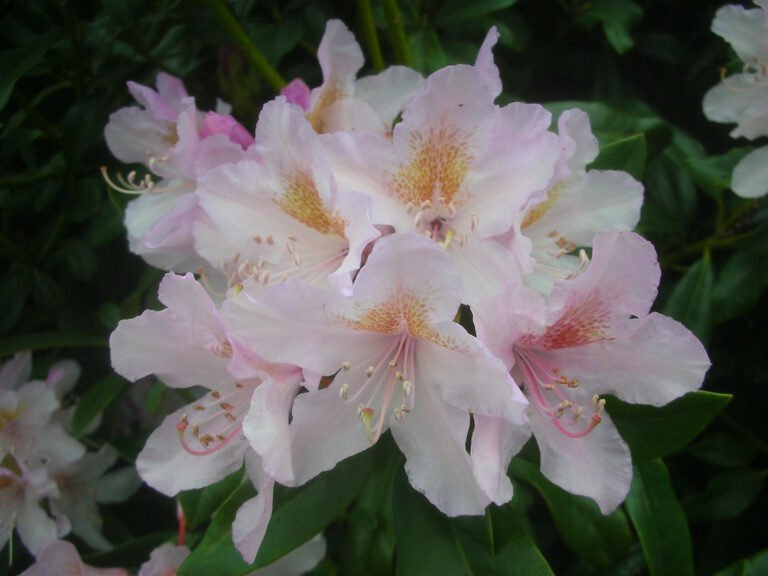
Compact yakushimanum hybrids
These are useful comparisons for smaller gardens and containers, often with attractive young foliage. Check each cultivar’s stated mature spread rather than assuming the whole group remains tiny.
A pale flowered rhododendron shown for comparison; yakushimanum hybrid identity and compact habit are not established by this image.
Photo: Michael Spiller, CC BY-SA 2.0. Resized and optimised; cropped for display. Adapted image under the same licence.
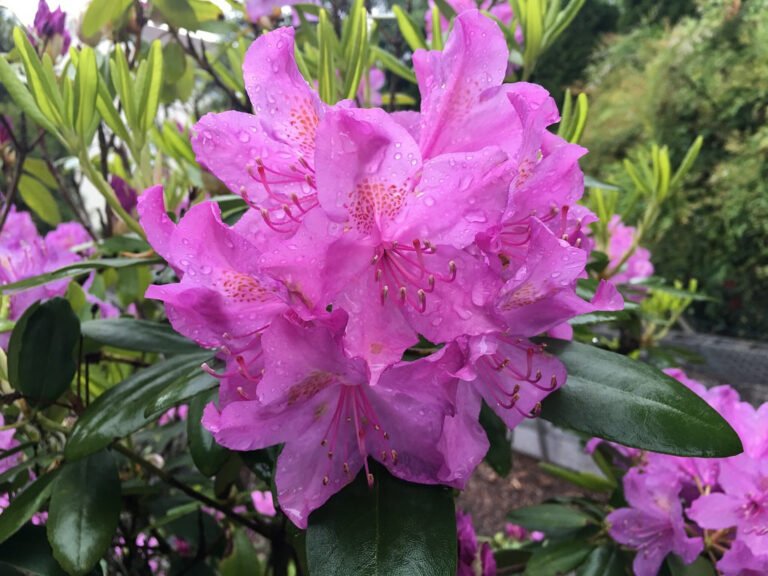
Large evergreen hybrids
Their substantial flower trusses suit a spacious woodland-style border. Give them enough room to develop a natural outline instead of planning annual shearing beside a narrow path.
A purple flowered rhododendron illustrates the familiar evergreen shrub flower form; a named hybrid is not verified.
Photo: Michele Dorsey Walfred, CC BY 2.0. Resized and optimised; cropped for display.
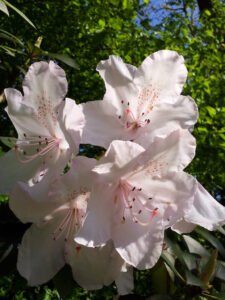
Deciduous azaleas
These shed their leaves for winter and can contribute strong flower colour, sometimes fragrance and autumn foliage. Choose them as a distinct habit within the genus rather than expecting evergreen screening.
White rhododendron flowers shown for comparison; this photograph does not establish a deciduous azalea.
Photo: duncan_idaho_2007, CC BY-SA 2.0. Resized and optimised; cropped for display. Adapted image under the same licence.
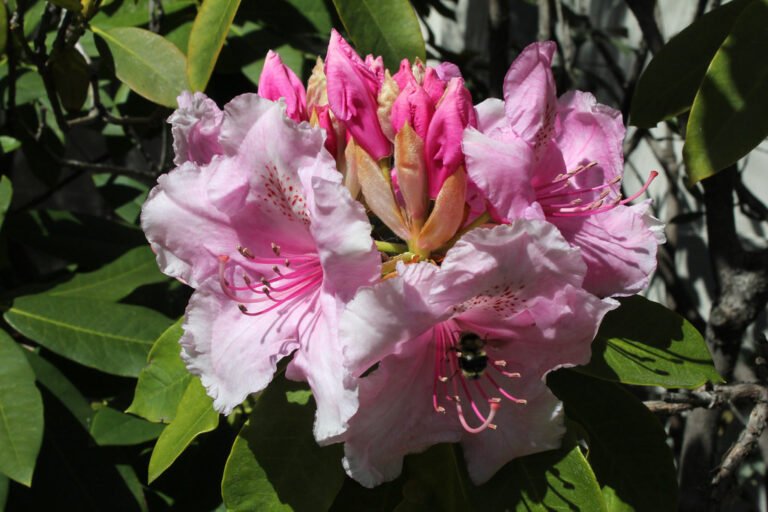
Dwarf alpine types
Small-leaved low-growing species and hybrids can suit specialist rock or container planting. Many tolerate more sun if moisture is reliable, but require the individual plant’s conditions to be checked.
Pink rhododendron flowers shown for comparison; dwarf alpine identity and final plant size are not verified.
Photo: Quinn Daedal, CC BY-SA 2.0. Resized and optimised; cropped for display. Adapted image under the same licence.
Choose rhododendron by mature size, flowering season and the conditions available in your garden. Compare healthy labelled plants, check the stated hardiness and arrange the growing position before bringing a large group home.
Flowers can be visited by suitable insects, with accessibility varying across the many flower forms.
A mature shrub also adds garden cover, but combine it with a wider range of plants rather than relying on one dense evergreen mass for all wildlife needs.
Published by Buy From Farmers Direct. Growing guidance reviewed 11 October 2026. The seasonal timeline uses the shared BFFD Growers Calendar record; adjust timings to your variety and local conditions.
Most need acid conditions; a compact plant in ericaceous compost is usually more practical.
No. Rhododendrons root near the surface and should not have their rootball buried.
Rainwater is preferable in hard-water areas, but temporary tap-water use is better than drought damage.
Check summer moisture, light, pruning and bud condition; several causes are possible.
It is optional where practical and should be done without damaging nearby new shoots.
They are within Rhododendron, with evergreen and deciduous groups that vary in size and habit.
Give rhododendron the position and seasonal care it needs, then allow time for establishment. A few regular observations of moisture, light and new growth will guide useful small adjustments through the year.
Want to get food independence, support your local grower, get better prices and shop more privately?
Local food isn’t just something you find. It’s something you protect. A free account helps keep local supply visible, supported, and resilient.

….it takes 30 seconds for food lovers and 5 minutes for suppliers
We built this for people who care where their food comes from. For people who want to remain food secure. For Farmers to get to the local people, who deserve a better income and to deliver a better price for you. For the environmentally conscious and the privacy-conscious. An account simply helps us make the map and supplier reach more useful to you, without changing how open it is. You’re always in control.


Find local food. Stay connected to it. Create a free account to support local producers and be part of a growing food network.


