Artisan cheese is cheese with a stronger connection to maker, method, milk and place.
Artisan cheese is often made in smaller batches, with more attention given to flavour, texture, ageing, milk quality and production method. Some artisan cheese comes from farmhouse dairies. Some comes from independent cheese makers, regional dairies, farm shops, cheesemongers or specialist food producers. Buy From Farmers Direct is being built to help people find artisan cheese, cheesemongers, farm shop cheese counters and dairy producers with clearer links between food, provenance and trust.
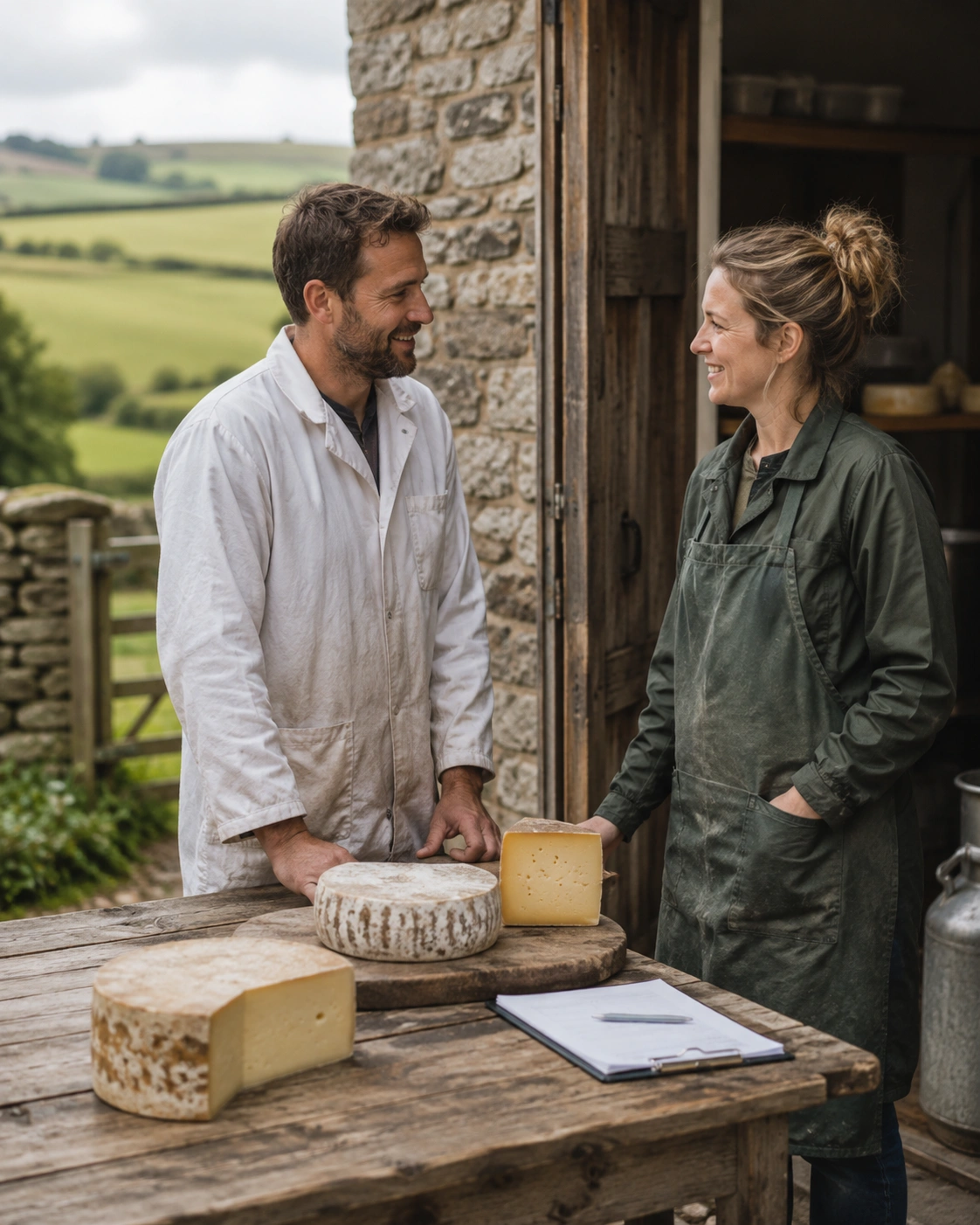
Artisan cheese usually means cheese made with craft, care and a clearer connection to the producer, milk source, method and place. It may be made in small batches by a cheesemaker, dairy farm or specialist producer, and may include soft cheese, hard cheese, blue cheese, washed rind cheese, goat cheese, sheep cheese or farmhouse cheese. Before buying artisan cheese, check who made it, where it was produced, what milk was used, whether it is pasteurised or unpasteurised where relevant, how it should be stored, what allergens apply and how fresh or mature it is.
Artisan cheese usually means cheese made with craft, care and a clearer connection to the producer, milk source, method and place. It may be made in small batches by a cheesemaker, dairy farm or specialist producer, and may include soft cheese, hard cheese, blue cheese, washed rind cheese, goat cheese, sheep cheese or farmhouse cheese. Before buying artisan cheese, check who made it, where it was produced, what milk was used, whether it is pasteurised or unpasteurised where relevant, how it should be stored, what allergens apply and how fresh or mature it is.
Artisan cheese is best understood as cheese made with more attention to craft than mass standardisation.
That does not mean every artisan cheese is handmade in the same way, or that every product using the word artisan is automatically high quality. The term is often used to describe cheese where the maker, method, milk source, maturation and flavour are central to the product.
Artisan cheese may come from:
The value of artisan cheese is often found in the detail. Who made it? Where did the milk come from? How was it matured? What makes the flavour different? How should it be stored and served?
Artisan cheese matters because it keeps food knowledge visible.
A good cheesemonger or cheese maker can explain why one cheese is crumbly, another is creamy, another is strong, another is soft, and another has a washed rind or blue veining. They can help people understand milk type, maturity, texture, storage, serving temperature and pairing.
This matters for BFFD because artisan cheese sits close to several important food themes:
Artisan cheese gives people a reason to ask where food comes from, not just what it costs.
Hard cheeses are often matured for longer and may have a firm texture. They can be sliced, grated, cooked with or served on a cheeseboard.
Soft cheeses may be creamy, delicate, rich or ripened. They often need careful storage and clear use by guidance.
Blue cheeses contain blue veining and can range from mild and creamy to strong and sharp.
Washed rind cheeses are often known for strong aromas and complex flavours. They may be soft, rich and distinctive.
Goat cheese can be fresh, soft, aged, crumbly or firm, depending on how it is made.
Sheep milk cheese can be rich and full flavoured, often with a different texture and character from cow milk cheese.
Farmhouse cheese is often linked directly to a farm or dairy, giving it a strong provenance story.
Before buying artisan cheese, check the practical details.
Useful things to look for include:
A good cheesemonger should be able to explain the cheese without making the customer feel lost.
Cheese contains milk, which is one of the major allergens.
Some cheese products may also contain other ingredients or be sold alongside foods such as nuts, crackers, chutneys, fruit, bread, honey, beer, cider or wine. Customers with allergies or intolerances should always check directly with the cheesemonger, producer or supplier before buying.
Allergen Note
BFFD does not provide food safety, legal, trading standards, allergen, dairy hygiene or labelling advice. Cheesemongers and food businesses should follow current official guidance and seek professional advice where required.
Some artisan cheeses may be made using unpasteurised milk.
This can be part of the cheese’s character, but it also means customers need clear information. Certain people may need to take extra care with unpasteurised dairy products, including pregnant women, young children, older people and people with weakened immune systems.
Cheesemongers and producers should make pasteurisation information clear where relevant, and customers should ask if they are unsure.
Unpasteurised Cheese Note
If you are pregnant, immunocompromised or buying for someone vulnerable, ask the cheesemonger or producer about pasteurisation and current food safety guidance before buying.
A good cheeseboard should offer contrast.
Rather than choosing several cheeses that taste similar, think about texture, strength, milk type and style.
A simple cheeseboard might include:
Additions might include bread, crackers, chutney, fruit, honey, pickles or nuts, depending on preference and allergens.
A cheesemonger can help choose the right amount of cheese for the number of people and the occasion.
Artisan cheese is not only for cheeseboards.
It can be used in cooking, but stronger cheeses should be used thoughtfully. Some melt well, some crumble, some are better cold, and some can dominate a dish if used heavily.
Useful cooking ideas include:
The best cooking cheese depends on flavour, melt, saltiness and texture.
Artisan cheese can cost more than standard supermarket cheese, but it can still be used thoughtfully.
A strong cheese may go further because less is needed for flavour. A small piece can lift a salad, soup, toastie, tart, pasta, potato dish or cheeseboard. Buying the right amount can also reduce waste.
Useful budget questions include:
Good value is not always about the cheapest block. It is about flavour, use and waste.
Restaurants, cafés, pubs and hotels may use artisan cheese to improve menus and tell a stronger local food story.
A cheesemonger can help hospitality buyers choose cheese for:
For hospitality buyers, the key questions are consistency, availability, delivery, portioning, cost, storage and provenance that can be explained to customers.
Cheese for Restaurants
BFFD is being built to help people discover food by product, place and supplier type.
For artisan cheese, BFFD can help users find:
A strong supplier profile can help show what cheese is available, where it comes from, how to buy and why it is worth discovering.
If you sell artisan cheese, run a cheese shop, supply farm shops, attend markets or produce cheese directly from a dairy, BFFD can help people find you more easily.
A strong BFFD listing can show:
List your cheese shop, dairy, farm shop counter or online cheese business on BFFD and help people find your products by location, cheese type and buying route.
Get Listed as a Cheesemonger
View Supplier Journey
A cheese can be artisan but made far away. Check the producer and origin.
Organic is a separate certified claim. Artisan usually refers to craft, production method and maker identity.
The best cheese depends on taste, occasion, pairing, texture and personal preference.
Some farm shops sell their own cheese, while others stock local, regional or imported cheeses.
BFFD presents supplier information, but always check labels, provenance and food safety details.
Selling jam brings food business responsibilities.
Related Cheesemonger Pages
Use this for food business setup and safe food operation context.
Use this for allergen responsibilities and customer information.
Use this for official food hygiene and safe food handling context.
Use this for hygiene rating checks and public trust.
Use this if the cheese society serves or sells alcohol at events.
*External sources are provided for further reading. BFFD does not provide food safety, legal, trading standards, allergen, dairy hygiene, delivery, labelling or business advice. Cheesemongers, cheese makers and food businesses should always follow current official guidance and seek professional advice where required.
Artisan cheese usually refers to cheese made with craft, care and a clearer connection to the maker, milk source, production method and place.
Artisan cheese usually refers to cheese made with craft, care and a clearer connection to the maker, milk source, production method and place.
Artisan cheese usually refers to cheese made with craft, care and a clearer connection to the maker, milk source, production method and place.
Artisan cheese usually refers to cheese made with craft, care and a clearer connection to the maker, milk source, production method and place.
Artisan cheese usually refers to cheese made with craft, care and a clearer connection to the maker, milk source, production method and place.
Artisan cheese usually refers to cheese made with craft, care and a clearer connection to the maker, milk source, production method and place.
Artisan cheese usually refers to cheese made with craft, care and a clearer connection to the maker, milk source, production method and place.
Artisan cheese usually refers to cheese made with craft, care and a clearer connection to the maker, milk source, production method and place.
Artisan cheese should be easier to understand, easier to find and easier to connect back to the maker.BFFD is being built to help people discover cheesemongers, cheese makers, farm shops and dairy producers with clearer links between product, place, provenance and trust.
