Alstroemeria brings generous summer colour to a sunny border and useful stems to the cutting garden. Often called Peruvian lilies, these plants are fleshy rooted perennials rather than true lilies. A sheltered position, soil that drains freely and sensible winter protection give them a better start than a rich but permanently wet planting hole. Choose the cultivar before choosing the space: compact patio selections and tall border plants need different room and support.
Herbaceous perennial
Summer flowers
Sun or light shade
Good cut flower
Protect young roots
| Botanical name | Alstroemeria species and hybrids |
| Family | Alstroemeriaceae |
| Common name | Peruvian lily |
| Plant type | Herbaceous perennial |
| Origin | South America |
| Main use | Borders, containers and cut flowers |
| Typical height | 15cm to over 1m, cultivar dependent |
| Typical spread | 30cm to 60cm, cultivar dependent |
| Light | Full sun or light shade |
| Exposure | Warm and sheltered |
| Soil | Fertile soil with good drainage |
| Moisture | Moist during establishment; avoid saturation |
| Hardiness | Check the named cultivar |
| Planting season | Spring; autumn in suitable mild sites |
| Flowering season | Early summer to autumn, cultivar dependent |
| Suggested border spacing | 60cm; adjust to mature spread |
| Propagation | Careful division of mature clumps |
| Containers | Large pot with open drainage holes |
| Wildlife | Flowers visited by pollinating insects |
| Handling | Wear gloves; sap may irritate skin |
| Plant name | Crop type | Spacing |
Sow indoors
Plant outdoors
Harvest
Polytunnel | |||||||||||
|---|---|---|---|---|---|---|---|---|---|---|---|---|---|---|
| Jan | Feb | Mar | Apr | May | Jun | Jul | Aug | Sep | Oct | Nov | Dec | |||
| Alstroemeria | Unusual & exotic | Single 0.60m, In row 0.60m, Row gap 0.60m | Polytunnel | Polytunnel | Polytunnel | Plant outdoors, Polytunnel | Plant outdoors | Harvest | Harvest | Harvest | Sow indoors, Plant outdoors, Harvest | Sow indoors, Harvest, Polytunnel | Polytunnel | Polytunnel |
Sow indoors: September, October. Plant outdoors: April, May, September. Harvest: June, July, August, September, October. Polytunnel: January, February, March, April, October, November, December.
The calendar is a guide for established garden alstroemerias. Harvest means flowers for cutting, not an edible crop. Spring is the simplest planting window in colder gardens; autumn planting suits mild, freely draining sites. The seed window shows autumn sowing of fresh seed under suitable protection; follow the species or seed supplier protocol, since germination can be irregular. Polytunnel months indicate protected growing or overwintering work only: an unheated tunnel is not reliably frost free.
A good choice where you want repeated flowers without replanting the border every year. Start with a healthy plant in a pot and a clearly named variety. That makes mature size, colour and winter requirements much easier to check than buying an unnamed packet of dry roots.
Choose a compact selection for a patio pot and a taller one for cutting. If your only available position stays wet through winter, grow in a container you can shelter instead. Young plants need time to root deeply, so judge first year success by healthy establishment as well as flower numbers.
Photo: Energy86, CC BY-SA 3.0. Resized and optimised; cropped for display. Adapted image under the same licence.
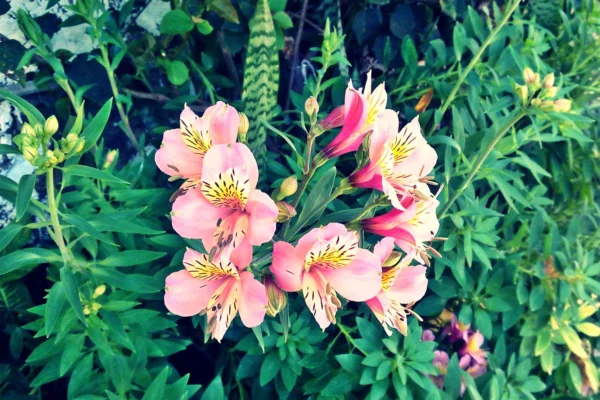
Put alstroemeria where it receives useful summer sun and some shelter from strong winds. Light shade is acceptable, but a dark corner is unlikely to give the same display as an open position. Notice how neighbouring shrubs will grow before settling on the site.
Drainage is the deciding factor in many British gardens. Check the chosen bed after heavy rain. If water remains around the planting area, improve the wider growing space or select another position; adding a little grit to one isolated hole will not drain the surrounding ground.
Allow air and access around the clump. A typical border plant can be spaced about 60cm from its neighbours, but follow the mature spread on its label. Leave enough working room to remove spent stems without trampling the crown or surrounding plants.
For containers, choose a substantial pot with drainage holes and a loam based peat free compost made more open with horticultural grit. Plan where the pot will spend winter before filling it. A wheeled pot stand can make seasonal movement much more manageable.
Photo: apple2000, CC BY-SA 3.0. Resized and optimised; cropped for display. Adapted image under the same licence.
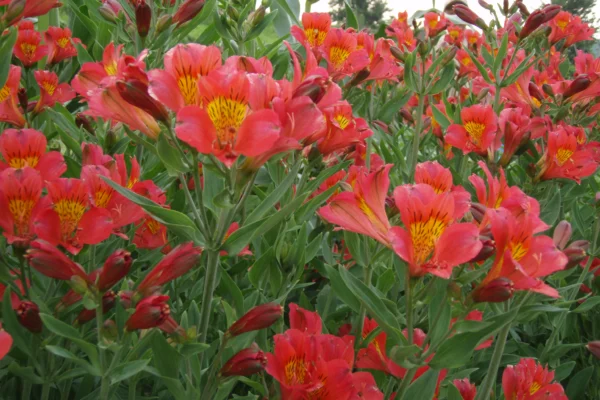
Spring planting gives young roots a growing season before their first winter. Handle the rootball gently, because fleshy roots are brittle and a damaged plant may take time to recover.
1.
Check the cultivar label for height, spread and hardiness before buying.
2.
Water the plant in its nursery pot and let excess water drain.
3.
Remove perennial weeds from the wider planting area.
4.
Dig a hole wide enough to accept the rootball without bending or crushing it.
5.
Ease the plant out gently and retain as much of the rootball as possible.
6.
Set it at the existing compost level unless the supplier gives different instructions.
7.
Backfill, settle the soil with your hands and water thoroughly.
8.
Label the position and add support for tall stems before they become crowded.

Watering
Water new plants when the root zone begins to dry, directing water onto the soil. Check below the surface before repeating: a dry crust can hide wet ground. Once a border clump is established, routine watering is usually needed much less often.
Containers need closer attention during warm weather because their restricted compost dries faster. Water until the rootball is moistened, then allow excess to escape. Empty a water filled saucer rather than leaving the fleshy roots standing in it.

Feeding
In a reasonable garden soil, begin with modest soil improvement rather than repeated heavy feeding. If growth looks poor, check light, moisture and root health first. Extra fertiliser cannot correct a waterlogged position or a plant continually grazed by slugs.
Feed container plants during summer with an appropriate potassium rich fertiliser, following its label. Make a note of feeding dates so doses are not accidentally repeated. Avoid applying concentrated feed to a dry rootball.

Pruning
Remove finished flowering stems to keep the clump productive and tidy. On firmly established plants, a gentle upward pull can remove the whole stem. In the first summer, cut stems instead, so you do not loosen the young root system.
Support tall stems before wind or rain bends them across the path. Remove dead remains in early spring, taking care around new shoots. Do not repeatedly dig through a dormant clump simply because no foliage is visible above ground.

Winter care
Protect young border plants during their first winters with an insulating dry mulch. Use the cultivar rating and your local conditions together: a sheltered urban border and an exposed rural frost pocket are different prospects even within the same county.
Move potted plants to a bright, sheltered place that remains frost free and limits winter rain. Check the compost occasionally rather than continuing the summer watering routine. Protection should address both freezing roots and prolonged saturation.
Look for leafy upright stems topped by clusters of funnel shaped flowers. There are six petal like segments, frequently marked with darker lines or speckles. Narrow leaves can appear twisted along the stem, one of the useful details to notice alongside the flowers.
Flower colour alone does not identify a cultivar reliably. Keep the original plant label and photograph the whole clump as well as a bloom. Despite the common name Peruvian lily, Alstroemeria belongs to a different family from true Lilium lilies and is not a food plant.
Photo: Varsha munde, CC BY-SA 4.0. Resized and optimised; cropped for display. Adapted image under the same licence.
A longer season in a sheltered southern garden may produce flowers later into autumn, but the calendar should never overrule the weather. Fresh shoots can be damaged by a late cold spell, particularly when a plant has been brought on under protection.
In cooler districts, favour spring planting and allow generous time for establishment. A raised, freely draining bed can be more useful than adding feed. Exposed sites may also require support even for cultivars that stand well in a sheltered garden.
In wet western gardens, pay special attention to winter drainage and the position of containers beneath roof runoff. Keep a simple annual record of first shoots, first flowers and winter losses. It provides more useful local guidance than assuming all UK gardens follow identical dates.
Photo: Kolforn (Wikimedia), CC BY-SA 4.0. Resized and optimised; cropped for display. Adapted image under the same licence.
Slugs and snails may graze soft new growth. Inspect the crown after dusk, remove pests by hand and keep young plants under observation as they emerge.
Poor drainage may be damaging the roots. Stop automatic watering, check that pot holes are open and address the wet conditions before considering fertiliser.
Review sunlight, cultivar season and recent establishment. Avoid assuming the answer is stronger feed. A new clump may need time before delivering a full display.
Wind and heavy rain can overwhelm tall stems. Insert a support early and guide stems into it loosely; moving an established clump should be a considered last step.
Check for aphids. Inspect nearby growth, encourage natural predators and remove small colonies by hand or with a gentle water spray where practical.
Divide only a healthy, established clump when extra plants are needed, usually in spring. Lift carefully and retain viable shoots with their fleshy roots. Replant promptly and water in. Small, repeatedly disturbed divisions are less useful than a few substantial pieces.
Seed raising is possible but slower and less predictable than buying a named plant. Seedlings from garden hybrids may differ from the parent. Follow the packet method for the particular seed rather than assuming an ordinary quick annual sowing will work.
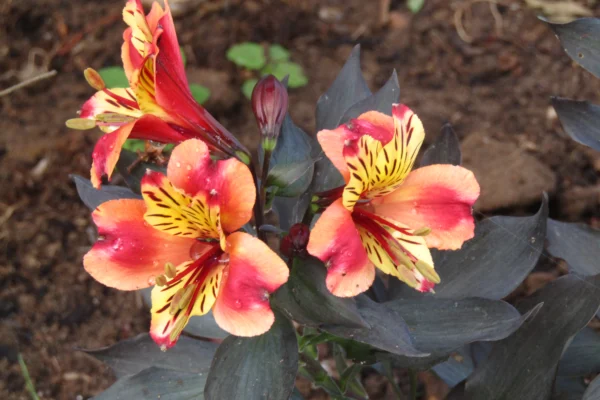
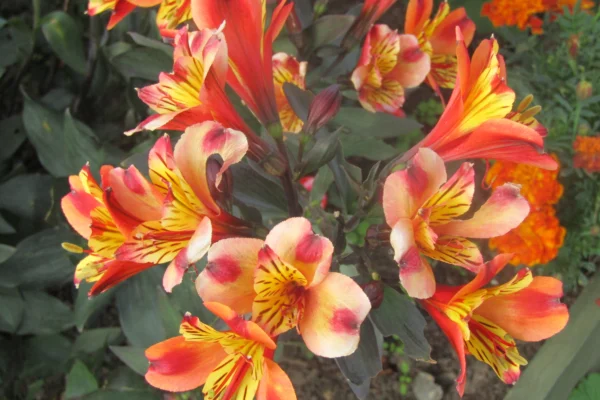
Alstroemeria Indian Summer ('Tesronto')
Copper orange flowers with yellow inner markings stand above bronze tinted foliage. This is a substantial border selection, generally around 75cm to 90cm tall, with colour continuing from summer into autumn.
Photo: Kolforn (Wikimedia), CC BY-SA 4.0. Resized and optimised; cropped for display. Adapted image under the same licence.
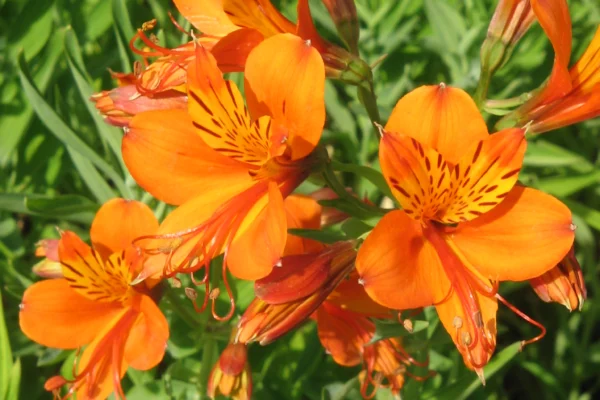
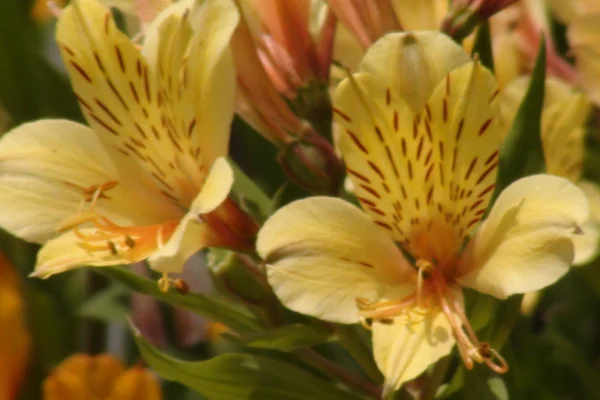
Alstroemeria aurea
The species offers yellow to orange flowers with darker markings and an upright border presence. Give it room to establish and check the identity of named selections, which may differ from the species photograph.
Photo: Meneerke bloem, CC BY-SA 3.0. Resized and optimised; cropped for display. Adapted image under the same licence.
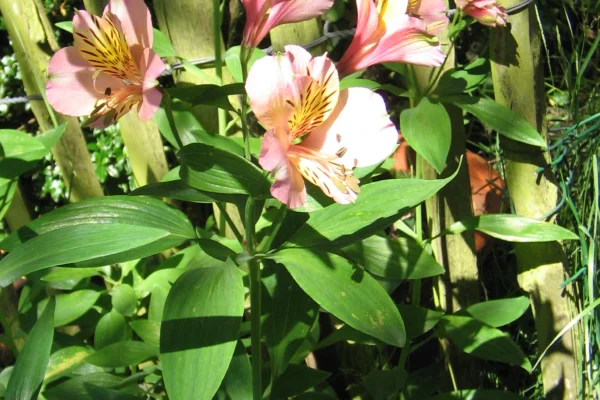
Alstroemeria ligtu hybrids
Seed raised hybrids bring a variable palette of pastel pink, coral and orange. They can reach about 1.2m and are particularly useful where a mixed early summer display is welcome. The photograph shows a ligtu cultivar rather than a single named seed strain.
Photo: Meneerke bloem, CC BY-SA 4.0. Resized and optimised; cropped for display. Adapted image under the same licence.
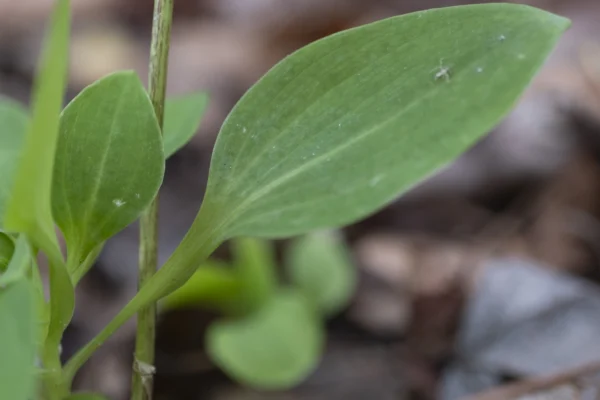
Alstroemeria psittacina
Parrot lily has narrower, unusually coloured flowers combining crimson red and green. It offers a different flower shape from broad petalled modern hybrids and deserves the same care over a sheltered position and sound drainage.
Photo: Alex Abair, CC BY 4.0. Resized and optimised; cropped for display.
Explore the BFFD map for local growers and plant sellers, then ask about named alstroemeria varieties, mature size and collection arrangements. Check current availability directly before travelling.
Alstroemeria flowers can attract bees and other visiting insects. Combine them with plants that flower earlier and later so a border offers more than one seasonal flush. Leave space for a varied planting rather than relying on one ornamental alone.
Avoid spraying open flowers. A quick inspection can often distinguish a few aphids from a problem that needs intervention. Tolerating minor cosmetic damage helps retain food and habitat for beneficial garden wildlife.
Published by Buy From Farmers Direct. Sources checked 4 October 2026. Growing references: RHS: How to grow alstroemerias; NC State Extension: Alstroemeria; RHS: Alstroemeria Indian Summer; RHS: Alstroemeria ligtu hybrids; RHS: Alstroemeria psittacina; RHS: Alstroemeria Plant Guide. The seasonal timeline uses the shared BFFD Growers Calendar record; adjust timings to your variety and local conditions.
Yes, suitable garden alstroemerias are perennials. Their foliage normally dies back and new shoots emerge again. Survival depends on cultivar hardiness, establishment and drainage, with young and container grown plants needing particular care.
Yes. Choose a compact cultivar, a large pot and freely draining compost. Water and feed while it is actively growing, then provide appropriate frost free winter shelter.
Protect young border plants with an insulating mulch and avoid saturated soil. Move pots to suitable frost free shelter. An unheated greenhouse or polytunnel may still freeze, so check actual temperatures.
Cut stems in the first summer after planting. Once a clump is firmly rooted, a gentle upward pull can remove a finished flower stem. Do not tug hard enough to lift or disturb the crown.
Check the variety’s season, available sunlight and how recently it was planted. Inspect moisture and roots before feeding. An establishing or repeatedly disturbed plant may flower less strongly.
Spring is a practical time for dividing established clumps. Handle the brittle roots carefully, keep useful roots and shoots together and replant immediately. Division is not an annual requirement.
Use the Growers Calendar to plan planting and flowering alongside the rest of your garden. For plants or locally grown cut stems, explore the BFFD directory and confirm what individual growers currently offer.
Explore more growing guides: Agastache, Anemone, Aster (China).
Want to get food independence, support your local grower, get better prices and shop more privately?
Local food isn’t just something you find. It’s something you protect. A free account helps keep local supply visible, supported, and resilient.

….it takes 30 seconds for food lovers and 5 minutes for suppliers
We built this for people who care where their food comes from. For people who want to remain food secure. For Farmers to get to the local people, who deserve a better income and to deliver a better price for you. For the environmentally conscious and the privacy-conscious. An account simply helps us make the map and supplier reach more useful to you, without changing how open it is. You’re always in control.


Find local food. Stay connected to it. Create a free account to support local producers and be part of a growing food network.


