Cordon apple trees make a narrow fence line surprisingly productive. Each tree is trained around one main stem, with fruit carried close to it on short shoots. The method suits gardeners who want several apple varieties without giving each a spreading crown. Choose a suitable grafted tree, install a permanent support and make late summer pruning part of the annual routine.
Small garden choice
Permanent support
Summer pruning
Outdoor fruit tree
Edible autumn crop
| Botanical name | Malus domestica |
| Family | Rosaceae |
| Plant type | Deciduous fruit tree |
| Growing form | Single stem, oblique or vertical |
| Rootstock | Usually M9; M26 for more vigour |
| Typical height | Oblique cordons usually 1.5 to 2m |
| Space required | Allow for the length of the sloping stem |
| Plant spacing | 60 to 90cm between trees |
| Sunlight | Sunny, sheltered position |
| Soil | Fertile soil with good drainage |
| Planting season | November to March while dormant |
| Blossom | Usually April or May |
| Harvest | August to October, by cultivar |
| Pollination | Compatible apple with overlapping blossom |
| Pruning | Late summer; occasional winter renewal |
| Container suitability | Possible with suitable rootstock |
| First crops | Often within a few years; variable |
| Propagation | Grafting or budding named varieties |
| Winter care | Check supports and protect exposed pots |
| Main watch points | Scab, canker, codling moth and drought |
| Plant name | Crop type | Spacing |
Sow indoors
Plant outdoors
Harvest
Polytunnel | |||||||||||
|---|---|---|---|---|---|---|---|---|---|---|---|---|---|---|
| Jan | Feb | Mar | Apr | May | Jun | Jul | Aug | Sep | Oct | Nov | Dec | |||
| Apple (Cordon) | Orchard fruit | Single 0.90m, In row 0.90m, Row gap 1.80m; supported cordon layout, allow access | Sow indoors, Plant outdoors | Sow indoors, Plant outdoors | Sow indoors, Plant outdoors | No activity recorded | No activity recorded | No activity recorded | No activity recorded | Harvest | Harvest | Sow indoors, Harvest | Sow indoors, Plant outdoors | Sow indoors, Plant outdoors |
Sow indoors: January, February, March, October, November, December. Plant outdoors: January, February, March, November, December. Harvest: August, September, October. Polytunnel: no months recorded.
Plant dormant trees mainly from November to March, whenever the ground is workable. The harvest band covers different cultivars from August to October, not three months of picking from every tree. No sowing or polytunnel period is shown: named apples are bought as grafted trees and ordinary outdoor cordons need neither.
A cordon is a training system, not a separate apple species. It trades the bulk of a bush tree for a narrow, carefully managed strip. A short row can therefore offer several flavours and harvest dates within reach of the path.
This form suits someone willing to inspect ties and prune every year. If that maintenance is unlikely to happen, a small bush tree on an appropriate rootstock is usually a more forgiving choice. Allow working room in front of the support.
Photo: Augustus Binu, CC BY-SA 3.0. Resized and optimised; cropped for display. Adapted image under the same licence.
Choose a bright boundary with reasonable shelter. Heavy shade leaves less light for productive fruiting wood; a cramped gap behind shrubs also makes routine inspection awkward.
Prepare the whole planting strip. Remove persistent weeds and deal with poor drainage before ordering trees. The support must remain secure when wet soil, wind and the eventual fruit load act on it.
For conventional oblique cordons, plan trees about 60 to 90cm apart and train their stems at roughly 45 degrees. Check the nursery recommendation for the chosen combination of cultivar, soil and rootstock.
Keep wall wires away from the masonry so growth is accessible and ventilated. Remember that ground at the foot of a wall may receive little rain even when the rest of the garden looks wet.
Photo: R J Higginson, CC BY-SA 3.0. Resized and optimised; cropped for display. Adapted image under the same licence.
Buy a labelled grafted apple with its cultivar and rootstock recorded. Spur bearing varieties are easiest to manage as cordons; an attractive fruit photograph alone tells you nothing about the tree’s suitability.
1.
Mark the planting positions and check the eventual direction of each main stem.
2.
Install strong posts, tensioned wires and a sloping cane before planting.
3.
Keep bare roots moist while preparing a hole wide enough to spread them comfortably.
4.
Position the tree at its previous soil level, leaving the graft union clearly above soil.
5.
Backfill with the excavated soil and firm gently without stamping roots into a compacted pocket.
6.
Water thoroughly, then cover the surrounding soil with mulch kept away from the trunk.
7.
Tie the stem to its cane with flexible ties that will not cut into thickening bark.
8.
Check whether initial formative pruning was already done by the nursery before making further cuts.

Watering
Check the root zone of a new cordon through spring and summer. Give a thorough watering when it is becoming dry, then check again before repeating. A quick surface sprinkle can leave deeper roots dry.
Inspect the trees nearest posts or walls individually; rainfall may not reach every position equally. In a container, test the compost rather than assuming a shower has replenished it.

Feeding
Support steady growth with an annual mulch over moist soil. Keep the base of the main stem clear so bark is easy to inspect.
Feed according to growth, soil condition and the product instructions. Strong growth already demanding repeated restraint is a reason to review feeding, not automatically increase it.

Pruning
Prune established cordons in late summer, usually from mid to late August once the lower parts of new shoots have become woody. Shorten eligible long shoots from existing spurs to one leaf above their basal leaf cluster; retain short shoots likely to carry fruit buds.
New shoots arising directly from the main stem need different treatment, commonly three leaves above the basal cluster. Preserve the leader while extending the framework. Thin congested old spurs in winter when needed, rather than treating the whole tree like a hedge.

Winter care
Check wire tension, posts and ties after storms. Keep labels readable and replace tightening ties before they become embedded. The bare outline makes faults much easier to see.
A cordon grown outdoors does not normally need winter heat. Protect vulnerable containers from severe freezing and waterlogging; check compost during dry spells even after leaf fall.
A conventional cordon has one dominant stem with compact fruiting growth along it. An oblique cordon leans; a vertical cordon stands upright. Both depend on training and selective pruning to keep the intended shape.
Do not confuse a trained vertical cordon with a naturally columnar Ballerina apple. Their pruning needs differ. Keep the original label, because you cannot reliably determine rootstock or cultivar from the outline alone.
Photo: Andy / Andrew Fogg, CC BY 2.0. Resized and optimised; cropped for display.
In exposed gardens, establish shelter and supports before expecting a heavily laden cordon to perform well. A sunny sheltered strip can be more valuable than a larger, windier planting space.
On cooler sites, ask a local fruit nursery which cultivars reliably ripen nearby. Compare that advice with your own intended harvest window; an apple that matures late elsewhere may be a less comfortable choice.
Record flowering, pruning and picking dates for each tree. A simple labelled row plan prevents a replacement tree or lost label from turning different pruning and harvest requirements into guesswork.
Photo: National Fruit Collection, Brogdale, Open Government Licence v2.0. Resized and optimised; cropped for display.
Vertical cordons can become dominated by top growth. Review missed pruning, light and feeding. Correct the imbalance gradually; repeatedly cutting only the tallest tip may leave the underlying problem untouched.
Check for a compatible apple flowering nearby, then consider frost and poor insect activity during blossom. A different rootstock does not turn two trees of the same cultivar into pollination partners.
Apple scab is a possible cause. Remove fallen affected leaves, keep the framework open and seek cultivar specific advice if the problem recurs. Natural russet skin is not automatically scab.
Suspect canker where bark dies back in a distinct patch. Remove affected small shoots into healthy wood. A lesion on the main cordon stem needs assessment because that stem carries the whole framework.
Brown rot often follows injury. Remove affected and shrivelled fruit promptly, including fruit left in the branches over winter. Avoid storing damaged apples with sound fruit.
Named cordon apples are reproduced by grafting or budding onto a chosen rootstock. Seedlings raised from pips will not reliably retain the parent variety or its controlled size.
For a first project, invest effort in training a sound purchased tree. If you later learn grafting, label both partners and keep a record of their origin; a successful graft still needs several seasons of aftercare.
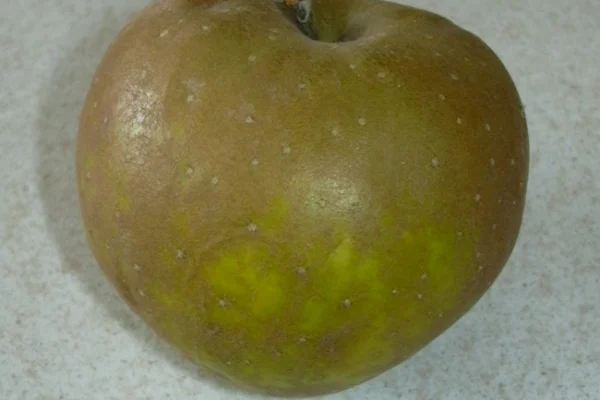
Malus domestica ‘Egremont Russet’
A russet dessert apple with a firm texture and nutty flavour. Its spur bearing habit suits trained forms. Flowering group 2; choose the rootstock separately from the fruit variety.
Photo: AJR, CC BY-SA 3.0. Resized and optimised; cropped for display. Adapted image under the same licence.
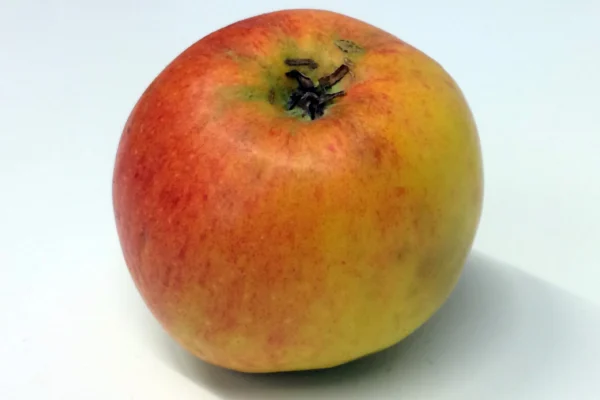
Malus domestica ‘James Grieve’
A juicy Scottish apple useful for cooking before full ripeness and eating later. Flowering group 3. Its spur bearing habit offers a useful option for either a supported trained tree or a conventional bush.
Photo: Aron Ambrosiani, CC BY-SA 4.0. Resized and optimised; cropped for display. Adapted image under the same licence.
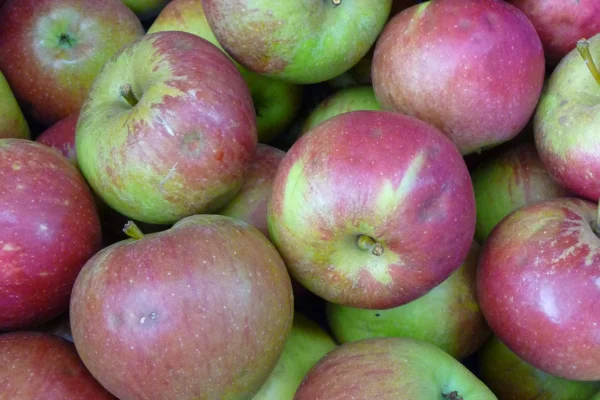
Malus domestica ‘Fiesta’
Also sold as Red Pippin, this Cox style apple gives an autumn crop with storage potential. A spur bearer in flowering group 3. A support framework helps organise its naturally rather untidy growth.
Photo: 4028mdk09, CC BY-SA 3.0. Resized and optimised; cropped for display. Adapted image under the same licence.
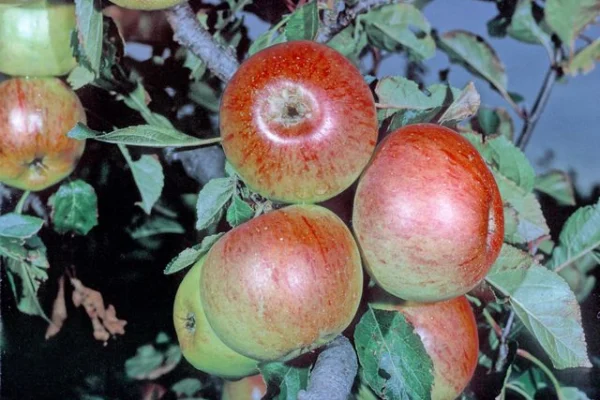
Malus domestica ‘Sunset’
A compact, aromatic dessert apple in flowering group 3. Its spur bearing habit is useful for small trained trees. Thin heavy crops thoughtfully because crowded fruit can remain small.
Photo: National Fruit Collection, Brogdale, Open Government Licence v2.0. Resized and optimised; cropped for display.
Explore the BFFD map for growers and producers near you. Check each listing and contact the business about seasonal apples or planting stock before travelling; availability and tree forms vary.
Apple blossom provides food for visiting insects. Keep flowers accessible during the day if temporary frost protection is used, and avoid spraying open blossom.
A narrow fruit strip can sit alongside flowers with a different flowering season. Keep vigorous neighbouring plants out of the young tree’s immediate root zone so habitat planting does not become competition.
Published by Buy From Farmers Direct. Sources checked 4 October 2026. Growing references: RHS: Starting a new cordon; RHS: Pruning established cordons; RHS: How to grow apples; RHS: Fruit trees, feeding and mulching; RHS: Apple canker; RHS: Apple and pear scab; RHS: Brown rot; RHS: Plant an apple tree for wildlife; Orange Pippin: Egremont Russet; Orange Pippin: James Grieve; Orange Pippin: Fiesta; Orange Pippin: Sunset. The seasonal timeline uses the shared BFFD Growers Calendar record; adjust timings to your variety and local conditions.
Allow about 60 to 90cm between conventional oblique cordons, subject to the nursery’s guidance. Also reserve enough length for the sloping stems and room to stand in front for pruning.
Carry out the principal maintenance prune in late summer, generally August after shoot bases become woody. Newly planted trees require formative treatment; crowded old spurs may also need selective winter thinning.
No. Start with a suitable dwarfing rootstock and preferably a spur bearing cultivar. Pure tip bearers do not suit routine cordon pruning. Partial tip bearers need modified treatment.
Most benefit from a different compatible cultivar with overlapping blossom. A suitable neighbouring apple may help, but its presence and flowering time should be checked rather than assumed.
Yes, with an appropriate rootstock, substantial container and reliable watering. The support still matters. Container restriction does not remove the need for annual pruning.
Check the named variety’s expected season, then test a sound fruit. A ripe apple should part from the branch when lifted and gently turned. Do not pull hard or strip every variety together.
Use the Growers Calendar to keep seasonal jobs in view, then explore the BFFD map to discover local food producers. A planting plan becomes more useful when it reflects your soil, available space and the apples you enjoy eating.
Explore more growing guides: Apple (Dwarf), Apple (Espalier), Apple (Large).