Milkweed is a name shared by plants with quite different garden needs. This guide covers pink or white Asclepias incarnata for moisture retentive soil and orange Asclepias tuberosa for a sunny, freely drained position. It excludes invasive common milkweed, Asclepias syriaca. Choose a correctly labelled nursery plant first, then match the growing conditions to that species.
Check the species
Sunny perennial borders
Different moisture needs
Summer flowers
Ornamental, not edible
| Botanical name | Asclepias incarnata and Asclepias tuberosa |
| Family | Apocynaceae |
| Plant type | Deciduous herbaceous perennials |
| Typical height | About 50cm–1.5m, by species |
| Typical spread | About 40–60cm |
| Light | Full sun |
| Soil | Match soil moisture to the species |
| Main interest | Summer flower clusters and seed pods |
| Best starting point | Correctly labelled nursery plants |
| Working spacing | Single 50cm, In row 50cm, Row gap 50cm |
| Pink species | Asclepias incarnata |
| Orange species | Asclepias tuberosa |
| Moisture for incarnata | Moisture retentive fertile soil |
| Moisture for tuberosa | Freely drained soil |
| Main flowering | Summer |
| Winter growth | Dies back above ground |
| Best planting | Spring as soil warms |
| Seed behaviour | Species and seed treatment dependent |
| Handling | Wear gloves; harmful if eaten |
| Excluded species | Asclepias syriaca |
| Plant name | Crop type | Spacing |
Sow indoors
Plant outdoors
Harvest
Polytunnel | |||||||||||
|---|---|---|---|---|---|---|---|---|---|---|---|---|---|---|
| Jan | Feb | Mar | Apr | May | Jun | Jul | Aug | Sep | Oct | Nov | Dec | |||
| Milkweed | Not recorded | Single 50cm, In row 50cm, Row gap 50cm | No activity recorded | No activity recorded | No activity recorded | Plant outdoors | Plant outdoors | No activity recorded | No activity recorded | No activity recorded | No activity recorded | No activity recorded | No activity recorded | No activity recorded |
Sow indoors: no months recorded. Plant outdoors: April, May. Harvest: no months recorded. Polytunnel: no months recorded.
The April and May planting band is a practical spring window for nursery grown plants once soil is workable and cold spells have eased. Sowing is blank because cold treatment and germination requirements vary between species and seed products; follow a verified packet if using seed. The harvest row is blank because this is an ornamental guide, and routine cutting is not needed. No regular tunnel band is shown for established outdoor plants. Space about 50cm apart, adjusting for the labelled mature spread.
These milkweeds suit gardeners who enjoy unusual flower detail and can give a perennial a settled position. Start with a realistic amount of space and a plant you can reach easily for routine care. A small, well placed group is easier to establish than a crowded display that needs constant correction.
They are not interchangeable solutions for every damp or dry border. Do not buy a plant labelled only milkweed without a botanical name. Look at the garden through the whole year before buying. Space that seems empty in spring may already belong to a neighbouring plant by midsummer, while the winter conditions can be very different from a sheltered shop display.
Photo: Macdon910, CC BY-SA 4.0. Resized and optimised; cropped for display. Adapted image under the same licence.
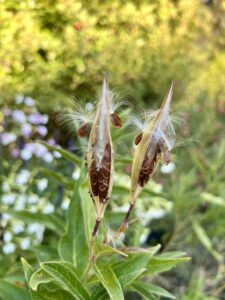
Give both species sun. Asclepias incarnata can join a moisture loving border, while A. tuberosa needs a warmer, better drained root area. Check how the light moves across the proposed position, including shade cast by fences and nearby trees. The amount of direct sun at midday alone does not describe the whole growing site.
For A. incarnata, improve moisture retention without creating stagnant soil. For A. tuberosa, avoid heavy wet winter ground; raised planting may be more useful than a little grit in a deep hole. Clear persistent weeds before planting. Working around established roots later is slower and risks damage, so this is a useful stage to deal with bindweed, couch grass or other unwanted growth.
A substantial container can help control drainage, but demands careful watering. Do not let the moist soil species dry repeatedly or leave the drainage loving species standing in a saucer. Make drainage holes accessible and allow water to escape freely. Check the pot after heavy rain as well as during dry weather; a blocked outlet can undo otherwise careful watering.
Mark the position before foliage dies down. Shoots can emerge relatively late, so an apparently empty patch should not be dug over in early spring. Leave practical access for inspection and maintenance. Think about the mature outline rather than filling every visible gap around a newly bought plant. Its neighbours will also be growing into the available space.
Photo: Agnieszka Kwiecień, Nova, CC BY-SA 4.0. Resized and optimised; cropped for display. Adapted image under the same licence.
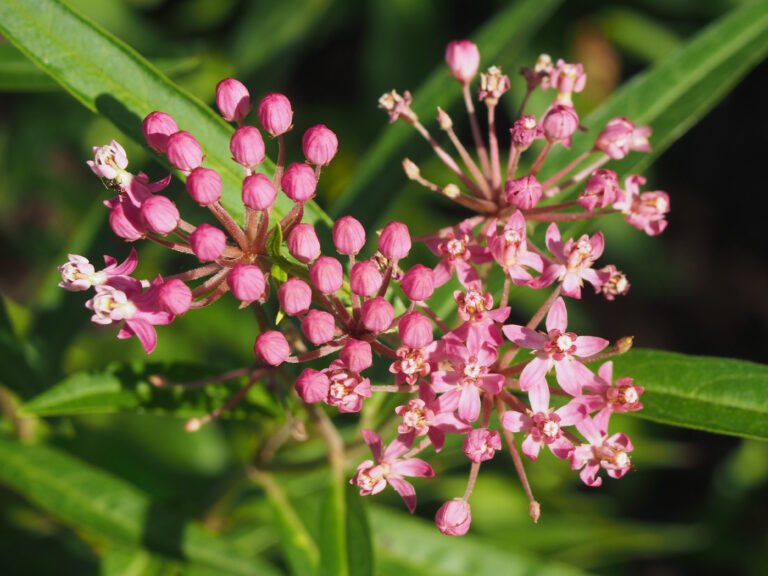
Nursery plants make the species identity and initial establishment easier to manage than an unlabelled seed mixture. Prepare everything before removing plants from their pots or opening a seed packet, so roots and seedlings are not left exposed while you look for tools.
1.
Buy only a labelled A. incarnata or A. tuberosa from a reputable supplier. Exclude Asclepias syriaca. Keep the label and record the planting date. That small record makes it much easier to understand differences in growth and to replace a successful selection accurately.
2.
Prepare the bed for the particular moisture requirement, clearing weeds before the roots establish. Avoid working saturated soil: squeezing and treading it while wet can leave a compacted planting area. Wait for a workable day if the surface smears rather than crumbles.
3.
Keep the young plant watered in its pot while preparing the site; do not leave a small rootball to dry in sun. Work with clean containers and fresh suitable compost where pots are involved. Reusing a container is fine after cleaning it, but a crust of old compost can conceal pests and obstruct drainage.
4.
Plant in spring when the soil is workable and the young plant can begin active growth. Use the forecast alongside the calendar. A warm afternoon does not cancel a cold night, and a printed month should never take priority over the conditions in your own garden.
5.
Slide the rootball out gently and plant at its previous level, avoiding unnecessary disturbance to established roots. Work carefully rather than rushing to fill the space. Check the intended depth and spacing before finishing, because corrections are easier now than once growth is established.
6.
Water in thoroughly and keep the base free of a thick wet pile of mulch. Water gently enough to avoid washing compost away. If the surface settles, top it up to the intended level without burying the base more deeply than planned.
7.
Label the species and check moisture through the first growing season, especially during dry wind. Look again after the first windy or very wet spell. A plant that has rocked loose or a newly exposed rootball needs attention before the problem becomes established.
8.
Mark the dormant crown and resist moving a settled plant simply because its spring shoots are late. Review growth after a few weeks and adjust care to what you see. Regular observation is more useful than repeatedly adding fertiliser to a plant whose main problem is light, moisture or space.

Watering
Asclepias incarnata needs a dependable supply of moisture during growth. Check newly planted specimens particularly carefully in hot weather. A name such as swamp milkweed should not be interpreted as permission to keep a container permanently stagnant.
Asclepias tuberosa needs water to establish, but its mature roots require good drainage. Let the surface begin to dry between necessary waterings. In winter, wet soil can be a greater difficulty than an occasional summer dry spell.

Feeding
Prepare a reasonably fertile site for A. incarnata, using well rotted organic matter where soil needs improvement. Avoid frequent strong feeds that encourage soft growth. An established plant in suitable soil is usually easier to manage with modest feeding.
For A. tuberosa, concentrate on sun and drainage before fertility. Do not try to correct poor flowering in a cold wet position by adding more fertiliser. Container plants may need a light labelled feed during active growth once compost nutrients decline.

Pruning
Remove damaged or diseased stems promptly. Healthy flower stems can be left to develop interesting pods, or spent heads removed if seed is unwanted. Wear gloves when handling cut stems and keep plant material away from food preparation.
Cut dead stems back when tidying the dormant plant, taking care not to damage emerging shoots. There is no need to shear living foliage repeatedly. Retain enough leaf area through summer for the root system to build reserves.

Winter care
Both species die down above ground. Mark their positions and keep winter drainage appropriate to the species, particularly around A. tuberosa. Do not bury crowns beneath a dense wet layer of garden debris.
New plants in pots are more exposed to severe cold and waterlogging than established border plants. Move pots to a sheltered position if needed and check drainage, but avoid forcing dormant plants into soft growth in a hot room.
Asclepias flowers have an intricate central crown and are grouped into clusters. A. incarnata usually has pink flowers, with white garden selections available; A. tuberosa commonly carries orange flowers. Leaves, pods and the label help confirm identification.
This guide deliberately excludes A. syriaca, the invasive common milkweed listed in official restrictions. It also does not cover tropical A. curassavica. Do not identify a plant from flower colour alone or transfer this advice to an unknown milkweed.
Photo: Guettarda, CC BY-SA 4.0. Resized and optimised; cropped for display. Adapted image under the same licence.
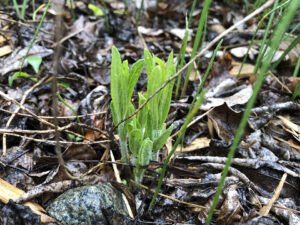
Buy plants by botanical name. Official invasive species guidance lists Asclepias syriaca; this guide does not recommend buying, growing, propagating or sharing that species.
UK gardening advice should focus on local conditions and local wildlife. North American photographs of monarch butterflies do not mean planting milkweed in Britain is a monarch conservation project.
Treat these as ornamental plants. They are harmful if eaten, and gloves are sensible when cutting or handling them. Do not use leaves, pods or seed in food or home remedies.
Photo: Photo by and (c)2008 Derek Ramsey ( Ram-Man ). Co-attribution must be given to the Chanticleer Garden., CC BY-SA 3.0. Resized and optimised; cropped for display. Adapted image under the same licence.
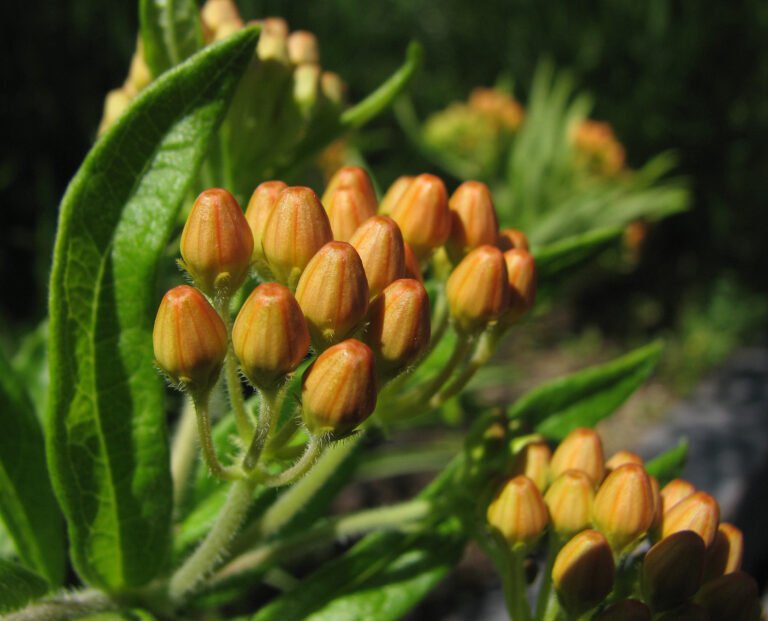
Milkweeds can emerge late. Keep the labelled position undisturbed and check patiently as soil warms before deciding the plant has died.
Review drainage and crown depth. Persistent wet can damage this species; choose a sunnier, drier site for a replacement.
Check the root area for dryness and water deeply when needed. Repeated drought is a poor match for this species.
Inspect for slugs and snails during emergence. Protect the small amount of new growth rather than assuming the dormant root has failed.
Inspect colonies and nearby predators. Small infestations can often be tolerated or removed physically without spraying flowers visited by insects.
For the simplest route, buy a correctly identified young plant. Seed propagation is possible, but treatment differs by species and seed lot. Follow a reputable supplier’s cold treatment and sowing instructions rather than a single universal milkweed recipe.
Avoid repeatedly lifting established A. tuberosa, which has substantial roots and dislikes disturbance. If propagating a named selection, use a method suited to that plant and keep clear labels. Never propagate or distribute the excluded A. syriaca.
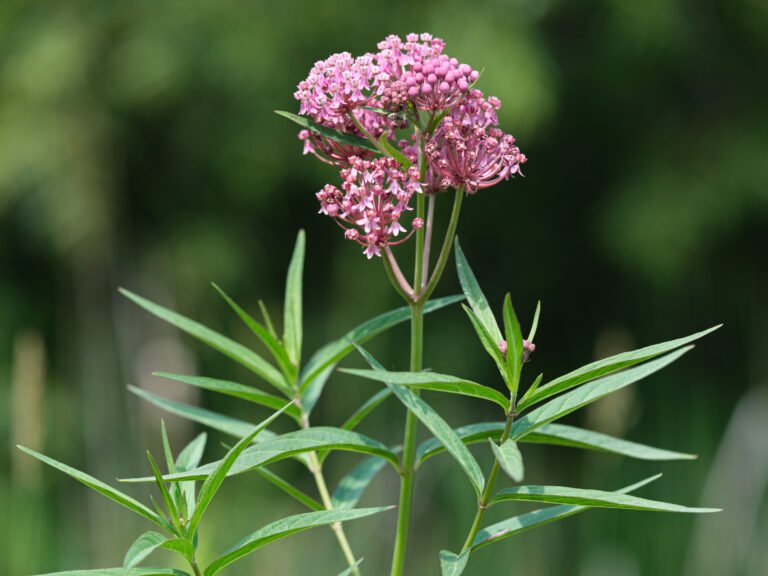
Pink Asclepias incarnata
Choose this species for a sunny border with dependable summer moisture. Its pink clusters sit well among other moisture loving perennials. Check mature height when placing it among neighbours.
Pink Asclepias incarnata.
Photo: Jasper Shide, CC0. Resized and optimised; cropped for display.
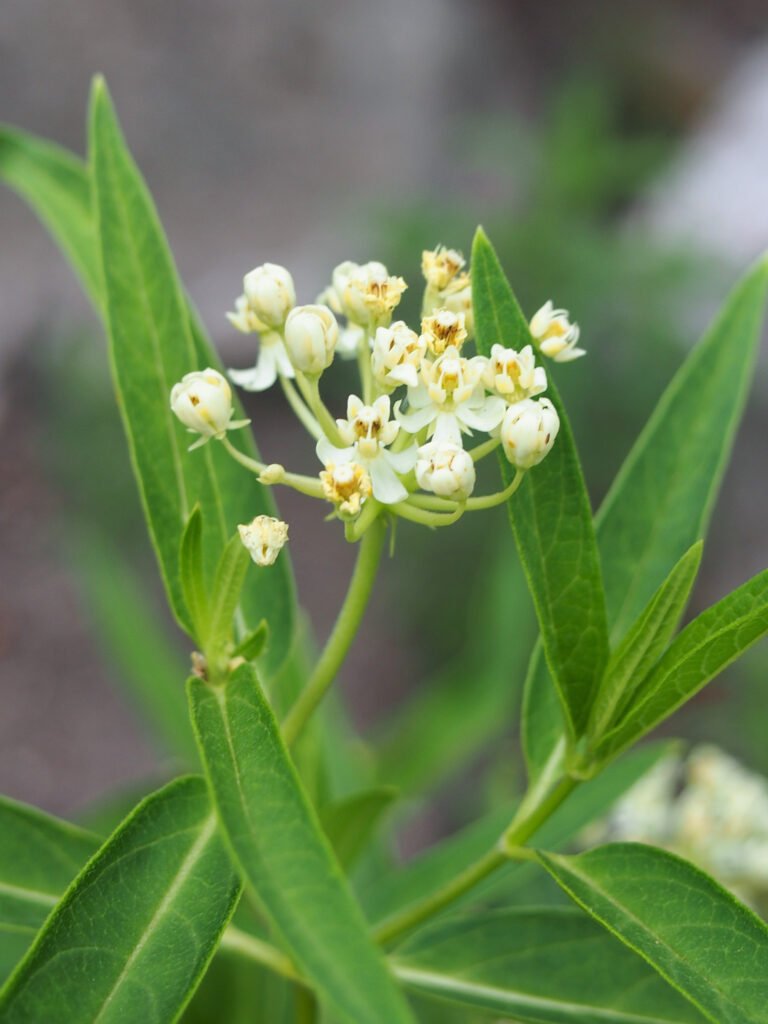
White Asclepias incarnata
White selections offer the same basic moisture requirement with a paler flower effect. Buy a named plant if exact identity matters; flower colour alone does not prove the cultivar.
White Asclepias incarnata, photographed as Iceberg.
Photo: Agnieszka Kwiecień, Nova, CC BY-SA 4.0. Resized and optimised; cropped for display. Adapted image under the same licence.
Orange Asclepias tuberosa
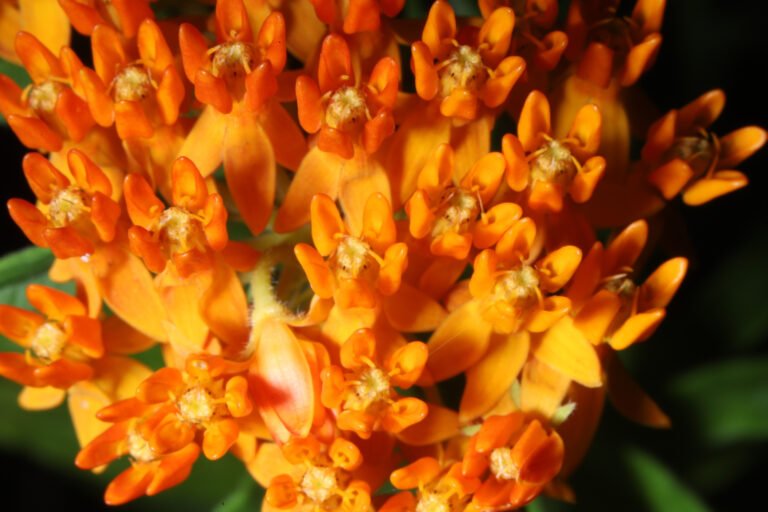
A site matched planting
Choose one species for the conditions available rather than mixing contrasting root requirements in a single small pot. A well matched plant is more useful than an assortment selected only by colour.
Asclepias tuberosa flower detail.
Photo: Steven Bodzin, CC BY 4.0. Resized and optimised; cropped for display.
Choose a fully labelled plant and match its moisture needs to your garden. This guide recommends only Asclepias incarnata and A. tuberosa, with no recommendation for common milkweed A. syriaca.
The flowers can attract visiting insects, and a varied garden offers more dependable seasonal forage than one plant alone. Keep some flower heads if you enjoy observing the developing pods and their structure.
Avoid claims about supporting monarch butterflies in the UK. Use local observations to judge the plant’s contribution, and include suitable native flowers and habitat alongside ornamental border plants.
Published by Buy From Farmers Direct. Growing guidance reviewed 11 October 2026. The seasonal timeline uses the shared BFFD Growers Calendar record; adjust timings to your variety and local conditions.
Only Asclepias incarnata and A. tuberosa. It excludes invasive A. syriaca and tropical milkweeds.
No. A. incarnata wants dependable moisture, while A. tuberosa needs freely drained soil.
These perennials can start late in spring. Mark the crown and wait for warmer soil before disturbing it.
No. These are ornamental plants and harmful if eaten. Do not use this guide for food or remedies.
Do not treat a UK planting as a monarch conservation project. Focus on the insects and habitats present locally.
Use species specific supplier instructions, including any required cold treatment. The calendar intentionally leaves sowing blank.
Correct identification comes first. Give A. incarnata summer moisture or A. tuberosa reliable drainage, then allow the perennial time to settle into its chosen place.
Explore more growing guides: Marguerite Daisy, Marigold, Miscanthus.
Want to get food independence, support your local grower, get better prices and shop more privately?
Local food isn’t just something you find. It’s something you protect. A free account helps keep local supply visible, supported, and resilient.

….it takes 30 seconds for food lovers and 5 minutes for suppliers
We built this for people who care where their food comes from. For people who want to remain food secure. For Farmers to get to the local people, who deserve a better income and to deliver a better price for you. For the environmentally conscious and the privacy-conscious. An account simply helps us make the map and supplier reach more useful to you, without changing how open it is. You’re always in control.


Find local food. Stay connected to it. Create a free account to support local producers and be part of a growing food network.


