A black mulberry is a long term garden tree with broad leaves, a spreading crown and soft richly flavoured fruit. Morus nigra needs sun, space and patience: young trees may take several years to crop well. Choose the right tree for the garden and keep pruning modest so its natural framework can develop.
Summer fruit
Self fertile tree
Needs mature space
Handle fruit gently
Prune sparingly
| Botanical name | Morus nigra, with other Morus choices distinguished |
| Family | Moraceae |
| Plant type | Deciduous fruit tree |
| Typical height | About 6–10m for a mature black mulberry |
| Typical spread | Potentially 8–10m |
| Light | Full sun and shelter |
| Soil | Fertile, moisture retentive but drained |
| Main interest | Soft dark summer fruit |
| Best starting point | Grafted or nursery propagated named tree |
| Working spacing | Single 900cm, In row 900cm, Row gap 900cm |
| Main fruit species | Morus nigra |
| Pollination | Self fertile |
| Harvest | Usually August–September |
| Fruit texture | Soft and easily bruised |
| Leaf character | Broad, sometimes lobed |
| Winter habit | Deciduous |
| Time to cropping | Several years; varies by plant |
| Pruning | Minimal, after leaf fall to midwinter |
| Container route | A specifically compact selection |
| Fruit handling | Ripe juice stains |
| Plant name | Crop type | Spacing |
Sow indoors
Plant outdoors
Harvest
Polytunnel | |||||||||||
|---|---|---|---|---|---|---|---|---|---|---|---|---|---|---|
| Jan | Feb | Mar | Apr | May | Jun | Jul | Aug | Sep | Oct | Nov | Dec | |||
| Mulberry | Not recorded | Single 900cm, In row 900cm, Row gap 900cm | No activity recorded | No activity recorded | Plant outdoors | Plant outdoors | No activity recorded | No activity recorded | No activity recorded | Harvest | Harvest | Plant outdoors | Plant outdoors | No activity recorded |
Sow indoors: no months recorded. Plant outdoors: March, April, October, November. Harvest: August, September. Polytunnel: no months recorded.
Spring is a useful planting time; autumn planting also suits workable, well drained ground. The calendar highlights March–April and October–November, while dormant bare root trees may be planted outside those windows if conditions allow. Sowing is blank because seed is slow and unpredictable for fruit quality. August–September shows the usual black mulberry harvest, adjusted for cultivar and weather. No regular tunnel cover is needed. A 9m spacing suits a large species tree; compact named selections need their own labelled allowance.
Choose a black mulberry for a sunny garden with space for a broad tree and patience for its early years. Start with a realistic amount of space and a plant you can reach easily for routine care. A small, well placed group is easier to establish than a crowded display that needs constant correction.
It is less suitable over paving, cars or frequently used seating because ripe fruit can fall and stain. A compact selection is a different purchase from an ordinary species tree. Look at the garden through the whole year before buying. Space that seems empty in spring may already belong to a neighbouring plant by midsummer, while the winter conditions can be very different from a sheltered shop display.
Photo: Calistemon, CC BY-SA 4.0. Resized and optimised; cropped for display. Adapted image under the same licence.
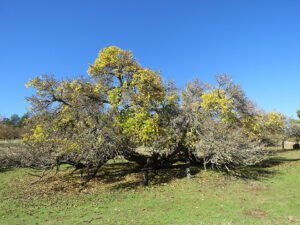
Give full sun and shelter so fruit has the best chance to ripen. Avoid a cramped shaded corner that cannot accommodate the future crown. Check how the light moves across the proposed position, including shade cast by fences and nearby trees. The amount of direct sun at midday alone does not describe the whole growing site.
Deep fertile soil with drainage and moisture retention supports steady growth. Avoid planting into a persistently waterlogged depression. Clear persistent weeds before planting. Working around established roots later is slower and risks damage, so this is a useful stage to deal with bindweed, couch grass or other unwanted growth.
Only a clearly compact named selection is a sensible long term pot choice. Use a very substantial container, typically at least about 50cm across, with regular watering and feeding. Make drainage holes accessible and allow water to escape freely. Check the pot after heavy rain as well as during dry weather; a blocked outlet can undo otherwise careful watering.
Allow access beneath and around the tree for collecting fruit. Keep the future canopy clear of places where staining would be a nuisance. Leave practical access for inspection and maintenance. Think about the mature outline rather than filling every visible gap around a newly bought plant. Its neighbours will also be growing into the available space.
Photo: JJ Harrison ( https://www.jjharrison.com.au/ ), CC BY-SA 3.0. Resized and optimised; cropped for display. Adapted image under the same licence.
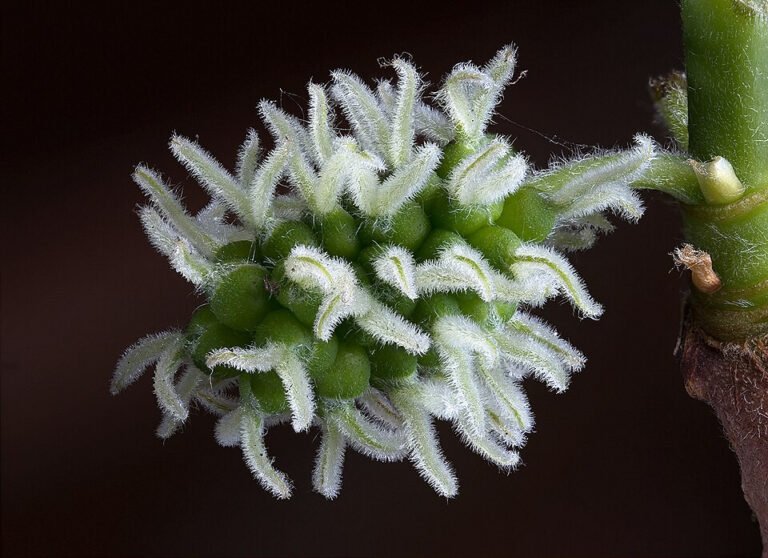
Think in decades when choosing the position, and check the exact plant’s growth habit before ordering. Prepare everything before removing plants from their pots or opening a seed packet, so roots and seedlings are not left exposed while you look for tools.
1.
Buy a named nursery propagated tree with clear information on species, mature size and likely cropping behaviour. Keep the label and record the planting date. That small record makes it much easier to understand differences in growth and to replace a successful selection accurately.
2.
Clear a broad planting area and assess drainage, access and the future canopy spread. Avoid working saturated soil: squeezing and treading it while wet can leave a compacted planting area. Wait for a workable day if the surface smears rather than crumbles.
3.
Keep bare roots moist before planting or water a container rootball thoroughly. Work with clean containers and fresh suitable compost where pots are involved. Reusing a container is fine after cleaning it, but a crust of old compost can conceal pests and obstruct drainage.
4.
Plant while conditions are mild and soil is workable, with spring particularly useful for establishment. Use the forecast alongside the calendar. A warm afternoon does not cancel a cold night, and a printed month should never take priority over the conditions in your own garden.
5.
Set the tree at the nursery soil level, keeping any graft union above ground and spreading roots naturally. Work carefully rather than rushing to fill the space. Check the intended depth and spacing before finishing, because corrections are easier now than once growth is established.
6.
Backfill, firm and water in. Stake only as needed, using a flexible tie that can be checked and adjusted. Water gently enough to avoid washing compost away. If the surface settles, top it up to the intended level without burying the base more deeply than planned.
7.
Maintain a weed free root area and water during prolonged dry spells while the tree establishes. Look again after the first windy or very wet spell. A plant that has rocked loose or a newly exposed rootball needs attention before the problem becomes established.
8.
Keep notes on flowering and fruiting without assuming an unproductive young tree is faulty. Review growth after a few weeks and adjust care to what you see. Regular observation is more useful than repeatedly adding fertiliser to a plant whose main problem is light, moisture or space.

Watering
Water young trees deeply during dry weather while roots establish. Keep moisture reasonably steady as fruit develops, particularly on light soils.
Established ground grown trees need less intervention, but prolonged drought can affect fruit quality. Container trees remain dependent on regular watering and should not swing repeatedly between saturated and bone dry.

Feeding
A spring mulch of well rotted organic matter helps maintain soil condition. Keep material clear of the trunk and avoid encouraging a mound against the bark.
Use a suitable general feed if the soil or growth indicates a need. Compact container trees need more regular nutrient renewal, but excessive feeding cannot shorten every tree’s juvenile period.

Pruning
Prune free standing mulberries as little as possible. Remove necessary damaged or poorly placed growth after leaf fall and before late winter, when cuts are less likely to bleed heavily.
A trained espalier has a separate training routine, including light summer attention to side shoots. Do not apply repeated hard winter pruning to a naturally spreading tree in an attempt to force it into a small space.

Winter care
Established black mulberries are normally grown outdoors without cover. Leaf fall is natural; protect young trunks from avoidable damage and check supports after storms.
Container roots are more exposed to severe cold and waterlogging. Shelter the pot if necessary, maintain drainage and check dormant trees occasionally so roots do not dry completely.
Black mulberry has broad rough leaves and clustered fruit that changes colour as it ripens. Leaves can vary in lobing, especially on young vigorous shoots.
Morus alba and other mulberries are distinct choices, and fruit colour alone is not a reliable species identification. Buy a labelled tree rather than assuming every dark fruited mulberry is Morus nigra.
Photo: Beko, CC BY-SA 4.0. Resized and optimised; cropped for display. Adapted image under the same licence.
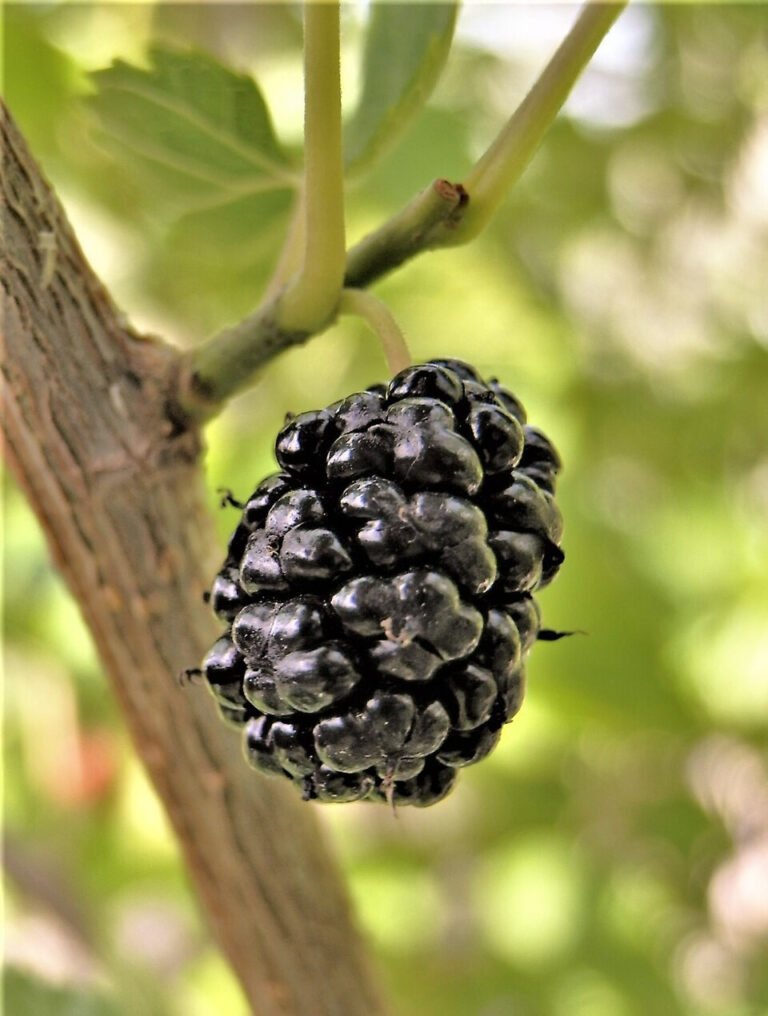
Patience matters: nursery method, cultivar and growing conditions influence the first useful crop. Give a young tree time rather than repeatedly moving it or pruning it hard.
Pick fully ripe soft fruit gently and use it promptly. A clean sheet beneath the tree can help collect ripe berries with minimal handling, but check and remove damaged fruit.
Wear clothes that can tolerate stains and keep harvest containers shallow. Do not include unripe fruit or leaves in food based on this ornamental and fruit growing guide.
Photo: Juan Emilio Prades Bel, CC BY 4.0. Resized and optimised; cropped for display.
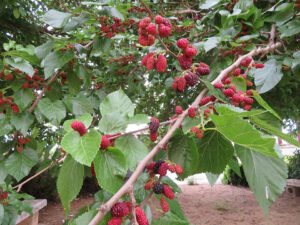
Several years without substantial fruit can be normal. Check age, sun and growth before assuming pollination failure.
Water stress and weather can affect developing fruit. Check soil moisture and the tree’s general condition.
Remove badly affected fallen leaves and avoid unnecessary overhead wetting. Seek a diagnosis if decline is substantial.
Mulberries can lose sap after badly timed cuts. Keep pruning minimal and use the appropriate dormant window.
Harvest ripe fruit promptly. If netting is necessary, fit it securely and safely so wildlife cannot become entangled.
For reliable fruit and a known growth habit, buy a nursery propagated named tree. Growing from seed is slow and does not reliably reproduce the parent’s fruit quality or compactness.
Mulberries can be propagated by specialist vegetative methods, but success varies with material and conditions. A labelled nursery plant is usually more practical than experimenting when only one garden tree is needed.
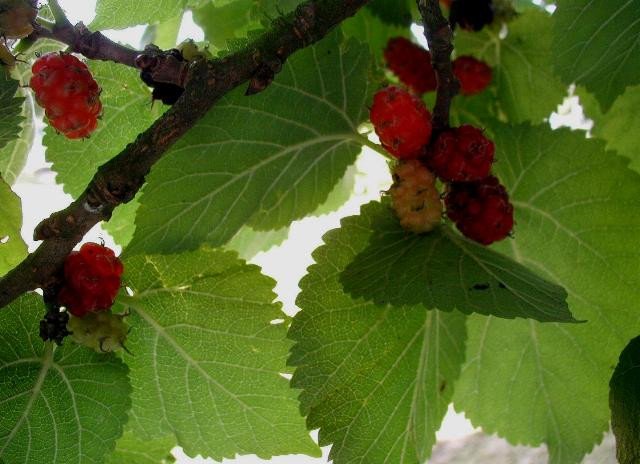
Black mulberry
Morus nigra is the traditional UK garden fruit choice. Its mature canopy can be broad, so allow generous space and time for cropping.
Black mulberry fruit and foliage, identified in the source.
Photo: Sten Porse, CC BY-SA 3.0. Resized and optimised; cropped for display. Adapted image under the same licence.
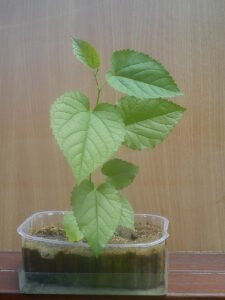
Compact named selections
These can make fruit growing possible in a smaller garden or large pot. Verify the exact mature size and species rather than relying on the word dwarf alone.
Young Morus nigra comparison plant; no compact named cultivar is established by the source.
Photo: Clonewayx, CC BY-SA 4.0. Resized and optimised; cropped for display. Adapted image under the same licence.
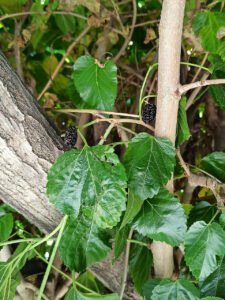
White mulberry
Morus alba is a different species with different growth and fruit characteristics. Select it deliberately from a clear description, not from fruit colour alone.
Morus alba fruit and foliage, identified in the source.
Photo: Juan Carlos Fonseca Mata, CC BY-SA 4.0. Resized and optimised; cropped for display. Adapted image under the same licence.

Trained nursery trees
A prepared fan or espalier can suit a suitable sunny boundary with ongoing training. It needs its own framework and pruning plan, rather than the free standing tree routine.
Mature Morus nigra trunk shown for comparison; this is not a trained nursery tree.
Photo: Peter Coles, CC BY-SA 4.0. Resized and optimised; cropped for display. Adapted image under the same licence.
Choose the species, eventual size and training form before choosing a tree by price. A compact cultivar and a standard black mulberry are very different long term commitments.
Ripe fruit can attract birds and other wildlife. Decide how much crop you are happy to share, and harvest regularly rather than leaving damaged fruit to accumulate.
The spreading crown provides shelter and structure. Check for active nests before pruning and use securely fitted wildlife safe netting only where it is genuinely needed.
Published by Buy From Farmers Direct. Growing guidance reviewed 11 October 2026. The seasonal timeline uses the shared BFFD Growers Calendar record; adjust timings to your variety and local conditions.
Black mulberry is self fertile, so a second tree is not normally required.
Mulberries can take several years to crop well. Age, propagation method and conditions all matter.
Usually August and September in the UK, when fruit is fully coloured, soft and comes away readily.
Keep pruning minimal, usually after leaf fall to midwinter. Trained forms have additional specific routines.
Choose a clearly compact named selection and a very large container; an ordinary species tree becomes substantial.
Yes. Site the tree away from surfaces and possessions where ripe juice would be a problem.
Give a mulberry sun, space and time. Gentle pruning and careful harvesting let this long lived tree develop its character while supplying delicate summer fruit.
Explore more growing guides: Marguerite Daisy, Marigold, Miscanthus.
Want to get food independence, support your local grower, get better prices and shop more privately?
Local food isn’t just something you find. It’s something you protect. A free account helps keep local supply visible, supported, and resilient.

….it takes 30 seconds for food lovers and 5 minutes for suppliers
We built this for people who care where their food comes from. For people who want to remain food secure. For Farmers to get to the local people, who deserve a better income and to deliver a better price for you. For the environmentally conscious and the privacy-conscious. An account simply helps us make the map and supplier reach more useful to you, without changing how open it is. You’re always in control.


Find local food. Stay connected to it. Create a free account to support local producers and be part of a growing food network.


