A large nectarine needs one of the warmest, most sheltered positions a British garden can offer. Its reward is fragrant spring blossom followed by richly flavoured fruit, but successful cropping depends on more than a healthy canopy. Choose the right growing form, protect vulnerable spring growth and keep young fruiting shoots coming each year.
Deciduous stone fruit
Warm sunny position
Bush or trained fan
Self fertile
Renew fruiting wood
| Botanical name | Prunus persica var. nectarina |
| Plant type | Smooth skinned form of peach |
| Growing forms | Bush tree or fan trained against support |
| Light | Full sun |
| Shelter | Important for blossom and ripening |
| Soil | Deep, fertile and well drained |
| Moisture | Retain useful moisture without saturation |
| Common rootstock | St Julien A |
| Rootstock character | Moderate to strong growth; not a dwarf guarantee |
| Mature space | Several metres according to rootstock and form |
| Fan width | Often 3.5 to 5m |
| Planting | Preferably November to March |
| Blossom | Pink flowers in early spring |
| Pollination | Self fertile; hand pollination can help |
| Harvest | Usually July to September |
| Fruit spacing | Thin to about 15cm apart |
| Fruiting wood | Mostly the previous season's shoots |
| Pruning | Dry spring or summer conditions |
| Winter pruning | Avoid routine dormant cuts |
| Main protection | Blossom frost and peach leaf curl |
| Plant name | Crop type | Spacing |
Sow indoors
Plant outdoors
Harvest
Polytunnel | |||||||||||
|---|---|---|---|---|---|---|---|---|---|---|---|---|---|---|
| Jan | Feb | Mar | Apr | May | Jun | Jul | Aug | Sep | Oct | Nov | Dec | |||
| Nectarine (Large) | Orchard fruit | Allow several metres according to rootstock and form; fans commonly need 3.5 to 5m width | Plant outdoors, Polytunnel | Plant outdoors, Polytunnel | Plant outdoors, Polytunnel | Polytunnel | Polytunnel | No activity recorded | Harvest | Harvest | Harvest | No activity recorded | Plant outdoors, Polytunnel | Plant outdoors, Polytunnel |
Sow indoors: no months recorded. Plant outdoors: January, February, March, November, December. Harvest: July, August, September. Polytunnel: January, February, March, April, May, November, December.
The calendar marks the preferred dormant planting season and a possible July to September harvest across cultivars. The protected band refers to rain exclusion for a reachable fan, not an assumption that a large tree can be moved indoors. Cooler sites may need a permanent protected growing space.
Best suited to a warm sheltered garden with room for a mature canopy, or a substantial sunny wall where a fan can be managed. Plan access for pruning, pollination and harvesting before planting.
Less suitable for an exposed frost pocket or a small yard where growth will need constant hard cutting. A naturally dwarf nectarine is a better starting point when a patio container is the intended home.
Photo: Ibrahim Echchaffani, CC BY-SA 4.0. Resized and optimised; cropped for display. Adapted image under the same licence.
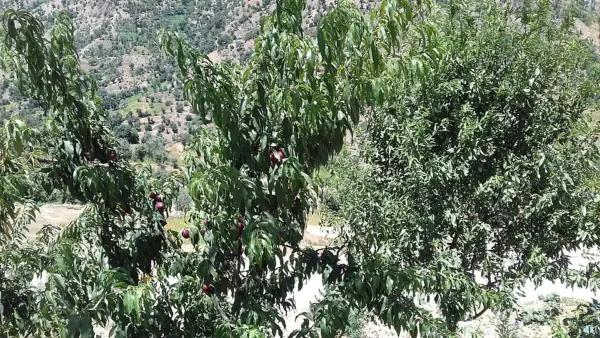
Choose a very favourable open position for a bush tree. In Britain, a large tree can survive a site that rarely gives enough spring protection and summer warmth to ripen a worthwhile crop.
A wall facing south or southwest offers a useful home for a fan. Leave space across the full planned width and install supports that allow branches to remain accessible rather than pressed tightly against masonry.
Use soil with depth, fertility and reliable drainage. Avoid planting into a shallow paved opening or ground that stays saturated, because root limitations become harder to correct as the tree grows.
In cooler areas, consider whether a greenhouse or polytunnel can provide enough permanent space for a trained nectarine. Protected growing still requires ventilation, irrigation and active management of blossom.
Photo: Photo by David J. Stang, CC BY-SA 4.0. Resized and optimised; cropped for display. Adapted image under the same licence.
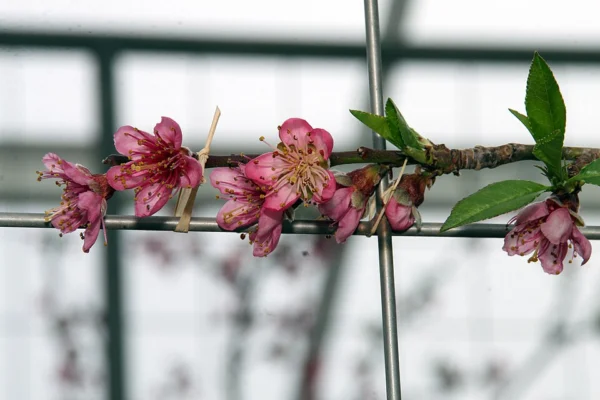
Buy for the eventual shape rather than the immediate display. A well arranged young bush and a partly trained fan are different starting points, and the nursery should confirm which form suits your site.
1.
Record the cultivar and rootstock and confirm expected mature dimensions. Large describes the tree's scale, not a promise that its individual fruit will be larger than a compact cultivar's crop.
2.
Choose the growing position after considering spring frost and summer shade. Leave enough access around the canopy or along the wall for future care.
3.
Put in a suitable stake or fan supports before planting. A strong framework is easier to install accurately before roots and branches occupy the space.
4.
Water a potted tree well, or briefly soak exposed roots immediately before planting. Keep bare roots sheltered from drying wind while the hole is prepared.
5.
Dig a broad hole and position the tree at its original soil depth. Keep the graft union above ground and do not force roots into a narrow vertical slot.
6.
For a wall fan, place the rootball about 20 to 30cm from the wall and guide the tree gently towards its supports. Check that the planting area can receive enough water.
7.
Backfill, firm gently and water thoroughly. Fit flexible ties and mulch the surrounding ground, keeping mulch away from the trunk.
8.
Check moisture and support through establishment. Follow the appropriate spring formative pruning plan and keep an early crop modest while the tree builds its roots and structure.

Watering
New trees need thorough watering during dry spells for the first growing seasons. Apply it over the root area slowly enough to penetrate rather than repeatedly wetting just the surface.
Established open ground trees are less dependent on irrigation, but fans can remain dry beside a wall. Check moisture during fruit swelling, especially after long warm spells or where surrounding planting competes for water.

Feeding
A spring mulch of well rotted organic material supports soil condition and moisture retention. In fertile regularly mulched ground, extra fertiliser may not be necessary.
Do not treat an absent crop as proof of hunger. Frost, poor pollination, shade and removal of fruiting shoots can each explain failure, even when the tree has strong leafy growth.

Pruning
Most nectarines fruit on shoots made in the previous season. Keep a supply of well positioned young replacements and gradually remove older fruited wood, rather than allowing all production to move to the outer edge of the crown.
An established bush is usually pruned after a summer crop; a fan needs spring and summer work. Use dry active season conditions and avoid delaying routine cuts into damp autumn or winter. In a fan, tie useful replacement shoots into the space vacated by older wood.

Winter care
Inspect stakes, wires and ties while the branch structure is visible. Loosen anything that constricts growth and replace worn supports before they must carry fresh foliage and fruit.
For a reachable fan, a clear rain shelter from late autumn through spring can reduce peach leaf curl. Keep it ventilated and protect blossom separately from frost. A tall open bush is much harder to cover, making its original siting especially important.
Nectarines have narrow green leaves, pink spring flowers and smooth fruit skin. They belong with peaches, rather than being a hybrid between peaches and plums, and may have white or yellow flesh.
The tree's training form affects its outline, but does not change where fruit is produced. Learn to recognise the younger shoots that will carry future crops before deciding which growth to remove.
Photo: jjron, CC BY-SA 3.0. Resized and optimised; cropped for display. Adapted image under the same licence.
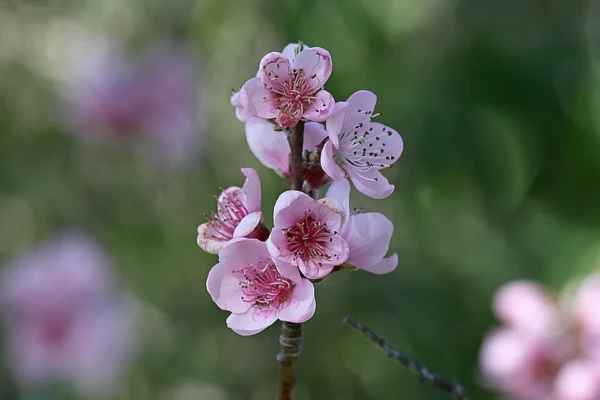
The warmest gardens can support an open bush, while a sunny wall or permanent protected structure is more useful in less favourable districts. Consider the likely ripening conditions as carefully as winter hardiness.
Nectarines are self fertile, yet early blossom can receive few insect visits. Where flowers are accessible, use a soft brush between open flowers on several suitable days, especially under cover.
Thin young fruit at roughly walnut size to leave about 15cm between retained nectarines. Pick ripe fruit in stages once colour develops and flesh near the stalk softens, supporting each fruit and lifting gently rather than pulling branches.
Image from the BFFD media library.
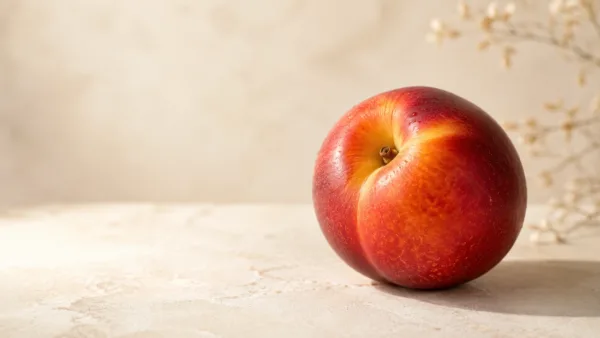
Peach leaf curl also infects nectarines. Plan effective rain exclusion before the next vulnerable growth period where the tree's form allows, and keep an affected plant from becoming drought stressed.
Review frost during blossom, pollen transfer and pruning history. A large healthy crown cannot compensate for damaged flowers or the loss of the shoots that should carry fruit.
Shade, insufficient warmth and an excessive crop can all play a part. Thin sensibly and consider whether the chosen site or growing form can provide better ripening conditions.
Check water consistency and remove affected fruit promptly. Keep fruit from rubbing in tight clusters and handle it carefully at harvest to reduce damage.
Gumming may follow injury or disease, including bacterial canker. Seek a diagnosis for spreading damage rather than assuming every gum deposit needs the same treatment or immediate winter cutting.
A grafted named tree provides a more predictable combination of fruit quality and vigour. Specialist nurseries can advise on rootstock and the appropriate starting form for a bush or fan.
Seedlings from stones can differ markedly from their parent and take years to crop. They are an uncertain choice where a specific flavour, harvest period or mature size is needed.
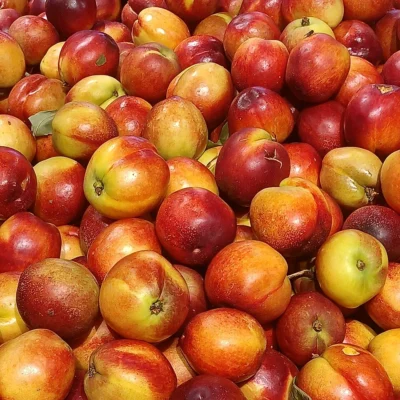
Lord Napier
A traditional white fleshed nectarine whose flesh separates readily from the stone. Give a standard growing form enough space and warmth. These photographed nectarines are illustrative and are not confirmed as Lord Napier.
Photo: Fumikas Sagisavas, CC0. Resized and optimised; cropped for display.

A compact alternative
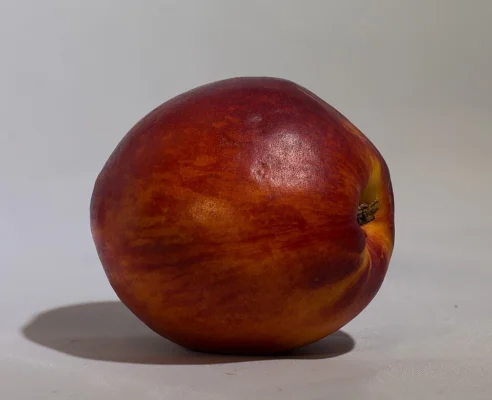
If the available space is limited, compare a naturally dwarf cultivar such as Nectarella before committing to a larger tree. This generic nectarine photograph does not show or identify that cultivar.
Photo: CostaPPPR, CC BY-SA 4.0. Resized and optimised; cropped for display. Adapted image under the same licence.
Match tree size to the site
Garden Beauty is another naturally compact option to discuss if a large bush or fan will not fit. The fruit shown is not confirmed as Garden Beauty and cannot establish the size of its parent tree.
Photo: Rhododendrites, CC BY-SA 4.0. Resized and optimised; cropped for display. Adapted image under the same licence.
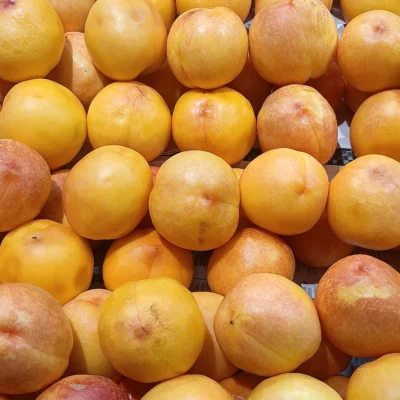
Pineapple nectarine
This traditional yellow fleshed choice takes its name from a flavour description, not a connection with the tropical pineapple plant. Check local suitability and tree size. The pictured yellow nectarines are not confirmed as this cultivar.
Photo: Fumikas Sagisavas, CC0. Resized and optimised; cropped for display.
Tell a fruit nursery the wall dimensions, soil and shelter available. Ask for a cultivar, rootstock and starting form that suit those conditions rather than choosing by fruit photograph alone.
Keep blossom available to visiting insects when conditions permit. If a fan is temporarily covered for frost, remove that protection during suitable daylight hours.
Protect ripe fruit only where needed, using securely fitted materials that cannot trap birds. Inspect any netting frequently and remove it once harvesting is complete.
Yes, in a particularly warm sheltered site. A fan against a sunny wall is often more practical, while cooler districts may need permanent greenhouse or polytunnel space.
Many need roughly 3.5 to 5m, depending on cultivar, rootstock and management. Confirm the nursery's recommendation before planting beside other permanent features.
No. Nectarines are self fertile, but early flowers still need pollen transfer. Hand pollination is useful where cold weather or covers limit insect visits.
Most fruit grows on shoots made during the previous season. Keeping suitable young replacement shoots helps maintain production within a manageable framework.
Avoid routine dormant pruning of nectarines. Plan gradual work in suitable spring or summer weather, obtaining skilled advice where large branches or difficult access are involved.
Tree size alone does not determine fruit size. Cultivar, light, moisture and crop load matter, so thin the developing crop and maintain healthy growth.
A large nectarine is most rewarding when its site makes the crop realistic. Start with warmth and workable access, then maintain healthy replacement shoots and give each retained fruit room to ripen.
Want to get food independence, support your local grower, get better prices and shop more privately?
Local food isn’t just something you find. It’s something you protect. A free account helps keep local supply visible, supported, and resilient.

….it takes 30 seconds for food lovers and 5 minutes for suppliers
We built this for people who care where their food comes from. For people who want to remain food secure. For Farmers to get to the local people, who deserve a better income and to deliver a better price for you. For the environmentally conscious and the privacy-conscious. An account simply helps us make the map and supplier reach more useful to you, without changing how open it is. You’re always in control.


Find local food. Stay connected to it. Create a free account to support local producers and be part of a growing food network.


