Sweet orange trees bring scented blossom and glossy evergreen foliage to a bright protected growing space. A UK harvest is possible with enough warmth, light and patience, but a tree should not be treated as an ordinary hardy orchard fruit. Buy a named mature nursery plant, provide suitable winter accommodation and let individual oranges ripen on the tree.
Tender evergreen citrus
Named mature plants crop sooner
Bright winter accommodation
Small steps when repotting
Fruit ripens over many months
| Botanical identity | Citrus × sinensis; also classified in Citrus × aurantium Sweet Orange Group |
| Family | Rutaceae |
| Plant type | Evergreen shrub or small tree |
| UK growing method | Container with suitable winter accommodation |
| Height in a pot | Often maintained around 1–2m; stock and pruning matter |
| Natural potential | Larger than a typical container specimen |
| Light | Bright light and a sunny sheltered summer position |
| Winter conditions | Bright protected position; confirm cultivar minimum temperature |
| Compost | Free draining citrus or suitable loam based compost |
| Planting season | Spring repotting when needed |
| Container size | Only slightly larger than the rootball |
| Flowers | Fragrant white blooms |
| Pollination | Self-fertile; a second tree is unnecessary |
| Fruit development | Commonly takes many months, sometimes about a year |
| Harvest timing | Variable; no fixed UK outdoor harvest season |
| Watering | Thorough watering followed by free drainage |
| Feeding | Citrus fertiliser according to season and label |
| Pruning | Light shaping and removal of unwanted shoots |
| Starting plant | Named grafted nursery tree |
| Other orange names | Seville and calamondin are distinct citrus types |
| Plant name | Crop type | Spacing |
Sow indoors
Plant outdoors
Harvest
Polytunnel | |||||||||||
|---|---|---|---|---|---|---|---|---|---|---|---|---|---|---|
| Jan | Feb | Mar | Apr | May | Jun | Jul | Aug | Sep | Oct | Nov | Dec | |||
| Orange | Not recorded | Allow about 100 to 150cm canopy room initially; expand with growth and keep access | Polytunnel | Polytunnel | Plant outdoors, Polytunnel | Plant outdoors, Polytunnel | Plant outdoors, Polytunnel | No activity recorded | No activity recorded | No activity recorded | No activity recorded | Polytunnel | Polytunnel | Polytunnel |
Sow indoors: no months recorded. Plant outdoors: March, April, May. Harvest: no months recorded. Polytunnel: January, February, March, April, May, October, November, December.
March to May is the spring repotting band, used only when roots need more space; it is not an instruction to plant a sweet orange outdoors permanently. The October to May protected band is a broad UK planning window that must extend whenever nights are unsuitable for the supplied tree. An unheated tunnel may freeze and is not automatically adequate. Harvest and sowing rows are empty: fruit ripening varies with cultivar and conditions, while a named nursery plant is the dependable route.
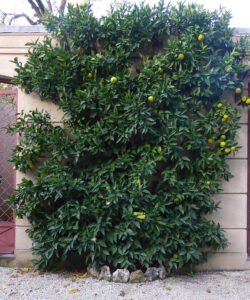
An orange suits a gardener who can provide both a bright summer position and a suitable winter growing space. The flowers and foliage are worthwhile features even in a season with little fruit. A warm wall outdoors does not replace dependable winter accommodation.
A container gives control over compost, movement and drainage, but it also makes the tree dependent on regular checks. If your only indoor option is a dark shed or a hot dry living room, solve that limitation before investing in a mature citrus plant.
Photo: Ellen Levy Finch ( Elf ), CC BY-SA 3.0. Resized and optimised; cropped for display. Adapted image under the same licence.
Use a bright conservatory, glazed porch or suitably managed greenhouse for winter. Check the overnight minimum at the plant rather than relying on the house thermostat, and keep the foliage away from radiators and cold draughts.
Provide a sunny sheltered position outdoors only when nights are reliably suitable. Acclimatise the tree gradually to stronger sunlight and wind; foliage raised behind glass can scorch if moved abruptly into a hot exposed corner.
Choose a stable pot with several clear drainage holes. A decorative outer container must not trap water after rain or watering. Use a wheeled base or plan safe lifting before a large tree becomes too heavy to move.
Ventilate a greenhouse or conservatory in bright weather. Roots should remain comfortably moist and aerated, while the canopy receives light and fresh air. A sealed hot enclosure can stress the tree even when outdoor temperatures feel modest.
Photo: Syrio, CC BY-SA 4.0. Resized and optimised; cropped for display. Adapted image under the same licence.
Check the full name on the label. A sweet orange, a bitter Seville orange and a calamondin may all be sold with orange in the name, but fruit use and winter requirements differ.
1.
Choose a healthy named sweet orange raised for fruit production. A grafted mature plant gives a clearer prospect of cropping than a seedling; inspect the leaf undersides, stems and graft area before bringing it among other plants.
2.
Confirm the supplier’s winter temperature recommendation and prepare a bright place that can maintain it. Check doorway width and moving arrangements before choosing a broad or heavy standard tree.
3.
Assess the existing rootball before repotting. A recently supplied tree may have enough room for another season, and moving immediately into a very large pot can leave excess compost cold and wet.
4.
Repot in spring when roots have filled their container. Choose a pot only slightly larger, with unobstructed drainage holes, and gather a suitable peat free citrus or loam based potting mix before unpotting.
5.
Water the old rootball, ease it out and inspect the outer roots. Remove loose exhausted surface compost carefully without stripping healthy roots. Do not aggressively break apart a sound rootball simply to fit a smaller decorative pot.
6.
Set the tree at its previous depth, keeping the trunk base and graft above compost. Fill evenly around it and leave a practical watering space below the rim; avoid covering the stem with deep mulch.
7.
Water thoroughly so the fresh compost settles around the roots, then let surplus escape. Support a top heavy tree against windrock and check that any tie allows the trunk to thicken without rubbing.
8.
Keep care steady after repotting and introduce outdoor conditions gradually when temperatures permit. Record the cultivar and repotting date, then inspect growth and moisture rather than repeating the operation every spring automatically.

Watering
During active growth, check the whole pot regularly, especially in sun or wind. Water thoroughly when needed, preferably with rainwater, then let excess drain. A dry surface does not always mean the centre is dry, so use the pot’s weight and moisture below the surface together.
Winter demand is lower. Let the surface partially dry before watering again with water near room temperature, but do not allow the entire rootball to become dust dry. Empty outer pots and saucers; roots held in stagnant water cannot be rescued by adding fertiliser.

Feeding
Use a citrus fertiliser at its labelled dilution and season. Products may supply a higher nitrogen summer feed and a more balanced winter formulation; follow the actual product rather than combining several fertilisers in an attempt to speed fruit growth.
Yellow leaves deserve a whole-plant check. Waterlogging, cold roots, drought, pests and nutrient imbalance can look similar. If compost remains wet and the tree is losing leaves, correct the conditions first rather than increasing feed around damaged roots.

Pruning
Sweet oranges normally need limited shaping. Remove dead or damaged growth and an awkward branch when required, commonly in late winter before stronger growth. Preserve a balanced canopy and avoid repeatedly clipping every new tip that might later carry flowers.
Remove shoots growing below the graft because they belong to the rootstock. Wear gloves around thorns and inspect the origin of an unusual vigorous shoot before cutting. Thin an excessive fruit load on a small tree instead of allowing branches to bend under more fruit than they can support.

Winter care
Provide a bright, protected winter home and confirm the minimum temperature for the supplied sweet orange. Different citrus sold as oranges have different needs; do not transfer a calamondin figure or an outdoor survival claim from another species to your tree. Avoid frost and sudden temperature swings.
An unheated greenhouse or tunnel can fall below freezing on a clear night. Use a thermometer and suitable heating where required, keep air moving without cold draughts and check for scale insects or mites. Evergreen leaves continue to need light even when growth is slow.
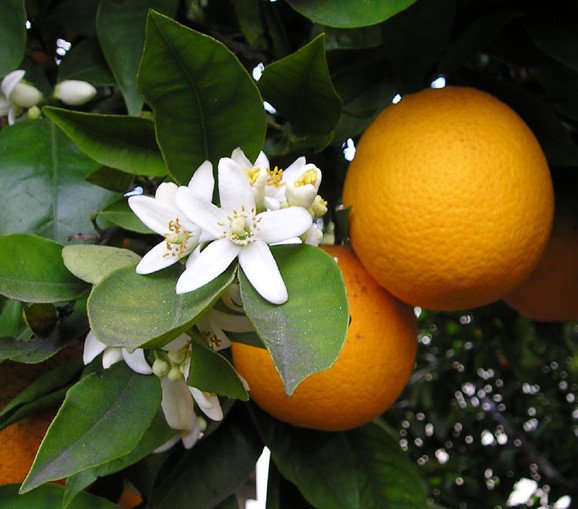
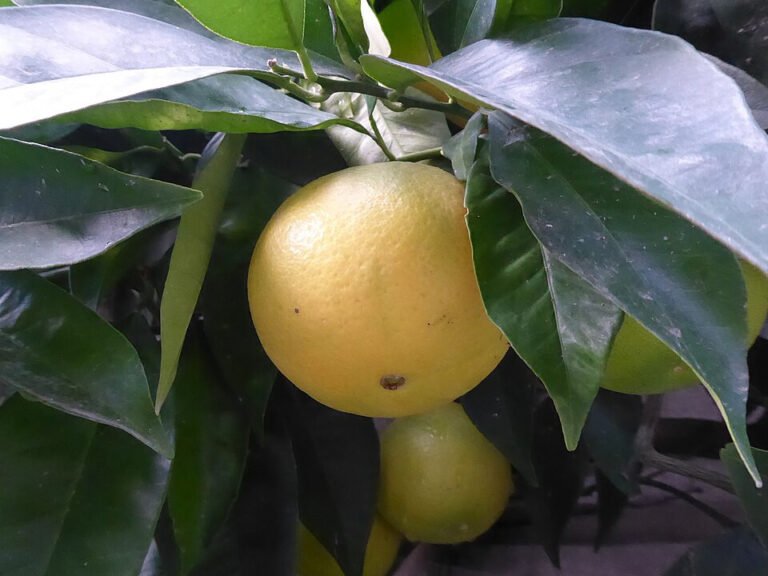
Sweet oranges have glossy evergreen leaves, woody shoots and fragrant white flowers. Fruit develops from green to its mature colour over many months. Leaves, flowers and fruit can be present together, but their appearance alone rarely confirms a named cultivar.
A grafted plant has a visible join between the fruiting top and its rootstock. Shoots below that point may look different and should not be allowed to take over. Keep the original label, because Seville oranges, calamondins and sweet oranges are separate horticultural choices.
Photo: Syrio, CC BY-SA 4.0. Resized and optimised; cropped for display. Adapted image under the same licence.
Across Britain, a pot is the practical way to provide seasonal protection. Summer outdoor time may be short in cooler districts; a bright protected growing space can be more dependable than repeatedly moving a tree out during unsuitable nights and back in again.
Fruit often takes around nine to twelve months to mature, sometimes longer in cool or low-light conditions. A tree brought home already carrying oranges may finish a nursery-started crop before it produces its first fully home-grown harvest. Judge success across several seasons.
Leave fruit on the tree until it has reached useful size and the cultivar’s mature colour, then sample one rather than harvesting the whole crop prematurely. Cut with a short piece of stalk instead of pulling. Sweetness depends on maturity and growing conditions; orange skin alone is not proof of ideal flavour.
Photo: Syrio, CC BY-SA 4.0. Resized and optimised; cropped for display. Adapted image under the same licence.
Review moisture, drainage, recent moves and overnight temperatures together. Inspect for pests and check whether the rootball remains wet. A few old leaves may fall naturally, but rapid widespread loss calls for correcting conditions before adding more feed.
A young seedling may remain unproductive for years. Poor light, repeated hard clipping and unsuitable conditions also limit flowering. Choose a mature named tree, retain healthy new growth and assess its growing space rather than expecting fertiliser alone to induce a crop.
Some thinning is natural, especially when a small tree sets many fruitlets. Drought, cold changes and dry air can increase losses. Keep care steady and reduce an excessive crop; do not assume every fallen flower means another tree is needed.
Scale insects and mealybugs are frequent protected-crop problems. Check stems and leaf undersides, identify the pest and choose management suitable for edible citrus. Inspect neighbouring plants and avoid applying a general ornamental treatment without checking its permitted use.
Glasshouse red spider mites favour hot dry conditions. Examine leaf undersides and review ventilation and humidity. A suitable biological control may help in a managed greenhouse, but choose it for the actual pest and temperature conditions rather than releasing it blindly.
Named oranges are usually supplied as grafted or budded nursery plants. This preserves the fruiting cultivar and uses a rootstock chosen for its growing characteristics. Starting with a healthy mature plant is more predictable than waiting for a seedling to reach flowering age.
Semi ripe cuttings can preserve a cultivar where they root successfully, but they lack the benefits of a selected rootstock. Seed growing is a separate long experiment with uncertain results and is not included in this fruit-production calendar. Do not assume a supermarket pip will reproduce its parent.
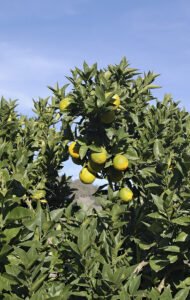
Valencia
A familiar sweet orange associated with juicy fruit and a relatively long development period. In a UK container, protected light and warmth determine how well the crop finishes. Overseas harvest dates should not be copied directly to a British patio calendar.
Sweet orange photograph; the Valencia cultivar is not verified.
Photo: Luis Fernández García, CC BY-SA 2.5 es. Resized and optimised; cropped for display. Adapted image under the same licence.
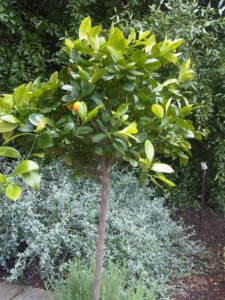
Washington Navel
A navel orange grown for eating fresh. The small secondary fruit at the blossom end gives the type its name. Confirm the exact nursery selection and winter requirements, rather than choosing solely from a photograph of ripe fruit.
Sweet orange tree at Kew Gardens; Washington Navel identity is not verified.
Photo: Emőke Dénes, CC BY-SA 4.0. Resized and optimised; cropped for display. Adapted image under the same licence.
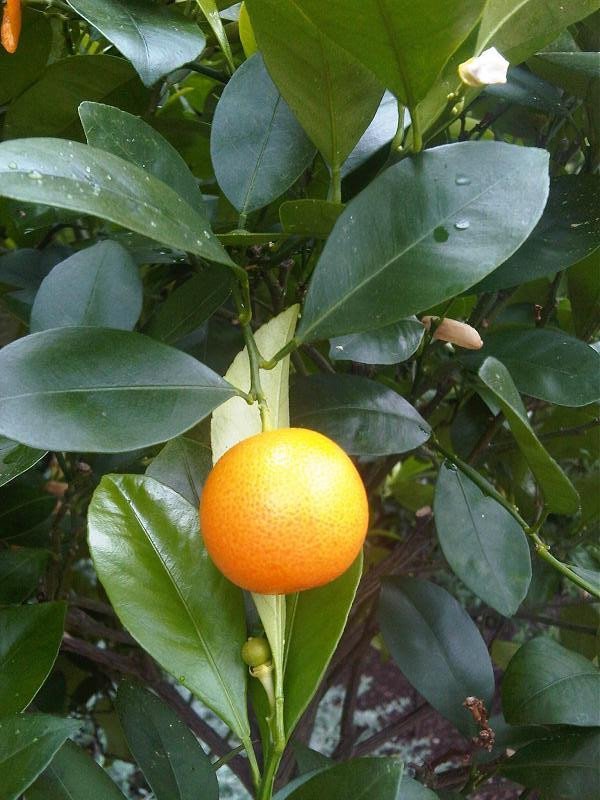
Navelina
Another named navel selection to compare with a specialist. Descriptions of early maturity refer to particular growing climates; a UK tree still needs enough warmth and time. Select a plant of manageable size for its winter home.
Sweet orange fruit at Kew Gardens; Navelina identity is not verified.
Photo: Emőke Dénes, CC BY-SA 4.0. Resized and optimised; cropped for display. Adapted image under the same licence.
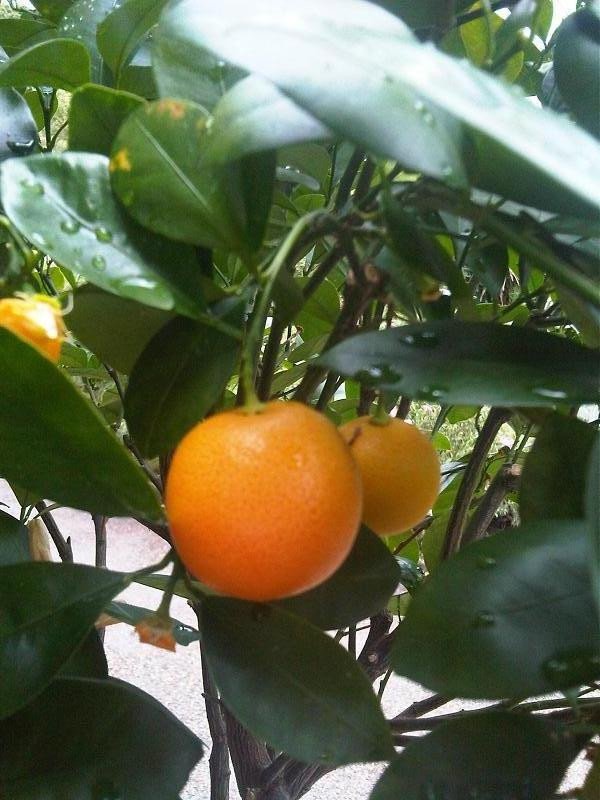
Sanguinelli
A blood orange selection whose flesh colour and flavour depend on the growing conditions as well as the cultivar. It is an interesting protected-crop choice, but do not promise Mediterranean colouring from every cool UK season.
Sweet orange comparison photograph; this is not a verified Sanguinelli blood orange.
Photo: Emőke Dénes, CC BY-SA 4.0. Resized and optimised; cropped for display. Adapted image under the same licence.
Compare named sweet oranges with a citrus nursery, confirm minimum temperatures and buy a size you can manage. A healthy mature plant in an appropriate pot is more useful than a large tree for which there is no bright winter space.
Flowers can attract visiting insects when the tree is outdoors or a protected space is open in suitable weather. Sweet oranges are self-fertile, so a second tree is unnecessary, but an accessible flowering plant still contributes to the garden’s seasonal insect activity.
Check pests before routine spraying. Protected citrus can support scale insects and mites, yet management should be targeted and compatible with edible fruit. Avoid spraying open flowers when insects are visiting and follow the actual product or biological-control instructions.
Published by Buy From Farmers Direct. Growing guidance reviewed 11 October 2026. The seasonal timeline uses the shared BFFD Growers Calendar record; adjust timings to your variety and local conditions.
It is not a reliable plan. Use a container and suitable bright winter accommodation, even in a mild garden. Cold survival claims do not guarantee healthy foliage or a useful crop through a wet British winter.
Choose a stable drained container only slightly larger than the existing rootball when repotting is needed. A huge tub of wet compost can create root problems. Increase size gradually as the roots fill their space.
No. Sweet oranges are self-fertile. A mature plant, adequate light, steady care and suitable temperatures matter more than adding a second tree.
Fruit often takes nine to twelve months, sometimes longer in UK conditions. Cultivar and the growing space affect timing, so the guide does not assign a fixed harvest month. Sample fully developed fruit before picking the whole crop.
No. Calamondins are a different citrus with small sharp fruit and their own winter needs. Seville oranges are also distinct. Keep the botanical and cultivar label so care and kitchen expectations match the plant.
A sudden change in light, temperature, humidity or watering can stress it. Check the rootball and the new growing position, avoid cold draughts and inspect for pests. Keep conditions stable instead of moving it repeatedly between extremes.
Match the tree to a bright winter space, keep its roots moist and aerated, and give the fruit time. A well managed orange can remain an attractive container plant while you learn its own flowering and ripening rhythm.
Want to get food independence, support your local grower, get better prices and shop more privately?
Local food isn’t just something you find. It’s something you protect. A free account helps keep local supply visible, supported, and resilient.

….it takes 30 seconds for food lovers and 5 minutes for suppliers
We built this for people who care where their food comes from. For people who want to remain food secure. For Farmers to get to the local people, who deserve a better income and to deliver a better price for you. For the environmentally conscious and the privacy-conscious. An account simply helps us make the map and supplier reach more useful to you, without changing how open it is. You’re always in control.


Find local food. Stay connected to it. Create a free account to support local producers and be part of a growing food network.


