Osteospermums bring bright daisy flowers to sunny borders and patio containers, often opening most fully in good light. Many familiar bedding selections are tender or only marginally hardy in Britain, while some forms of Osteospermum jucundum are more resilient. Buy by botanical name and cultivar rather than assuming every African daisy will survive the same winter. A sheltered sunny site and sharp drainage are the foundations of a lasting display.
Daisy flowers in sunshine
Hardiness varies by cultivar
Plant tender types after frost
Free drainage is essential
Keep cuttings as replacements
| Botanical group | Osteospermum species and hybrids |
| Family | Asteraceae |
| Common name | African daisy or Cape daisy |
| Plant type | Perennial or subshrub often grown as seasonal bedding |
| Typical height | About 20 to 60cm; larger species may exceed this |
| Typical spread | Often 30 to 60cm, according to cultivar |
| Flowers | Daisy heads with coloured rays and a central disc |
| Flowering | Late spring to autumn, depending on plant and weather |
| Light | Full sun |
| Soil | Moderately fertile and freely drained |
| Container compost | Peat free potting mix with good drainage |
| Tender plant-out | May to June once frost risk has passed |
| Seed sowing | February to April for suitable seed strains |
| Propagation | Cuttings preserve named selections |
| Routine pruning | Deadhead and lightly shape during growth |
| Winter status | Many hybrids need frost-free protection |
| Hardier option | Selected Osteospermum jucundum forms in suitable sites |
| Water needs | Regular during establishment; pots need checks |
| Feeding | Modest feed for containers during growth |
| Use | Ornamental flowers, not a food crop |
| Plant name | Crop type | Spacing |
Sow indoors
Plant outdoors
Harvest
Polytunnel | |||||||||||
|---|---|---|---|---|---|---|---|---|---|---|---|---|---|---|
| Jan | Feb | Mar | Apr | May | Jun | Jul | Aug | Sep | Oct | Nov | Dec | |||
| Osteospermum | Not recorded | Usually 30 to 45cm; allow the labelled cultivar spread | Polytunnel | Sow indoors, Polytunnel | Sow indoors, Polytunnel | Sow indoors, Polytunnel | Plant outdoors | Plant outdoors | No activity recorded | No activity recorded | No activity recorded | Polytunnel | Polytunnel | Polytunnel |
Sow indoors: February, March, April. Plant outdoors: May, June. Harvest: no months recorded. Polytunnel: January, February, March, April, October, November, December.
February to April sowing applies to suitable seed strains under protection, not to reproducing every named hybrid. May and June planting is for acclimatised tender plants after local frost risk. The October to April protected band is optional overwintering of less hardy stock or cuttings and must extend when cold requires it; an unheated tunnel may still freeze. Flowering is ornamental and is not represented as a harvest.
Choose osteospermums for a warm border edge, gravelly planting or a container that receives plenty of light. They combine well with plants that also dislike permanently wet roots. A sheltered sunny position usually gives more flowers and a tidier habit than an exposed shaded corner.
They are less suitable where winter water collects or where every plant must survive outdoors without attention. Treat tender hybrids as a seasonal display, or keep a few cuttings under protection. For a permanent planting, check the actual cultivar’s hardiness and drainage needs before buying.
Photo: Abcxyz179, CC BY-SA 4.0. Resized and optimised; cropped for display. Adapted image under the same licence.

Place plants where the sun reaches them for much of the day. Some flowers close in dull weather or at night; that normal response should not be mistaken for failure. Shade also encourages a looser plant with fewer flowers.
Prepare soil across the planting area, removing weeds and correcting drainage before setting out small plants. A narrow pocket of grit inside a saturated clay bed does not necessarily provide a safe winter root zone; a raised area or pot may work better.
Use containers with open drainage holes and suitable peat free compost. Leave a watering space below the rim and avoid an outer pot that catches water. Match container size to the expected spread so the plant is not repeatedly drought stressed.
Shelter from cold drying winds helps both summer appearance and winter survival. Near a wall, check the rain shadow rather than assuming rain has watered the roots. Keep enough room around each plant for airflow and access to remove faded flowers.
Photo: ZiemowitJ, CC BY 4.0. Resized and optimised; cropped for display.
Choose healthy compact plants with clear labels. Small plugs should be grown on until well rooted, then acclimatised before they enter the final border or patio pot.
1.
Check whether the purchase is a tender bedding hybrid or a hardier perennial selection. Read its expected spread and keep the label, because flower colour alone does not reveal its winter tolerance.
2.
For seed strains, sow under cover in late winter or spring according to the packet. Provide suitable warmth for germination, then strong light and ventilation so seedlings stay sturdy.
3.
Pot seedlings or plugs on before roots become crowded. Avoid repeatedly wetting tiny plants in oversized containers, and do not leave a tray standing in water after watering.
4.
Harden plants off gradually before outdoor planting. Wait until damaging frosts have passed for tender types; in cooler districts this may be June even when plants are already flowering in shops.
5.
Clear the site and set out plants at the cultivar’s mature spacing, commonly around 30 to 45cm. Allow trailing or spreading forms extra room instead of relying on repeated clipping to fit them in.
6.
Water the rootball, ease off the pot and set the plant at its previous compost level. Backfill around roots, firm gently and water the soil so it settles into contact with the rootball.
7.
For a container, arrange the plants before filling around them and keep their crowns clear. A newly planted pot need not look completely full; room for roots and summer growth improves the later display.
8.
Check moisture closely during establishment and remove weeds while small. Mark any hardy trial plants you intend to leave outdoors, and make an early plan for cuttings or protected winter storage of valuable tender selections.

Watering
Water newly planted osteospermums when their root zone begins to dry, allowing surplus to drain. Drought tolerance develops after establishment; a small plug has too little root volume to be left through a long dry spell simply because the mature plant likes sun.
Pots need frequent checks in warm weather. Water the compost thoroughly when required and empty trapped water from outer containers. Overwintered plants use less moisture, so let the surface dry somewhat between checks while preventing complete rootball desiccation.

Feeding
Plants in ordinary moderately fertile soil need little extra feeding once established. Too much nitrogen encourages soft leafy growth. Improve poor soil sensibly before planting, then judge the actual plant rather than feeding on every occasion it produces fewer flowers.
Container compost has a limited nutrient supply. Once its initial feed is used, apply a suitable balanced or flowering-plant feed at the labelled rate during active growth. Do not apply strong feed to a dry or waterlogged rootball, and reduce feeding when growth slows.

Pruning
Remove faded flower heads and their short stalks to keep the display tidy and limit unwanted seed production. Lightly shorten straggling leafy shoots when the plant is actively growing, leaving enough healthy foliage for recovery rather than shearing into a bare woody base.
In spring, inspect overwintered plants for living shoots before tidying damaged stems. Avoid a hard autumn cut on plants left outdoors in a marginal site. If an old specimen is woody and weak, a healthy replacement cutting may give a better result than repeated severe pruning.

Winter care
For tender hybrids, bring a manageable plant or rooted cuttings into a bright frost-free place before cold nights arrive. Ventilate on suitable days and keep compost only lightly moist. A closed dark shed is not an adequate winter home for leafy plants.
Hardier selections left outdoors need excellent drainage and a sheltered position. Keep wet mulch away from the crown and check pots for blocked holes. Hardiness depends on the cultivar and conditions, so do not interpret one successful mild winter as a guarantee for every later season.
Osteospermums have daisy flower heads made of outer ray florets surrounding a central disc. Leaves are usually simple and may be toothed or lobed, with a somewhat fleshy texture. Some cultivars have spoon-shaped rays, but many retain a more familiar flat daisy form.
The name African daisy is also used for other plants, including annual Dimorphotheca and unrelated daisies. Use the botanical label for winter and propagation decisions. A photograph of a single bloom rarely proves the exact hybrid cultivar or its hardiness.
Photo: ИринаЯ, CC0. Resized and optimised; cropped for display.

In mild sheltered districts, selected hardier forms may persist outdoors for years in drained ground. In wet, cold or exposed gardens, choose a seasonal display or preserve young stock under protection. Winter wet and cold together are often more limiting than summer growth.
Deadhead through the main display and cut back a few tired stems to encourage branching where healthy leaves remain. A pause in flowering during an unsuitable spell does not automatically mean the plant needs stronger feeding; check sun, moisture and root health first.
Inspect container plants after heavy rain and during hot windy weather, since either saturation or rapid drying can occur in a small pot. If you are away regularly, use fewer well spaced plants in a larger drained container rather than a crowded display that needs constant rescue.
Photo: 阿橋 HQ, CC BY-SA 2.0. Resized and optimised; cropped for display. Adapted image under the same licence.
This can be a normal response to light. Observe the same plant in sunshine before assuming a disease. If growth is weak as well, review shade, watering and root conditions rather than treating closed petals alone.
Persistent saturation can damage roots and the crown. Check drainage and reduce unnecessary watering. Remove dead plants and use fresh healthy stock in suitable conditions; adding feed does not restore a rotted root system.
Shade, overcrowding or excessive nitrogen may be responsible. Improve light and spacing, reduce unnecessary feeding and trim lightly within healthy growth. Do not suddenly expose a soft indoor plant to scorching sun without acclimatisation.
Look for natural predators and tolerate small populations where growth remains sound. Remove badly affected soft tips if practical. Avoid routine spraying across open flowers when the actual problem is limited to a few shoots.
Review cultivar hardiness, wet roots and exposure together. Keep backup cuttings next season and choose hardier stock for a permanent position. A plant sold as a perennial is not necessarily reliably hardy outdoors throughout the UK.
Take healthy non-flowering shoots for softwood or semi ripe cuttings during summer, following the cultivar’s usual method. Remove lower leaves, use a suitable free-draining cutting mix and maintain humidity without leaving the base wet or the foliage sealed in stagnant air.
Pot rooted cuttings individually and overwinter tender selections in bright frost-free conditions. Seed is useful for strains bred for seed production, but seedlings from a named hybrid may differ in colour and habit. Do not assume an attractive volunteer is identical to its parent.
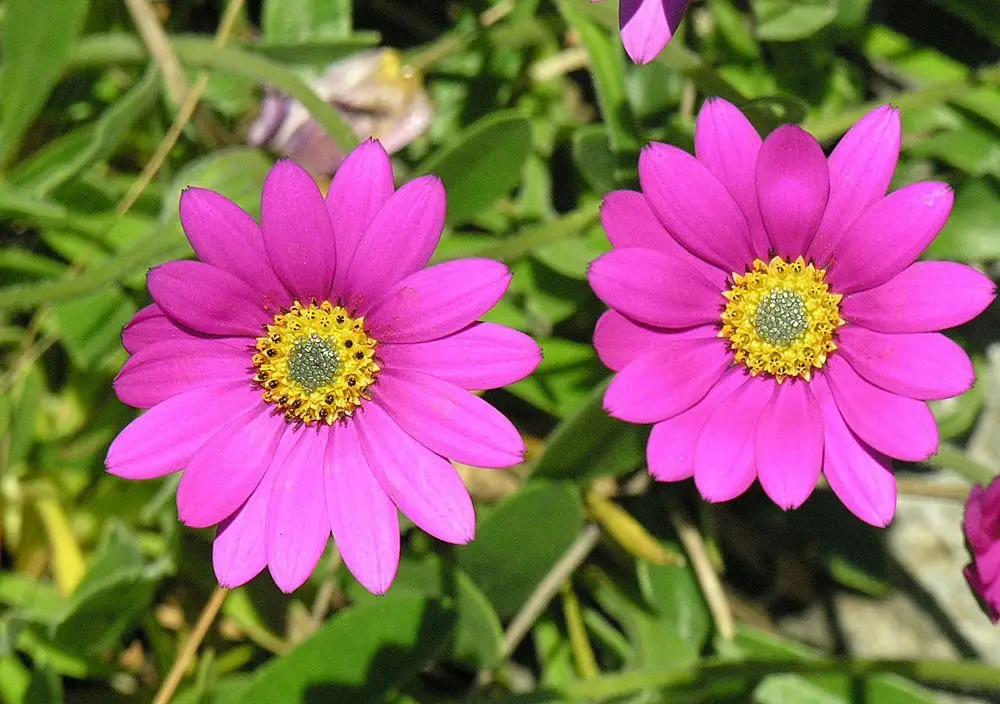
Osteospermum jucundum forms
These are useful candidates for a permanent sunny planting where drainage and local climate suit them. Check the particular selection rather than assuming all forms share identical hardiness. A spreading habit needs room along a border edge.
Osteospermum jucundum flowers, identified in the original image record.
Photo: Dick Culbert, CC BY 2.0. Resized and optimised; cropped for display.
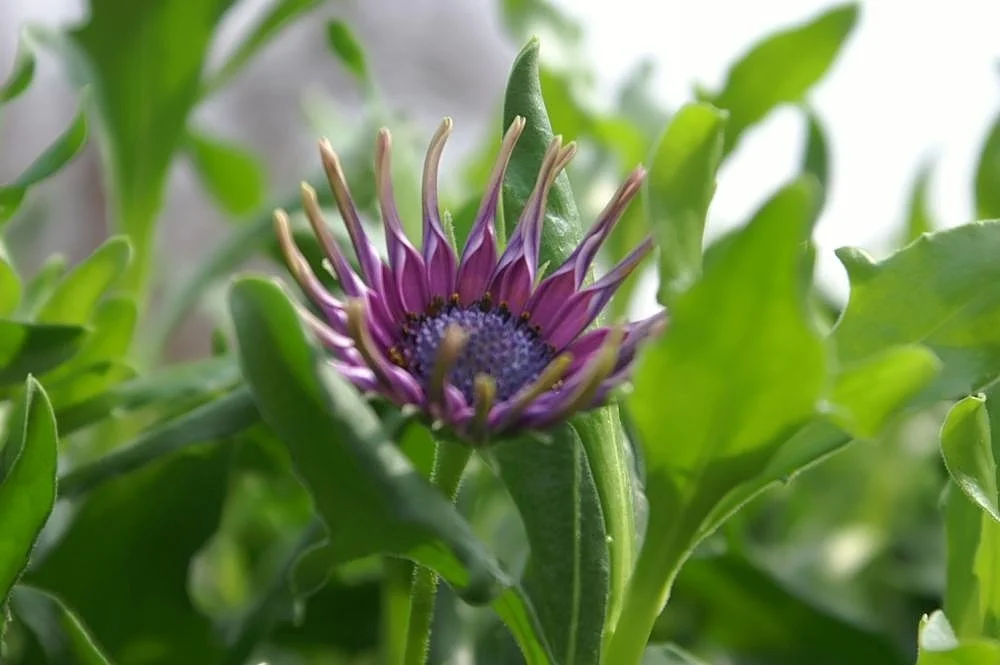
Osteospermum ecklonis hybrids
Many colourful bedding plants belong to this broad horticultural background. Treat their label as the guide to size and winter care. They suit containers and seasonal beds, but should not automatically be left outdoors through severe cold.
Osteospermum ecklonis with a partly open flower. The photograph shows the species background, not a verified named bedding hybrid.
Photo: David J. Stang, CC BY-SA 4.0. Resized and optimised; cropped for display. Adapted image under the same licence.
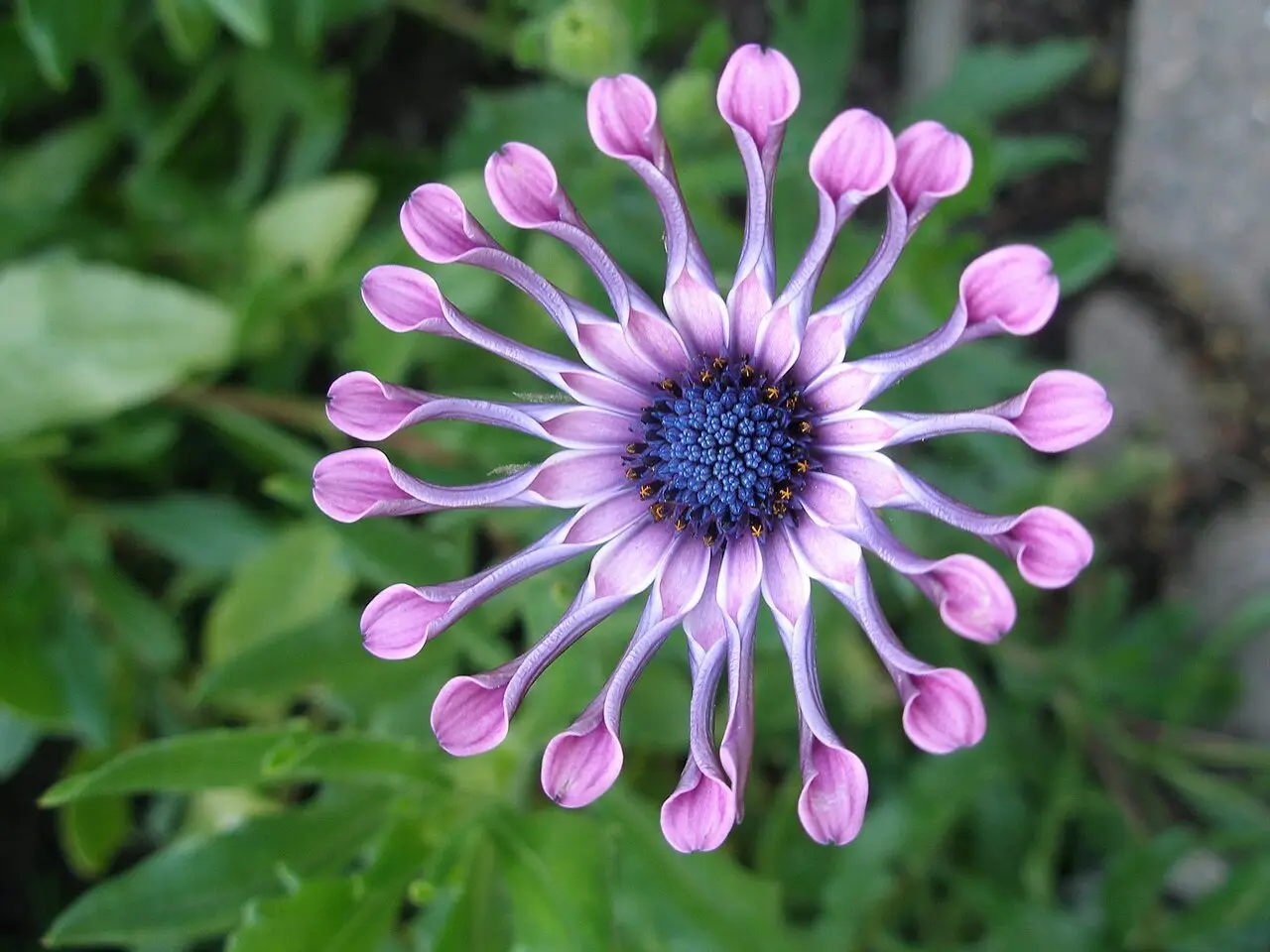
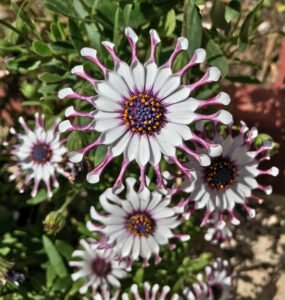
Spoon-petalled selections
Cultivars such as Pink Whirls are chosen for their distinctive ray shape. Buy a named vegetatively propagated plant if that detail matters. Seedlings and ordinary daisy forms will not reliably reproduce the same appearance.
Pink Whirls osteospermum, identified in the original image record, showing its spoon shaped rays.
Photo: Thom Quine, CC BY 2.0. Resized and optimised; cropped for display.

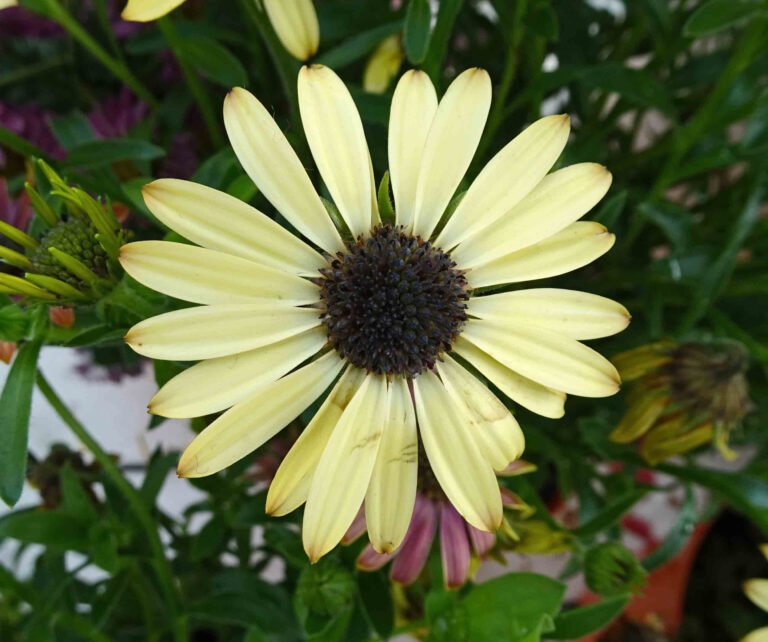
Compact bedding selections
Shorter modern selections fit smaller pots and the front of a summer border. Compact at purchase still means a living plant that needs root space. Check the labelled spread and avoid packing a container beyond its practical watering capacity.
Osteospermum jucundum compactum, identified in the original image record. This illustrates a compact form rather than a named bedding series.
Photo: Andy Morffew, CC BY 2.0. Resized and optimised; cropped for display.
Check the botanical name, mature size and seasonal requirements before buying. Choose healthy labelled plants or fresh seed, prepare their final position and keep the label so future care follows the selection you actually planted.
Open single flower heads can be visited by insects when the weather is warm. Include other flower shapes and flowering seasons nearby so the planting supplies interest beyond the daisy display. Avoid treating a long flowering season as a guarantee that every cultivar is equally useful to every insect.
Check pest populations before taking action and tolerate light cosmetic damage on established plants. Do not routinely spray open flowers. If protection or treatment is genuinely needed, choose a targeted method and follow the label around flowering ornamental plants.
Published by Buy From Farmers Direct. Growing guidance reviewed 11 October 2026. The seasonal timeline uses the shared BFFD Growers Calendar record; adjust timings to your variety and local conditions.
Some selected forms are hardier than many bedding hybrids, but winter survival varies. Check the botanical name and cultivar, provide drainage and keep tender stock frost free or treat it as seasonal bedding.
Many respond to low light by closing in dull weather or at night. This is normal when the rest of the plant is healthy. A sunny position encourages a fuller daytime display.
Plant tender plants after hardening off and after frost risk has passed, commonly May or June. Established hardier selections may have a wider planting season, but cold wet ground is a poor start.
Yes, removing faded heads keeps the plant tidy and can encourage continued flowering. Lightly shape leafy shoots when needed, avoiding severe cuts into a bare woody framework.
You can overwinter tender plants or rooted cuttings in bright frost-free conditions. Hardier selections may remain outdoors in suitable ground, but keeping a backup cutting is useful in marginal gardens.
Not reliably for named hybrids. Use cuttings to preserve the parent’s flower colour and habit, and follow packet instructions for commercial seed strains.
Match the plant to its position, establish it carefully and respond to the season in front of you. A little attention at the right time makes the display easier to maintain.
Want to get food independence, support your local grower, get better prices and shop more privately?
Local food isn’t just something you find. It’s something you protect. A free account helps keep local supply visible, supported, and resilient.

….it takes 30 seconds for food lovers and 5 minutes for suppliers
We built this for people who care where their food comes from. For people who want to remain food secure. For Farmers to get to the local people, who deserve a better income and to deliver a better price for you. For the environmentally conscious and the privacy-conscious. An account simply helps us make the map and supplier reach more useful to you, without changing how open it is. You’re always in control.


Find local food. Stay connected to it. Create a free account to support local producers and be part of a growing food network.


