Petunias give a long summer display in pots, baskets and beds, with upright, mounding and trailing forms for different spaces. Most garden selections are tender plants managed as seasonal bedding in Britain. Keep them frost free while young, plant them into a sunny position after acclimatisation and make watering easy to reach; a full basket can dry much faster than a border.
Summer pots and baskets
Tender seasonal bedding
Choose upright or trailing habit
Sun and steady moisture
Feed containers as directed
| Botanical group | Garden Petunia hybrids |
| Family | Solanaceae |
| Plant type | Tender perennial commonly grown as seasonal bedding |
| Typical height | About 15 to 45cm; habit varies |
| Spread | Compact to vigorous trailing selections |
| Flowers | Trumpet-shaped, single or double |
| Flowering | Summer until cold ends the display |
| Light | Full sun or very light shade |
| Soil | Fertile, moist but drained |
| Container compost | Suitable fresh peat free potting compost |
| Seed sowing | February to April with suitable warmth and light |
| Planting outside | May to June after frost risk |
| Plugs | Grow on before final planting |
| Propagation | Seed strains or cuttings of suitable named plants |
| Routine care | Water, feed and tidy as needed |
| Deadheading | Useful for many forms; some selections shed flowers readily |
| Basket requirement | Secure support and reachable watering |
| Winter care | Optional bright frost-free stock or cuttings |
| Common problems | Drought, wet roots, aphids and flower damage |
| Use | Ornamental display, not a food crop |
| Plant name | Crop type | Spacing |
Sow indoors
Plant outdoors
Harvest
Polytunnel | |||||||||||
|---|---|---|---|---|---|---|---|---|---|---|---|---|---|---|
| Jan | Feb | Mar | Apr | May | Jun | Jul | Aug | Sep | Oct | Nov | Dec | |||
| Petunia | Not recorded | Usually 25 to 35cm in beds; container numbers depend on cultivar vigour and pot volume | Polytunnel | Sow indoors, Polytunnel | Sow indoors, Polytunnel | Sow indoors, Polytunnel | Plant outdoors, Polytunnel | Plant outdoors | No activity recorded | No activity recorded | No activity recorded | Polytunnel | Polytunnel | Polytunnel |
Sow indoors: February, March, April. Plant outdoors: May, June. Harvest: no months recorded. Polytunnel: January, February, March, April, May, October, November, December.
February to April sowing applies to seed-raised strains under suitable protection. Plant outside in May or June only after local frost risk and hardening off. The October to May protected band is optional for young plants, stock or cuttings; a greenhouse must be kept frost free where required. It is not a year-round requirement for a disposable summer display. There is no food harvest band.
Petunias suit a sunny patio where regular watering and light maintenance are realistic. A trailing selection can cover a large container edge, while a compact upright type gives a neater bed. Choose the habit before the colour so the plant fits its job.
They are less convenient in an inaccessible basket or a pot that is left dry for several days. Large double flowers can show rain damage more readily than smaller single blooms. In a wet exposed position, compare weather-tolerant selections rather than expecting every petunia to perform alike.
Photo: ali graney, CC BY 2.0. Resized and optimised; cropped for display.

Choose good light and shelter from strong winds, especially for hanging baskets. A south-facing wall may be warm but can also create a dry rain shadow. Check the compost itself after showers instead of assuming the canopy has allowed water through.
Use drained fertile soil in beds and fresh suitable compost in pots. Petunias need moisture while growing strongly, but stagnant water excludes air from roots. Check holes and basket liners before planting rather than diagnosing poor drainage after the display collapses.
Match the container to mature growth. A vigorous trailing plant can occupy much more space than its small nursery pot suggests. Leave room for roots and do not rely on daily feeding to compensate for too little compost.
Make maintenance safe and convenient. Fix a basket bracket to a sound support and keep the basket within easy reach for watering and inspection. A visually impressive high position becomes a poor choice if you cannot check moisture without unsafe stretching.
Photo: Mike Mozart, CC BY 2.0. Resized and optimised; cropped for display.

Buy healthy plugs to grow on, larger plants for a quick display, or a seed strain suited to your propagation space. Named trailing selections are often bought as plants because their exact habit is not reproduced reliably from saved seed.
1.
Select upright, mounding or trailing plants for the intended bed or container. Read expected spread and vigour so one strong petunia does not overwhelm slower companions in a mixed display.
2.
Sow suitable seed strains under cover in late winter or spring. The seed is fine, so follow packet directions for surface sowing or light covering, temperature and light rather than burying it like a large vegetable seed.
3.
Keep emerging seedlings in strong light and pot them on carefully when ready. Avoid a warm dim window that produces stretched stems, and ventilate covered trays once seedlings are established.
4.
Grow small plugs into well rooted young plants before filling a final basket. A tiny plug is vulnerable to overwatering in a large volume of compost and cannot immediately support the display shown on its label.
5.
Harden plants off gradually and wait until frost risk has passed. A flowering plant bought in April may still need protected growing for several weeks before it can remain outdoors overnight.
6.
Prepare fresh compost or a weed free bed, water rootballs and arrange plants at a sensible spacing. Set each at its previous depth, keeping crowns clear and leaving a watering rim in containers.
7.
Water thoroughly after planting and check that excess drains freely. Secure baskets and top-heavy pots before growth makes them heavier or more wind resistant. Keep labels until the plants have established their habit.
8.
Check moisture and new growth frequently through establishment. Pinch a soft shoot tip if a young plant needs branching and the cultivar benefits, but avoid unnecessary repeated pinching that delays flowers on an already compact selection.

Watering
Check pots and baskets frequently in warm or windy weather, because foliage can hide dry compost. Water the root zone thoroughly when needed, allowing surplus to drain. If water runs straight around a shrunken dry rootball, rewet gradually instead of assuming one quick pour has reached the roots.
Beds usually need less frequent attention once established, but prolonged drought reduces flowering. Avoid constant saturation and investigate a wilted plant before watering again. Wet compost plus limp growth may indicate damaged roots rather than thirst.

Feeding
Fresh compost usually contains an initial nutrient supply; check its label before adding more. Once that reserve is used, feed growing containers with a suitable flowering-plant fertiliser at the stated rate, maintaining regular moisture so roots can use it.
Do not combine several feeds or increase concentration to compensate for an overcrowded dry pot. Excess salts can damage roots. Border plants in fertile soil may need little extra, while a long-lived basket depends more heavily on the limited compost volume.

Pruning
Remove faded flowers and seed pods on selections that benefit from deadheading. Some modern petunias, including many Surfinia selections, shed flowers readily and need less routine picking. Check the actual plant and label instead of imposing the same task on every cultivar.
Shorten overly long healthy stems above leaves to encourage branching if the display becomes thin. Do a few at a time and allow recovery. Clear damaged flowers after heavy rain, but do not repeatedly shear the whole plant into leafless stems.

Winter care
Most UK displays are cleared when cold ends the season. Healthy plants can be composted and containers cleaned ready for their next use. Do not leave tender petunias outdoors expecting the root system to behave like a hardy perennial.
If preserving a favourite, keep healthy stock or rooted cuttings in bright frost-free conditions before cold weather arrives. Water sparingly enough to avoid wet roots, ventilate and inspect for pests. An unheated tunnel may freeze and is not sufficient protection by name alone.
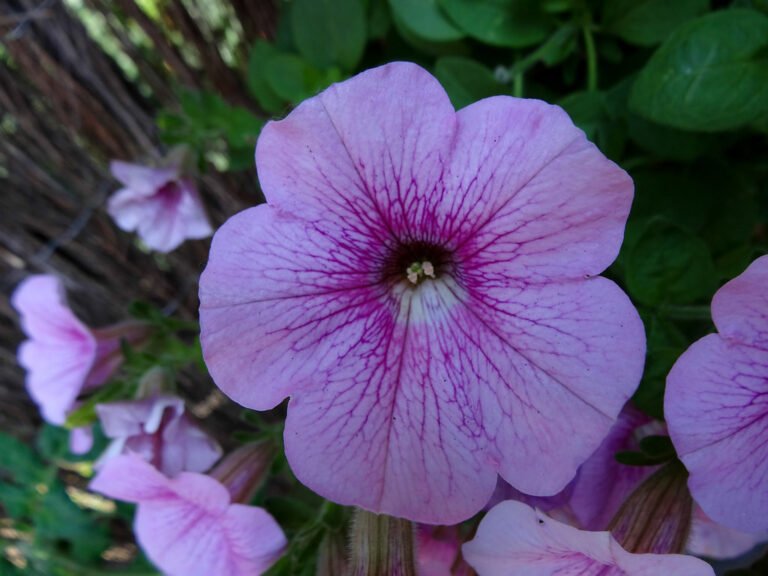
Garden petunias have soft branching stems and trumpet-shaped flowers with fused petals. Foliage is usually green, oval and somewhat sticky or hairy. Single flowers show a clear funnel, while doubles carry additional petals that can obscure the centre.
Calibrachoa and other basket plants can look similar at a distance, and names such as Surfinia refer to particular petunia series rather than a separate general care category. Keep the label to confirm vigour, deadheading needs and whether the selection is propagated from seed or cuttings.
Photo: Jim, the Photographer, CC BY 2.0. Resized and optimised; cropped for display.
Wait for local warmth rather than a fixed sales date before planting outdoors. Cooler northern or exposed gardens may need to wait until June. A few extra weeks of bright protected growth can prevent an early display being checked or lost to cold.
After rain, remove damaged mushy flowers so they do not sit against healthy leaves. Smaller single-flowered and weather-tolerant selections may recover more readily, but no flower is immune to repeated heavy rain and poor airflow in a crowded basket.
If a healthy plant becomes long and bare, shorten selected stems above leafy growth and maintain sensible watering and feeding while it branches again. Renew sections gradually so the whole container is not stripped at once. Replace plants that have root decay rather than treating every decline as a pruning problem.
Photo: Michael John Button, CC BY 2.0. Resized and optimised; cropped for display.
Check the compost beneath the foliage and the weight of the basket. Small crowded volumes can dry rapidly. Rewet thoroughly if dry, improve the watering arrangement and reduce competition next time rather than relying on occasional surface splashes.
Blocked drainage or root damage may be responsible. Check the base and avoid adding more water automatically. Remove rotted plants and correct the container conditions before replacing them.
Heavy rain and poor airflow can damage petals and encourage decay. Remove spoiled flowers promptly and space plants sensibly. Consider smaller single or weather-tolerant selections for an exposed position.
Inspect the growing points and look for predators. Small populations can often be tolerated or removed locally. Avoid blanket spraying over a flowering basket and use a targeted approach only if growth is being significantly affected.
Plants may be crowded, shaded or tired. Review light, root room and feeding, then shorten a few healthy stems above leaves to renew branching. A plant with rotten roots needs different action and will not recover simply from clipping.
Seed is suitable for commercial seed strains and gives an economical way to raise bedding plants. Saved seed from hybrids can vary widely and may not preserve flower pattern or trailing habit. Use labelled plants when uniformity is important.
Healthy non-flowering cuttings can preserve suitable named plants for personal garden use. Root them in a clean suitable medium with humidity and ventilation, then keep young plants bright and frost free. Do not keep visibly diseased stock simply because the flower colour is valuable.

Compact upright petunias
Useful for beds and the centre of smaller pots, these keep a more contained outline than vigorous trailing types. Compare eventual spread and flower size, and leave enough root volume for summer watering to remain manageable.
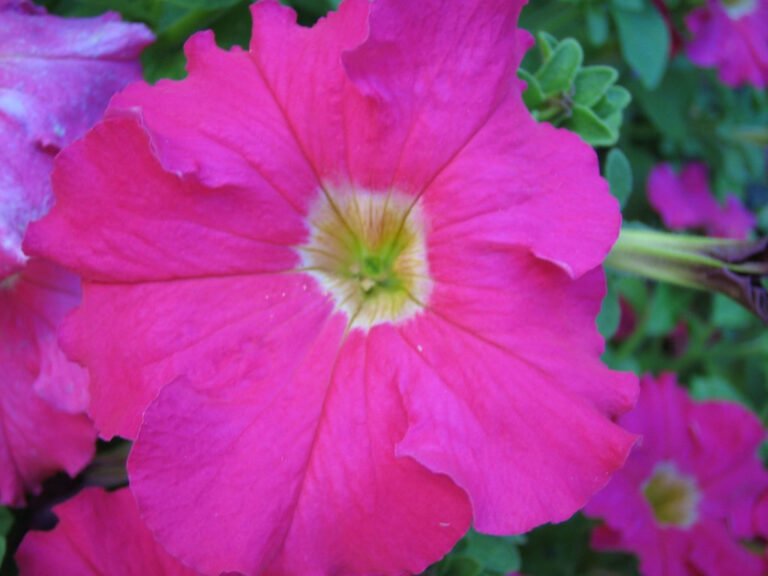
Carmine petunia flowers illustrate bedding colour; final plant habit depends on the selected cultivar.
Photo: Serres Fortier, CC BY 2.0. Resized and optimised; cropped for display.

Trailing petunias
Selections such as many Surfinia forms spill over large baskets and containers. Their vigour is an advantage only when the pot, water supply and neighbours can accommodate it. Buy labelled stock when you want a predictable trailing habit.
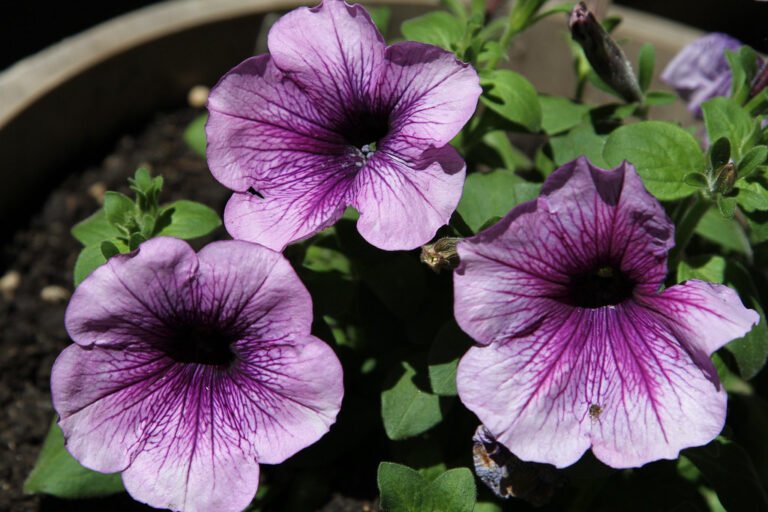
Purple Wave petunia, identified in the photographer’s caption, illustrates a spreading garden selection.
Photo: Serres Fortier, CC BY 2.0. Resized and optimised; cropped for display.
Double-flowered petunias
Tumbelina and other double selections offer fuller blooms and decorative texture. Their flowers may need extra tidying after rain. Place them where you can reach the display easily and where air moves through the foliage.
A single petunia flower is shown for comparison; this photograph does not illustrate the double flower form described here.
Photo: lil'bear, CC BY 2.0. Resized and optimised; cropped for display.
Small-flowered and weather-tolerant selections
These can be useful where rain repeatedly spoils very large blooms. Compare a nursery’s named choices and local performance rather than assuming flower size alone guarantees resilience. They remain tender plants requiring suitable outdoor timing.
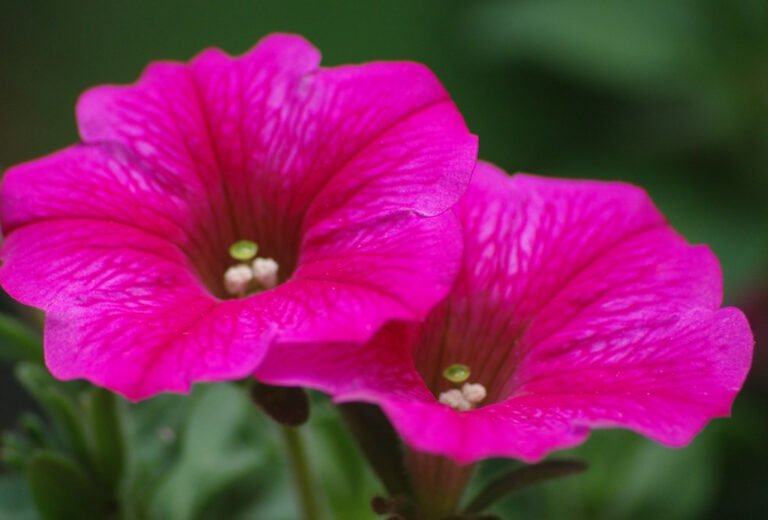
Single pink petunia flowers illustrate the general flower form; small flower size and weather tolerance are not established by the photograph.
Photo: Chris Luczkow, CC BY 2.0. Resized and optimised; cropped for display.
Check the botanical name, mature size and seasonal requirements before buying. Choose healthy labelled plants or fresh seed, prepare their final position and keep the label so future care follows the selection you actually planted.
Some single petunia flowers are visited by insects, while very full doubles offer less accessible centres. Include a range of flower shapes in the garden instead of relying on one basket plant to meet all pollinator needs.
Inspect aphids and other pests before taking action, allowing natural predators where practical. Avoid spraying open flowers and use treatments only for the identified problem. Good watering and spacing reduce stress without adding unnecessary chemicals to a summer display.
Published by Buy From Farmers Direct. Growing guidance reviewed 11 October 2026. The seasonal timeline uses the shared BFFD Growers Calendar record; adjust timings to your variety and local conditions.
After hardening off and once local frost risk has passed, usually May or June. Plants sold in flower earlier may still need protected growing before remaining outside overnight.
No. Many benefit from removing faded flowers and pods, while some modern selections shed blooms readily. Follow the cultivar guidance and remove damaged flowers when they remain stuck among the leaves.
A dense canopy, wind and a small compost volume can use water rapidly. Check beneath the leaves, water thoroughly and choose a larger practical container or fewer plants next time.
Healthy plants or cuttings can be kept bright and frost free, but most displays are managed as seasonal bedding. Do not expect them to survive an ordinary outdoor UK winter.
Only if the chosen product’s instructions specify that dilution and routine. Follow the label and the compost’s initial nutrient guidance; stronger or combined feeds can damage roots.
Not reliably. Hybrid offspring may differ in flower pattern and habit. Use a named plant or appropriate cuttings if preserving that exact selection is important.
Match the plant to its position, establish it carefully and respond to the season in front of you. A little attention at the right time makes the display easier to maintain.
Want to get food independence, support your local grower, get better prices and shop more privately?
Local food isn’t just something you find. It’s something you protect. A free account helps keep local supply visible, supported, and resilient.

….it takes 30 seconds for food lovers and 5 minutes for suppliers
We built this for people who care where their food comes from. For people who want to remain food secure. For Farmers to get to the local people, who deserve a better income and to deliver a better price for you. For the environmentally conscious and the privacy-conscious. An account simply helps us make the map and supplier reach more useful to you, without changing how open it is. You’re always in control.


Find local food. Stay connected to it. Create a free account to support local producers and be part of a growing food network.


