A compact plum can bring blossom and summer fruit to a smaller garden, but the word dwarf needs careful checking. Plum rootstocks restrict growth without producing the tiny trees many people imagine. Choose the cultivar and rootstock together, allow room for the mature crown and plan regular care if the tree will live in a container.
Compact fruit tree
Check mature size
Sunny sheltered site
Summer pruning
Thin heavy crops
| Botanical name | Prunus domestica |
| Plant type | Deciduous European plum |
| Growth form | Compact bush tree in this guide |
| Smaller rootstocks | Pixy or VVA1 |
| Rootstock limit | These reduce vigour but are not truly dwarfing |
| Pixy bush height | Often about 3 to 4m |
| VVA1 bush height | Often around 3m |
| Position | Sunny and sheltered |
| Soil | Fertile, moisture retentive and well drained |
| Container | At least 50cm wide and deep |
| Compost | Loam based peat free compost |
| Planting | Preferably November to March |
| Flowers | White spring blossom |
| Pollination | Check whether the cultivar is self fertile |
| Harvest | July to October across different cultivars |
| Pruning | Spring for young trees; summer once established |
| Winter pruning | Avoid because of disease risk |
| Fruit thinning | Important when the crop is heavy |
| Watering | Check pots and new trees closely |
| Propagation | Buy a named grafted tree |
| Plant name | Crop type | Spacing |
Sow indoors
Plant outdoors
Harvest
Polytunnel | |||||||||||
|---|---|---|---|---|---|---|---|---|---|---|---|---|---|---|
| Jan | Feb | Mar | Apr | May | Jun | Jul | Aug | Sep | Oct | Nov | Dec | |||
| Plum (Dwarf) | Orchard fruit | Allow the cultivar and rootstock's mature spread; compact plums can still reach about 3 to 4m | Plant outdoors | Plant outdoors | Plant outdoors | No activity recorded | No activity recorded | No activity recorded | Harvest | Harvest | Harvest | Harvest | Plant outdoors | Plant outdoors |
Sow indoors: no months recorded. Plant outdoors: January, February, March, November, December. Harvest: July, August, September, October. Polytunnel: no months recorded.
The calendar shows preferred dormant planting and July to October harvest across different cultivars; one tree crops for only part of that span. Pruning takes place during active growth. Container trees can be planted at other suitable times with dependable aftercare.
Useful where a smaller crown makes picking and blossom protection easier. It suits a gardener who can provide sunshine, water during establishment and seasonal attention to pruning and crop load.
Less suitable where only a tiny decorative pot or a shaded corner is available. A compact plum remains a tree, and repeated hard pruning cannot reliably turn an unsuitable vigorous plant into a low maintenance miniature.
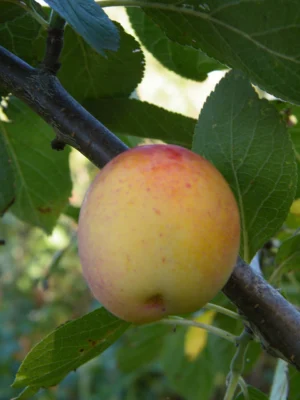
Photo: APictche, CC BY-SA 4.0. Resized and optimised; cropped for display. Adapted image under the same licence.
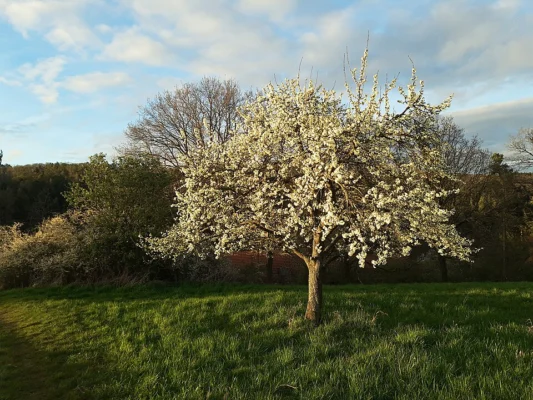
Choose a warm, bright position with shelter from strong wind. The tree's dormant wood is hardy, but open flowers are vulnerable to frost and cold weather can discourage pollinating insects.
In the ground, allow the expected mature spread rather than planting by the width of the nursery pot. Keep shrubs and grass from competing with a young tree's roots.
A container should sit on firm level ground with clear drainage holes. Position it where you can reach the compost for watering and where a full canopy will not obstruct a path.
If you hope to move the tree into shelter during blossom, consider the weight of the planted pot first. A stable trolley and clear route can help, but permanent good siting remains the priority.
Photo: Gerda Arendt, CC0. Resized and optimised; cropped for display.
Read beyond the patio label. The nursery should be able to name the cultivar and rootstock and give a realistic size for your growing method. That information is the starting point for a manageable tree.
1.
Choose a less vigorous cultivar on an appropriate size controlling rootstock. Confirm whether it needs a compatible pollination partner and whether one already grows nearby.
2.
Prepare the growing space and support before planting. For a container, choose a stable pot at least 50cm wide and deep with unobstructed drainage.
3.
Use suitable loam based peat free compost in pots. For open ground, clear weeds and dig a hole broad enough for the roots without creating a deep sunken pocket.
4.
Water a nursery pot thoroughly before removing it, or briefly soak a tree supplied with exposed roots. Protect bare roots from drying wind while working.
5.
Set the tree at its previous depth and keep the graft union above the soil or compost. Do not bury the stem to make a tall young tree appear shorter.
6.
Backfill around the roots and firm gently, then water thoroughly. Allow space below a container rim so water can soak in without immediately spilling over.
7.
Fit a flexible tie and support as needed for the rootstock and site. Mulch ground grown trees while leaving a clear gap around the trunk.
8.
Inspect moisture regularly through establishment and keep the first crop modest. Begin the appropriate young tree training in spring rather than pruning simply because planting took place in winter.

Watering
A container plum depends on the moisture held in a limited rootball. Check regularly during warm weather and fruit swelling, watering thoroughly when needed and allowing excess to escape.
New trees in the ground also need water in dry spells. Established trees are more resilient, but do not assume a recently planted tree can find deep moisture simply because nearby mature plants cope.

Feeding
Feed a container tree during active growth using a suitable product at its stated rate. Account for any fertiliser already present in new compost, and review the pot's condition as the roots fill it.
For open ground, maintain a mulch of well rotted organic matter and assess the tree before adding extra feed. A failed crop can reflect frost or pollination rather than a nutrient shortage.

Pruning
This guide covers a compact bush, with an open crown rather than the specific leader system used for a pyramid. Train young trees in spring after growth begins, then use restrained summer pruning once established.
Choose dry weather and remove damaged, crossing or congested growth for a clear reason. Retain useful fruiting wood and avoid routine winter cuts, which increase the risk of silver leaf and bacterial canker.

Winter care
Keep drainage holes clear and prevent pots standing in water. Roots in a container have less insulation than roots in the ground, so protect an exposed rootball during prolonged severe freezing.
Inspect ties and prepare temporary blossom protection before spring. A cover should be supported clear of flowers on frosty nights and removed when conditions permit insects and light to reach them.
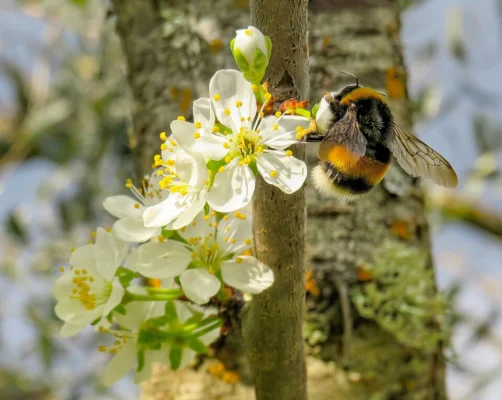
European plums produce white spring flowers and smooth skinned fruit containing a single stone. Fruit can be yellow, red, purple or blue, depending on cultivar; a dusty surface bloom is normal on many ripe plums.
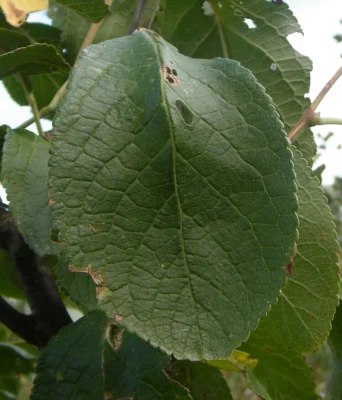
Small size at purchase does not prove a tree has a compact rootstock. Keep its label and identify the graft union. Shoots arising below that join belong to the stock rather than the chosen fruiting cultivar.
Photo: APictche, CC BY-SA 4.0. Resized and optimised; cropped for display. Adapted image under the same licence.
In cooler gardens, compare flowering and ripening times as well as flavour. A later flowering cultivar can sometimes avoid an early frost, while an early harvest may suit a shorter warm season.
Thin excessive fruit while young so branches are not pulled down by the crop. Aim for roughly one plum every 5 to 8cm, or a pair every 15cm, adjusting for the strength of the young framework.
Allow dessert plums to develop their characteristic colour and soften on the tree. Pick gently over several visits, use bruised fruit promptly and freeze or preserve sound surplus rather than leaving a heavy crop to deteriorate.
Photo: PROPOLI87, CC BY-SA 4.0. Resized and optimised; cropped for display. Adapted image under the same licence.
Thin early and support vulnerable branches before the load becomes excessive. A small tree can set more fruit than its young framework safely carries.
Check frost, cold wind and the cultivar's pollination requirements. A self fertile label removes the need for another cultivar but does not remove the need for pollen transfer and suitable weather.
Some shedding is natural, but severe loss can follow moisture stress. Check the rootball, especially in a pot, and review crop load rather than immediately adding feed.
Remove affected fruit promptly and clear shrivelled fruit from the tree. Crowding and wounds allow rot to spread, so thinning and gentle harvesting are useful preventive habits.
Inspect for aphids on young shoots before deciding on treatment. Avoid unnecessary spraying during blossom, and distinguish insect damage from symptoms that may need a different diagnosis.
Grafting and budding retain the named cultivar while pairing it with a selected rootstock. For a small garden, a labelled nursery tree gives a more predictable result than raising your own from a stone.
A seedling may take years to fruit and will not reliably repeat either the parent's flavour or its compact size. Treat seed growing as a separate experiment with enough space for an uncertain outcome.
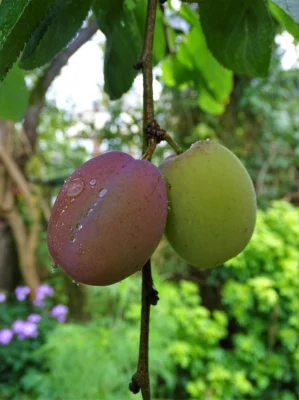
Victoria
A familiar self fertile plum for fresh eating and cooking. Choose a suitable rootstock and thin heavy crops rather than assuming the cultivar will remain small. The photograph shows labelled Victoria fruit, not evidence of a dwarf tree.
Photo: Neil Theasby, CC BY-SA 2.0. Resized and optimised; cropped for display. Victoria plums in a Sheffield suburban garden by Neil Theasby
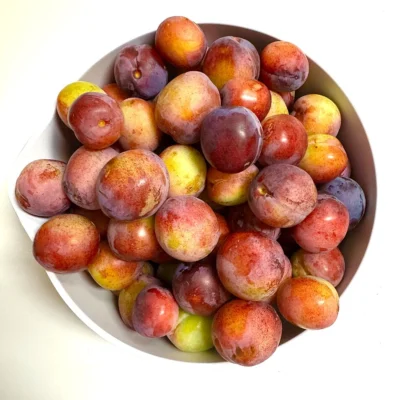
Opal
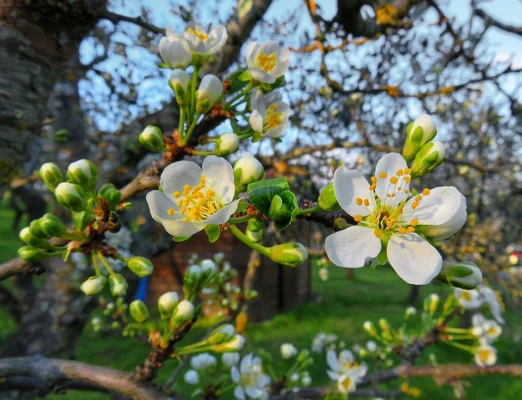
Blue Tit
A relatively compact cultivar worth discussing for a smaller space, on suitable stock. Later blossom can be useful in some gardens. This image shows European plum flowers and is not verified as Blue Tit.
Photo: PROPOLI87, CC BY-SA 4.0. Resized and optimised; cropped for display. Adapted image under the same licence.
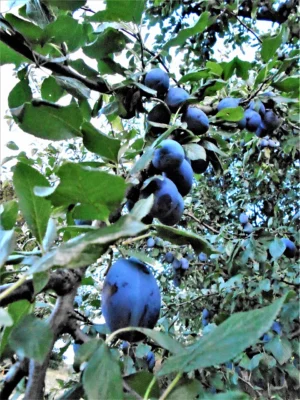
Read the rootstock label
Blue fruit does not reveal a tree’s eventual size. These photographed plums are labelled Stanley; use the nursery’s cultivar and rootstock information to judge whether any offered tree genuinely suits your available space.
Photo: Silverije, CC BY-SA 4.0. Resized and optimised; cropped for display. Adapted image under the same licence.
Ask a nursery about the complete cultivar and rootstock combination, container suitability and expected spread. A clear answer is more useful than a patio label alone.
Plum blossom supplies spring food for visiting insects. Allow pollinator access when temporary frost covers are removed, and keep other flowering plants elsewhere in the garden through the season.
If birds take ripening fruit, protect selected branches with secure taut netting and inspect frequently. Avoid loose loops around the canopy that can catch wildlife.
Smaller is relative. Pixy and VVA1 reduce vigour, but a bush can still reach around 3m or more. Confirm dimensions for the cultivar, rootstock and growing method.
A suitable compact combination can grow in a large container, with regular water, feed and rootball care. Use a substantial stable pot rather than a small ornamental planter.
Many cultivars are self fertile, but others need a compatible partner. Check the exact cultivar rather than assuming every compact plum will crop alone.
No. Train young plums during suitable spring growth and prune established trees in dry summer weather. Stone fruit has different disease risks from apples and pears.
Cultivar, water supply and an excessive crop all affect fruit size. Thin young fruit and maintain steady moisture, especially where the roots are restricted to a pot.
No. It describes restricted tree growth. A well chosen, well cared for compact tree can produce normal fruit for its cultivar.
A compact plum succeeds when expectations match its real size. Choose carefully, keep the roots well supplied and thin heavy crops so the tree remains manageable and productive.
Want to get food independence, support your local grower, get better prices and shop more privately?
Local food isn’t just something you find. It’s something you protect. A free account helps keep local supply visible, supported, and resilient.

….it takes 30 seconds for food lovers and 5 minutes for suppliers
We built this for people who care where their food comes from. For people who want to remain food secure. For Farmers to get to the local people, who deserve a better income and to deliver a better price for you. For the environmentally conscious and the privacy-conscious. An account simply helps us make the map and supplier reach more useful to you, without changing how open it is. You’re always in control.


Find local food. Stay connected to it. Create a free account to support local producers and be part of a growing food network.


