Annual poppies can turn a small open patch into a light, shifting display of papery flowers. The simplest starting point is the corn poppy, Papaver rhoeas, together with its Shirley selections. Sow where the plants will flower, leave enough room between seedlings and accept that each individual bloom is brief even when the whole patch flowers for weeks.
Hardy annual flowers
Sow where they will flower
Full sun and free drainage
Thin crowded seedlings
Ornamental use only
| Botanical name or group | Papaver rhoeas and annual ornamental Papaver |
| Family | Papaveraceae |
| Garden life cycle | Annual |
| Typical height | Usually 30–90cm, depending on selection |
| Typical spread | 20–30cm apart; use the seed packet for the selected type |
| Position | Full sun |
| Soil | Well-drained, cultivated soil with modest fertility |
| Flowering season | Mainly June to August; season depends on sowing |
| Foliage | Divided green leaves; annual growth dies after seed ripens |
| Hardiness | Hardy annual types tolerate ordinary UK winters as young plants |
| Main planting window | Direct sow March–May or September–October |
| Seed route | Direct sow thinly; avoid disturbing the taproot |
| Propagation | Seed; offspring of mixed cultivars may vary |
| Watering priority | Keep the seedbed moist; water established plants in prolonged drought |
| Feeding approach | Usually little additional feeding |
| Pruning priority | Deadhead or retain selected seed capsules |
| Best garden role | Sunny informal borders and small annual flower patches |
| Container suitability | Possible in a deep drained container; sow directly |
| Harvest interpretation | Ornamental flowers only; no food harvest |
| Key distinction | Annual poppies are separate from perennial Oriental poppies |
| Plant name | Crop type | Spacing |
Sow indoors
Plant outdoors
Harvest
Polytunnel | |||||||||||
|---|---|---|---|---|---|---|---|---|---|---|---|---|---|---|
| Jan | Feb | Mar | Apr | May | Jun | Jul | Aug | Sep | Oct | Nov | Dec | |||
| Poppy (Annual) | Not recorded | 20–30cm apart; use the seed packet for the selected type | No activity recorded | No activity recorded | Sow indoors | Sow indoors | Sow indoors | No activity recorded | No activity recorded | No activity recorded | Sow indoors | Sow indoors | No activity recorded | No activity recorded |
Sow indoors: March, April, May, September, October. Plant outdoors: no months recorded. Harvest: no months recorded. Polytunnel: no months recorded.
March to May is the main direct-sowing window. September and October are an optional autumn route on well-drained ground, producing overwintering seedlings and potentially earlier flowers; choose spring sowing on cold wet soil. Planting and protected-growing bands are empty because this guide uses direct sowing. Flowers commonly appear June to August. The empty harvest band means no food crop is advised.
Choose annual poppies for a loose cottage border, a sunny gap after spring bulbs or a small deliberately managed annual flower area. Their stems move easily among other light plants, but they are overwhelmed by dense established perennials and will not establish reliably through a closed lawn.
They are a useful low-cost project when you can prepare a fine seedbed and recognise the seedlings. Containers also work, although a shallow pot dries very rapidly. Expect to start again from seed each season rather than buying one plant for a permanent clump.
Photo: Andreas Rockstein, CC BY-SA 2.0. Resized and optimised; cropped for display. Adapted image under the same licence.
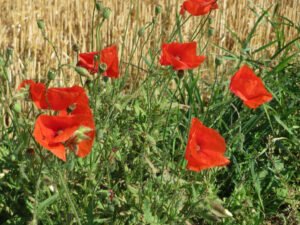
Choose a position with sun for most of the day. Avoid broad shrubs or vigorous summer plants that will close over the seedbed before the poppies flower.
Clear persistent weeds and rake a fine surface. Poppies need open ground to establish; scattering seed into thick grass usually disappoints. Cultivate only the intended patch and retain established habitat nearby.
Choose soil that drains after rain. Ordinary fertility is adequate, and rich nitrogen feeding can encourage excessive leaves. On sticky winter soil, wait for spring rather than sowing into a cold saturated surface.
A deep drained container offers an alternative. Use peat-free compost, leave a watering margin and sow directly into the final pot. Check frequently while seeds germinate and during hot weather.
Photo: Andreas Rockstein, CC BY-SA 2.0. Resized and optimised; cropped for display. Adapted image under the same licence.
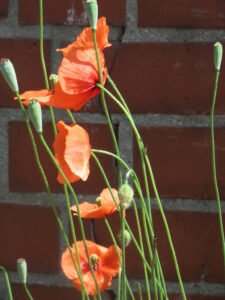
Direct sowing avoids the disruption that poppy taproots dislike. Prepare a small area carefully rather than distributing a whole packet over unsuitable ground.
1.
Choose a packet labelled with the botanical name and annual habit. Corn poppies and Shirley selections follow a different timetable from perennial Oriental poppies.
2.
Sow into a workable moist spring seedbed or use the optional early autumn window. Postpone if saturated soil would be damaged by cultivation.
3.
Remove weeds and rake the surface level. Water a dry bed before sowing and allow excess moisture to drain, so the small seed is not immediately washed into hollows by a heavy first watering.
4.
Mix very small seed with a little dry horticultural sand if this helps even distribution. Scatter thinly over the prepared area and press gently into contact with the surface, following the packet’s covering instruction.
5.
Mark and label the patch. Water through a fine rose so emerging roots remain covered, keeping the surface lightly moist rather than muddy.
6.
Thin seedlings in stages to roughly 20–30cm apart, adjusting for the selection. Remove surplus plants carefully rather than leaving a dense carpet that competes for light and water and produces weak, short-lived stems.
7.
Keep neighbouring weeds from overtaking the young plants. Work with fingers or a small hand tool near seedlings, because deep hoeing can sever their roots. Avoid lifting the remaining plants to make the pattern artificially perfect.
8.
Let the plants establish where they were sown. Decide later whether to deadhead for a tidier display or retain a few sound capsules for seed. Label desirable selections before petals fall and colours are forgotten.

Watering
Germinating seed and newly thinned seedlings need consistent moisture near the surface. Water gently when necessary and check below the crust rather than assuming a dry-looking top means the whole bed needs soaking. Small seedlings have limited roots and cannot yet tolerate long dry spells.
Once well rooted, annual poppies are fairly economical with water in suitable soil. During prolonged drought, give a useful watering around the roots. Containers require closer attention because their compost dries faster; allow excess water to escape and do not leave pots standing in a filled saucer.

Feeding
Most plants in ordinary cultivated soil do not need a schedule of repeated feeding. Good light, enough space and sensible watering usually make more difference than additional fertiliser. Avoid using a rich lawn feed around an annual flower patch, where it can favour competing grasses.
In containers, follow compost guidance if nutrients become depleted. Use any feed at its labelled dilution and correct crowding or waterlogging before adding fertiliser.

Pruning
Remove faded flowers before capsules ripen when limiting self-seeding is the priority. Follow the stem down to a suitable junction rather than pulling at the whole plant. Leave some blooms untouched if you want the changing shapes of developing seed heads within the display.
Annual plants eventually finish naturally. Lift or cut down exhausted stems once your chosen capsules have matured, checking for insects before clearance. This is the end of their life cycle, not a failure that can be reversed by cutting the plant to a perennial crown.

Winter care
Spring-sown plants generally complete their life cycle before winter. Clear unwanted mature seed heads before they shed, then leave the soil covered with an appropriate following planting or mulch rather than expecting old annual stems to provide next year’s flowers.
Autumn seedlings can overwinter outdoors in suitable drained ground. Their main difficulty is often prolonged wetness and competition rather than a need for warm greenhouse conditions. Keep fallen leaves from smothering small rosettes and accept some losses in an exceptionally difficult winter.
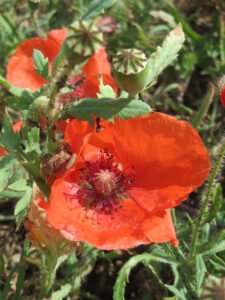
Corn poppies develop divided green foliage and slender, often hairy stems carrying nodding buds. Open flowers commonly have four broad papery petals surrounding many dark stamens. Garden selections may be pink, white or bicoloured as well as the familiar scarlet.
Annual Papaver includes more than one species. Ornamental Papaver somniferum has different, often blue-grey foliage and distinctive capsules, while Oriental poppies form returning perennial crowns. Keep packets and labels; a red flower alone does not establish species, variety or suitability for any food use.
Photo: Andreas Rockstein, CC BY-SA 2.0. Resized and optimised; cropped for display. Adapted image under the same licence.
Spring is usually the safer sowing season in a cold, wet garden. Autumn sowing can work well on free-draining southern or coastal sites, but the result depends on winter weather. A small trial patch lets you compare both timings without committing all your seed.
For a longer display, make two or three modest spring sowings a few weeks apart while conditions remain suitable. Flowers respond to weather and sowing date, so judge progress by buds and growth rather than expecting every patch to open in the same calendar week.
Treat this as an ornamental planting. Do not harvest unverified garden poppy seed, capsules or sap for eating or home preparations. If flowers are cut for a vase, take only a few stems and recognise that the petals are delicate and often short lived.
Photo: Andreas Rockstein, CC BY-SA 2.0. Resized and optimised; cropped for display. Adapted image under the same licence.
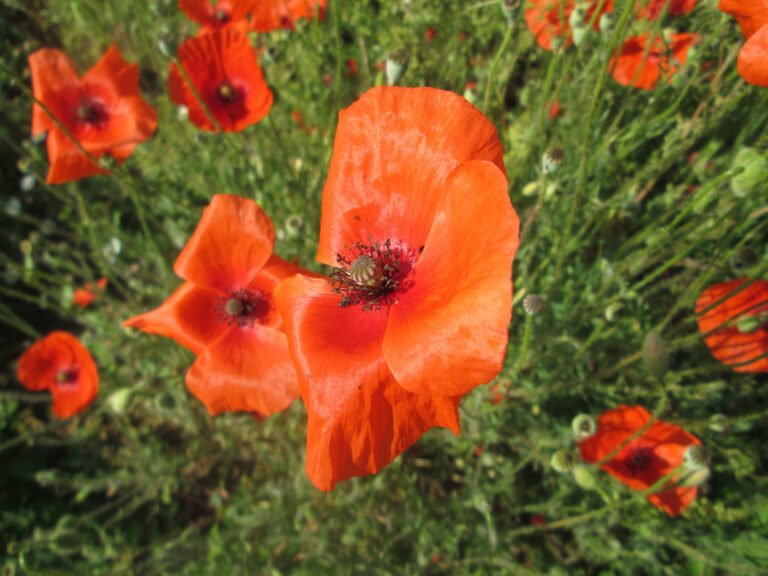
A dry surface, buried seed or a heavily crusted bed can interrupt establishment. Check a small area before sowing again, and use a fine seedbed with gentle watering. Leave the rest undisturbed long enough for the packet’s germination period.
Slugs can remove young growth, especially beside thick damp cover. Check around dusk, reduce immediate hiding places and protect the vulnerable patch with practical barriers where useful. Do not assume every missing seedling is evidence of failed germination.
Crowding, shade and overly rich feeding can produce weak stems. Thin early and preserve light around the patch. Propping up a crowded mass late in the season rarely gives the same result as suitable spacing from the beginning.
Powdery mildew can develop on stressed plants. Improve airflow and water the soil when dry. Remove badly affected exhausted growth where appropriate, but avoid unnecessary treatments around open flowers and retain healthy plants with only minor cosmetic marking.
Ripe capsules can release plenty of seed, particularly where soil is later disturbed. Deadhead before ripening when spread is unwelcome. Pull unwanted young plants promptly, and keep a few selected seed heads only in the area where future seedlings are acceptable.
Raise annual poppies from seed directly in their flowering position. Collected seed is useful for an informal mixed patch, but neighbouring forms can cross and later flowers may differ. Buy a clearly labelled strain when colour or height must be predictable.
Allow selected capsules to dry on healthy plants, then collect before all the seed escapes. Finish drying in an airy place and store seed cool and dry in a labelled paper packet. Keep ornamental seed separate from food and away from children and pets.
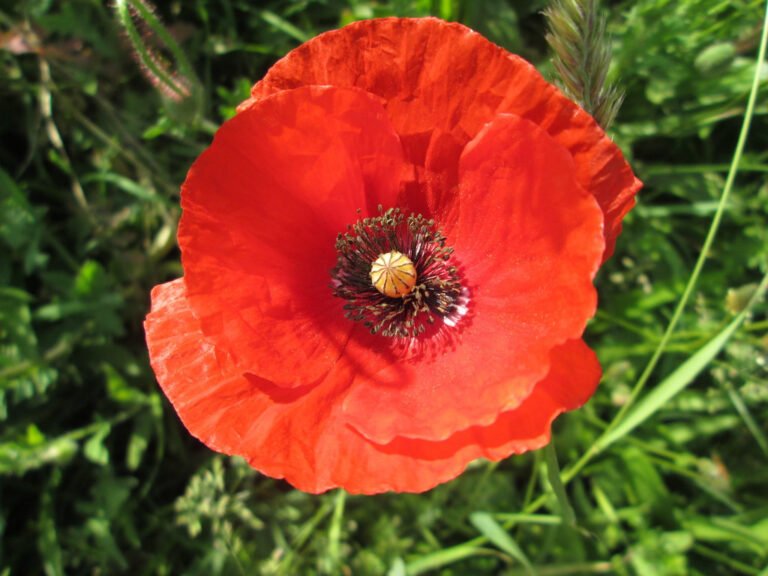
Corn poppy
Papaver rhoeas gives scarlet single flowers and the loose habit associated with annual flower fields. It suits a deliberately cultivated sunny patch. Choose nursery seed and avoid removing plants from wild populations; a garden display should be established from an appropriate purchased source.
Corn poppy, Papaver rhoeas, with the open flower centre visible.
Photo: Andreas Rockstein, CC BY-SA 2.0. Resized and optimised; cropped for display. Adapted image under the same licence.
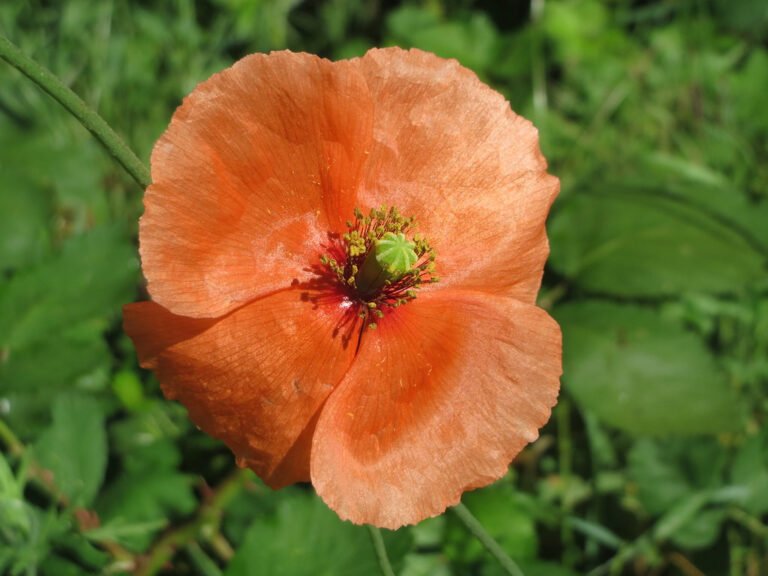
Shirley selections
These Papaver rhoeas strains broaden the palette into pink, white and soft mixtures. Seed-raised plants naturally vary, which is useful in an informal border. Read the packet for height and flower form rather than expecting one exact colour from every seedling.
Papaver rhoeas illustrates a paler flower colour; Shirley selection identity is not verified.
Photo: Andreas Rockstein, CC BY-SA 2.0. Resized and optimised; cropped for display. Adapted image under the same licence.
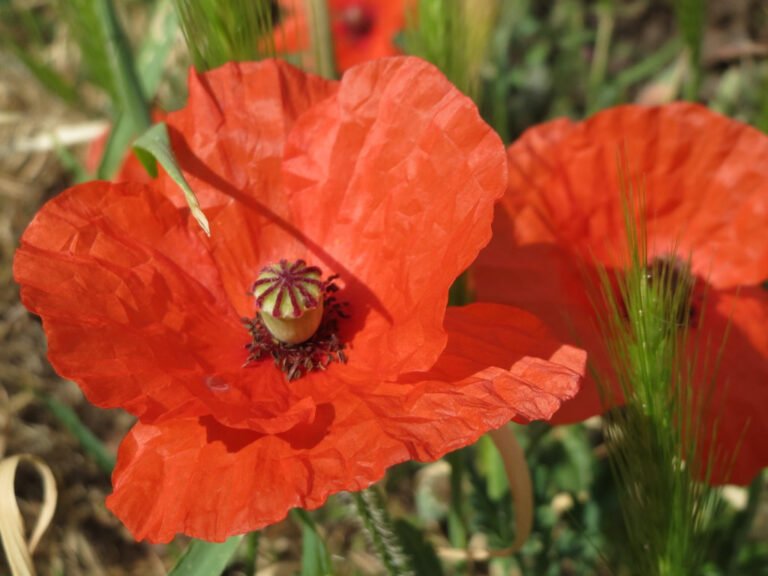
Ladybird poppy
Papaver commutatum is another annual species, typically with red petals carrying dark basal blotches. It creates a stronger graphic effect than pale Shirley mixtures. Treat it as its own labelled seed choice and check the supplier’s spacing and sowing directions.
Corn poppy comparison photograph; this is not an identified ladybird poppy.
Photo: Andreas Rockstein, CC BY-SA 2.0. Resized and optimised; cropped for display. Adapted image under the same licence.
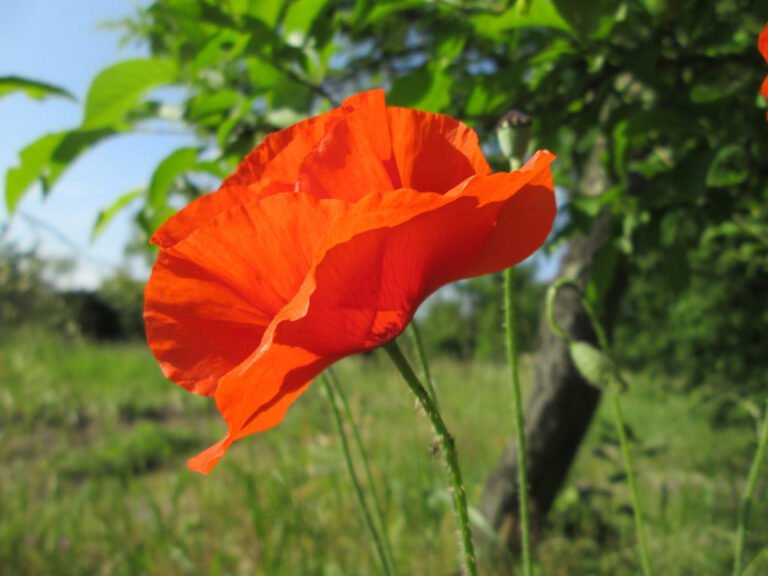
Ornamental breadseed poppies
Papaver somniferum selections provide larger flowers and prominent capsules in several forms. They are included as ornamental comparisons, not as a food recommendation. Select a reliable named strain and keep this group distinct from the corn-poppy planting described above.
Corn poppy comparison photograph; this does not depict an ornamental breadseed poppy or establish Papaver somniferum identity.
Photo: Andreas Rockstein, CC BY-SA 2.0. Resized and optimised; cropped for display. Adapted image under the same licence.
Match the packet to your intended display: corn poppies for scarlet simplicity, Shirley strains for a softer mixture, or another clearly identified annual species for a different form. Buy only the amount you can sow into properly prepared open ground.
Single flowers expose pollen to visiting bees. Leave a generous proportion of blooms in the garden instead of cutting the entire patch at once. Poppies contribute one seasonal resource, so combine them with plants flowering earlier and later for a more continuous garden display.
Use the patch as part of a varied garden rather than treating it as a complete habitat. Avoid spraying open flowers, tolerate small insect populations and keep some undisturbed ground nearby. Where seed heads are retained, balance that benefit against unwanted spreading into neighbouring beds.
Published by Buy From Farmers Direct. Growing guidance reviewed 11 October 2026. The seasonal timeline uses the shared BFFD Growers Calendar record; adjust timings to your variety and local conditions.
Direct sowing is usually simplest because their roots dislike disturbance. If using modules, choose a method specified by the supplier and transplant very young plants with an intact rootball.
The original plants die after their annual cycle. New seedlings may appear if capsules shed seed onto suitable ground, but they are a new generation.
Yes, hardy annual types can be sown in September or October on well-drained ground. Spring is usually more dependable where winter soil stays wet.
Check sun, crowding, sowing date and excessive feeding. Young or late-sown plants may simply need time; deeply shaded plants rarely give a good display.
Deadheading limits self-seeding and keeps the patch tidy. Leave selected capsules if you want ornamental seed heads or seed for next year.
No food use is advised here. Species identity, seed provenance and growing treatments matter; keep ornamental seeds and other plant material separate from food.
Give annual poppies a sunny start and enough space. Enjoy their changing buds, flowers and capsules, then plan another sowing for the following season.
Explore more growing guides: Poppy (Perennial).
Want to get food independence, support your local grower, get better prices and shop more privately?
Local food isn’t just something you find. It’s something you protect. A free account helps keep local supply visible, supported, and resilient.

….it takes 30 seconds for food lovers and 5 minutes for suppliers
We built this for people who care where their food comes from. For people who want to remain food secure. For Farmers to get to the local people, who deserve a better income and to deliver a better price for you. For the environmentally conscious and the privacy-conscious. An account simply helps us make the map and supplier reach more useful to you, without changing how open it is. You’re always in control.


Find local food. Stay connected to it. Create a free account to support local producers and be part of a growing food network.


