Bedding salvias provide upright colour through summer, from the dense red flower spikes of scarlet sage to the finer blue and white stems of mealy sage. This page focuses on tender types commonly grown as annuals in UK gardens. They need a different winter plan from hardy perennial salvias, and none should automatically be treated as culinary sage.
Tender summer bedding
Plant after frost risk
Sun and steady moisture
Deadhead spent spikes
Different from hardy perennial salvia
| Botanical name or group | Tender bedding Salvia, especially S. splendens and S. farinacea |
| Family | Lamiaceae |
| Garden life cycle | Tender perennials usually grown as annual bedding |
| Typical height | 20–60cm for many bedding strains |
| Typical spread | 20–35cm apart, according to strain |
| Position | Full sun; some bedding forms tolerate light shade |
| Soil | Fertile, moist but well-drained soil |
| Flowering season | Summer into autumn |
| Foliage | Paired leaves on upright branching stems |
| Hardiness | Tender bedding types need frost protection |
| Main planting window | Late May or June after local frost risk |
| Seed route | Optional seed route; follow the packet for the particular species or strain |
| Propagation | Raise bedding salvias from spring-sown seed, using the requirements of the actual species and strain. |
| Watering priority | Keep new plants and summer containers evenly moist while allowing surplus water to drain. |
| Feeding approach | Modest feeding according to soil and container conditions |
| Pruning priority | Remove finished flower spikes to encourage a tidy continuing display. |
| Best garden role | Summer bedding, patio containers and seasonal border colour |
| Container suitability | Well suited to generous drained pots |
| Harvest interpretation | Ornamental flowers only; no food harvest |
| Key distinction | Tender bedding salvias are distinct from hardy S. nemorosa and edible culinary sage |
| Plant name | Crop type | Spacing |
Sow indoors
Plant outdoors
Harvest
Polytunnel | |||||||||||
|---|---|---|---|---|---|---|---|---|---|---|---|---|---|---|
| Jan | Feb | Mar | Apr | May | Jun | Jul | Aug | Sep | Oct | Nov | Dec | |||
| Salvia | Not recorded | 20–35cm apart, according to strain | No activity recorded | No activity recorded | Sow indoors, Polytunnel | Sow indoors, Polytunnel | Plant outdoors, Polytunnel | Plant outdoors | No activity recorded | No activity recorded | No activity recorded | No activity recorded | No activity recorded | No activity recorded |
Sow indoors: March, April. Plant outdoors: May, June. Harvest: no months recorded. Polytunnel: March, April, May.
Sow bedding salvias under cover in March and April, using the temperature required by the particular species. Plant outside in May or June only after local frost risk has passed. The March to May cover band refers to raising and hardening young plants. The harvest band is empty because these salvias are ornamental, not a culinary crop.
Choose bedding salvias for a planned summer colour scheme or a patio container where upright spikes contrast with lower spreading annuals.
They suit gardeners prepared to replace the display after autumn cold or provide appropriate frost-free protection for selected retained plants.
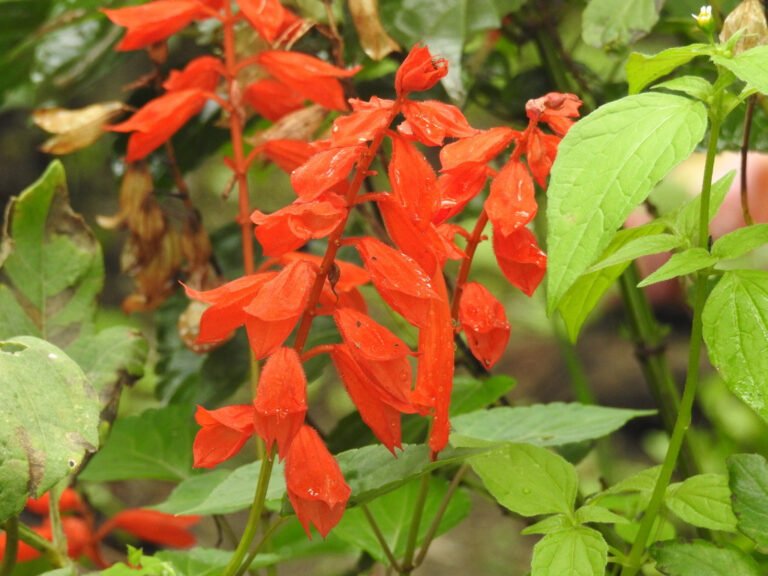
Photo: Tandin Wangdi, CC BY 4.0. Resized and optimised; cropped for display.
Use a sunny position, checking the cultivar if light shade is unavoidable. Watch the proposed spot at different times of day before committing it. A bright place in early spring may become substantially shadier once surrounding shrubs and trees are in full leaf.
Provide fertile drained soil that can retain enough moisture for active summer flowering. Check what happens after heavy rain as well as during dry weather. The appearance of the surface on planting day cannot tell you whether roots will remain saturated for long periods in winter.
Allow airflow between plants and keep tall neighbours from shading the developing flower stems. Remove persistent weeds before planting, while their roots are accessible. Later digging between established plants can damage the roots you want to retain and creates repeated disturbance close to the crown.
Choose a drained container with sufficient compost volume to avoid repeated drying during warm weather. Choose a position where water can drain freely and where you can reach the plant for routine checks. Group pots by their watering needs so a thirsty neighbour does not dictate unsuitable treatment.
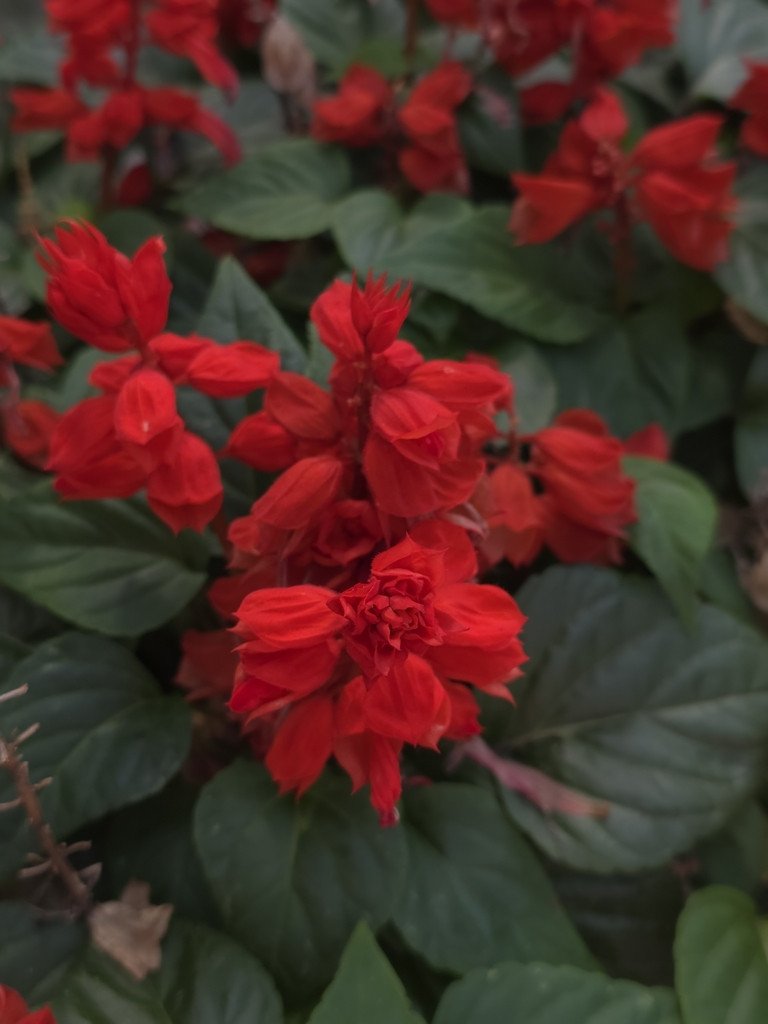
Photo: Pawin Chan, CC0 1.0. Resized and optimised; cropped for display.
Begin with correctly labelled salvia and prepare its permanent position before planting. The following sequence keeps the needs of the roots, the eventual spacing and the first season's care together.
1.
Read the botanical label so tender bedding salvia is not confused with a hardy perennial or culinary sage. Retain the label and record the planting date. This helps distinguish a genuine problem from normal seasonal behaviour and keeps future decisions tied to the plant you actually bought.
2.
Sow in March or April under the species-appropriate temperature and packet instructions. Work when the growing medium is manageable. Avoid compressing very wet soil, and prepare any necessary support or container before taking the plant from its nursery pot or opening the seed packet.
3.
Keep seedlings in bright conditions and ventilate covered trays once growth is established. Clear only the area needed and check levels before proceeding. Good preparation should improve the whole rooting area rather than creating one isolated pocket that behaves differently from the surrounding bed.
4.
Pot on young plants before their roots become tightly restricted. Set out the intended positions before final planting. Stand back to check the mature spacing and the relationship with neighbouring growth; moving an empty pot is easier than moving an established root system.
5.
Harden off gradually, protecting plants whenever nights are still cold. Handle roots gently and keep them from drying in wind or sunshine. Have the prepared growing medium close by so young material spends as little time exposed as possible.
6.
Plant outside after frost risk, usually during late May or June locally. Firm lightly enough to make contact without turning the root area into a compacted block. Add a durable label where it can be read without pushing hands through later growth.
7.
Allow around 20–35cm between compact bedding plants, following the strain’s size. Check again after the first thorough watering, as loose compost or soil may settle. Correct any exposed roots or low hollows promptly rather than burying the plant deeper with each subsequent top-up.
8.
Water thoroughly and remove damaged growth carefully while plants settle. Review progress regularly through establishment. Judge watering and protection from the plant, soil and weather together; a calendar date cannot account for every exposed, shaded or sheltered UK garden.

Watering
Keep new plants and summer containers evenly moist while allowing surplus water to drain. Check moisture with a finger or small probe rather than relying on surface colour alone. Water the root area slowly enough for it to absorb moisture, and allow surplus to drain before considering another application.
Do not let repeated wilting become the normal watering signal; check compost during hot or windy weather. Pots and recently planted specimens need more frequent observation than established plants in open ground. Check again after wind or warm weather, especially where a wall or dense neighbouring foliage prevents rainfall reaching the roots.

Feeding
Ordinary fertile bedding soil supports growth without excessive nitrogen. Read the product label and measure the stated amount. More fertiliser is not automatically better, and a weak plant may be responding to shade, damaged roots or unsuitable drainage rather than a shortage of nutrients.
Feed containers according to their compost and the product label during the flowering season. Keep any mulch away from the immediate base and check that the original planting depth remains visible. In containers, consider how long the compost has been in use before choosing a feeding or repotting routine.

Pruning
Remove finished flower spikes to encourage a tidy continuing display. Use clean, sharp tools and take time to locate the living growth before cutting. Remove material carefully so nearby shoots are not pulled loose, and inspect it for resident insects before disposal.
Some young plants benefit from pinching for branching, but do not repeatedly remove developing flowers from an already compact strain. A light tidy and a major reduction are different operations. If the plant is unfamiliar, begin with clearly dead or spent material and use its observed growth to guide any further work.

Winter care
Tender bedding plants are usually replaced after autumn cold ends the season. Keep drainage holes and surface outlets clear of debris. Wet roots and trapped airless foliage can cause damage even during a relatively mild winter, so inspect the growing position after prolonged heavy rain.
Retain special plants or cuttings only in a bright genuinely frost-free place; unheated cover alone may be insufficient. Adjust the plan to local exposure rather than the county name alone. A windy raised pot, a sheltered courtyard and an open garden bed can experience quite different conditions on the same night.
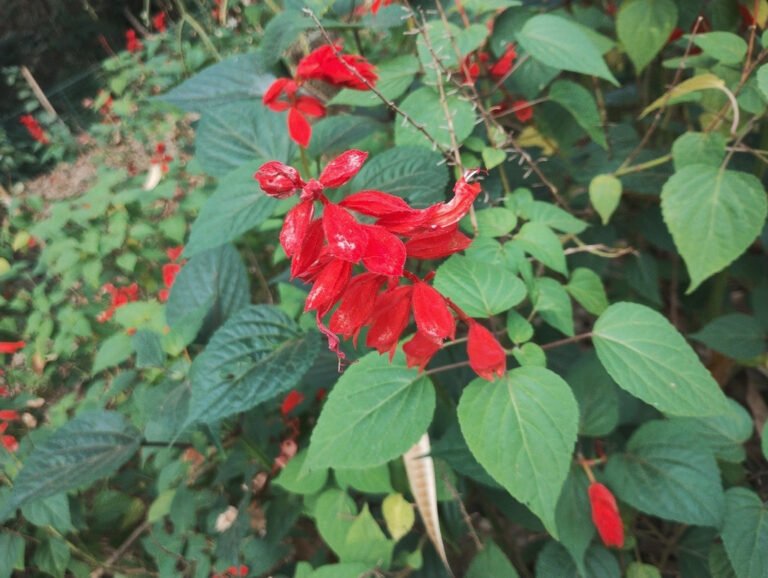
Salvia splendens has broad oval leaves and dense showy flower spikes, commonly red, while Salvia farinacea carries finer blue or white flower stems.
The genus includes annuals, hardy perennials and shrubs as well as edible sage. The word salvia alone does not establish winter hardiness or food suitability.
Photo: The Great Walter, CC BY 4.0. Resized and optimised; cropped for display.
Delay planting in cool districts until nights are reliably mild, even if plants are already on sale in spring.
A sheltered patio can help tender bedding perform during a cool summer, provided pots receive enough light.
Plan autumn clearance or protected retention before frost, rather than assuming every salvia will regrow from an outdoor crown.
Photo: Viktor Strenada, CC BY 4.0. Resized and optimised; cropped for display.
Tender bedding can be frost damaged. Keep young plants protected and delay outdoor planting when necessary.
Inspect newly planted stock and provide practical protection during establishment.
Check moisture and airflow, removing badly affected exhausted growth where useful.
Spent spikes, dry roots, shade or exhausted container nutrients may contribute. Review conditions before strong feeding.
Persistently wet compost can damage roots and stems. Improve drainage and stop unnecessary watering.
Raise bedding salvias from spring-sown seed, using the requirements of the actual species and strain.
Selected tender plants may be kept through cuttings in suitable protected conditions. Seed from hybrids may not repeat the colour or compact habit of the parent.
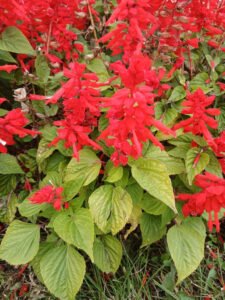
Scarlet sage
Salvia splendens provides dense coloured spikes, with red the familiar choice. Modern bedding strains vary in height and colour, so use the packet’s dimensions for spacing.
Photograph shows Salvia splendens as a botanical reference. It does not verify the named selection described here.
Photo: Дмитрий Дунин, CC BY 4.0. Resized and optimised; cropped for display.
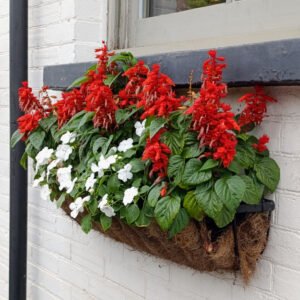
Mealy sage
Salvia farinacea offers finer upright blue, violet or white flowering stems. It is perennial in suitable climates but commonly treated as seasonal bedding in the UK.
Photograph shows Salvia splendens as a botanical reference. It does not verify the named selection described here.
Photo: Tim Johnson, CC BY 4.0. Resized and optimised; cropped for display.
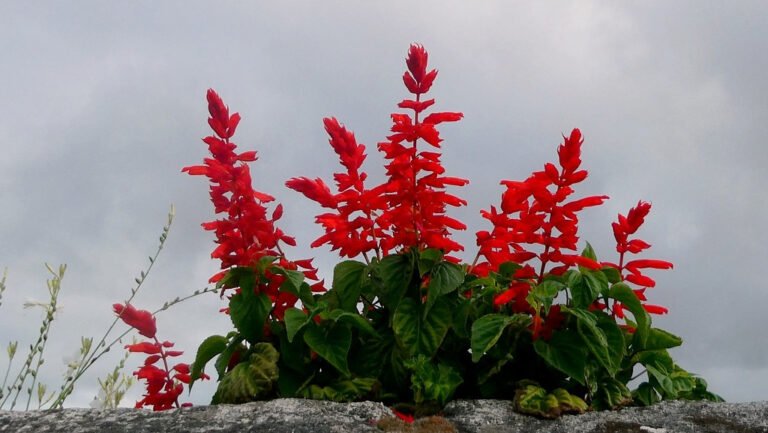
Victoria
A familiar blue-flowered Salvia farinacea selection for summer borders and containers. Buy a labelled strain where consistent height and colour are important.
Photograph shows Salvia splendens as a botanical reference. It does not verify the named selection described here.
Photo: Patrick Le Mao, CC0 1.0. Resized and optimised; cropped for display.

Painted sage as a separate annual
Salvia viridis is a true annual with colourful upper bracts and a different visual effect. Its cultivation can be more tolerant of cool conditions, so follow its own packet rather than applying every tender-bedding instruction unchanged.
Photograph shows Salvia splendens as a botanical reference. It does not verify the named selection described here.
Photo: Sebastián Ordóñez, CC BY 4.0. Resized and optimised; cropped for display.
Choose salvia by mature size, flowering season and the conditions available in your garden. Compare healthy labelled plants, check the stated hardiness and arrange the growing position before bringing a large group home.
Many bedding salvias attract suitable pollinating insects, although access and value vary between species and flower forms.
Keep some flowers in the garden when cutting stems and combine the display with plants that support insects before and after the summer bedding season.
Published by Buy From Farmers Direct. Growing guidance reviewed 11 October 2026. The seasonal timeline uses the shared BFFD Growers Calendar record; adjust timings to your variety and local conditions.
No. This page concerns tender bedding types; hardy perennial salvias have a separate care plan.
After local frost risk has passed and nights are mild.
It is perennial in suitable climates but often grown as an annual in the UK.
Removing spent spikes helps keep the display tidy and can support further flowering.
Only if temperatures remain suitable; an unheated structure can freeze.
No. Ornamental salvias should not be assumed suitable for cooking.
Give salvia the position and seasonal care it needs, then allow time for establishment. A few regular observations of moisture, light and new growth will guide useful small adjustments through the year.
Explore more growing guides: Salvia (Perennial).
Want to get food independence, support your local grower, get better prices and shop more privately?
Local food isn’t just something you find. It’s something you protect. A free account helps keep local supply visible, supported, and resilient.

….it takes 30 seconds for food lovers and 5 minutes for suppliers
We built this for people who care where their food comes from. For people who want to remain food secure. For Farmers to get to the local people, who deserve a better income and to deliver a better price for you. For the environmentally conscious and the privacy-conscious. An account simply helps us make the map and supplier reach more useful to you, without changing how open it is. You’re always in control.


Find local food. Stay connected to it. Create a free account to support local producers and be part of a growing food network.


