Skimmia is a slow growing evergreen shrub for a shady border or a north facing container. Its neat foliage, spring flowers and often colourful winter buds make it useful in small spaces. Berries are a separate choice: most female plants need a male nearby, while male cultivars provide flowers and pollen but no fruit.
Evergreen for partial shade
Slow and compact growth
Check male or female labels
Moisture matters more than acidity
Usually needs little pruning
| Botanical genus | Skimmia |
| Common garden species | Skimmia japonica |
| Family | Rutaceae |
| Plant type | Evergreen shrub |
| Typical size | About 1 to 1.5m, cultivar dependent |
| Compact selections | Some remain around 40 to 70cm |
| Preferred light | Partial to deeper shade |
| Sun tolerance | Better where soil stays adequately moist |
| Soil | Moist but not waterlogged |
| Soil reaction | No automatic need for acid soil |
| Pot compost | Suitable peat free multipurpose or loam based mix |
| Main planting | Spring or autumn |
| Flowering | Spring |
| Flower colour | Creamy white or greenish, often scented |
| Male plants | Flowers and pollen, no berries |
| Female plants | Berries after suitable pollination |
| Self fertile exception | S. japonica subsp. reevesiana |
| Berry colours | Usually red; some selections white |
| Pruning | Minimal, normally after flowering if needed |
| Fruit use | Ornamental; do not eat |
| Plant name | Crop type | Spacing |
Sow indoors
Plant outdoors
Harvest
Polytunnel | |||||||||||
|---|---|---|---|---|---|---|---|---|---|---|---|---|---|---|
| Jan | Feb | Mar | Apr | May | Jun | Jul | Aug | Sep | Oct | Nov | Dec | |||
| Skimmia | Not recorded | Single 100cm, In row 100cm, Row gap 100cm | No activity recorded | No activity recorded | Plant outdoors | Plant outdoors | No activity recorded | No activity recorded | No activity recorded | No activity recorded | Plant outdoors | Plant outdoors | No activity recorded | No activity recorded |
Sow indoors: no months recorded. Plant outdoors: March, April, September, October. Harvest: no months recorded. Polytunnel: no months recorded.
March to April and September to October are useful planting windows while soil is workable and moisture is available. Container plants can be planted at other suitable times with appropriate watering. Sow, harvest and polytunnel bands are empty: named plants are normally bought or propagated by cuttings, berries are ornamental and hardy skimmias need no routine tunnel season. Flowering is in spring and berries appear later where pollination succeeds; neither is represented as an edible harvest.
Skimmia suits a shady border edge, a sheltered entrance or a patio pot where winter foliage matters. Its slow growth makes it easier to place than a vigorous screen shrub, though even a small plant needs room for its eventual rounded shape.
Choose it for its actual display rather than assuming every skimmia will carry berries. A male with attractive buds may be ideal on its own. For fruit, plan a female and a compatible male or a correctly labelled self fertile form.
Photo: Madeline, CC BY 4.0. Resized and optimised; cropped for display.
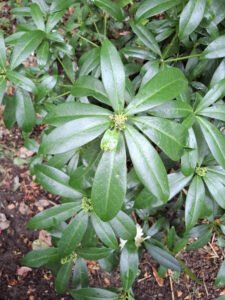
Partial shade is a dependable choice, with deeper shade also tolerated by many skimmias. A sunnier position is possible if the soil does not dry excessively. Avoid a hot exposed corner where roots repeatedly dry and leaves become stressed.
Choose soil that stays reasonably moist while draining after heavy rain. Skimmias dislike both prolonged waterlogging and severe dryness. Under trees, check root competition and rainfall interception: a shady position can still be surprisingly dry at root level.
Do not assume skimmia requires acid soil or ericaceous compost. Current RHS guidance distinguishes it from acid loving rhododendrons. Yellow leaves commonly reflect dryness or excessive sun, so inspect the growing conditions before trying to change soil acidity.
For a pot, use a suitable peat free multipurpose compost with loam, or an appropriate loam based mixture. Choose drainage holes and a container only moderately larger than the rootball. Keep the pot where watering checks are easy.
Photo: yneumann, CC BY 4.0. Resized and optimised; cropped for display.
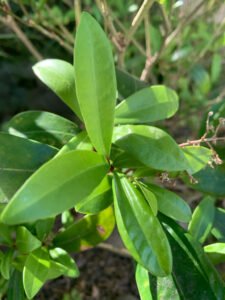
Start with the right plant and prepare its growing space before planting.
1.
Read the label for the full name, mature size and flower sex. Male plants such as Rubella do not become berry bearing females with age. If berries matter, buy a suitable female with access to a flowering male.
2.
Choose compact healthy growth and sound roots. A shrub covered in berries can still be stressed beneath its decorative wrapping, so check the compost and pot. Avoid plants with extensive yellowing, root decay or dense pest infestations.
3.
Plant mainly in spring or autumn when the ground is neither frozen nor waterlogged. Summer planting is possible for container stock, but demands more attention to moisture. Grow very small seasonal display plants on carefully before expecting a full border shrub.
4.
Clear weeds and prepare a generous rooting area. Improve poor soil with mature organic matter where appropriate, rather than creating a rich isolated pocket. Check that neighbouring shrubs will not soon overhang the new plant completely.
5.
Water the rootball before removing its pot and ease congested outer roots gently. Dig a hole wide enough for the roots and plant at the original compost level. Avoid burying the stem base beneath soil or mulch.
6.
Refill, firm lightly and water thoroughly. Add a surface mulch to conserve moisture, leaving a clear space around the stems. Keep the nursery label accessible so sex and cultivar remain known when arranging future companions.
7.
Place a pollinating male within the same garden area as female plants and make sure their flowers overlap. One male can serve several females. Do not expect a berry laden shop plant to repeat that display without suitable pollination next spring.
8.
Check the original rootball during dry spells for the first couple of years. Remove weeds before they compete strongly and inspect container drainage. Steady establishment is more useful than frequent trimming or strong feeding to force rapid growth.

Watering
Water newly planted skimmias during dry spring and summer spells until their roots are established. Check below the mulch and around the original rootball. A plant can remain dry despite light rain that never penetrates dense foliage.
Established shrubs often need little routine watering, but very dry soil or a sunny position can still cause yellowing. Pots need continuing checks throughout the year. Water thoroughly when needed and let surplus escape rather than keeping roots permanently saturated.

Feeding
Skimmias in ordinary garden soil generally need little or no regular feeding. A mulch of mature compost can improve the root environment. Where soil is poor, use a modest spring general fertiliser according to its label.
Container shrubs eventually need fresh compost and an appropriate feed, but excessive feeding will not correct drought or damaged roots. Review watering and light first when leaves yellow. Do not automatically add iron treatments or acidifying products without diagnosing the cause.

Pruning
Skimmia naturally develops a neat shape and usually needs little pruning. Remove dead or damaged stems and make small shaping cuts after flowering if necessary. Heavy annual clipping sacrifices the natural outline and may remove useful buds or developing fruit.
On female plants, consider the berry display before cutting flowered shoots. A badly overgrown or damaged plant may need more deliberate renovation, but recovery can be slow. Avoid treating a healthy compact shrub as though it were a fast growing hedge.

Winter care
Established hardy skimmias normally remain outdoors through UK winters. Keep roots from staying waterlogged and shelter pots from severe exposure. Evergreen foliage still uses water, so check containers during prolonged dry weather when the compost is not frozen.
Small plants used in winter arrangements need proper aftercare once the display ends. Move them into a suitable permanent pot or border rather than leaving roots cramped among exhausted bedding. Do not discard a healthy shrub simply because its berries fade.
Skimmia has leathery evergreen leaves and clusters of small flowers at shoot tips. Buds can be conspicuous through winter, particularly on selected male cultivars. The spring flowers are often scented, with appearance varying among species and selections.
Berries develop on pollinated female plants and on suitable self fertile forms. They are decorative fruit, not a food crop. A photograph of red buds should not be described as berries: unopened flower clusters and rounded mature fruit are different structures.
Photo: Peter Eriksen, CC BY 4.0. Resized and optimised; cropped for display.
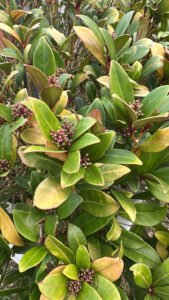
Shady town gardens and sheltered courtyards often provide useful skimmia positions, but check summer dryness beneath walls and overhangs. In exposed districts, protect containers from drying winds and repeated freezing rather than assuming shade alone supplies a suitable microclimate.
For berries, flowering overlap and pollinating insects matter as well as plant sex. A lone female may arrive with fruit produced at the nursery, then fail to repeat it. Plan its companion before attributing the absence of berries to feeding.
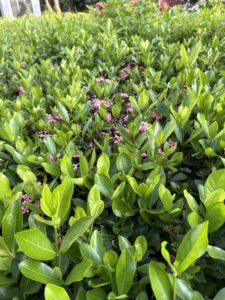
First check dryness, excessive sun and root condition. Skimmias do not automatically need acid soil, and yellowing is not proof of lime induced chlorosis. Correct watering and siting before repeatedly adding specialist feeds.
A male cultivar will not fruit. Most females need a compatible flowering male nearby, while frost or poor flowering can also limit fruit set. Verify labels and flowering overlap before replacing a healthy shrub.
Roots may be damaged by waterlogging. Check drainage holes and standing water in outer pots. Reduce watering while diagnosing the problem, remove dead material and improve the growing medium or site before replanting.
Vine weevil adults may notch leaves, particularly on container shrubs. Check roots if a plant wilts because larvae can cause greater damage below ground. Use an appropriate biological control where conditions and timing suit it.
Inspect stems and leaf undersides for sap feeding insects. Small populations may be tolerated or removed carefully. Improve plant health and use any further control only after identifying the pest and checking suitability for the plant.
Semi ripe cuttings in late summer offer a way to preserve a named skimmia and its sex. Use healthy non flowering shoots, remove lower leaves and place in suitable cutting compost. Keep humidity steady while providing light and ventilation.
Seed is slower and introduces variation, including uncertainty over eventual sex. Clean ripe seed and follow a reliable skimmia propagation method, allowing time for germination and establishment. Buy labelled plants when a particular male or female role is essential.
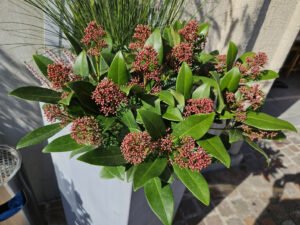
Rubella
A male Skimmia japonica grown for its red flower buds and spring flowers. It supplies pollen for suitable females but does not produce berries, however colourful its winter buds appear.
Photograph shows Skimmia japonica as a botanical reference. It does not verify the named selection described here.
Photo: Marc Riera, CC BY 4.0. Resized and optimised; cropped for display.
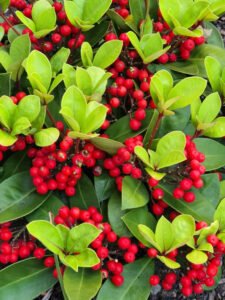
Nymans
A female Skimmia japonica valued for red berries after pollination. Pair it with an appropriate male flowering at the same time and give the mature shrub enough room.
Photograph shows Skimmia japonica as a botanical reference. It does not verify the named selection described here.
Photo: mattnewnham, CC0 1.0. Resized and optimised; cropped for display.
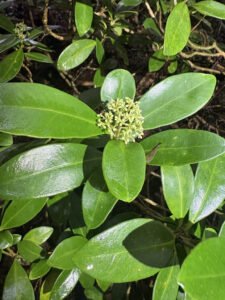
Kew Green
A male hybrid skimmia with greenish buds and scented flowers. It can tolerate a sunnier site where moisture is adequate and is useful as a pollinating partner.
Photograph shows Skimmia japonica as a botanical reference. It does not verify the named selection described here.
Photo: unipon, CC BY 4.0. Resized and optimised; cropped for display.
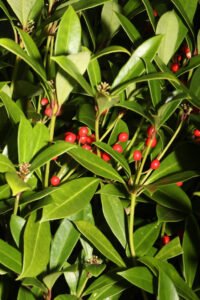
Reevesiana
A compact self fertile form generally sold as Skimmia japonica subsp. reevesiana. It can fruit without a separate male, but still needs suitable growing conditions and a correctly identified plant.
Photograph shows Skimmia japonica as a botanical reference. It does not verify the named selection described here.
Photo: Stephen James McWilliam, CC0 1.0. Resized and optimised; cropped for display.
Choose skimmia by mature size, buds and the berry display you want. Verify male, female or self fertile labels and provide suitable moisture.
Spring flowers are visited by insects, and mixed male and female planting supports both flowers and the later ornamental display. Leave flowers accessible and avoid unnecessary treatments while insects are active around them.
Evergreen branches provide small scale cover through winter. Some birds may take the fruit, but that does not make berries suitable for people or pets. Keep the shrub's ornamental role clear when placing it near a vegetable or herb garden.
Published by Buy From Farmers Direct. Growing guidance reviewed 11 October 2026. The seasonal timeline uses the shared BFFD Growers Calendar record; adjust timings to your variety and local conditions.
Not automatically. Current RHS guidance says skimmias are not acid loving plants like rhododendrons. Suitable moisture and drainage deserve attention first.
Rubella is male. Its red winter clusters are flower buds, and its role includes providing pollen for suitable female plants.
A correctly labelled self fertile form such as reevesiana can. Most female cultivars need a male nearby.
Dry soil or too much sun is a common cause. Check water and roots before assuming a nutrient or acidity problem.
Usually no. Tidy damaged growth and shape lightly after flowering only when needed, considering the effect on berries.
No. They are ornamental and should not be eaten. Keep them separate from edible garden crops and decorative food displays.
Give skimmia a comfortable shaded position, steady establishment moisture and the right companion if berries matter. Its slow rounded growth should need little intervention once the roots are settled.
Want to get food independence, support your local grower, get better prices and shop more privately?
Local food isn’t just something you find. It’s something you protect. A free account helps keep local supply visible, supported, and resilient.

….it takes 30 seconds for food lovers and 5 minutes for suppliers
We built this for people who care where their food comes from. For people who want to remain food secure. For Farmers to get to the local people, who deserve a better income and to deliver a better price for you. For the environmentally conscious and the privacy-conscious. An account simply helps us make the map and supplier reach more useful to you, without changing how open it is. You’re always in control.


Find local food. Stay connected to it. Create a free account to support local producers and be part of a growing food network.


