Swiss chard provides generous leaves and broad, colourful stalks over a long season. It is a leaf beet, so its roots stay small rather than swelling like beetroot. A spring sowing followed by another in midsummer can keep a small household picking for months.
Productive leafy vegetable
Colourful edible stalks
Sun or light shade
Pick outer leaves repeatedly
Useful overwintering crop
| Botanical name | Beta vulgaris, leaf beet forms |
| Family | Amaranthaceae |
| Plant type | Biennial, usually grown as a leaf crop |
| Parts harvested | Leaf blades and leaf stalks |
| Different from | True spinach, Spinacia oleracea |
| Related crop | Narrower stalked perpetual spinach or spinach beet |
| Position | Sun or light partial shade |
| Soil | Fertile, moist and well drained |
| Main outdoor sowing | April to July |
| Optional early start | Modules under cover in March |
| Seed depth | About 1 to 2.5cm, following the packet |
| Final plant spacing | About 30cm for mature leaves |
| Row spacing | About 45cm |
| Container size | Around 40cm wide and deep for mature plants |
| First substantial harvest | Usually about 10 to 12 weeks after sowing |
| Harvest method | Take outer leaves and leave the centre growing |
| Typical leaf crop height | Around 40 to 60cm, depending on variety |
| Cold season behaviour | Hardy plants grow slowly or stop in cold weather |
| Overwintered plants | Fresh spring leaves, then usually flowering |
| Winter colour choice | White stemmed varieties are generally hardier |
| Plant name | Crop type | Spacing |
Sow indoors
Plant outdoors
Harvest
Polytunnel | |||||||||||
|---|---|---|---|---|---|---|---|---|---|---|---|---|---|---|
| Jan | Feb | Mar | Apr | May | Jun | Jul | Aug | Sep | Oct | Nov | Dec | |||
| Swiss Chard | Salad & leaves | About 30cm between plants and 45cm between rows for mature leaves | No activity recorded | No activity recorded | Sow indoors, Harvest | Sow indoors, Plant outdoors, Harvest | Sow indoors, Plant outdoors, Harvest | Sow indoors, Plant outdoors, Harvest | Sow indoors, Plant outdoors, Harvest | Plant outdoors, Harvest | Harvest | Harvest | Harvest | No activity recorded |
Sow indoors: March, April, May, June, July. Plant outdoors: April, May, June, July, August. Harvest: March, April, May, June, July, August, September, October, November. Polytunnel: no months recorded.
March sowing means an optional protected start; outdoor sowing is April to July. Plant modules out roughly April to August as ready. March to November harvest combines last year’s spring crop with new plants, which need about 10 to 12 weeks for substantial leaves. Winter picking depends on weather. A tunnel is optional.
Chard suits a vegetable bed, allotment or roomy container. A few plants give repeated pickings, while coloured stalks add interest among other crops. Harvest mature leaves for cooking or smaller quantities of tender young foliage.
It is a useful alternative where summer heat makes true spinach bolt quickly. It still needs water during prolonged dry weather, room to develop and regular checks for damaged leaves.
Photo: Lufa Farms, CC BY-SA 2.0. Resized and optimised; cropped for display. Adapted image under the same licence.
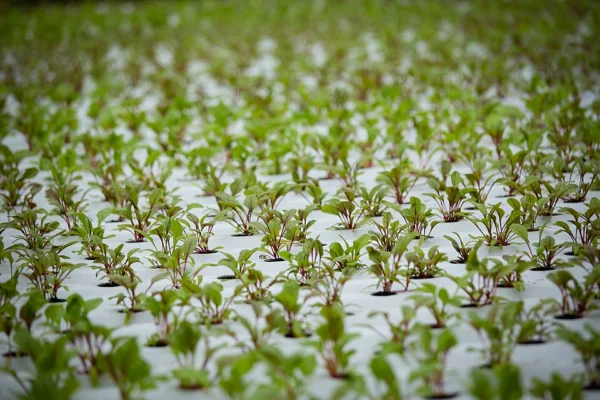
Choose sun or light shade and fertile soil that holds moisture without waterlogging. Afternoon shade helps on hot exposed plots. Avoid places where rain pools around the crown.
Work in well rotted organic matter before sowing if the soil needs improvement. Prepare a fine, level seedbed and remove perennial weeds so young seedlings can establish without competition.
Allow about 30cm between plants and 45cm between rows for large leaves. Denser spacing suits baby leaf harvesting, but will not produce full sized plants.
Use a drained container around 40cm wide and deep for mature plants, with fresh peat free compost. Leave space for watering and picking rather than crowding wet foliage together.
Photo: Ragesoss, CC BY-SA 3.0. Resized and optimised; cropped for display. Adapted image under the same licence.
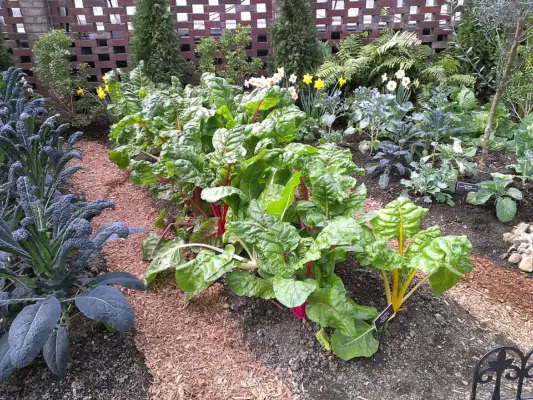
Sow directly into prepared soil or start a few modules under cover. Plan a second midsummer batch if you want young plants for autumn and the following spring.
1.
Choose a variety for colour and season. White stemmed kinds generally offer better winter resilience; colourful selections add summer interest.
2.
From April to July, make shallow drills in moist soil. Sow about 1 to 2.5cm deep according to the packet, with rows 45cm apart.
3.
Space seeds about 10cm apart initially. Chard seed clusters can produce more than one seedling, so expect to thin even a careful sowing.
4.
Water with a fine rose and keep the seedbed moist. Label the row and protect seedlings from slugs or birds where necessary.
5.
Thin gradually to around 30cm between the strongest plants for mature leaves. Remove competing weeds while small, taking care not to disturb young chard roots.
6.
For an optional March start, sow one or two seed clusters per module under cover. Thin to one plant and provide good light.
7.
When module plants are well rooted and at least about 5cm tall, harden them off before planting at their previous depth. Water the rootball and soil thoroughly.
8.
Sow again in July for autumn and overwintering. Water through summer and leave plenty of healthy foliage as weather cools.

Watering
Keep newly sown rows, transplants and containers evenly moist. Water mature plants during long dry spells to maintain tender growth, aiming at the soil around their roots.
A mulch of garden compost can help retain moisture once plants are established. Leave the crown clear and do not bury the central growing point.

Feeding
Fertile soil and fresh compost usually supply enough nutrients initially. Improve poor ground before planting rather than relying on frequent strong feeds.
A container cropped for a long time may eventually need a general purpose feed at the label rate. First check watering, crowding and root conditions if growth slows.

Pruning
Regular harvesting provides most of the trimming needed. Cut or gently detach sound outer stalks near the base while leaving the central leaves intact.
Remove damaged or decaying leaves promptly. Cutting out an early flower stem may give a little more picking, but replace plants that are moving firmly into their flowering stage.

Winter care
A July sowing can stand through winter and produce fresh leaves in spring. Growth slows sharply in cold weather, so avoid stripping plants bare before winter.
A cloche can protect usable leaves and encourage an earlier spring restart. Ventilate in mild weather and watch for rot. Move pots into shelter if practical, keeping drainage open.
Swiss chard forms a rosette of broad, often crinkled leaves with prominent veins and substantial stalks. Stalk colour may be white, red, pink, orange or yellow, depending on the seed selection.
Perpetual spinach is another leaf beet with narrower stalks and generally smoother leaves. True spinach belongs to a different genus. Rhubarb chard is a red chard type, not rhubarb.
Image from the BFFD media library.
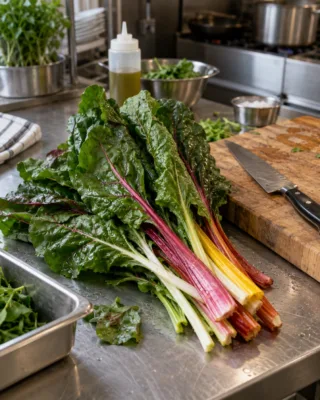
Pick when plants have plentiful foliage, usually about 10 to 12 weeks from sowing. Take outer leaves from several plants rather than exhausting one crown. Keep harvested leaves cool and use while fresh.
Wash leaves and separate thick stalks from their blades. Slice and cook stalks first, adding the softer leaves later because they wilt more quickly.
Overwintered plants can bridge the early spring gap before new sowings mature, but they usually flower in their second year. Establish replacements rather than expecting the same plants to provide tender leaves indefinitely.
Image from the BFFD media library.
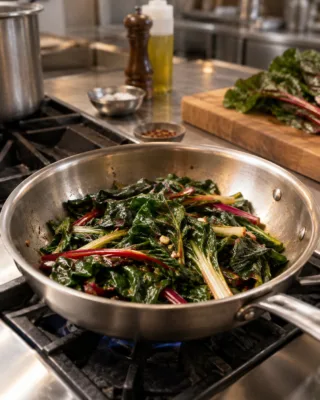
Slugs often damage small plants. Inspect at dusk and protect vulnerable seedlings with targeted measures. Birds can also peck young leaves; check the pattern before choosing protection.
Beet leaf miner larvae feed inside leaves. Remove badly mined foliage and inspect undersides for eggs. Fine mesh helps prevent egg laying, but rotate crops so adults cannot emerge from infested soil beneath it.
Downy mildew is favoured by prolonged leaf wetness. Remove badly affected material, allow airflow and water at the soil in the morning. Avoid crowding crops beneath poorly ventilated covers.
Grey mould often starts on dead or damaged tissue in damp conditions. Clear decaying leaves and improve ventilation. Keep winter protection from resting against a wet mass of foliage.
Heat or stress can encourage early bolting, while second year flowering is normal. Keep younger crops watered, remove an early flower stalk if worth prolonging the plant, and bring on a replacement sowing.
Grow new chard from seed. Saving seed means leaving healthy plants through winter to flower in their second year, using space otherwise available for leaf crops.
Chard and beetroot belong to the same species and can cross through wind carried pollen. Different flowering varieties also mix. Use a planned isolation method if preserving a variety matters; bought seed is simpler for a small mixed garden.
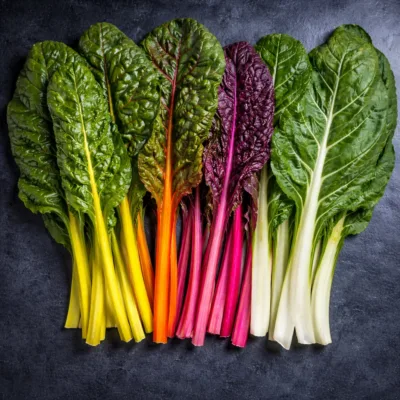
Bright Lights
A mix of stalk colours for a decorative bed and varied harvests. Different seedlings supply the rainbow; every plant will not carry every colour.
A mixed coloured chard harvest from BFFD media; the cultivar is not verified.
Image from the BFFD media library.
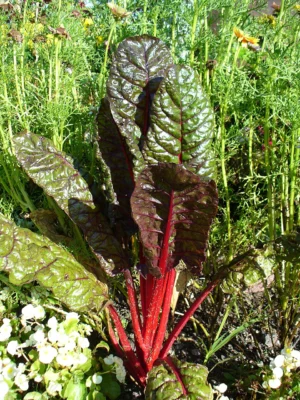
Rhubarb Chard
A red stalked type with textured leaves. The name reflects its colour; it is the same leaf vegetable crop described in this guide.
Illustrative red stemmed chard; not a confirmed Rhubarb Chard cultivar.
Photo: Neelix, Public domain. Resized and optimised; cropped for display.
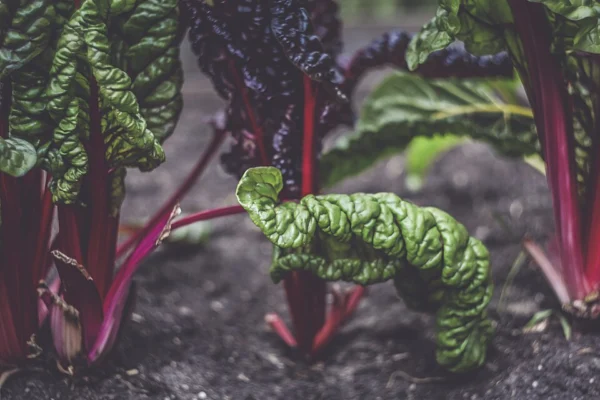
Charlotte
Red stalks and veins contrast with dark green leaves. Add a white stemmed variety alongside it for a generally hardier winter crop.
Red purple stalked chard illustrating colour only; Charlotte is not confirmed.
Photo: Markus Spiske, CC0. Resized and optimised; cropped for display.
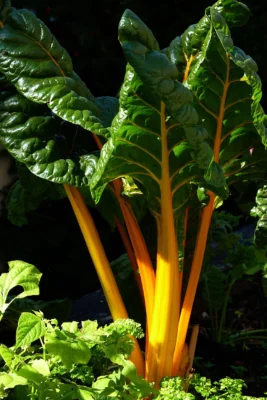
Bright Yellow
A yellow stemmed choice that stands out among green vegetables. Give it the same generous spacing and regular picking as other mature leaf chard crops.
Illustrative yellow stalked chard; the exact variety is not documented.
Photo: Schnobby, CC BY-SA 3.0. Resized and optimised; cropped for display. Adapted image under the same licence.
Compare colourful selections with productive white stemmed kinds such as Fordhook Giant. Plan a spring and midsummer sowing before ordering more seed than your bed needs.
Leaf miner larvae have natural enemies, including parasitoid wasps, and some birds find them inside the mines. Inspect damage before intervening so that management stays focused on the leaves you need to harvest.
Keep protective mesh securely fitted and check it regularly. Leave space elsewhere for flowering plants and undisturbed habitat rather than trying to exclude every small creature from the whole garden.
Published by Buy From Farmers Direct. Growing guidance reviewed 6 October 2026. The seasonal timeline uses the shared BFFD Growers Calendar record; adjust timings to your variety and local conditions.
No. Swiss chard is a leaf beet. Perpetual spinach is closely related to chard, while true spinach is Spinacia oleracea.
Yes. They are part of the crop. Wash them, slice thick stalks and give them a little longer cooking than the leaf blades.
Yes, if you leave the centre and enough healthy foliage. Take modest amounts of outer leaves from several plants for repeat harvests.
Yes. Use a well drained pot around 40cm wide and deep for mature plants, with fresh compost and close attention to watering.
Only when conditions and existing leaf growth allow it. Cold weather slows or stops new growth; shelter may help but does not guarantee a continuous crop.
Chard is biennial and normally flowers in its second year. Replace ageing plants with fresh sowings for continued leaf production.
Give chard room, steady moisture and regular light picking. A second sowing in midsummer makes a useful bridge from autumn leaves to fresh spring growth.
Want to get food independence, support your local grower, get better prices and shop more privately?
Local food isn’t just something you find. It’s something you protect. A free account helps keep local supply visible, supported, and resilient.

….it takes 30 seconds for food lovers and 5 minutes for suppliers
We built this for people who care where their food comes from. For people who want to remain food secure. For Farmers to get to the local people, who deserve a better income and to deliver a better price for you. For the environmentally conscious and the privacy-conscious. An account simply helps us make the map and supplier reach more useful to you, without changing how open it is. You’re always in control.


Find local food. Stay connected to it. Create a free account to support local producers and be part of a growing food network.


