Tansy has finely divided aromatic leaves and flat clusters of yellow button flowers. It can add a strong late-summer shape to an informal border, but its spreading underground stems make it a considered choice for a small garden. Grow it where the edges can be inspected and controlled. Historical uses are not a reason to put it in food, drinks, remedies or homemade pest treatments.
Yellow button flowers
Hardy spreading perennial
Inspect the boundaries
Useful to visiting insects
Not for food or remedies
| Botanical identity | Tanacetum vulgare |
| Family | Asteraceae |
| Plant type | Rhizomatous herbaceous perennial |
| Typical height | 60 to 120cm |
| Typical spread | 60cm or more, spreading |
| Main flowering season | Mid to late summer |
| Light | Full sun or light shade |
| Soil | Ordinary drained soil |
| Soil reaction | Broad tolerance |
| Winter behaviour | Hardy |
| Main planting window | March to May or September to October |
| Seed route | Optional spring sowing |
| Pruning approach | Cut back dead stems; remove unwanted seedheads |
| Propagation | Division or seed |
| Container suitability | Possible where spread must be controlled |
| Watering priority | Water new plants until established |
| Feeding priority | Little feed in ordinary ground |
| Wildlife value | Button flowers attract insects |
| Main use | Ornamental and wildlife planting |
| Important distinction | Tansy is an ornamental plant here, not a food, tea, medicine or homemade pesticide; contain its vigorous spread. |
| Plant name | Crop type | Spacing |
Sow indoors
Plant outdoors
Harvest
Polytunnel | |||||||||||
|---|---|---|---|---|---|---|---|---|---|---|---|---|---|---|
| Jan | Feb | Mar | Apr | May | Jun | Jul | Aug | Sep | Oct | Nov | Dec | |||
| Tansy | Not recorded | Single 60cm, In row 60cm, Row gap 60cm | No activity recorded | No activity recorded | Sow indoors, Plant outdoors | Sow indoors, Plant outdoors | Plant outdoors | No activity recorded | Harvest | Harvest | Plant outdoors, Harvest | Plant outdoors | No activity recorded | No activity recorded |
Sow indoors: March, April. Plant outdoors: March, April, May, September, October. Harvest: July, August, September. Polytunnel: no months recorded.
Spring and early autumn suit planting or division. March to April seed sowing is optional and unnecessary where a rooted division is available. July to September harvest means a few ornamental stems for arrangements, handled carefully; it never means collecting material for food or medicine. Established plants do not need a routine tunnel season. These month bands are planning windows for a typical UK garden; local frost, altitude, exposure and the season can move the work. Check the plant or seed label before using an optional route.
Tansy suits an informal sunny area where a vigorous clump has room and its yellow heads can contrast with grasses or late daisies. It is less suitable among small, slow-growing treasures.
A container can make spread easier to manage, but it still needs monitoring for roots escaping through holes and seedlings nearby. Place it away from crops or herbs with which its leaves might be confused.
Photo: Laurelium, CC BY-SA 4.0. Resized and optimised; cropped for display. Adapted image under the same licence.
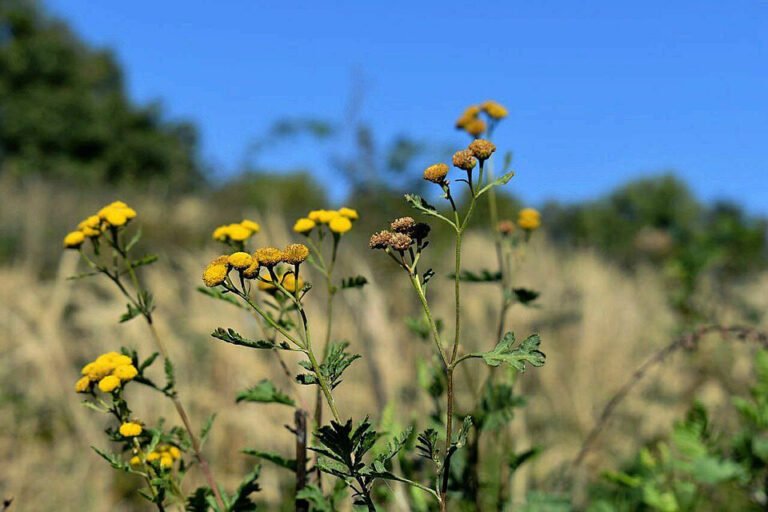
Choose sun or light shade with enough room for the mature stems. Tall neighbouring plants can hide emerging shoots and make the edge of the patch difficult to follow.
Ordinary drained soil is usually sufficient. Very rich feeding encourages height and spread without solving a poor planting position, while prolonged saturation can weaken roots.
Start with roughly 60cm of space and expect to review the boundary as the clump develops. A narrow gap beside delicate plants creates recurring maintenance. Walk around the planting after new shoots emerge and compare its outline with the previous year. A simple photograph from the same position helps reveal steady expansion that can be overlooked when looking only at the flowers.
If using a pot, choose a stable drained container that can be inspected beneath. A pot sunk into the ground is not automatically a reliable permanent root barrier.
Photo: Lienhard Schulz, CC BY-SA 3.0. Resized and optimised; cropped for display. Adapted image under the same licence.
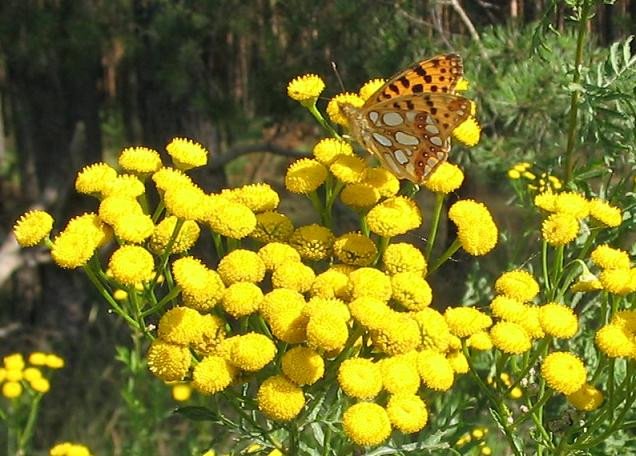
Begin with correctly labelled tansy and decide where the mature plant will fit. Preparing the growing space before buying makes the first season easier, especially when young plants need prompt attention.
1.
Confirm the plant is Tanacetum vulgare and decide whether a vigorous perennial suits the space.
2.
Choose spring or early autumn planting so roots can establish without the stress of peak summer drought.
3.
Remove perennial weeds first; untangling them later from tansy’s spreading roots is much harder.
4.
Mark the intended boundary, leaving room to reach the outer shoots from a path or open ground.
5.
Plant a healthy rooted piece at its previous depth and firm gently around the roots.
6.
Water the new plant until established, then adjust attention to rainfall and the actual soil moisture.
7.
Remove unwanted seedheads before they ripen if seedlings would be a nuisance nearby.
8.
Inspect the patch in spring and autumn, lifting spreading pieces while they are still small.

Watering
Give new divisions enough water to root into their position. Established tansy often tolerates dry spells, but newly planted pieces have little reserve and should not be abandoned.
Containers need regular checks through summer. Water the rootball when dry and let it drain fully; keep runoff from remaining in a saucer.

Feeding
In ordinary garden soil, routine feeding is generally unnecessary. If stems are already tall and vigorous, additional nitrogen is more likely to make management harder than improve the flowers.
A long-term pot may need fresh compost and modest nutrition, but inspect roots and space first. Repeated feeding cannot keep an overcrowded root system indefinitely healthy.

Pruning
Deadhead before seed ripens when self-sowing is unwanted. Wear gloves if the foliage irritates your skin and wash after handling substantial cut material.
Cut dead stems down when their winter value is over, taking care around new shoots. Reduce spread by removing rooted pieces rather than only cutting the tops.

Winter care
Tansy is hardy and normally remains outdoors. Leave selected stems if they are stable and attractive, but clear collapsed material that smothers adjacent plants.
There is no routine need for heated protection. Check containers after winter rain and prevent blocked drainage from leaving roots in standing water.
The plant carries deeply divided fern-like leaves and rounded yellow flower heads without the conspicuous ray petals of an ordinary daisy.
Other yellow-flowered plants can be confused at a glance. Botanical identification matters, but correct identification still does not turn ornamental tansy into a recommended edible herb.
Photo: Acroterion, CC BY-SA 4.0. Resized and optimised; cropped for display. Adapted image under the same licence.
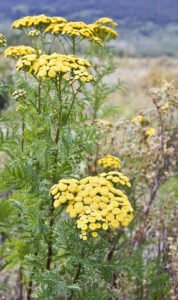
The species occurs in Britain, yet a garden clump can still spread more vigorously than wanted. Native status does not remove the need to consider scale and neighbouring plants.
A few stems can be used ornamentally if handled sensibly. Keep arrangements away from food preparation and do not label them as culinary herbs or dried tea.
Avoid promises that planting tansy will reliably repel insects or protect vegetables. Use appropriate crop protection and observation rather than unverified companion-planting claims.
Photo: Syrio, CC BY-SA 4.0. Resized and optimised; cropped for display. Adapted image under the same licence.
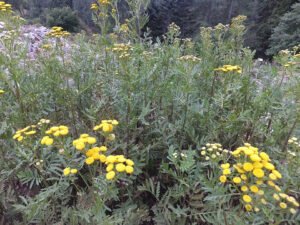
Follow the wandering shoots back to rooted sections and lift them. Repeated small removals are easier than allowing a dense colony to form.
Remove them while young and deadhead before seed matures next season. Keep composting practices in mind when disposing of ripe seedheads.
Shade, rich soil and exposure can produce a lax clump. Improve siting or use discreet support rather than increasing fertiliser.
Late-season powdery growth can accompany stress or crowding. Improve airflow and root conditions; assess overall vigour before taking drastic action.
Check for root congestion, severe drying or wet compost. Divide and refresh a healthy plant rather than adding stronger feed to an unknown root problem.
Divide established plants in spring or early autumn, taking a manageable rooted section. Replant only the number needed and avoid distributing unidentified or diseased material. Dispose of unwanted rooted pieces carefully instead of leaving them on moist soil beside the bed. A fragment that survives can become another patch, turning a containment job into an accidental expansion.
Seed can be sown in spring, but variable seedlings and unwanted spread make division a simpler option. Named foliage forms should be propagated vegetatively to preserve their character.
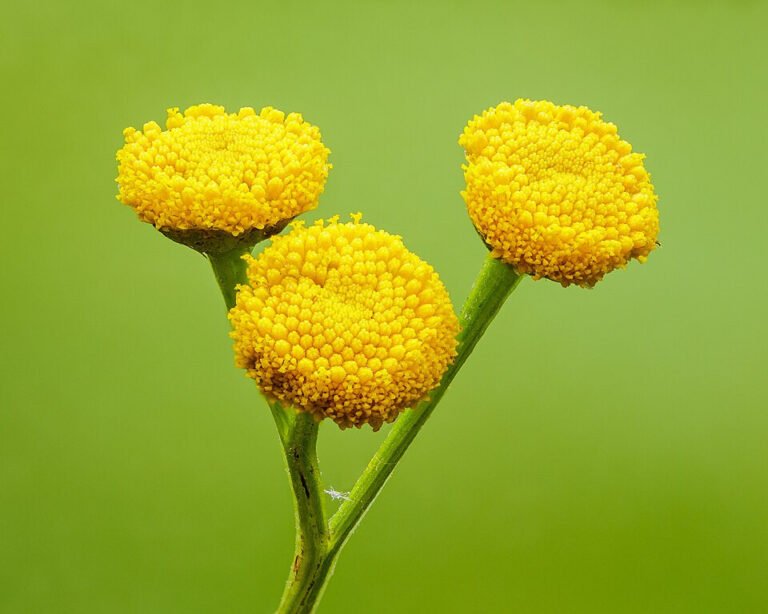
Tanacetum vulgare species
The standard upright plant with divided foliage and yellow button heads. Choose it only where its vigorous spread can be managed.
Source identified Tanacetum vulgare flower heads.
Photo: Agnes Monkelbaan, CC BY-SA 4.0. Resized and optimised; cropped for display. Adapted image under the same licence.
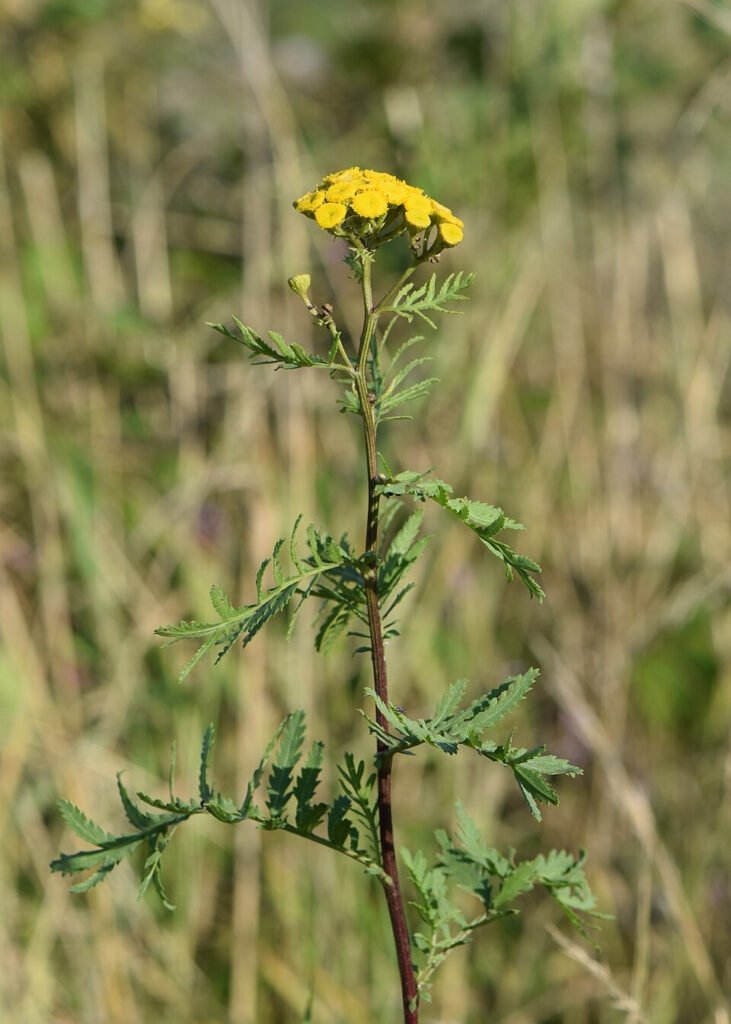
Crispum
A curled-leaved form valued for foliage texture. Keep a correctly labelled division if retaining that leaf character matters.
Ordinary tansy foliage shown for comparison; this is not an authenticated photograph of the curled leaf Crispum cultivar.
Photo: Krzysztof Ziarnek, Kenraiz, CC BY-SA 4.0. Resized and optimised; cropped for display. Adapted image under the same licence.
Compact nursery selections
Where a grower offers a named compact plant, check the actual mature dimensions. A small sales pot alone does not prove a restrained adult habit.
Species tansy shown for comparison; a compact nursery selection is not authenticated.
Photo: Agnieszka Kwiecień, Nova, CC BY-SA 4.0. Resized and optimised; cropped for display. Adapted image under the same licence.
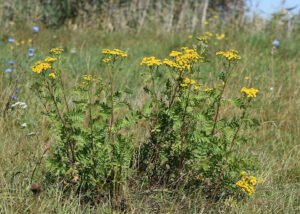
Container-grown species plants
A buying format rather than a cultivar. Useful for starting a controlled ornamental planting, provided the container and surrounding area are inspected regularly.
Species tansy growing in the ground; this photograph illustrates the plant rather than a container growing method.
Photo: Krzysztof Ziarnek, Kenraiz, CC BY-SA 4.0. Resized and optimised; cropped for display. Adapted image under the same licence.
Compare the mature size, growing requirements and season of interest before choosing tansy. Buy clearly labelled, healthy stock and prepare its position in advance. A plant suited to the available light and soil is easier to establish and maintain.
The clustered flowers offer feeding opportunities to insects, including hoverflies and other small visitors. Leave some heads open while containing the plant’s overall spread. Its wildlife role is compatible with managing spread. Keeping a contained flowering clump and a diverse surrounding border is more useful than allowing one vigorous plant to dominate every available space.
Avoid unnecessary spraying and grow a range of flowers around the patch. A single vigorous species should not replace the diversity that supports different insects through the year.
Published by Buy From Farmers Direct. Growing guidance reviewed 11 October 2026. The seasonal timeline uses the shared BFFD Growers Calendar record; adjust timings to your variety and local conditions.
This guide does not recommend eating tansy or using it in drinks, remedies or homemade pesticides.
Yes, through underground stems and potentially seed. Plan room and inspect the edges regularly.
Yes, but check escaping roots, seedlings and moisture. A pot does not remove every spread risk.
Spring or early autumn, using healthy rooted sections.
Do not rely on that claim as crop protection. Use evidence-based controls suited to the actual pest.
Only optional ornamental flower cutting, never collection for food or medicine.
Give tansy an appropriate position, establish it carefully and adjust care to the weather. Keep a simple note of flowering and any problems so that next year’s planting decisions reflect what actually succeeds in your garden.
Want to get food independence, support your local grower, get better prices and shop more privately?
Local food isn’t just something you find. It’s something you protect. A free account helps keep local supply visible, supported, and resilient.

….it takes 30 seconds for food lovers and 5 minutes for suppliers
We built this for people who care where their food comes from. For people who want to remain food secure. For Farmers to get to the local people, who deserve a better income and to deliver a better price for you. For the environmentally conscious and the privacy-conscious. An account simply helps us make the map and supplier reach more useful to you, without changing how open it is. You’re always in control.


Find local food. Stay connected to it. Create a free account to support local producers and be part of a growing food network.


