Perennial verbenas are valued for a long season of small flowers carried in an open, airy shape. Tall Verbena bonariensis is the familiar choice, allowing views through its stems rather than forming a solid screen. Other species stay lower or prefer moister ground, so start with a botanical name. In a UK garden, seedling replacements and good winter drainage can be as useful as expecting every original plant to last indefinitely.
Long summer flowering
Choose species carefully
Full sun
Leave useful seedheads
Winter survival varies
| Botanical identity | Verbena bonariensis and other border species |
| Family | Verbenaceae |
| Plant type | Herbaceous or short-lived perennial |
| Typical height | 30cm to 2m, by species |
| Typical spread | 30 to 60cm |
| Main flowering season | Summer to autumn |
| Light | Full sun |
| Soil | Drained soil; moisture needs vary by species |
| Soil reaction | Broad garden tolerance |
| Winter behaviour | Varies; cold wet conditions can cause losses |
| Main planting window | April to June |
| Seed route | March to April under cover; May outside |
| Pruning approach | Retain winter heads; cut back in spring |
| Propagation | Seed, cuttings or suitable division |
| Container suitability | Compact selections in drained pots |
| Watering priority | Establish well; V. hastata needs more moisture |
| Feeding priority | Little routine feed in suitable soil |
| Wildlife value | Summer and autumn insect flowers |
| Main use | Airy border colour and occasional cutting |
| Important distinction | Border perennial verbenas are distinct from tender annual bedding hybrids. Verbena bonariensis, rigida and hastata have different height, moisture and hardiness needs. |
| Plant name | Crop type | Spacing |
Sow indoors
Plant outdoors
Harvest
Polytunnel | |||||||||||
|---|---|---|---|---|---|---|---|---|---|---|---|---|---|---|
| Jan | Feb | Mar | Apr | May | Jun | Jul | Aug | Sep | Oct | Nov | Dec | |||
| Verbena (Perennial) | Not recorded | Single 45cm, In row 45cm, Row gap 60cm | No activity recorded | No activity recorded | Sow indoors, Polytunnel | Sow indoors, Plant outdoors, Polytunnel | Sow indoors, Plant outdoors, Polytunnel | Plant outdoors | Harvest | Harvest | Harvest | Harvest | No activity recorded | No activity recorded |
Sow indoors: March, April, May. Plant outdoors: April, May, June. Harvest: July, August, September, October. Polytunnel: March, April, May.
March to April sowing under cover and May sowing outside are optional seed routes. April to June planting gives young roots a growing season before winter; protect tender young stock from late frost. July to October harvest means limited ornamental cutting, ending with local frost. March to May cover is for young plants, not a requirement for established hardy border specimens. These month bands are planning windows for a typical UK garden; local frost, altitude, exposure and the season can move the work. Check the plant or seed label before using an optional route.
Tall bonariensis suits sunny borders where purple flowers can hover among grasses and other perennials without hiding everything behind them. Plant in repeated groups for a clear effect.
Lower selections are easier in smaller borders and pots. Choose the species before designing the combination: a moisture-loving V. hastata should not automatically share the driest position chosen for V. rigida.
Photo: frank wouters, CC BY 2.0. Resized and optimised; cropped for display.

Give perennial verbenas a sunny position with sufficient airflow. Deep shade tends to produce weaker growth and fewer flowers, even where a plant survives.
For bonariensis and rigida, choose good drainage and avoid persistent winter saturation. V. hastata is better suited to reliably moist but drained ground.
Allow roughly 45cm for medium border plants, increasing or reducing according to the named selection. Their airy appearance does not mean their roots need no room. The tall stems of bonariensis can be planted near the front of a border as well as behind it, because their openness allows views through. Keep paths clear, however, and do not let self-sown crowns occupy walking space.
Use compact selections for containers and match compost and watering to the species. Pots need more winter attention than a well-rooted plant in suitable ground.
Photo: Leon Perrie, CC BY 4.0. Resized and optimised; cropped for display.

Begin with correctly labelled perennial verbena and decide where the mature plant will fit. Preparing the growing space before buying makes the first season easier, especially when young plants need prompt attention.
1.
Choose a named species or cultivar for height, moisture needs and local winter conditions.
2.
Raise seed in spring where appropriate, following the packet because germination can be uneven.
3.
Grow seedlings on without crowding and harden them off gradually before final planting.
4.
Prepare a weed-free position with the drainage or moisture reserves the chosen species requires.
5.
Space plants for their mature spread and set the crown at its previous soil level.
6.
Water after planting and through dry establishment spells until roots enter surrounding ground.
7.
Allow flowers to develop freely, cutting only selected stems if an arrangement is wanted.
8.
Leave some seedheads and reassess winter survival when new spring shoots begin to appear.

Watering
Water new plants while roots establish. Established bonariensis and rigida can cope with dry spells better than a small fresh planting.
V. hastata needs more consistent moisture. Container plants of every type need checking because their roots cannot follow moisture into surrounding soil.

Feeding
In suitable garden soil, little routine feeding is usually necessary. Excess nitrogen can encourage height and weak stems without improving the intended airy display.
Refresh container compost and feed modestly where needed. Treat persistent poor growth as a reason to inspect roots, light and moisture, not automatically as hunger.

Pruning
Leave sound heads over winter for structure and potential seed, then cut old stems down in spring as new growth shows. Wait for signs of living basal growth before assuming a late-starting crown has died. Conversely, seedlings around an old plant may be independent replacements, so check which shoots are actually connected to the original crown.
Remove unwanted seedlings while small. Do not mistake self-sown replacements for proof that every original crown survived a difficult winter.

Winter care
Winter survival varies by species, cultivar and drainage. Keep the crown clear of wet debris and consider an appropriate dry protective mulch in colder sites.
Move exposed pots to a sheltered position or suitable cool protected space. An unheated structure may still freeze, so match protection to the plant’s actual needs.
Verbena bonariensis carries small purple flower clusters high on relatively bare, angular stems. Its open branching habit is different from low bedding verbena.
V. rigida is lower and spreading, while V. hastata carries more slender branching spikes. Lemon verbena is a different plant and these ornamental species are not interchangeable culinary herbs.
Photo: Salicyna, CC BY-SA 4.0. Resized and optimised; cropped for display. Adapted image under the same licence.
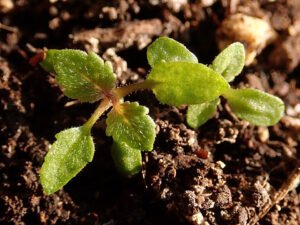
Spring planting is useful in colder or wetter districts because roots gain a full season to establish. A sheltered sunny position improves the prospects of less dependable species.
Expect some self-sowing where conditions suit. Retain well-placed seedlings, but remove those crowding paths or rare plants before their roots become established.
Cut a few stems for informal arrangements if wanted, keeping plenty in the border. The calendar’s harvest band refers only to ornamental use.
Photo: ИринаЯ, CC BY-SA 4.0. Resized and optimised; cropped for display. Adapted image under the same licence.
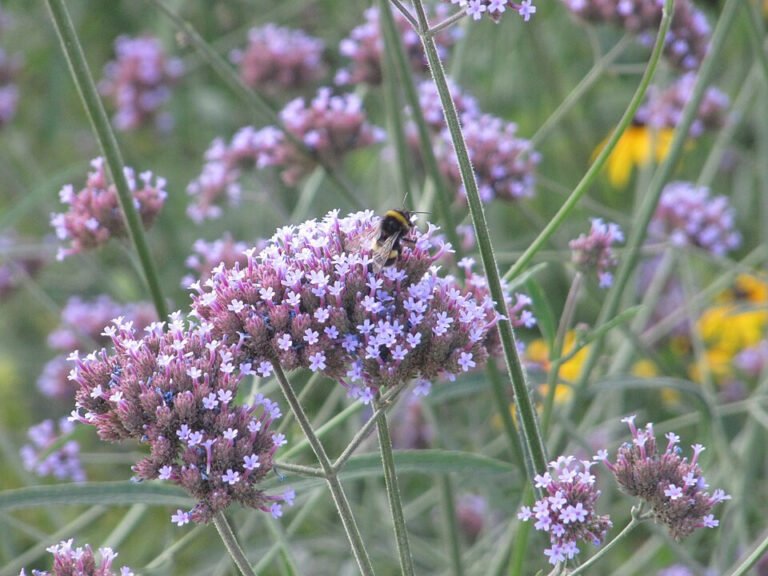
Cold wet soil may kill a short-lived crown. Check for new basal growth and useful seedlings before replanting into the same unsuitable spot.
Shade, rich feed or crowding can contribute. Improve the position and allow room rather than trying to correct all weakness with staking.
Some verbena seed takes patience and specific temperature treatment. Follow the packet and retain labelled trays long enough before declaring failure.
Mildew can affect stressed plants. Improve airflow and the appropriate root moisture; minor late-season symptoms may be mainly cosmetic.
Remove unwanted plants while small and leave fewer heads to ripen next season. Self-sowing is useful only where the resulting plants fit the space.
Many border verbenas can be raised from seed, including useful self-sown seedlings. Named cultivars may not come true, so keep seedling identity honest.
Take healthy non-flowering cuttings where appropriate to preserve a favourite selection. Overwinter young rooted plants with suitable light, airflow and protection rather than excessive warmth. Label compact named selections separately from ordinary species seedlings. A seedling beside a cultivar may grow much taller, and retaining the cultivar name without checking its origin can lead to an unexpected border arrangement.
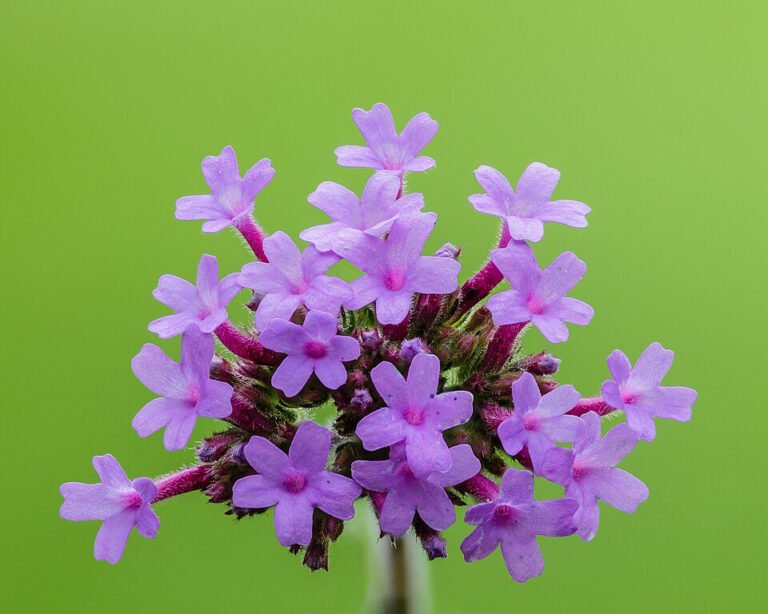
Verbena bonariensis
The familiar tall airy species for purple flowers above a border. It can self-sow and may be short-lived in cold wet conditions.
Source identified Verbena bonariensis flower cluster.
Photo: Dominicus Johannes Bergsma, CC BY-SA 4.0. Resized and optimised; cropped for display. Adapted image under the same licence.

Lollipop
A more compact bonariensis selection for smaller spaces. Buy correctly labelled plants if its reduced height is essential to the design.
Verbena bonariensis shown for comparison; the compact Lollipop cultivar is not authenticated.
Photo: Dominicus Johannes Bergsma, CC BY-SA 4.0. Resized and optimised; cropped for display. Adapted image under the same licence.
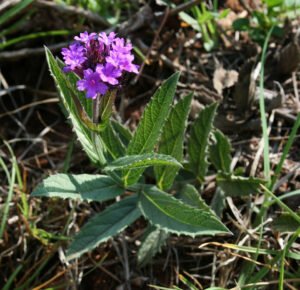
Verbena rigida
A lower spreading species with vivid purple flowers. Good drainage and careful winter siting are useful in the UK.
Source identified Verbena rigida flowers and foliage.
Photo: Franz Xaver, CC BY-SA 4.0. Resized and optimised; cropped for display. Adapted image under the same licence.
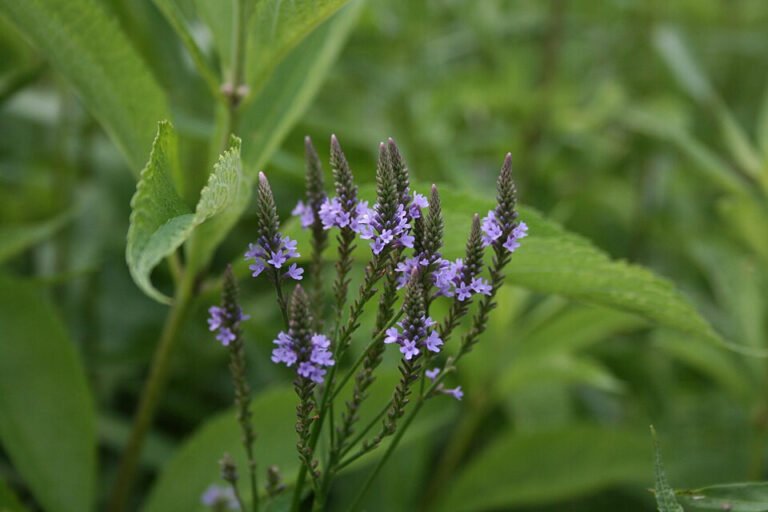
Verbena hastata
An upright species with branching narrow flower spikes that appreciates more moisture. Do not automatically give it the driest site selected for other verbenas.
Source identified Verbena hastata flower spikes.
Photo: Cody Hough, CC BY-SA 3.0. Resized and optimised; cropped for display. Adapted image under the same licence.
Compare the mature size, growing requirements and season of interest before choosing perennial verbena. Buy clearly labelled, healthy stock and prepare its position in advance. A plant suited to the available light and soil is easier to establish and maintain.
Open flower clusters are visited by bees, butterflies and other insects over a long period. Leave enough flowering stems when taking material for the house. Clusters open progressively, so a plant with some browned flowers can still carry fresh feeding opportunities. Selective tidying preserves those remaining flowers better than cutting down every stem as soon as the first heads fade.
Seedheads can provide food and structure later in the season. Retain useful stems where safe, then clear selectively when fresh spring growth needs space.
Published by Buy From Farmers Direct. Growing guidance reviewed 11 October 2026. The seasonal timeline uses the shared BFFD Growers Calendar record; adjust timings to your variety and local conditions.
It varies. Species, cultivar, drainage and local winter conditions all matter, and some plants are short-lived.
Leave sound heads through winter and cut old stems in spring as new growth appears.
Often in suitable conditions. Keep useful seedlings and remove unwanted ones while small.
Yes, particularly compact selections, with suitable drainage, watering and winter shelter.
No. V. hastata appreciates more moisture than bonariensis or rigida.
No. Tender low bedding hybrids are treated separately and generally need more intensive seasonal container care.
Give perennial verbena an appropriate position, establish it carefully and adjust care to the weather. Keep a simple note of flowering and any problems so that next year’s planting decisions reflect what actually succeeds in your garden.
Explore more growing guides: Stonecrop, Yarrow, Verbena (Annual).
Want to get food independence, support your local grower, get better prices and shop more privately?
Local food isn’t just something you find. It’s something you protect. A free account helps keep local supply visible, supported, and resilient.

….it takes 30 seconds for food lovers and 5 minutes for suppliers
We built this for people who care where their food comes from. For people who want to remain food secure. For Farmers to get to the local people, who deserve a better income and to deliver a better price for you. For the environmentally conscious and the privacy-conscious. An account simply helps us make the map and supplier reach more useful to you, without changing how open it is. You’re always in control.


Find local food. Stay connected to it. Create a free account to support local producers and be part of a growing food network.


