Zinnias bring strong summer colour and useful cutting stems to a warm, sunny garden. They perform best when young plants move into settled weather without their roots being disturbed. Give them space for air to move between the leaves, keep water at the roots and keep picking once the flowers begin.
Summer annual
Warm sunny position
Handle roots gently
Useful cut flowers
Flowers until autumn frost
| Botanical name | Zinnia species, cultivars and garden hybrids |
| Common garden species | Zinnia elegans |
| Family | Asteraceae |
| Life cycle | Tender annual in UK gardens |
| Position | Full sun |
| Soil | Fertile and well drained |
| Protected sowing | April to May |
| Direct sowing | Early June in reliably warm conditions |
| Planting out | Late May to June after frost risk |
| Sowing depth | Follow the seed packet |
| Spacing | Usually 20 to 45cm, depending on variety |
| Height | Compact bedding to taller cutting varieties |
| Main flowering | July to October, weather permitting |
| Harvest | Cut flowers during the display |
| Root handling | Avoid unnecessary disturbance |
| Watering | At the roots; steady but not waterlogged |
| Feeding | Moderate, according to soil and container needs |
| Deadheading | Remove spent blooms regularly |
| Containers | Choose compact types with room for airflow |
| Winter | Start again from seed or young plants |
| Plant name | Crop type | Spacing |
Sow indoors
Plant outdoors
Harvest
Polytunnel | |||||||||||
|---|---|---|---|---|---|---|---|---|---|---|---|---|---|---|
| Jan | Feb | Mar | Apr | May | Jun | Jul | Aug | Sep | Oct | Nov | Dec | |||
| Zinnia | Not recorded | Usually 20 to 45cm; follow the variety | No activity recorded | No activity recorded | No activity recorded | Sow indoors, Polytunnel | Sow indoors, Plant outdoors, Polytunnel | Sow indoors, Plant outdoors, Polytunnel | Harvest | Harvest | Harvest | Harvest | No activity recorded | No activity recorded |
Sow indoors: April, May, June. Plant outdoors: May, June. Harvest: July, August, September, October. Polytunnel: April, May, June.
April and May are protected sowing months. June includes direct sowing only in warm, suitable conditions. Plant young plants outside in late May or June after local frost risk. July to October marks cut flower picking, with the final date controlled by autumn weather. The polytunnel band refers to propagation.
Zinnias suit a sunny cutting patch, warm border or sheltered patio pot. They are a good choice where summer warmth and open growing conditions help the foliage stay healthy.
A cool, damp, shaded corner is less promising. In a difficult climate, start with a small trial of a compact, disease tolerant hybrid rather than committing the whole summer display.
Photo: Ermell, CC BY-SA 4.0. Resized and optimised; cropped for display. Adapted image under the same licence.
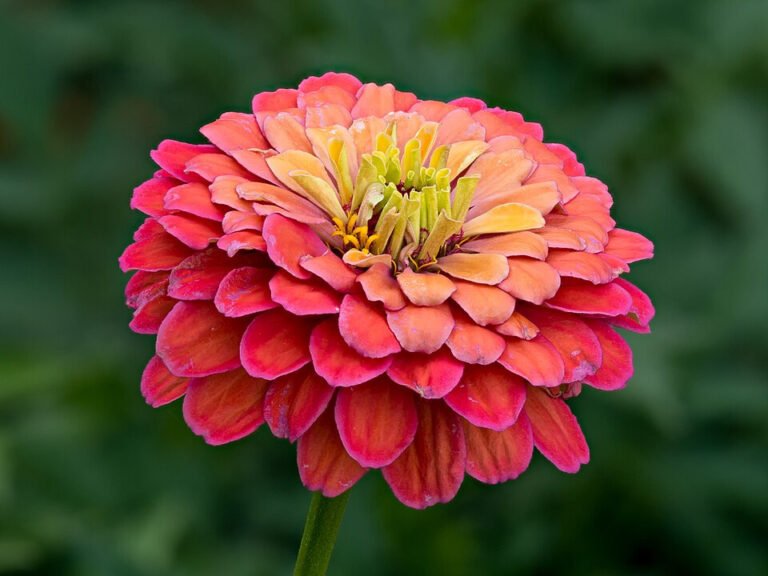
Choose the sunniest practical position with shelter from strong winds. Leave enough access to pick flowers without repeatedly pushing through neighbouring plants.
Prepare soil that supplies steady moisture but drains freely. Clear weeds and break up large clods before planting, so delicate young rootballs can settle into good contact.
Use the variety’s mature size to set spacing, often around 20 to 45cm. Taller branching types need more room than compact bedding plants, particularly where summer air is humid.
For containers, use suitable peat free compost and clear drainage holes. Avoid combining vigorous plants so tightly that wet leaves remain pressed together after watering.
Photo: Aathavan jaffna, CC BY-SA 3.0. Resized and optimised; cropped for display. Adapted image under the same licence.

Sow in individual modules or small pots so each seedling can be moved with its roots intact. Wait for settled warmth before planting out; zinnias gain little from sitting cold and checked in the border.
1.
Choose a variety for height, flower form and purpose. Compact hybrids suit pots, while taller types provide longer cutting stems.
2.
Sow under cover in April or May at the depth on the packet. Use clean containers and moist peat free seed compost, with enough space to avoid immediate crowding.
3.
Keep the sowing in the recommended warmth and provide good light after germination. Water carefully so the compost stays moist without becoming airless.
4.
Retain a strong seedling in each module. Move it into a larger pot only if needed, supporting the complete rootball rather than pulling at the stem.
5.
Prepare the outdoor bed while plants grow. Leave suitable spacing and arrange supports in advance if the selected cutting varieties are tall.
6.
Harden plants off gradually and wait until frost risk has passed. In many gardens this means late May or June, with later planting sensible in cold districts.
7.
Plant at the existing compost depth, keep roots intact and water in. Keep the central stem clear of buried compost and avoid heavy handling of the young foliage.
8.
In a reliably warm garden, an early June direct sowing is another option. Protect emerging seedlings and thin to the final spacing before competition becomes severe.

Watering
Water the soil when plants need it, especially while establishing and during dry weather. Aim below the foliage where possible and allow excess water to escape from pots.
Avoid alternating severe drought with saturated compost. Check plants early enough to correct a dry rootball before leaves repeatedly wilt in the afternoon.

Feeding
A reasonably fertile bed usually needs modest feeding. Too much fertiliser can encourage leafy growth without solving problems caused by cold or poor drainage.
Containers may need a suitable liquid feed as the initial compost nutrients are used. Follow the product rate and keep the watering pattern steady.

Pruning
Regularly remove faded flowers or cut stems for the vase. Make cuts above a healthy leaf joint so the remaining plant retains useful foliage.
Pinching young tall types can encourage branching where appropriate. Compact varieties may need little shaping; do not repeatedly trim them simply to impose the same form on every zinnia.

Winter care
Zinnias are normally grown as annuals and finish with autumn cold and frost. Remove unhealthy remains and clean reusable pots before storing them.
Buy fresh seed or young plants for a predictable display. Seed ripening is unreliable in many UK seasons, and hybrid offspring may differ even where viable seed is saved.
Zinnias have upright stems with pairs of fairly broad leaves and daisy family flower heads. Depending on the selection, blooms may be single, semi double or densely double in a wide range of colours.
Different Zinnia species and hybrids vary in leaf size, branching and disease tolerance. Use the label to confirm height and habit; a close photograph of one flower cannot establish a named cultivar.
Photo: Colifaturansa, CC BY-SA 4.0. Resized and optimised; cropped for display. Adapted image under the same licence.
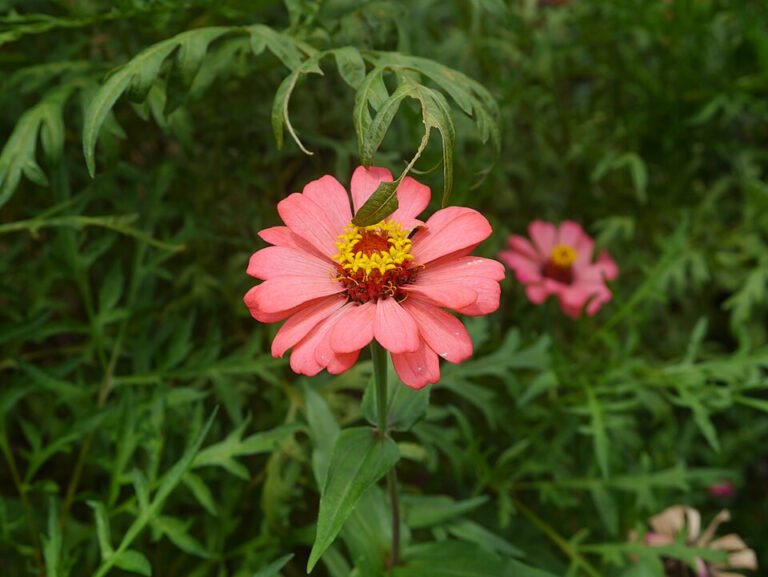
Warmth is especially important during establishment. In a shorter or cooler summer, a healthy protected start and a sheltered sunny site give the crop a better chance than early planting into cold soil.
Compact hybrids such as selections in the Profusion group can be worth considering where ordinary tall zinnias have struggled. Check the individual variety rather than assuming every zinnia has identical tolerance.
Pick in cool conditions once stems and flowers are sufficiently developed, then place in clean water. Keep cutting or deadheading through the useful display, which ends when weather and plant condition no longer support healthy flowers.
Photo: Екатерина Борисова, CC BY-SA 4.0. Resized and optimised; cropped for display. Adapted image under the same licence.
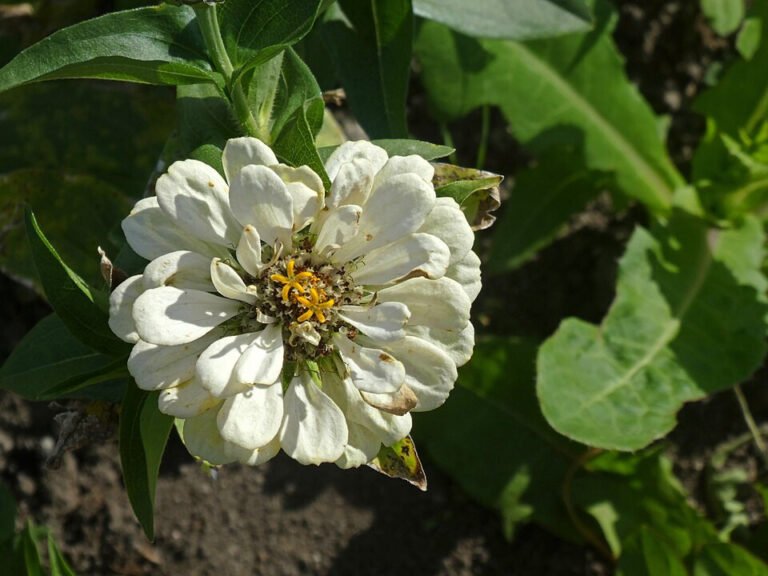
Cold weather or root disturbance may have checked them. Keep conditions steady and avoid more unnecessary moving. Plant later next time if the bed was still cold.
Powdery mildew can become noticeable as plants age or suffer stress. Allow airflow, maintain sensible moisture and remove badly affected foliage without stripping every healthy leaf.
Several leaf diseases can cause spotting, especially in wet, crowded growth. Avoid splashing foliage, improve spacing and remove badly affected material.
Check overly wet compost, poor ventilation and damaged roots. Use clean containers and adjust moisture rather than keeping every tray permanently soaked.
Check sun, feeding and variety. A shaded or overfed plant may make plenty of foliage without the expected display; regular removal of spent flowers also helps continuation.
Raise zinnias from seed each spring, taking particular care to minimise root disturbance. Buying well grown young plants is a useful alternative if propagation space is limited.
Saved seed is an experiment rather than a guarantee. UK plants may not ripen much viable seed, and hybrid selections may not repeat their parent’s colour or habit.
Tall cutting zinnias
Choose longer stems and a manageable mature height for the cutting patch. Space plants so you can reach and pick without bruising neighbouring growth.
Double zinnia flower shown for comparison; a tall cutting strain is not authenticated.
Photo: Lennity, CC BY-SA 4.0. Resized and optimised; cropped for display. Adapted image under the same licence.

Compact bedding types
Shorter selections suit pots and the front of borders. Check the eventual width as well as height before filling a container.
Zinnias in a bedding display; a compact bedding strain is not authenticated.
Photo: 小石川人晃, CC BY-SA 4.0. Resized and optimised; cropped for display. Adapted image under the same licence.

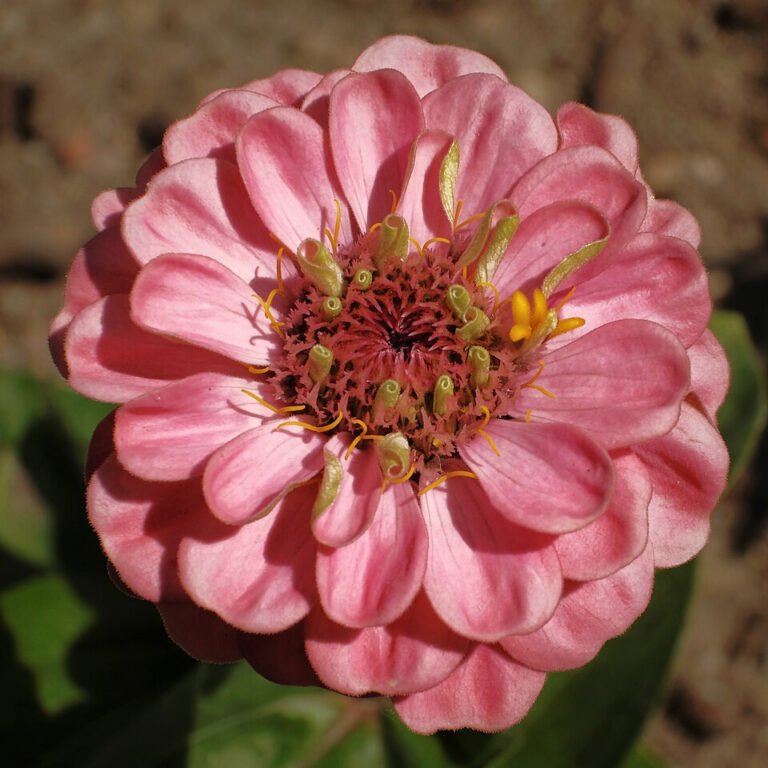
Open flower forms
Single and semi double flowers offer an accessible centre and a lighter appearance. These are useful choices where visiting insects are part of the planting plan.
An open centred zinnia flower illustrates an accessible flower form.
Photo: Muhammad Khaikal Al-Akbarsyah, CC BY-SA 4.0. Resized and optimised; cropped for display. Adapted image under the same licence.

Hybrid series for a trial
Disease tolerance and climate performance vary among hybrids. A small comparison of named selections gives better local guidance than expecting every packet to behave alike.
Source labelled Profusion Orange zinnias; the photograph does not establish parentage or disease tolerance of the hybrid series.
Photo: Kritzolina, CC BY-SA 4.0. Resized and optimised; cropped for display. Adapted image under the same licence.
Choose zinnias to match your summer conditions and start with healthy, uncrowded young plants. A small trial can show which forms deserve more space next year.
Open centred flowers can be useful to visiting insects. Densely doubled forms may be less accessible, so include a mixture of flower structures if supporting pollinators is a priority.
Inspect plants before reacting to minor damage. Keep any protection around seedlings secure and remove it when the particular risk has passed.
Published by Buy From Farmers Direct. Growing guidance reviewed 11 October 2026. The seasonal timeline uses the shared BFFD Growers Calendar record; adjust timings to your variety and local conditions.
After local frost risk has passed and weather is warming, commonly late May or June. Cold, wet soil can check growth even without a hard frost.
Yes, in early June in reliably warm conditions and suitable soil. A protected April or May start is more dependable in many UK gardens.
Their roots can be checked by rough handling. Raise them in individual modules or pots and move the complete rootball gently.
Yes. Remove faded flowers or cut stems for the vase regularly, leaving healthy foliage and suitable leaf joints below each cut.
The garden types covered here are grown as tender annuals in the UK. Start a new crop the following spring.
Yes. Choose a suitable compact type, provide drainage and leave enough room for air to circulate between the leaves.
Zinnias respond to warmth, sun and careful establishment. Give their roots a gentle start, keep foliage open to the air and pick regularly for a colourful summer display.
Explore more growing guides: Aster (China), Marguerite Daisy, Marigold.
Want to get food independence, support your local grower, get better prices and shop more privately?
Local food isn’t just something you find. It’s something you protect. A free account helps keep local supply visible, supported, and resilient.

….it takes 30 seconds for food lovers and 5 minutes for suppliers
We built this for people who care where their food comes from. For people who want to remain food secure. For Farmers to get to the local people, who deserve a better income and to deliver a better price for you. For the environmentally conscious and the privacy-conscious. An account simply helps us make the map and supplier reach more useful to you, without changing how open it is. You’re always in control.


Find local food. Stay connected to it. Create a free account to support local producers and be part of a growing food network.


