A large apricot tree needs a permanent place in the garden, with enough warmth for the fruit and enough room for its mature crown. Choosing a suitable rootstock and site matters more than making a young tree look immediately productive. In a good position, spring blossom and fragrant summer fruit can reward the planning, although British weather makes cropping variable.
Full sun
Permanent planting
Allow mature spread
Summer fruit
Protect early blossom
| Botanical name | Prunus armeniaca |
| Family | Rosaceae |
| Plant type | Deciduous fruit tree |
| Form | Large free standing tree |
| Typical height | About 4.5 to 5m on St Julian A |
| Spread | Allow approximately 5m, subject to rootstock |
| Sunlight | Full sun |
| Aspect | Warm and sheltered |
| Soil | Fertile with effective drainage |
| Container | Unsuitable for long term large form |
| Blossom | Usually February to March |
| Harvest | Usually July to August |
| Planting | November to March when soil permits |
| Pollination | Many cultivars are self fertile |
| Frost risk | Flowers are more vulnerable than dormant wood |
| Pruning | Spring or summer in dry weather |
| Watering | Important during establishment and drought |
| Propagation | Grafting or budding |
| Edible crop | Ripe fruit flesh |
| Main challenge | Protecting early blossom on a large crown |
| Plant name | Crop type | Spacing |
Sow indoors
Plant outdoors
Harvest
Polytunnel | |||||||||||
|---|---|---|---|---|---|---|---|---|---|---|---|---|---|---|
| Jan | Feb | Mar | Apr | May | Jun | Jul | Aug | Sep | Oct | Nov | Dec | |||
| Apricot (Large) | Orchard fruit | Single 5.00m, In row 5.00m, Row gap 5.00m; confirm rootstock and mature spread | Plant outdoors | Plant outdoors | Plant outdoors | No activity recorded | No activity recorded | No activity recorded | Harvest | Harvest | No activity recorded | No activity recorded | Plant outdoors | Plant outdoors |
Sow indoors: no months recorded. Plant outdoors: January, February, March, November, December. Harvest: July, August. Polytunnel: no months recorded.
The harvest band shows the usual July to August ripening period; some cultivars or cool sites run later. Plant dormant trees from November to March only when soil is workable. Named apricots are normally bought as grafted trees, so there is no seed sowing band. No routine polytunnel band is given for a large permanent tree. It needs adequate outdoor space or a purpose designed fruit house.
Choose this form where there is room for a permanent tree and where the soil does not remain waterlogged in winter. A small nursery tree can conceal a substantial future canopy. Check the rootstock before deciding its distance from paths, boundaries and other fruit trees.
A large tree suits a gardener willing to manage blossom risk and accept that harvests may vary. It is harder to cover every branch than a dwarf tree. Where cropping reliability is the priority on a cold site, a sheltered trained tree may be more practical than an exposed standard.
Photo: Susan Slater, CC BY-SA 4.0. Resized and optimised; cropped for display. Adapted image under the same licence.
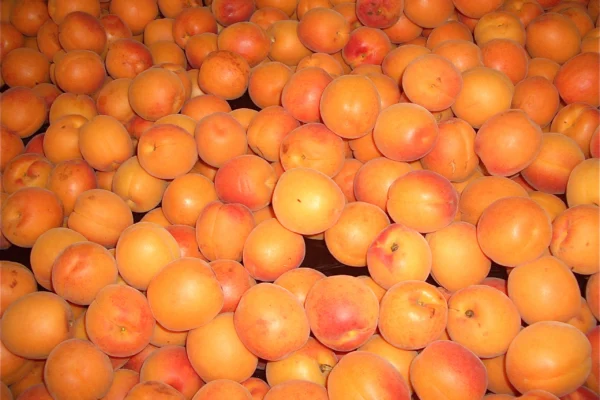
Choose an open, sunny position sheltered from the strongest winds. Light needs to reach the crown, and there must be room to inspect branches and pick safely without leaning over fences or neighbouring beds.
Avoid frost hollows. Cold air tends to collect in low enclosed places, exposing very early blossom to damage. A gentle slope or an open route for cold air can be more useful than a seemingly cosy but enclosed corner.
Apricots need a fertile soil with effective drainage. Investigate standing winter water before planting, and improve a broad area rather than filling a narrow hole with rich compost surrounded by impermeable clay.
If training against a sunny wall, plan wires and the eventual fan before planting. A fan is a separate management choice from a large free standing crown. Neither should be squeezed into the spacing of a dwarf patio tree.
Photo: Jossian, CC BY-SA 3.0. Resized and optimised; cropped for display. Adapted image under the same licence.
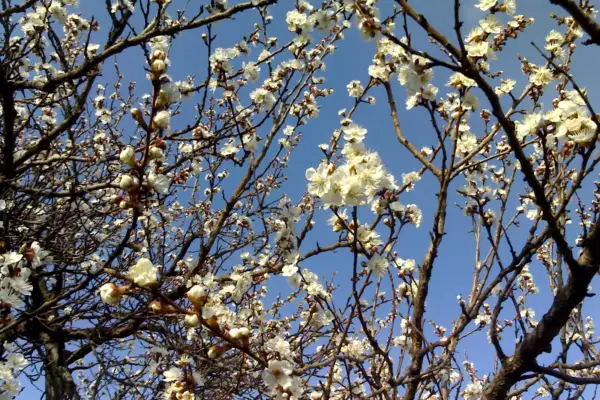
Specify the intended form and rootstock when ordering. A tree sold on St Julian A can become roughly 4.5 to 5m tall; site, cultivar and management alter the eventual size. Ask the nursery for a mature spread and spacing recommendation as well as a height.
1.
Select a named cultivar and a rootstock suitable for the soil and desired mature tree.
2.
Mark its future canopy on the ground and check access, boundaries, shade and nearby planting.
3.
Remove perennial weeds and prepare a broad area of soil while conditions are workable.
4.
Keep bare roots moist; water a container rootball thoroughly before removing its pot.
5.
Dig a hole wide enough to spread the roots and place a support before the tree is fully backfilled.
6.
Plant at the nursery soil level, keeping the graft union above the finished ground.
7.
Backfill, firm gently and water well, then apply mulch with a clear gap around the trunk.
8.
Secure with a flexible tie, label the cultivar and inspect the tie and root zone regularly during establishment.

Watering
Water newly planted trees deeply during dry periods, reaching the developing root zone rather than wetting only the trunk base. Keep grass and weeds away while roots establish. A large tree eventually explores more soil, but a young tree still depends on aftercare.
Once established, respond to prolonged drought and the condition of the soil. Mulch helps conserve moisture. Avoid repeated shallow watering that leaves most of the root area dry, and investigate drainage if leaves decline while the ground remains wet.

Feeding
Assess growth and soil condition before feeding. Apply a suitable fruit tree fertiliser in spring at the labelled rate where needed, spreading it over the root zone rather than against the trunk.
Maintain an organic surface mulch without building it against the bark. Excessive soft growth can complicate pruning and does not protect early blossom. Keep feeding decisions separate from frost or pollination problems.

Pruning
Develop a balanced, open framework while the tree is young so major corrective cuts are less likely later. Prune in dry spring or summer weather, not during the dormant winter routine used for apples and pears.
Prioritise damaged, crossing or congested growth and preserve useful fruiting wood. Stone fruit wounds can admit silver leaf and bacterial canker. For a large neglected tree or work above safe reach, obtain experienced pruning advice rather than making drastic cuts.

Winter care
Check ties, stakes and the base of the trunk. Keep drainage clear and avoid digging through the root zone. The dormant tree can withstand cold better than its opening flowers.
Blossom on a large crown may be impossible to protect fully. Where accessible, use temporary fleece supported clear of flowers and remove it in milder daylight. Site selection remains the main defence, so record where frost settles before planting another tree.
Apricot trees carry broad, finely toothed leaves and very early pale flowers, often before the canopy fills out. Summer fruit usually turns yellow orange, sometimes flushed red, with tender flesh around a single stone.
Large refers to the growing form and expected vigour, not a different species or unusually large individual fruit. Rootstock identity comes from nursery records. A juvenile tree cannot be reliably classified as dwarf or large from a photograph alone.
Photo: Victor M. Vicente Selvas, Public domain. Resized and optimised; cropped for display.
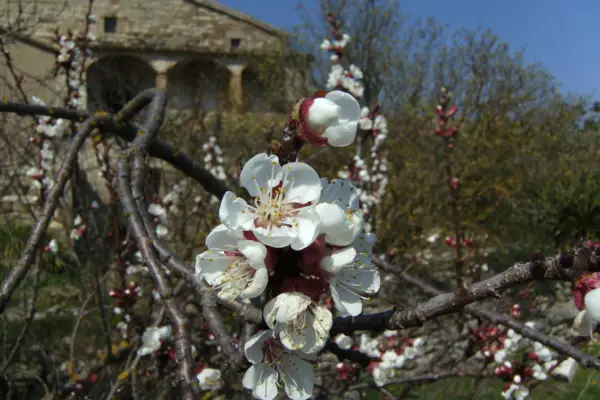
Warm, sheltered districts and favourable garden microclimates offer the best prospects for ripe outdoor apricots. In cooler areas, a sunny wall and trained form may be more dependable than an exposed large crown.
The main spring question is often whether the flowers survive, rather than whether the tree survives. Record flowering dates and late frosts over several seasons. A poor crop after frost does not automatically indicate a failed planting.
Allow fruit to develop colour and soften before picking. Harvest in several visits, supporting branches and fruit carefully. Plan safe access while the tree is young, because a high crop is of little practical value if it cannot be reached safely.
Photo: Ввласенко, CC BY-SA 3.0. Resized and optimised; cropped for display. Adapted image under the same licence.
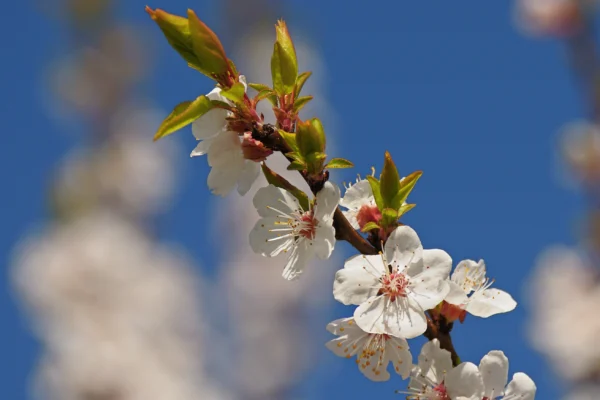
Consider frost and poor pollination first. Note whether flowers browned after a cold night and protect future blossom. Check watering before blaming a lack of fertiliser.
Gum can follow injury as well as disease. Sunken bark, dead buds or expanding dieback warrant closer diagnosis for bacterial canker. Seek specific advice before removing major branches.
Silver leaf is one possible cause, although other stresses can produce similar symptoms. Inspect affected branches and obtain a diagnosis. Routine pruning in summer reduces one route of infection.
A heavy crop, drought or other root stress can cause losses. Check soil moisture and thin crowded young fruit when appropriate. Avoid assuming that every dropped fruit indicates a pest.
Remove decaying and mummified fruit promptly, including fruit left hanging after harvest. Avoid damage during thinning and picking, and keep the canopy open enough to dry after rain.
For a predictable crop, buy a grafted or budded named tree. Growing from a stone produces a genetically variable seedling and does not preserve the parent cultivar, fruit quality or controlled mature size.
Commercial propagation combines the fruiting cultivar with a selected rootstock. If a shoot emerges from below the graft, it belongs to the rootstock and should not be encouraged as a replacement fruiting branch.
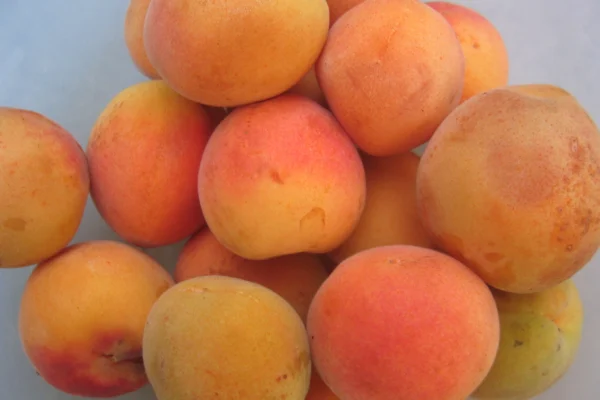
Tomcot
A well known option for UK gardens, producing orange fruit with a red flush. Rootstock and training determine tree size; ask for a combination appropriate to a permanent garden planting.
Apricot fruit. Illustrative Prunus armeniaca species photograph; cultivar not identified.
Photo: carol (CarolSpears), CC BY-SA 3.0. Resized and optimised; cropped for display. Adapted image under the same licence.
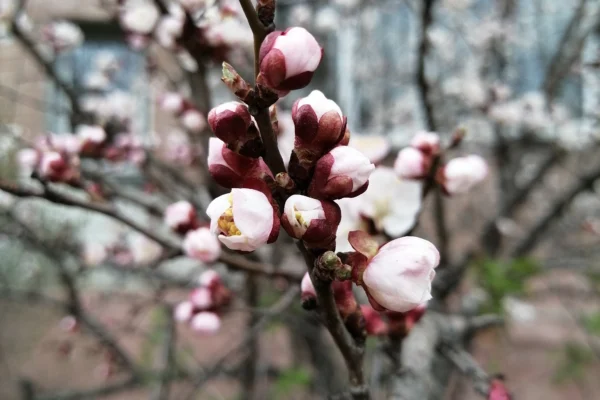
Moorpark
A traditional later variety valued for richly flavoured fruit. Give it a warm situation and check the expected harvest window against the length of summer at your site.
Apricot blossom. Illustrative Prunus armeniaca species photograph; cultivar not identified.
Photo: Kaunenas, CC BY 4.0. Resized and optimised; cropped for display.
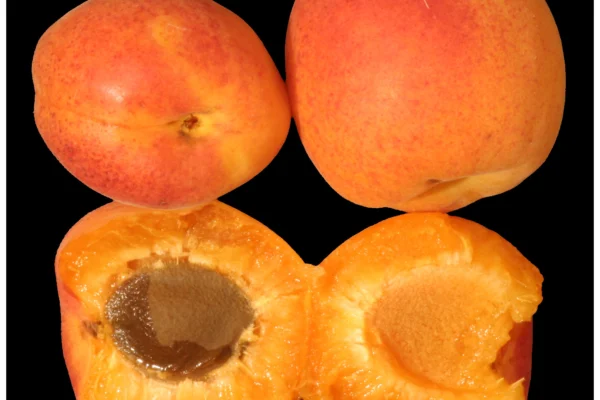
Flavorcot
Also sold under the cultivar name Bayoto. Its orange red fruit ripens in late summer. The label should distinguish the fruiting cultivar from the rootstock.
Whole and opened apricot fruit. Illustrative Prunus armeniaca species photograph; cultivar not identified.
Photo: MatthiasKabel, CC BY-SA 3.0. Resized and optimised; cropped for display. Adapted image under the same licence.
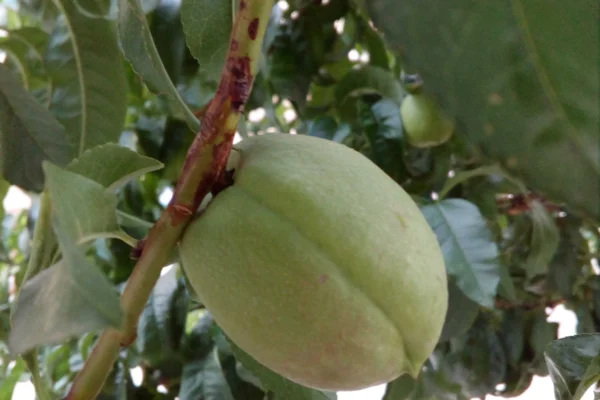
Kioto
A modern self fertile apricot offered by specialist UK nurseries. Compare flowering, ripening and rootstock details with the other cultivars before making a choice.
Unripe apricot fruit. Illustrative Prunus armeniaca species photograph; cultivar not identified.
Photo: Ανώνυμος Βικιπαιδιστής, CC BY 3.0. Resized and optimised; cropped for display.
Explore the BFFD map for growers and specialist producers near you, and check apricot availability directly. When buying a tree, ask about rootstock, mature spread and suitability for your local conditions.
Open blossom can provide an early food source for visiting insects when weather permits. Remove temporary frost covers during suitable daylight so pollinators can reach the flowers.
Use observation before pest treatment and avoid spraying open blossom. Keep any protective netting taut, correctly fitted and regularly checked so that birds cannot become trapped.
Published by Buy From Farmers Direct. Sources checked 4 October 2026. Growing references: RHS: How to grow apricots; RHS: Silver leaf; RHS: Bacterial canker; Frank P Matthews: Compacta apricot; Orange Pippin: Compacta apricot; Orange Pippin: Kioto apricot; RHS: Garden Aprigold; RHS: Choosing fruit trees. The seasonal timeline uses the shared BFFD Growers Calendar record; adjust timings to your variety and local conditions.
Allow for the mature rootstock and cultivar, not the current nursery height. St Julian A commonly produces a tree around 4.5 to 5m tall. About 5m between large free standing trees is a useful planning guide, subject to nursery advice.
Yes, in a sufficiently warm and sheltered position, but early blossom makes crops vulnerable to frost. Reliability varies by site, cultivar and season.
The dormant period from late autumn to early spring is preferred for bare root trees. Do not plant into frozen or saturated ground. Container trees are more flexible but need careful watering.
Routine winter pruning is best avoided. Prune during dry spring or summer weather to reduce the risk of silver leaf and bacterial canker entering wounds.
Yes. Self fertile means a second cultivar is unnecessary, not that pollen transfer is unnecessary. Cold wet weather and low insect activity can still reduce fruit set.
Training and pruning influence size, but repeated severe cutting is a poor substitute for the correct rootstock. Choose a dwarf cultivar or an appropriate trained tree if space is limited.
Use the Growers Calendar to plan planting and blossom protection, then adjust to your own garden and the forecast. If your tree has a quiet year, the BFFD map offers another way to discover seasonal growers and ask what they have available.
Explore more growing guides: Apricot (Dwarf), Almond, Apple (Large).
Want to get food independence, support your local grower, get better prices and shop more privately?
Local food isn’t just something you find. It’s something you protect. A free account helps keep local supply visible, supported, and resilient.

….it takes 30 seconds for food lovers and 5 minutes for suppliers
We built this for people who care where their food comes from. For people who want to remain food secure. For Farmers to get to the local people, who deserve a better income and to deliver a better price for you. For the environmentally conscious and the privacy-conscious. An account simply helps us make the map and supplier reach more useful to you, without changing how open it is. You’re always in control.


Find local food. Stay connected to it. Create a free account to support local producers and be part of a growing food network.


