A dwarf apricot brings early blossom and sun warmed summer fruit within reach of a small garden. Its size makes frost protection and picking easier, but it still needs the warmth, drainage and patient attention of a full sized tree. Choose the cultivar and rootstock together, then plan how you will protect the flowers and keep the roots evenly supplied with water.
Full sun
Sheltered position
Summer fruit
Compact tree
Protect early blossom
| Botanical name | Prunus armeniaca |
| Family | Rosaceae |
| Plant type | Deciduous fruit tree |
| Form | Naturally compact cultivar or restricted rootstock |
| Typical height | About 1.5 to 2m for genuinely dwarf cultivars |
| Spread | Check cultivar and nursery specification |
| Sunlight | Full sun |
| Aspect | Warm south or west facing position |
| Soil | Fertile and freely drained |
| Container | At least 45cm wide and deep where suitable |
| Blossom | Usually February to March |
| Harvest | Usually July to August |
| Planting | Dormant season preferred |
| Pollination | Many cultivars are self fertile |
| Frost risk | Flowers and young fruit are vulnerable |
| Pruning | Dry weather in spring or summer |
| Watering | Regular checks in containers |
| Propagation | Named cultivars are grafted or budded |
| Edible crop | Ripe fruit flesh |
| Main challenge | Protecting blossom and avoiding wet roots |
| Plant name | Crop type | Spacing |
Sow indoors
Plant outdoors
Harvest
Polytunnel | |||||||||||
|---|---|---|---|---|---|---|---|---|---|---|---|---|---|---|
| Jan | Feb | Mar | Apr | May | Jun | Jul | Aug | Sep | Oct | Nov | Dec | |||
| Apricot (Dwarf) | Orchard fruit | Single 2.00m, In row 2.00m, Row gap 2.50m; confirm cultivar spread | Plant outdoors | Plant outdoors, Polytunnel | Plant outdoors, Polytunnel | Polytunnel | No activity recorded | No activity recorded | Harvest | Harvest | No activity recorded | No activity recorded | Plant outdoors | Plant outdoors |
Sow indoors: no months recorded. Plant outdoors: January, February, March, November, December. Harvest: July, August. Polytunnel: February, March, April.
The harvest band means ripe fruit, usually July and August, rather than blossom. Plant dormant trees from November to March when the ground is workable. There is no recommended seed sowing band for a named fruit cultivar. February to April under cover refers to blossom protection for movable pots, with ventilation and hand pollination as needed. An unheated polytunnel can still freeze overnight.
This is a rewarding tree for someone who can check a patio pot regularly and respond to a frost forecast. A compact crown is easier to cover than an orchard tree, and fruit can usually be picked from the ground. Dwarf does not mean the tree will crop reliably in shade or tolerate neglect.
For container growing, choose a cultivar explicitly sold for pots, such as Garden Aprigold. Compacta is naturally small, but nursery advice differs about keeping it permanently in a container. Ask the supplier about the exact tree and rootstock rather than relying on the word dwarf alone.
Photo: Susan Slater, CC BY-SA 4.0. Resized and optimised; cropped for display. Adapted image under the same licence.
Give the tree your sunniest sheltered space, with room to reach the entire crown. A warm wall can help fruit ripen, but avoid wedging the branches into a narrow, airless corner. Allow space for growth as well as the nursery pot.
A container must have open drainage holes and sit where surplus water can escape. Use a suitable loam based, peat free compost for permanent planting. Do not leave the pot standing in a saucer of winter water.
In the ground, choose soil that stays moist without remaining saturated. Check the space after prolonged rain before planting. A raised position may help on heavy soil, provided water has somewhere to drain and roots have adequate depth.
Avoid a low hollow where cold air collects. Decide where fleece or a temporary cover will be supported before blossom opens. If the tree will be moved under cover, check its eventual weight and access through doors first.
Photo: Jossian, CC BY-SA 3.0. Resized and optimised; cropped for display. Adapted image under the same licence.
Buy a healthy named tree from a reputable nursery and retain its cultivar and rootstock label. The label is more useful for future pruning and size decisions than a generic patio tree description.
1.
Choose a cultivar suitable for your available space and confirm whether permanent container growing is recommended.
2.
Select a sheltered sunny position and clear competing weeds from the planting area.
3.
For a pot, prepare a substantial container with drainage holes; for open ground, loosen a broad planting area.
4.
Water the rootball before planting, or keep bare roots moist while preparing the hole.
5.
Set the tree at its previous soil level, with the graft union clearly above the finished surface.
6.
Backfill gently, eliminating large air pockets without burying the trunk or compacting wet soil.
7.
Fit a suitable support if needed, water thoroughly and add a surface mulch clear of the trunk.
8.
Label the tree and record planting, flowering and fruiting dates so subsequent care matches its actual performance.

Watering
Check container moisture frequently in spring and summer, including during fruit swelling. Water the compost thoroughly when required, allowing excess water to drain. A dry surface alone is not a reliable guide to moisture deeper in a large pot.
Sudden swings from very dry to saturated compost can stress a developing crop. Check again after hot wind or a period under cover, where rainfall cannot reach the roots. A mulch helps, but never replaces watering.

Feeding
Use a fruit tree fertiliser in spring according to its label and the condition of the compost or soil. Avoid continually adding feed to compensate for waterlogging, damaged roots or lack of sunlight.
Refresh the surface compost of established pots carefully and review the need for repotting. Vigorous leafy growth is not the same as a successful fruit crop, so keep a simple record rather than escalating fertiliser whenever blossom fails.

Pruning
Naturally dwarf trees often need only light pruning. Remove badly placed or damaged shoots when the tree is actively growing, choosing dry weather in spring or summer. Do not apply the winter pruning routine used for apples.
Apricots are susceptible to bacterial canker and silver leaf. Keep cuts purposeful and tools clean; inspect suspect dieback before cutting extensively. A cultivar that is naturally compact should not need repeated severe reduction to fit its allotted space.

Winter care
Allow normal winter dormancy outdoors. Protect the container from prolonged freezing and wind exposure while maintaining drainage. A centrally heated room is unsuitable winter accommodation for a deciduous fruit tree.
When flower buds begin opening, watch the forecast closely. Support horticultural fleece above the flowers on frosty nights and remove it during milder daylight. Under cover, ventilate and use a soft brush to transfer pollen between open flowers if insects are scarce.
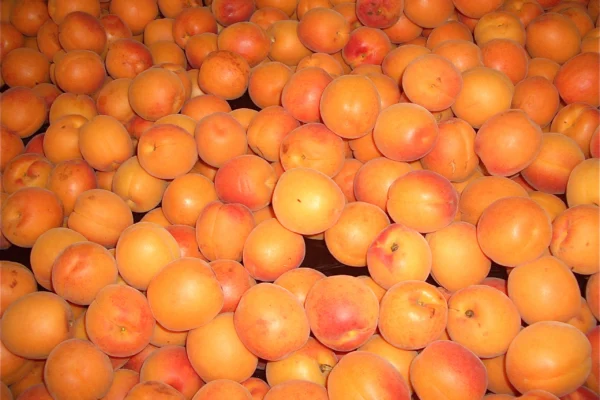
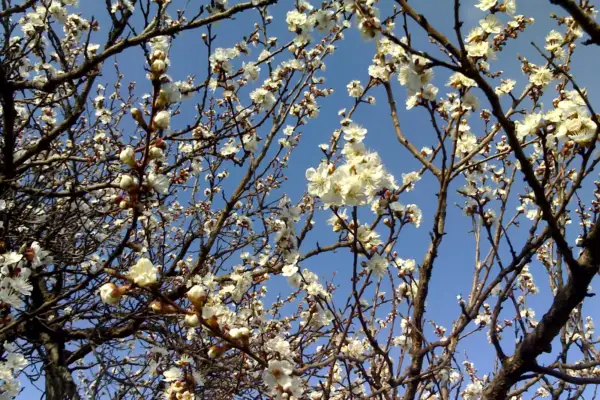
Apricot has broad rounded to oval leaves with a pointed tip and finely toothed margins. Its pale blossom appears early, before the full canopy develops. Ripe fruit is soft orange to yellow, often with a red flush and a single hard stone.
The dwarf entry is a growing form of the same fruit species, not a separate botanical species. Appearance alone cannot prove the cultivar or rootstock. Keep purchase records and do not assume a small young tree will remain small at maturity.
Photo: Victor M. Vicente Selvas, Public domain. Resized and optimised; cropped for display.
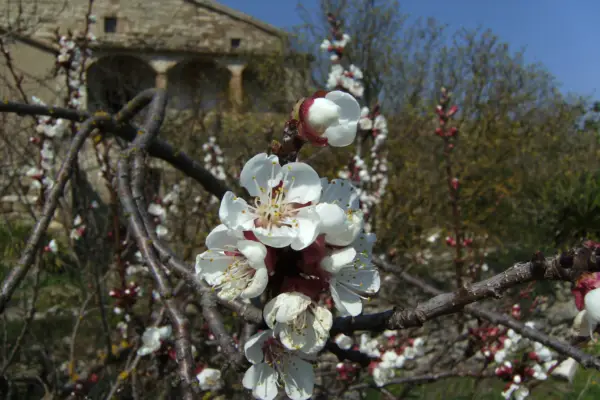
In Britain, surviving winter and setting fruit are different tests. Early blossom can be damaged by a short frost even where the dormant tree is hardy. A sheltered site and accessible crown make protection more practical.
Cool, wet flowering weather can also reduce insect activity. A self fertile cultivar does not need a second variety, but pollen still needs to reach receptive flowers. Hand pollination can help under cover or during unsettled weather.
Expect harvest dates to vary with cultivar and the season. Pick when fruit colours and softens, rather than harvesting everything on a calendar date. Support each fruit gently and use ripe fruit promptly.
Photo: Ввласенко, CC BY-SA 3.0. Resized and optimised; cropped for display. Adapted image under the same licence.
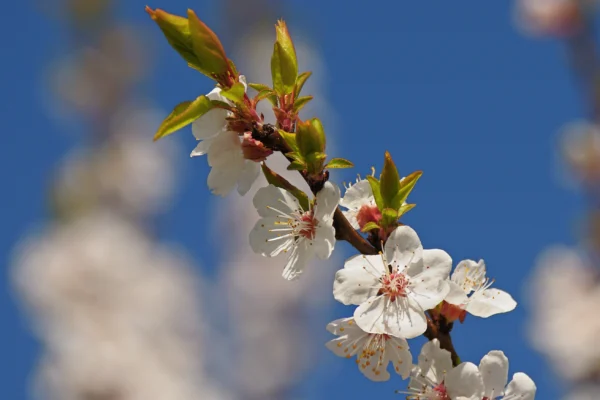
Consider frost and poor pollination first. Note whether flowers browned after a cold night and protect future blossom. Check watering before blaming a lack of fertiliser.
Gum can follow injury as well as disease. Sunken bark, dead buds or expanding dieback warrant closer diagnosis for bacterial canker. Seek specific advice before removing major branches.
Silver leaf is one possible cause, although other stresses can produce similar symptoms. Inspect affected branches and obtain a diagnosis. Routine pruning in summer reduces one route of infection.
A stressed rootball, especially in a small pot, can interrupt fruit development. Check moisture and drainage and avoid allowing a young tree to carry an excessive crop.
Remove decaying and mummified fruit promptly, including fruit left hanging after harvest. Avoid damage during thinning and picking, and keep the canopy open enough to dry after rain.
For a predictable crop, buy a grafted or budded named tree. Growing from a stone produces a genetically variable seedling and does not preserve a dwarf cultivar or its eventual fruit quality.
Commercial propagation combines the fruiting cultivar with a selected rootstock. If a shoot emerges from below the graft, it belongs to the rootstock and should not be encouraged as a replacement fruiting branch.
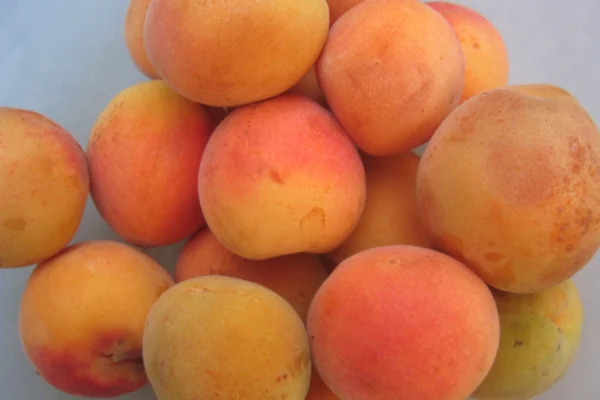
Garden Aprigold
A naturally compact apricot commonly recommended for patio containers. Choose a genuine named tree and confirm its expected dimensions with the supplier.
Apricot fruit. Illustrative Prunus armeniaca species photograph; cultivar not identified.
Photo: carol (CarolSpears), CC BY-SA 3.0. Resized and optimised; cropped for display. Adapted image under the same licence.
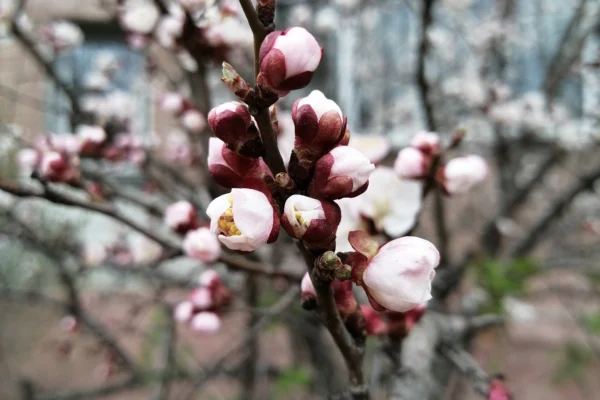
Compacta
A slow growing apricot described by specialist nurseries as reaching about 2m. Orange fruit is freestone. Particularly useful where a small tree can be planted in the ground.
Apricot blossom. Illustrative Prunus armeniaca species photograph; cultivar not identified.
Photo: Kaunenas, CC BY 4.0. Resized and optimised; cropped for display.
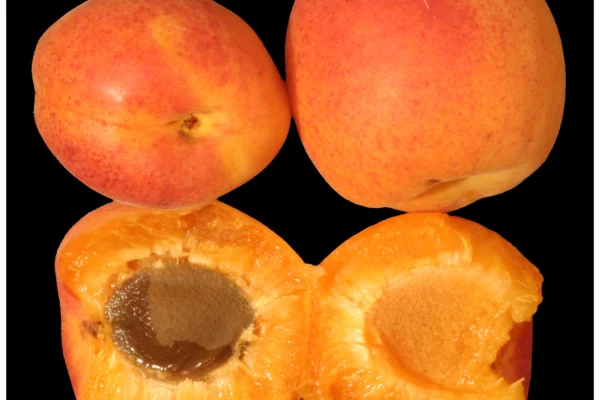
Tomcot
A larger cultivar to compare with the dwarf options. A manageable size depends on rootstock and training; the cultivar name alone does not make it a patio dwarf.
Whole and opened apricot fruit. Illustrative Prunus armeniaca species photograph; cultivar not identified.
Photo: MatthiasKabel, CC BY-SA 3.0. Resized and optimised; cropped for display. Adapted image under the same licence.
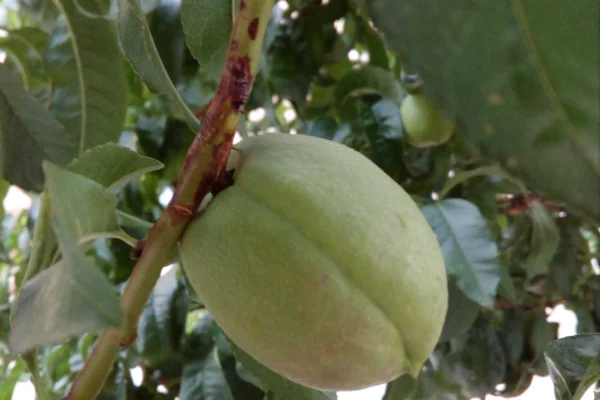
Moorpark
A traditional, later apricot with golden fruit and a red flush. Compare its space requirements carefully with true dwarf cultivars before ordering.
Unripe apricot fruit. Illustrative Prunus armeniaca species photograph; cultivar not identified.
Photo: Ανώνυμος Βικιπαιδιστής, CC BY 3.0. Resized and optimised; cropped for display.
Explore the BFFD map for nearby growers and specialist producers, then ask directly about apricot availability. For a tree, confirm cultivar, rootstock and suitability for a container before buying.
Open blossom can provide an early food source for visiting insects when weather permits. Remove temporary frost covers during suitable daylight so pollinators can reach the flowers.
Use observation before pest treatment and avoid spraying open blossom. Keep any protective netting taut, correctly fitted and regularly checked so that birds cannot become trapped.
Published by Buy From Farmers Direct. Sources checked 4 October 2026. Growing references: RHS: How to grow apricots; RHS: Silver leaf; RHS: Bacterial canker; Frank P Matthews: Compacta apricot; Orange Pippin: Compacta apricot; Orange Pippin: Kioto apricot; RHS: Garden Aprigold; RHS: Choosing fruit trees. The seasonal timeline uses the shared BFFD Growers Calendar record; adjust timings to your variety and local conditions.
Yes, if the cultivar is suited to pots and the container provides enough root space, drainage and reliable watering. Garden Aprigold is a recognised patio option. Confirm advice for the exact tree before buying.
Naturally compact cultivars commonly reach around 1.5 to 2m, but rootstock, soil and pruning affect the result. Semi dwarf trees can grow considerably larger, so check the nursery specification.
Many commonly sold apricots are self fertile. One suitable tree can set fruit, although frost or poor pollen transfer can still prevent a crop.
Prune lightly in dry spring or summer weather. Avoid routine winter pruning because apricots are vulnerable to silver leaf and bacterial canker.
Early frost, cold flowering weather and poor pollination are common explanations. Container drought can also disrupt a crop. Check what happened at flowering rather than assuming the tree needs more feed.
Do not bring it into a heated living room. It needs dormancy. A suitable unheated structure can provide temporary protection, particularly around blossom, but still needs ventilation and moisture checks.
Use the Growers Calendar to plan planting and blossom protection, then adjust to your own garden and the forecast. If your tree has a quiet year, the BFFD map offers another way to discover seasonal growers and ask what they have available.
Explore more growing guides: Apricot (Large), Almond, Apple (Dwarf).
Want to get food independence, support your local grower, get better prices and shop more privately?
Local food isn’t just something you find. It’s something you protect. A free account helps keep local supply visible, supported, and resilient.

….it takes 30 seconds for food lovers and 5 minutes for suppliers
We built this for people who care where their food comes from. For people who want to remain food secure. For Farmers to get to the local people, who deserve a better income and to deliver a better price for you. For the environmentally conscious and the privacy-conscious. An account simply helps us make the map and supplier reach more useful to you, without changing how open it is. You’re always in control.


Find local food. Stay connected to it. Create a free account to support local producers and be part of a growing food network.


