Spring is a useful time to start red cabbage, but the heads usually mature in summer or autumn. This guide interprets the calendar name Cabbage (Spring Red) as a spring sowing crop. It does not promise red heads in spring or treat ordinary red cabbage as the overwintered green crop sold as spring cabbage. Begin with the harvest season on your seed packet, then work towards sturdy plants and an uninterrupted growing season.
Spring sowing
Later harvest
Full sun
Edible heads
Brassica rotation
| Botanical name | Brassica oleracea Capitata Group |
| Family | Brassicaceae |
| Crop type | Red heading cabbage |
| Life cycle | Biennial grown for its first crop |
| Page scope | Spring sowing for later heads |
| Typical sowing | March and April |
| Planting out | April to June, when ready |
| Harvest | July to November, variety dependent |
| Position | Open and sunny |
| Soil | Fertile with good drainage |
| Moisture | Steady supply through growth |
| Soil reaction | Prefer near neutral soil |
| Starting method | Modules or a nursery seedbed |
| Sowing depth | About 1cm; follow packet |
| Final spacing | 45cm, with 60cm between rows |
| Larger varieties | May need wider spacing |
| Edible part | Leaves forming the head |
| Container suitability | Compact varieties in large pots |
| Protection | Insect mesh and bird protection |
| Winter role | Harvest or store suitable mature heads |
| Plant name | Crop type | Spacing |
Sow indoors
Plant outdoors
Harvest
Polytunnel | |||||||||||
|---|---|---|---|---|---|---|---|---|---|---|---|---|---|---|
| Jan | Feb | Mar | Apr | May | Jun | Jul | Aug | Sep | Oct | Nov | Dec | |||
| Cabbage (Spring Red) | Brassicas | Single 0.45m, In row 0.45m, Row gap 0.60m | No activity recorded | No activity recorded | Sow indoors | Sow indoors, Plant outdoors | Plant outdoors | Plant outdoors | Harvest | Harvest | Harvest | Harvest | Harvest | No activity recorded |
Sow indoors: March, April. Plant outdoors: April, May, June. Harvest: July, August, September, October, November. Polytunnel: no months recorded.
March and April show the main spring sowing window, including modules and suitable outdoor seedbeds. The calendar label Sow indoors also covers the outdoor option described here. Transplant from April to June according to plant development and local soil conditions. July to November combines different varieties, not one continuous harvest from every plant. This is not an overwintered spring harvest calendar. Polytunnel dates are omitted because protected sowing is optional.
A modest row can give a useful crop without overwhelming the kitchen. Before sowing, count how many mature cabbages you will actually use and allow room for their outer leaves.
Choose this approach when you can water and inspect the bed throughout summer. Red cabbage occupies ground for months, so put it in the planting plan before filling every gap with quicker crops.
Photo: Jamain, CC BY-SA 3.0. Resized and optimised; cropped for display. Adapted image under the same licence.
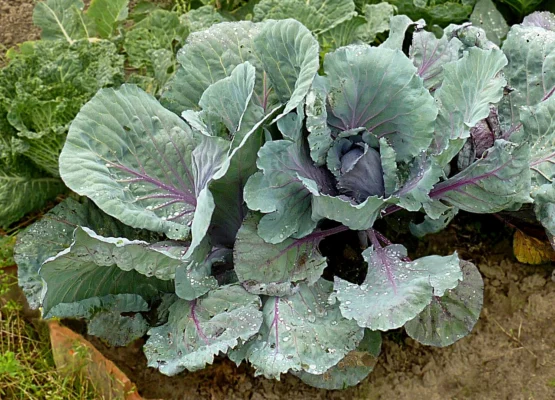
Give plants a bright position with an accessible path alongside. You should be able to lift the mesh, examine the centres and water the roots without stepping between the cabbages.
Improve the bed with mature compost before planting. Firm soil means settled soil around the roots, not a compacted, airless surface. Wait if wet ground sticks heavily to boots or tools.
Group cabbage with the brassica part of your rotation. Broccoli, kale and cauliflower count as related crops even though they look different.
For pots, choose a substantial container with drainage holes and fresh peat free growing medium. One plant is easier to manage than a crowded cluster.
Photo: Jamain, CC BY-SA 3.0. Resized and optimised; cropped for display. Adapted image under the same licence.
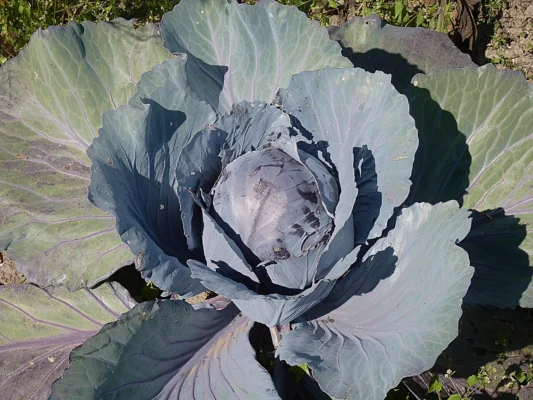
The aim is a compact transplant with healthy roots and several true leaves. Timing follows the variety, the light available and the condition of the bed, rather than the earliest date printed on a calendar.
1.
Read the packet for the expected harvest season and final spacing, especially with large storage varieties.
2.
Fill clean modules with seed compost, water it and let surplus moisture drain.
3.
Sow about 1cm deep, label the variety and date, and keep the surface evenly moist.
4.
Provide bright light as soon as seedlings emerge and thin crowded cells to one healthy plant.
5.
Alternatively sow a short outdoor nursery row once the soil is workable, then thin promptly.
6.
Harden protected plants gradually and water the rootballs before moving them to the bed.
7.
Set plants firmly at the recommended spacing, generally 45cm apart in rows 60cm apart, and water in.
8.
Cover with supported insect mesh, secure its edges and check beneath it regularly as the plants expand.

Watering
Check the root zone rather than watering only because the surface looks pale. Newly planted cabbage has a limited root system and needs particular attention during drying winds.
Once established, aim for steady moisture instead of alternating drought and soaking. Direct water to the soil. Near maturity, sudden abundant water can contribute to splitting, so pick ready heads promptly.

Feeding
Prepare the soil before planting and use any fertiliser according to its label and the fertility of the bed. The goal is sustained growth, not the darkest possible leaves.
If a plant stalls, first check moisture, root condition and pests. Avoid repeatedly adding fertiliser to an already rich bed when the problem has another cause.

Pruning
Leave sound outer leaves in place because they support development of the heart. Remove badly decaying leaves when necessary and keep the base clear enough to inspect.
Harvest by cutting the head from its stalk once it is firm and useful in size. Clear exhausted plants after the crop rather than leaving old brassica roots indefinitely in the bed.

Winter care
Spring starts normally finish their main growth before winter. Storage ability and frost tolerance vary, so use the variety instructions to decide whether to harvest, store or leave a short standing period.
Do not keep an ordinary red cabbage outdoors simply to create a spring crop. If you want fresh spring greens next year, plan a separate summer sowing of a suitable spring cabbage.
Red cabbage forms broad, often waxy purple leaves around a tightly packed centre. Colour alone does not identify a variety or tell you when it will be ready.
It is a heading cabbage, distinct from loose red kale and ornamental bedding brassicas. Early plants begin as open rosettes; the absence of a head at that stage is normal. Judge progress against the age and expected season of the crop.
Photo: Rick Heath, CC BY 2.0. Resized and optimised; cropped for display.
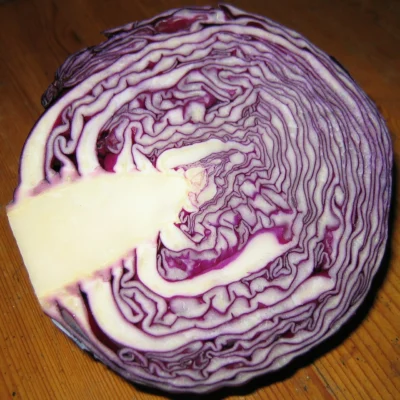
In a mild sheltered garden, protected March sowings may establish sooner than those in a cold northern plot. A later start in good light can be more manageable than weak seedlings kept too warm indoors.
Wet clay needs patience in spring. Use modules while waiting for workable ground, but pot plants on if their roots become congested. Avoid keeping them cramped merely to meet a planned planting date.
Keep a simple record of sowing, transplanting and the first firm head. After a season or two, those observations help you choose varieties and dates that fit your own growing conditions.
Photo: Red cabbage in a field by Evelyn Simak, CC BY-SA 2.0. Resized and optimised; cropped for display. Adapted image under the same licence.
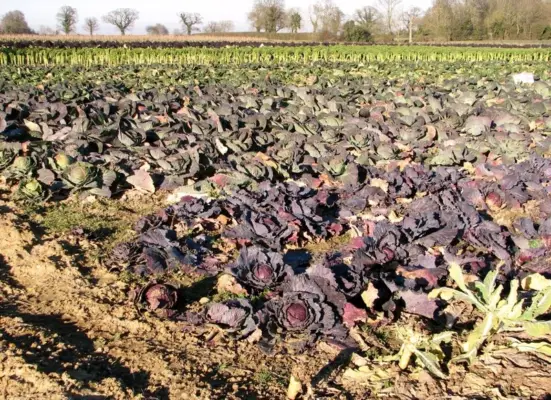
Insufficient light or overcrowding commonly produces weak growth. Increase light, give plants room and avoid a warm dim windowsill. Start again if plants are severely stretched.
Look for caterpillars and eggs on both leaf surfaces. Remove them and repair gaps in the cover. Keep mesh above the leaves so butterflies cannot lay through it.
Check the roots of a failing plant. Cabbage root fly larvae can damage them. Use clean ground and protective mesh or suitable collars for future plantings.
Club root can severely restrict growth. Avoid transferring affected soil on tools or boots, seek a confirmed diagnosis and review the planting site. Liming is not a cure.
An overmature head can split, particularly after a change in water supply. Harvest usable heads promptly and reduce the number planted at once next season.
Raise the crop from seed or buy clearly labelled young plants. Choose sturdy examples without discoloured roots or concealed pests.
Saving your own seed is a separate project because cabbages flower later in their life cycle and can cross with related cultivated brassicas. Purchased seed is the simpler way to retain a known variety, especially an F1 hybrid.
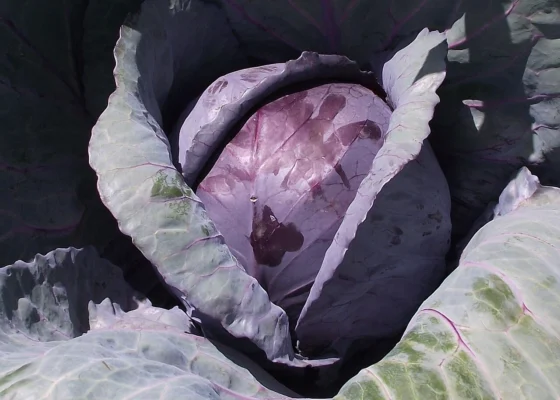
Roxy
A spring sown red cabbage with compact, slightly elongated heads and an autumn harvest in its breeder description. Choose it when the planned end point is a later crop, allowing a long period between sowing and harvest.
Illustrative red cabbage photograph. The pictured cultivar is not identified as Roxy.
Photo: Stickpen, Public domain. Resized and optimised; cropped for display.
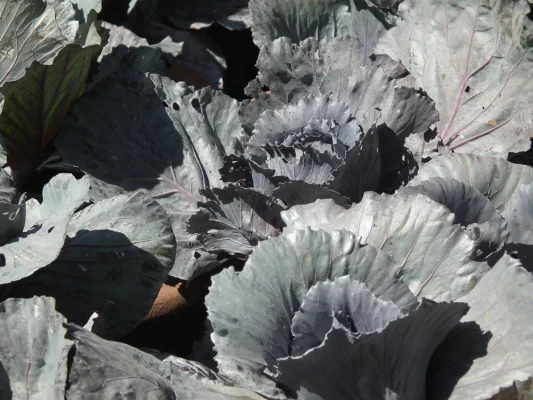
Roodkop
An earlier red cabbage offered for fresh use rather than prolonged storage. Supplier guidance supports spring sowing, but local conditions affect readiness.
Illustrative red cabbage plant. The pictured cultivar is not identified as Roodkop.
Photo: Rameshng, CC BY-SA 3.0. Resized and optimised; cropped for display. Adapted image under the same licence.
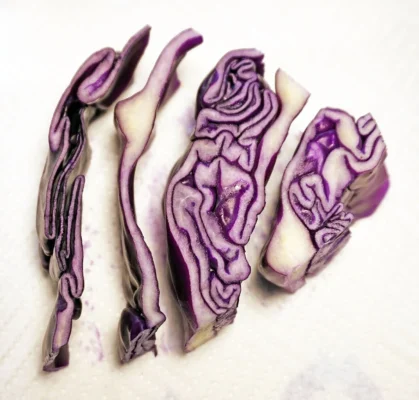
Marner Lagerrot
A traditional red cabbage sold for keeping and kitchen use. The seed supplier gives spring sowing options. Treat its continental timing as guidance and use the packet supplied for your growing region when planning harvest.
Illustrative red cabbage interior. The pictured cultivar is not identified as Marner Lagerrot.
Photo: Tiia Monto, CC BY-SA 4.0. Resized and optimised; cropped for display. Adapted image under the same licence.
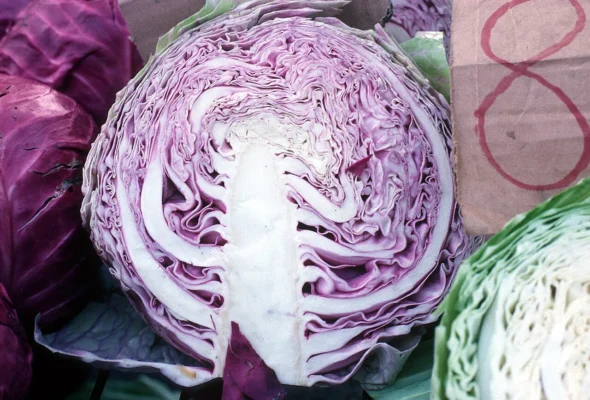
Red Drumhead
A familiar red cabbage with a later summer and autumn role. Kings Seeds describes cropping from August onwards.
Illustrative harvested red cabbages. The pictured cultivar is not identified as Red Drumhead.
Photo: Robert Kerton, CSIRO, CC BY 3.0. Resized and optimised; cropped for display.
Use the BFFD map and directory to find local growing suppliers. Ask about named varieties, their sowing windows and likely harvest dates, and check availability before travelling.
A cabbage crop can feed caterpillars as well as people. Protect the crop with a well fitted barrier and keep other parts of the garden welcoming to wildlife, rather than expecting decorative colour to deter insects.
Check supports and covers regularly so they stay taut and secure. Avoid routine spraying. A few holes in outer leaves do not automatically mean the crop is lost, especially while the centre remains healthy.
Published by Buy From Farmers Direct. Sources checked 4 October 2026. Growing references: RHS: How to grow cabbages; RHS: The cabbage revival; University of Minnesota Extension: Growing cabbage; RHS: Cabbage caterpillars; RHS: Cabbage root fly; RHS: Club root; Bayer Seminis: Roxy cabbage; The Farm Dream: Roodkop cabbage; Dürr Samen: Marner Lagerrot; Kings Seeds: Red Drumhead. The seasonal timeline uses the shared BFFD Growers Calendar record; adjust timings to your variety and local conditions.
Not as a general UK crop recommendation. Here the name means red cabbage started in spring for later harvest. Conventional spring cabbage is a different seasonal crop, usually sown the previous summer.
Usually from April to June, when seedlings are sturdy and the soil is workable. Check the seed packet and harden plants raised under protection before moving them outside.
Yes, suitable spring sowings can start in a nursery seedbed and be transplanted later. Modules make spacing and early pest inspection easier, particularly where outdoor seedlings disappear quickly.
Around 45cm between plants and 60cm between rows is a useful starting point. Follow wider recommendations for large varieties and leave enough access to tend the crop under its cover.
It may simply be immature. Check the variety and sowing date, then look for crowding, interrupted watering, poor growth or pest damage. Extra feeding alone does not guarantee a head.
Choose a compact variety and give each plant a large container with drainage. Monitor moisture and feed according to the growing medium. The outer leaves still need space and protection.
Use the BFFD growers calendar to plan the spring start and a realistic later harvest. Compare local suppliers through the directory, then record which variety and timing worked in your own plot.
Explore more growing guides: Cabbage (Spring), Cabbage (Autumn Red), Cabbage (Summer Red).
Want to get food independence, support your local grower, get better prices and shop more privately?
Local food isn’t just something you find. It’s something you protect. A free account helps keep local supply visible, supported, and resilient.

….it takes 30 seconds for food lovers and 5 minutes for suppliers
We built this for people who care where their food comes from. For people who want to remain food secure. For Farmers to get to the local people, who deserve a better income and to deliver a better price for you. For the environmentally conscious and the privacy-conscious. An account simply helps us make the map and supplier reach more useful to you, without changing how open it is. You’re always in control.


Find local food. Stay connected to it. Create a free account to support local producers and be part of a growing food network.


