A red cabbage picked in summer brings crisp leaves and colour to the kitchen without waiting for the main autumn crop. Success begins with a variety suited to earlier harvest, followed by bright seedling conditions, timely planting and consistent watering. This guide focuses on red heads for mid and late summer, with an autumn extension for suitable varieties. It does not describe red cabbage sown in summer for an immediate harvest.
Earlier red varieties
Summer heads
Full sun
Steady watering
Harvest when firm
| Botanical name | Brassica oleracea Capitata Group |
| Family | Brassicaceae |
| Crop type | Red heading cabbage |
| Life cycle | Biennial harvested as a vegetable |
| Main goal | Fresh summer heads |
| Sowing | February to April, variety dependent |
| Early sowing method | Under bright protection |
| Outdoor sowing | From suitable spring conditions |
| Planting out | Usually April and May |
| Main harvest | July to September |
| Later extension | October for suitable selections |
| Position | Sunny and accessible |
| Soil | Fertile, moisture retaining and drained |
| Typical plant gap | 45cm; follow variety |
| Typical row gap | 60cm |
| Water priority | Establishment and head development |
| Harvest indicator | Firm head of useful size |
| Usual leaf colour | Purple to reddish purple |
| Protection | Supported insect mesh |
| Storage ability | Varies with cultivar |
| Plant name | Crop type | Spacing |
Sow indoors
Plant outdoors
Harvest
Polytunnel | |||||||||||
|---|---|---|---|---|---|---|---|---|---|---|---|---|---|---|
| Jan | Feb | Mar | Apr | May | Jun | Jul | Aug | Sep | Oct | Nov | Dec | |||
| Cabbage (Summer Red) | Brassicas | Single 0.45m, In row 0.45m, Row gap 0.60m | No activity recorded | Sow indoors | Sow indoors | Sow indoors, Plant outdoors | Plant outdoors | No activity recorded | Harvest | Harvest | Harvest | Harvest | No activity recorded | No activity recorded |
Sow indoors: February, March, April. Plant outdoors: April, May. Harvest: July, August, September, October. Polytunnel: no months recorded.
The calendar shows February to April sowing for a summer harvest plan. February requires suitable protected conditions and a variety that allows it. Sow outdoors only when the soil is workable and the packet permits. April and May are typical transplanting months. July to October combines earlier summer varieties with later Red Jewel crops; it is not a promise that every cabbage crops for four months. Optional protected sowing does not mean a polytunnel is frost free.
Choose summer red cabbage if you enjoy using a fresh head at a time and can harvest promptly. Earlier varieties help avoid having every cabbage ready alongside the main autumn vegetables, but a small crop is easier to use than a long uniform row.
The key commitment is summer care. If watering will be difficult during holidays, arrange help or grow fewer plants.
Photo: Jamain, CC BY-SA 3.0. Resized and optimised; cropped for display. Adapted image under the same licence.
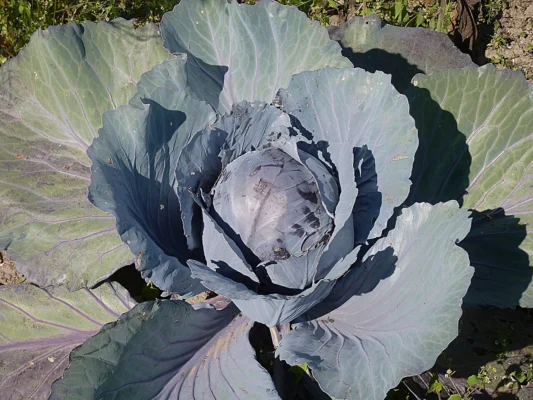
Choose a sunny, open bed with good access to water.
Prepare soil that drains after rain but retains useful moisture. Mature compost can improve the bed; a shallow dry patch beside a thirsty hedge is a poor choice for an uninterrupted summer crop.
Rotate away from recent brassica crops where possible. Keep records of cabbage, cauliflower, broccoli and kale together, because changing the vegetable name does not change their close relationship.
Compact varieties can be tried in large containers, one plant per pot. Use drainage holes and a suitable peat free medium.
Photo: Jamain, CC BY-SA 3.0. Resized and optimised; cropped for display. Adapted image under the same licence.
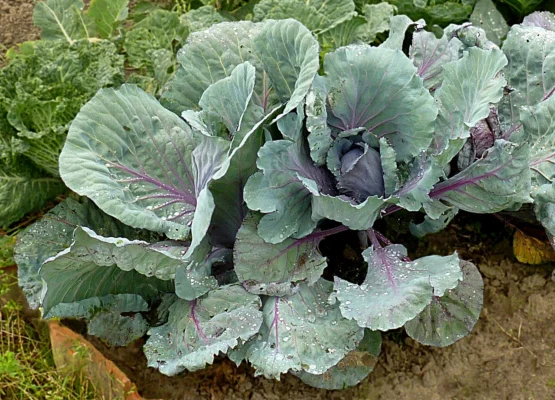
An early harvest is earned by choosing the right variety and maintaining growth. Starting seed extremely early in poor light may produce weaker plants rather than bring a useful head forward.
1.
Choose a variety with a stated summer harvest and check its sowing window before buying seed.
2.
For an allowed early sowing, prepare clean modules and moisten seed compost evenly.
3.
Sow about 1cm deep, label each batch and keep the compost moist without leaving it saturated.
4.
Move emerging seedlings into strong light and thin each cell to one healthy plant.
5.
Make a small later batch within the packet window if you want to spread the likely harvest.
6.
Harden protected seedlings gradually while preparing a firm, fertile and well drained bed.
7.
Transplant sturdy plants in suitable April or May conditions, usually 45cm apart with 60cm between rows.
8.
Water thoroughly, install supported insect mesh and inspect frequently through establishment.

Watering
Keep young plants supplied with water until their roots extend into the bed. Check below the surface during dry weather instead of assuming a brief shower has soaked the soil.
As heads develop, avoid long dry intervals followed by sudden heavy watering. Consistency supports growth and helps reduce splitting. A ready cabbage is usually better harvested than left through another wet spell.

Feeding
Prepare fertility before planting and follow a suitable fertiliser label if additional feeding is needed. Keep granules away from the stem and water them in where directed.
Do not chase rapid growth with repeated heavy feeds. If plants struggle, examine the soil moisture and roots before adding more.

Pruning
Keep healthy outer leaves because they help the plant build its head. Remove decaying material that interferes with inspection, but avoid tidying the crop by stripping useful foliage.
Begin checking firmness as the expected harvest approaches. Cut individual heads when ready, leaving others to develop.

Winter care
A summer harvest plan is normally completed before winter. Clear spent plants and record the finished bed in your rotation plan, rather than leaving old stumps where they will complicate the next planting.
If a variety also stores well, select sound mature heads and follow suitable storage guidance. Do not assume every early red cabbage is a winter keeper or that purple foliage indicates strong frost resistance.
Summer red cabbage has the same broad heading habit as other red cabbages. Its useful distinction lies in the named variety and cropping schedule, not a separate botanical species that can be recognised by colour.
Look for the centre tightening as the crop matures. Check with a gentle squeeze rather than pulling leaves apart. A loose plant may still need time, while a firm head can be ready even if it is smaller than the packet photograph.
Photo: Rick Heath, CC BY 2.0. Resized and optimised; cropped for display.
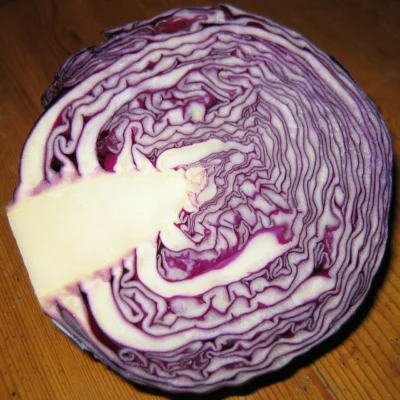
Early protected starts are most practical where there is good light and room to keep seedlings growing. In cooler areas, a later sowing can still supply a useful late summer crop without prolonged indoor management.
UK summers vary, so treat July as the beginning of a possible harvest window rather than a deadline. Record when your own crop becomes firm and compare results between varieties before changing the whole planting plan.
Later sowing may push harvest into autumn. If summer heads are the priority, favour an earlier selection and use healthy young plants rather than trying to force a late storage type into a shorter season.
Photo: Red cabbage in a field by Evelyn Simak, CC BY-SA 2.0. Resized and optimised; cropped for display. Adapted image under the same licence.
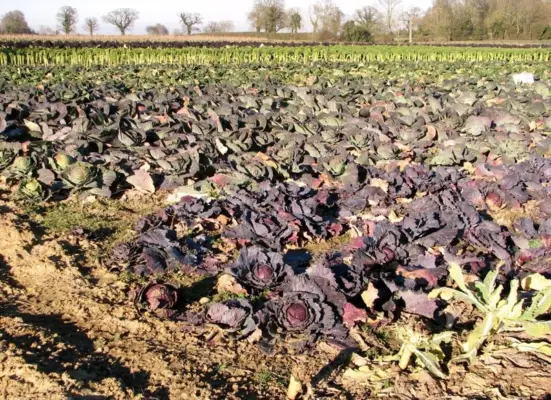
Cool conditions, delayed transplanting or interrupted growth can extend development. Check the variety and keep healthy plants growing. Do not judge maturity by the calendar alone.
Mature cabbage can split after uneven moisture or remaining too long in the bed. Harvest heads as they firm and plan smaller batches so fewer become overmature together.
Inspect both outer leaves and the centre before damage becomes extensive. Remove eggs and caterpillars, repair the cover and keep its surface clear of the foliage.
Root damage may be responsible. Check a failing plant for root fly larvae or swollen clubbed roots, then act on the cause rather than increasing water indiscriminately.
Mealy cabbage aphids can cluster in sheltered folds. Inspect regularly and remove small infestations where practical. Preserve useful predators nearby and avoid treating every visitor as a pest.
Sow fresh, labelled seed and keep the batch small enough to manage. If using bought plugs, check their variety and expected season. A plant sold simply as red cabbage may be unsuitable for an early harvest target.
F1 varieties are raised from commercially produced seed and saved seed will not reliably repeat them. Producing cabbage seed requires a longer growing cycle and isolation from compatible brassicas, so it is a separate project from growing this summer crop.
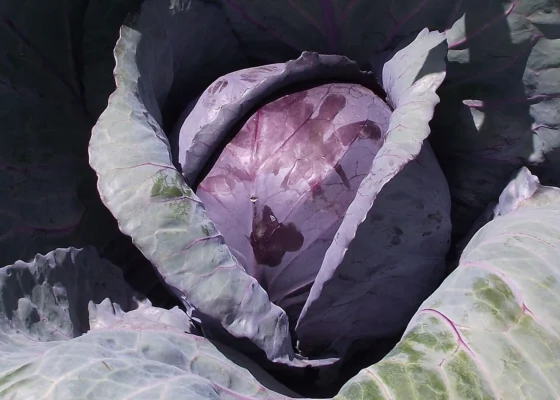
Rookie
The RHS describes Rookie as one of the earlier red cabbages, maturing in mid to late summer. It forms dense round heads with dark leaves.
Illustrative red cabbage plant. The pictured cultivar is not identified as Rookie.
Photo: Stickpen, Public domain. Resized and optimised; cropped for display.
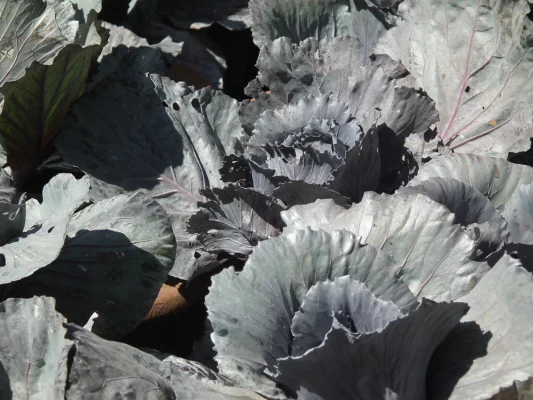
Red Jewel
A round red cabbage with tightly packed hearts. The RHS gives a July to October harvest window and protected sowing from February. It bridges summer and autumn, depending on when it is started and how the season develops.
Illustrative red cabbage plant. The pictured cultivar is not identified as Red Jewel.
Photo: Rameshng, CC BY-SA 3.0. Resized and optimised; cropped for display. Adapted image under the same licence.
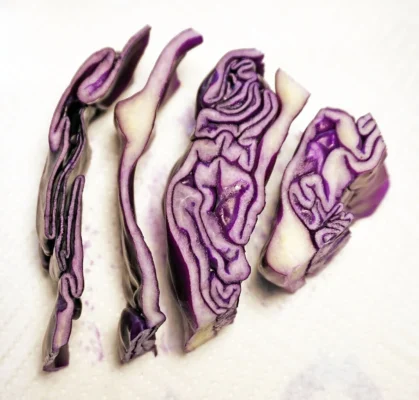
Roodkop
An earlier red cabbage offered for fresh use, with spring sowing and summer harvest guidance. Its supplier describes limited keeping ability, so plan to use mature heads rather than treating them as a long storage crop.
Illustrative red cabbage slices. The pictured cultivar is not identified as Roodkop.
Photo: Tiia Monto, CC BY-SA 4.0. Resized and optimised; cropped for display. Adapted image under the same licence.
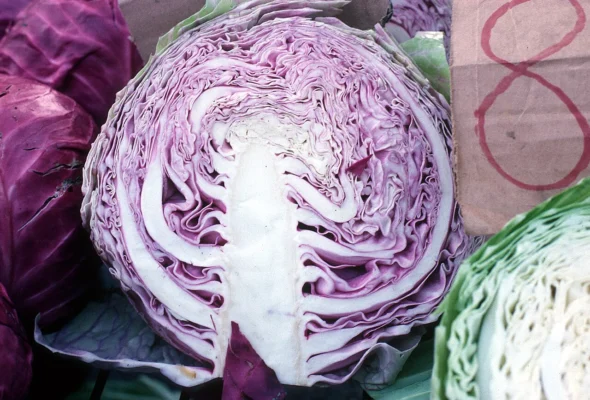
Rovite F1
A larger red cabbage offered by Kings Seeds Direct for mid to late August harvesting, with a later standing period.
Illustrative harvested red cabbages. The pictured cultivar is not identified as Rovite F1.
Photo: Robert Kerton, CSIRO, CC BY 3.0. Resized and optimised; cropped for display.
Search the BFFD map and directory for local seed and plant suppliers. Ask about a named earlier red variety, its likely harvest window and current stock before making a special trip.
The same leafy crop that supplies the kitchen can support caterpillars and other insects. Use a physical cover for the cabbages you need to harvest and keep flowering habitat available elsewhere in the garden.
Regular inspection is more useful than assuming red leaves repel pests. Where damage is minor, healthy outer foliage may still support a good crop. Maintain a secure cover and avoid unnecessary blanket spraying.
Published by Buy From Farmers Direct. Sources checked 4 October 2026. Growing references: RHS: How to grow cabbages; RHS: Rookie cabbage; RHS: Red Jewel cabbage; The Farm Dream: Roodkop cabbage; Kings Seeds Direct: Rovite F1; University of Minnesota Extension: Growing cabbage; RHS: Cabbage caterpillars; RHS: Cabbage root fly; RHS: Club root; RHS: Mealy cabbage aphid. The seasonal timeline uses the shared BFFD Growers Calendar record; adjust timings to your variety and local conditions.
Rookie is described by the RHS as an earlier red cabbage for mid to late summer. Red Jewel can begin in July, while Roodkop and Rovite provide other options. Check the supplier schedule and local conditions.
Usually in late winter or spring, using a variety suited to that schedule. February sowing needs appropriate protected conditions; March or April starts are often easier to manage with better natural light.
No. A headed cabbage needs time to establish and fill out. Summer in this guide refers to the intended harvest, while sowing takes place earlier.
The head should feel firm and be large enough for your needs. Check individual plants regularly as their expected season approaches. Do not wait for every head to reach the same size.
Splitting can follow uneven moisture, heavy rain near maturity or leaving a ready head too long. Maintain steady watering and harvest promptly. Smaller sowing batches help spread the work.
No. Keeping ability differs by variety, and earlier fresh use selections may store poorly. Choose and handle a named storage variety if keeping heads for winter is an important part of your plan.
Use the BFFD growers calendar to work backwards from the summer meals you want to supply. Compare suitable local seed and plant options in the directory, and keep your own harvest notes to refine next year’s timing.
Explore more growing guides: Cabbage (Autumn Red), Cabbage (Spring Red), Cabbage (Autumn).
Want to get food independence, support your local grower, get better prices and shop more privately?
Local food isn’t just something you find. It’s something you protect. A free account helps keep local supply visible, supported, and resilient.

….it takes 30 seconds for food lovers and 5 minutes for suppliers
We built this for people who care where their food comes from. For people who want to remain food secure. For Farmers to get to the local people, who deserve a better income and to deliver a better price for you. For the environmentally conscious and the privacy-conscious. An account simply helps us make the map and supplier reach more useful to you, without changing how open it is. You’re always in control.


Find local food. Stay connected to it. Create a free account to support local producers and be part of a growing food network.


