Summer purslane brings crisp, succulent leaves and a pleasantly sharp flavour to the salad bowl. Grow edible Portulaca oleracea from labelled culinary seed, give it warmth and sunshine, then take small repeat harvests. It is a summer annual, quite different from winter purslane.
Edible summer purslane
Warm season annual
Succulent salad leaves
Suitable for pots
Repeat shoot harvests
| Botanical name | Portulaca oleracea |
| Family | Portulacaceae |
| Plant type | Annual succulent leafy crop |
| Other name | Summer purslane |
| Edible crop | Leaves and tender young shoots |
| Flavour | Fresh, mildly sour and crisp |
| Position | Sunny and warm |
| Soil | Free draining and reasonably fertile |
| Typical cultivated height | About 15 to 25cm; habit varies |
| Spacing | Around 15cm each way, or follow the packet |
| Optional early start | March to May with warmth and good light |
| Outdoor sowing | May to July once warm; June is safer in cool areas |
| Seed depth | Surface to a very thin covering; follow the packet |
| Planting out | After frost, once conditions are warm |
| First cutting | Often about six to eight weeks from sowing |
| Harvest method | Cut leafy shoots, leaving growing points |
| Main outdoor harvest | June to September, depending on sowing |
| Flowers | Small and yellow |
| Winter survival | Killed by frost |
| Different crop | Winter purslane is Claytonia perfoliata |
| Plant name | Crop type | Spacing |
Sow indoors
Plant outdoors
Harvest
Polytunnel | |||||||||||
|---|---|---|---|---|---|---|---|---|---|---|---|---|---|---|
| Jan | Feb | Mar | Apr | May | Jun | Jul | Aug | Sep | Oct | Nov | Dec | |||
| Purslane | Salad & leaves | About 15cm each way; follow the culinary seed packet | No activity recorded | No activity recorded | Sow indoors, Polytunnel | Sow indoors, Polytunnel | Sow indoors, Plant outdoors, Polytunnel | Sow indoors, Plant outdoors, Harvest | Sow indoors, Plant outdoors, Harvest | Harvest | Harvest | No activity recorded | No activity recorded | No activity recorded |
Sow indoors: March, April, May, June, July. Plant outdoors: May, June, July. Harvest: June, July, August, September. Polytunnel: March, April, May.
The sowing band combines optional warm indoor starts in March to May with outdoor sowing once warm, through July. The tunnel band means optional protected starts, with extra warmth when needed. Plant out in May to July after frost; June to September is the main harvest window. Cold districts may start later.
Purslane suits a sunny vegetable bed or pots near the kitchen. Small sowings fit between other crops, adding a succulent texture alongside lettuce and summer herbs.
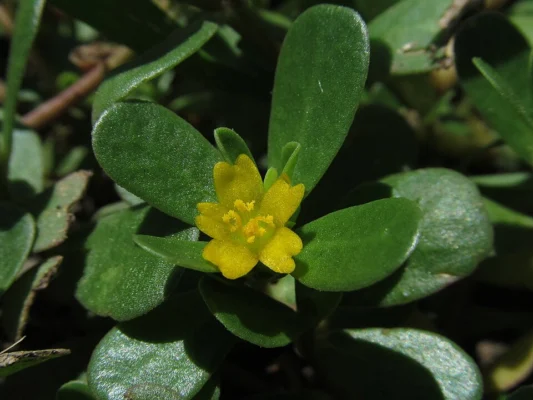
Choose a sunny warm position. Wait for soil to warm before direct sowing; exposed northern beds may be ready later.
Use a raised bed or drained container where soil stays wet. Prepare a fine surface so tiny seeds are not trapped under clods or a crust.
Use drained pots or window boxes with fresh peat free compost. Several containers allow the next sowing to grow while an older crop is still producing.
A greenhouse or tunnel can bring the season forward with sufficient warmth and light. Ventilate on sunny days and check compost moisture frequently.
Photo: MurielBendel, CC BY-SA 4.0. Resized and optimised; cropped for display. Adapted image under the same licence.
Buy seed sold for edible Portulaca oleracea. Keep the packet and label with the crop.
1.
Choose direct sowing for warm settled weather, or an optional protected start for an earlier crop. Early propagation around 20°C is useful; follow the seed supplier’s instructions.
2.
Prepare a fine, weed free surface outdoors, or clean modules of seed compost. Moisten before sowing.
3.
Sow thinly, following the packet’s depth. Instructions vary from surface sowing with a dusting of compost to roughly 3mm deep.
4.
Water with a gentle spray and keep the surface lightly moist during germination. Do not leave trays standing in water or let an emerging crop bake dry.
5.
Thin module seedlings to a strong plant per cell. Outdoors, allow about 10 to 15cm between plants; wider spacing makes individual shoots easier to pick.
6.
Gradually accustom indoor seedlings to outdoor conditions. Transplant with the root ball intact once roots hold the compost together and frost risk has passed.
7.
Set module plants about 15cm apart each way, unless the packet recommends otherwise. Water them in and keep the young crop free from competing weeds.
8.
Label the date and sow another small batch for a continuing supply of young leaves.

Watering
Established purslane tolerates dry spells, but regular moisture produces more tender, succulent leaves. Water the soil when it begins to dry rather than waiting for a pot to wilt badly.
Drainage matters as much as watering. If compost remains wet for days, improve the growing conditions instead of adding more water. Warmth and air around the plants help growth.

Feeding
A short crop in reasonably fertile soil usually needs little extra feeding. Watch growth before adding fertiliser.
For repeated container harvests, use a suitable edible crop feed as directed if growth weakens. Feeding will not solve cold or wet roots.

Pruning
Make the first cut when there is enough leafy growth, often six to eight weeks after sowing. On shoots around 15 to 20cm long, leave at least two pairs of leaves to support new branches.
Pick subsequent young shoots selectively, always leaving foliage and growing points. Several cuts may be possible in good conditions. Remove unwanted flowers and seed heads before seed scatters around the bed.

Winter care
Growth slows as temperatures fall, and frost finishes summer purslane. Make the final harvest before cold damages the leaves.
Clear spent plants and loose cut stems rather than leaving them on damp ground, where pieces may root. For winter leaves, plan a separate crop such as winter purslane with its own sowing schedule.
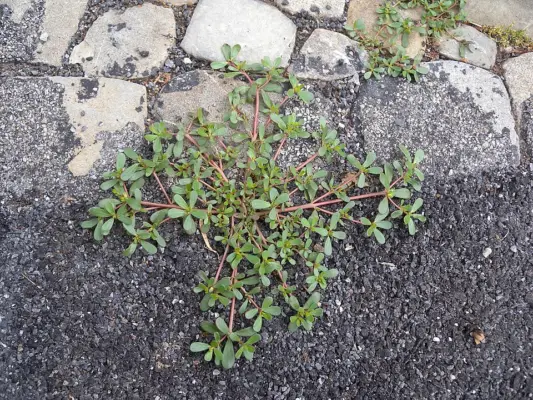
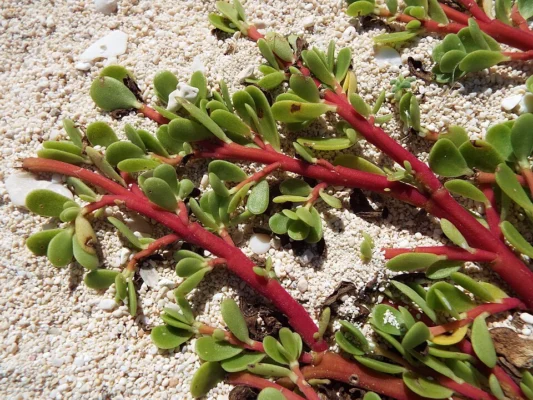
The cultivated plant has smooth fleshy leaves, often rounded or spoon shaped, on branching succulent stems that may turn red. Small yellow flowers appear in warm weather, followed by capsules containing tiny dark seeds.
These features are descriptive, not a foraging test. Unrelated spurges can form similar low mats and have irritating sap. Do not eat unidentified weeds, ornamental Portulaca or plants labelled only with an ambiguous common name.
Photo: Forest and Kim Starr, CC BY 3.0 us. Resized and optimised; cropped for display. Forest & Kim Starr
Later sowings can catch up with plants checked by a cold spring. June is a practical outdoor starting point; sheltered warm gardens may allow May sowing.
Take tender shoots for salads or light cooking, wash them well and use promptly. Older thick stems are less pleasant than fresh tips. Adjust the amount to the sharp flavour you enjoy.
Harvest depends on warmth, sowing date and cutting intensity. Mild sheltered gardens may crop beyond September, but this is not a dependable winter salad.
Photo: Bobjgalindo, CC BY 4.0. Resized and optimised; cropped for display.
Check seed freshness, warmth, moisture and sowing depth. Tiny seeds can struggle beneath a heavy covering or crust. Sow a small fresh batch using the packet method rather than repeatedly soaking the failed tray.
Cool soil and chilly nights can check this warmth loving crop. Give seedlings time in a bright protected place until outdoor conditions improve. Extra fertiliser will not replace warmth.
Persistently wet compost, crowding and poor airflow favour losses. Remove affected plants, check drainage and use clean trays and fresh compost for a replacement sowing. Avoid keeping the next batch saturated.
Check whether the roots are dry and whether you are harvesting old stems. Restore steady moisture and pick younger shoots. A fresh succession sowing is often more useful than nursing an exhausted plant indefinitely.
Purslane can seed freely, and fragments may also root in damp soil. Remove seed heads and collect cut stems promptly. Keep the crop labelled and deal with volunteers before they become another seed source.
Sow culinary seed little and often for a planned crop. Unlabelled garden seed should not be assumed to match a named selection.
For seed saving from your known crop, allow selected plants to flower and form mature capsules. Catch the tiny seeds before they scatter, dry thoroughly and store labelled in cool dry conditions.
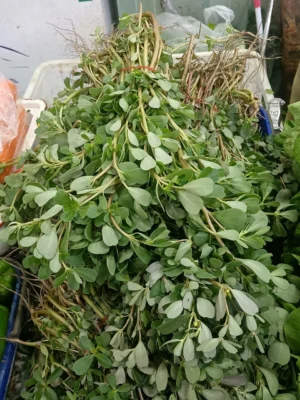
Green summer purslane
The usual green culinary type, often sold without a cultivar name. Compare the packet’s growth habit and harvest advice.
Harvested green purslane; no named cultivar is claimed.
Photo: Fumikas Sagisavas, CC0. Resized and optimised; cropped for display.
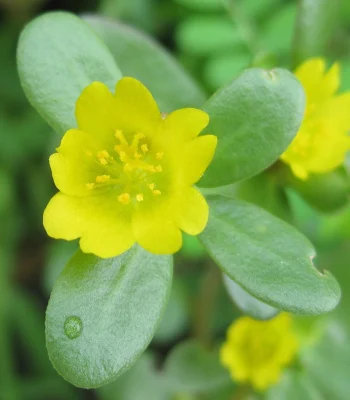
Golden
A culinary selection grown for lighter, yellow green foliage and contrasting reddish stems. The leaves and young stems can be used fresh or cooked. Colour varies with growing conditions.
Illustrative summer purslane flower, not a verified Golden plant.
Photo: Ton Rulkens, CC BY-SA 2.0. Resized and optimised; cropped for display. Adapted image under the same licence.
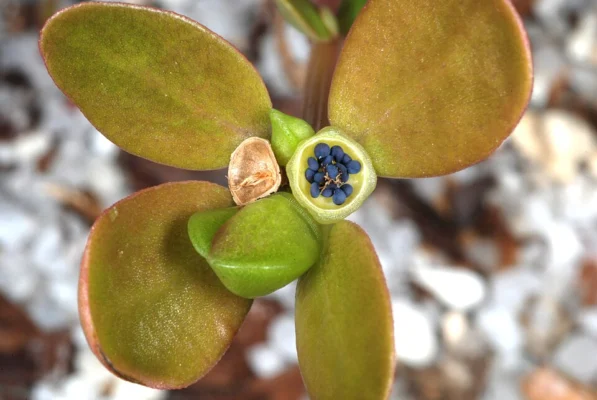
French Green Leaf
Described as a larger leaved, relatively upright selection with a mild flavour. It is worth comparing with ordinary green seed where available; naming and supply vary between sellers.
Illustrative purslane seed capsule; French Green Leaf is not verified.
Photo: Douglas Goldman, CC BY-SA 4.0. Resized and optimised; cropped for display. Adapted image under the same licence.
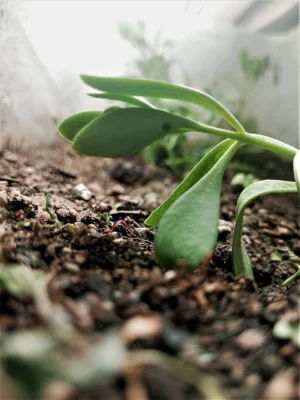
Red Gruner
An upright culinary selection with large leaves and red tinged stems. Red stems alone do not identify this cultivar.
Illustrative young purslane growth, not verified Red Gruner.
Photo: Abbie David, CC BY-SA 4.0. Resized and optimised; cropped for display. Adapted image under the same licence.
Choose edible Portulaca oleracea and compare sowing instructions. A small packet and a sunny growing space are enough for a useful trial crop.
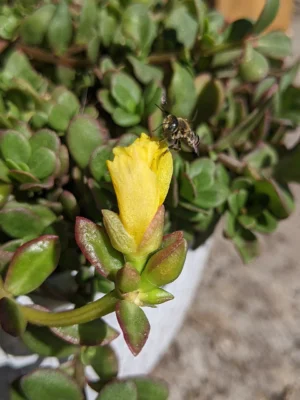
Small summer flowers may receive visits from insects, including bees. Leave a few on a known crop if you wish, while controlling unwanted seed production.
Include other flowering plants nearby for a longer season of insect food. Avoid unnecessary spraying on a leafy crop and inspect any damaged plants before deciding on action.
Published by Buy From Farmers Direct. Growing guidance reviewed 6 October 2026. The seasonal timeline uses the shared BFFD Growers Calendar record; adjust timings to your variety and local conditions.
No. Summer purslane is Portulaca oleracea and needs warmth. Winter purslane is Claytonia perfoliata, a separate salad crop with different seasonal requirements.
Yes, in a warm sunny spot during summer. Wait until frost risk has passed and conditions are warm, commonly May or June depending on the garden.
No. Direct sowing in warm weather works well. Protected propagation is an optional way to begin earlier, provided there is enough warmth and light.
Cut tender shoots while leaving leaf pairs and growing points. Allow new branches to grow before cutting again, and keep plants evenly watered.
This guide covers a labelled cultivated food crop. Do not use its photographs or a common name to approve an unidentified plant for eating.
Summer purslane is killed by frost. Save or buy seed for a new crop, and choose a separate hardy salad for winter harvesting.
Start with the right seed, wait for warmth and keep cutting young shoots. Small successive sowings give the most manageable supply of fresh summer purslane.
Want to get food independence, support your local grower, get better prices and shop more privately?
Local food isn’t just something you find. It’s something you protect. A free account helps keep local supply visible, supported, and resilient.

….it takes 30 seconds for food lovers and 5 minutes for suppliers
We built this for people who care where their food comes from. For people who want to remain food secure. For Farmers to get to the local people, who deserve a better income and to deliver a better price for you. For the environmentally conscious and the privacy-conscious. An account simply helps us make the map and supplier reach more useful to you, without changing how open it is. You’re always in control.


Find local food. Stay connected to it. Create a free account to support local producers and be part of a growing food network.


