Sweet potatoes bring a warm-climate crop into the kitchen garden, with trailing foliage above ground and edible storage roots beneath it. A sunny greenhouse or polytunnel gives the best chance of a worthwhile UK harvest; an outdoor crop is more dependent on a warm sheltered site and a generous summer. Start with healthy rooted slips or young plants, keep them growing steadily and lift before frost. Treat the first season as a small trial rather than promising yourself a sackful of roots.
Warm protected crop
Plant rooted slips
Large containers suit small trials
Lift before frost
Keep harvested roots out of the fridge
| Botanical name | Ipomoea batatas |
| Family | Convolvulaceae |
| Crop type | Tender perennial usually grown as an annual |
| Edible underground part | Swollen storage root, not a potato stem tuber |
| Starting material | Rooted slips or young plants of an edible variety |
| Ordinary seed sowing | Not the usual garden method |
| Spring preparation | Pot up bought slips under warm cover |
| Main planting window | Late May or June after frost, once conditions are warm |
| Position | Full sun and shelter |
| Best UK setting | Warm greenhouse or polytunnel |
| Useful growing temperature | Around 21 to 26°C |
| Soil | Fertile, moisture retentive and freely drained |
| Spacing guide | Around 30 to 45cm between plants |
| Container approach | One plant in a large drained pot |
| Stem habit | Trailing; can be tied to supports |
| Watering | Steady moisture during active growth |
| Container feeding | High-potassium feed while growing strongly |
| Growing period | Allow roughly four to five warm months |
| Main harvest window | September or October, before frost |
| Home storage | Handle gently; warm dry skins, then use promptly |
| Plant name | Crop type | Spacing |
Sow indoors
Plant outdoors
Harvest
Polytunnel | |||||||||||
|---|---|---|---|---|---|---|---|---|---|---|---|---|---|---|
| Jan | Feb | Mar | Apr | May | Jun | Jul | Aug | Sep | Oct | Nov | Dec | |||
| Sweet Potato | Root vegetables | Single 45cm, In row 45cm, Row gap 90cm where stems trail; allow access and support space | No activity recorded | No activity recorded | No activity recorded | No activity recorded | Plant outdoors, Polytunnel | Plant outdoors, Polytunnel | Polytunnel | Polytunnel | Harvest, Polytunnel | Harvest, Polytunnel | No activity recorded | No activity recorded |
Sow indoors: no months recorded. Plant outdoors: May, June. Harvest: September, October. Polytunnel: May, June, July, August, September, October.
Sweet potatoes are normally started from slips or young plants, so the seed-sowing band is empty. Pot up bought slips under warm cover in spring, then make the final planting in late May or June when frost has passed and growing conditions are warm. The May-October polytunnel band describes protected cropping, with extra warmth or an earlier finish where nights become cold. September-October harvest is indicative: allow roughly four to five warm months and lift before frost rather than waiting for a fixed date. Outdoor success and yield vary greatly with site and summer weather.
This crop suits a gardener with a warm greenhouse, polytunnel or exceptionally sheltered sunny space who enjoys trying something less routine. It needs a longer warm season than many familiar vegetables, so a late start in a cold bed can produce attractive leaves but disappointing roots.
A large pot makes a manageable first experiment and lets you keep the plant near shelter. Choose a variety sold for edible roots rather than an ornamental foliage display. Start with one or two plants so their water, space and temperature needs remain easy to manage.
Image from the BFFD media library.
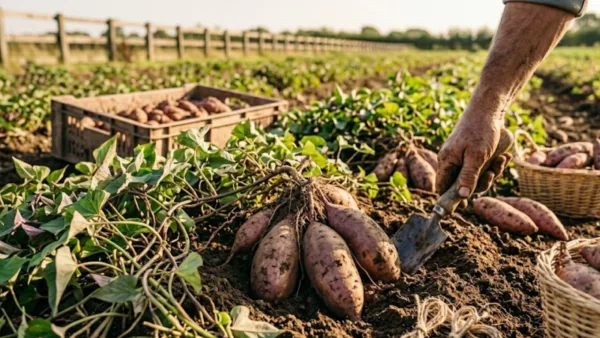
Give sweet potatoes the brightest warm position available. Under cover, avoid crowding them beneath taller crops that intercept the light; vigorous leafy growth is not proof that roots are swelling well.
Use fertile ground with good drainage, improved with well-rotted compost. A raised bed or large container can be more practical than heavy soil that stays cold and wet. Moisture should reach the root zone without leaving it saturated.
Allow about 30 to 45cm between plants, with sufficient room around the bed to reach and arrange the trailing stems. Their spread changes with the variety and how you manage the foliage; planting closely does not remove the need for light and access.
For a trial, choose one plant in a drained pot around 40cm across or larger. Use peat free compost suitable for long-term container cropping. A smaller pot dries quickly and restricts the space available for the storage roots.
Photo: Beeyah15, CC BY-SA 4.0. Resized and optimised; cropped for display. Adapted image under the same licence.
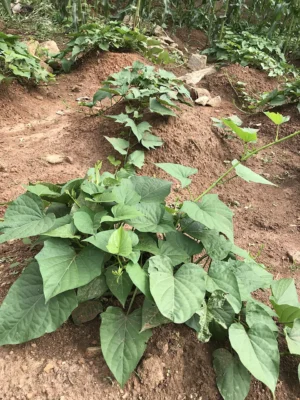
Slips are shoots used to start new sweet potato plants. Bought rooted slips or plugs are the simplest route because they save the time and uncertainty involved in sprouting a shop-bought root. Keep them warm from the moment they arrive.
1.
Order healthy slips or young plants of a culinary variety suited to UK growing. Check when they will arrive and prepare a warm, bright place for them before delivery.
2.
Pot small rooted plants into suitable compost if they are not ready for their final position. Water them in and keep the compost lightly moist, never standing in a saucer of water.
3.
Grow plants on in good light under cover. Avoid cold windowsills and unheated spaces during a chilly spring; a plant that survives may still lose valuable growing time.
4.
Prepare a sunny growing bed or substantial pot with good drainage. Install any support before planting so later work does not disturb developing roots.
5.
For outdoor planting, harden plants off gradually and wait until late May or June, after local frost risk and once soil and nights are warm. Keep them protected for longer if conditions remain cold.
6.
Plant a rooted plug at the depth it was growing in its pot, firm gently and water thoroughly. Space plants generously and label varieties if you are comparing their performance.
7.
Guide trailing stems away from paths or tie them loosely to supports. Check water regularly and keep the crop growing through summer, with appropriate feed for container plants.
8.
Lift the crop in autumn before frost. Start digging well outside the main plant and ease the roots free carefully; for a pot, gently empty the compost rather than pulling the stems.

Watering
Keep the root area evenly moist while plants are making growth and swelling their storage roots. Check containers frequently in hot weather, watering enough to wet the compost throughout rather than giving repeated tiny splashes.
If the plant wilts, check the compost before adding water. Both a dry pot and damaged roots in saturated compost can cause drooping leaves. Improve drainage where necessary instead of treating every wilt as a request for more water.

Feeding
Prepare the bed with well-rotted organic matter and avoid excessive nitrogen feeding. A mass of lush stems is not the same as a good underground crop, particularly where light or warmth is limited.
For container crops, use a high-potassium liquid feed such as tomato feed about every fortnight during strong growth, following the label. Reduce feeding as growth slows and harvest approaches; do not try to compensate for cold conditions with extra fertiliser.

Pruning
Sweet potato stems trail naturally and may root where they touch moist soil. Arrange them as needed for access, or tie them to a support; do not expect them to climb a cane without help.
Keep most healthy foliage to support the roots. Young leaves of correctly identified edible sweet potato plants can be cooked, but heavy leaf picking reduces the root crop. Ordinary potato foliage is a different plant and must not be treated as an edible substitute.

Winter care
Lift before damaging cold, handling the thin skins gently and avoiding cuts from the fork. Brush off loose dry soil without scrubbing the surface. Use damaged but otherwise sound roots first and discard roots that are mouldy or rotting.
Let sound roots dry in a warm, airy place for several days so the skins begin to firm. Home conditions do not necessarily provide commercial curing, so plan to use the crop within a few weeks. Keep it out of the fridge and away from cold, damp storage; inspect regularly.
Sweet potato plants carry long flexible stems and green leaves that may be heart-shaped or lobed, depending on the variety. Their edible crop develops below ground as swollen roots, often with tapered ends and varied skin colours.
They belong to the morning-glory family and are unrelated to ordinary potatoes. The flesh can be orange, cream, white or purple; skin colour alone does not tell you the interior colour or confirm a named variety. Buy labelled culinary stock.
Image from the BFFD media library.

Warmth is the main limitation in Britain. Plants grow best in conditions around 21 to 26°C, which are easier to provide under cover than in an open bed. Ventilate on hot days while avoiding a long period of chilly nights.
An outdoor crop is most realistic in a warm district, on a sheltered sunny site with soil that warms readily. Treat a cool northern or exposed site as a more uncertain trial, even when a variety is advertised for British gardens.
Watch the autumn forecast rather than leaving roots in the ground for a larger yield at any cost. Earlier planting is only useful if warmth accompanies it. Record planting and harvest dates so your first crop informs the following season.
Image from the BFFD media library.

A short cool season, late planting, shade or too much nitrogen can favour foliage over storage roots. Start healthy plants earlier under warmth, improve the sunny position and keep feeding balanced. No variety removes the crop’s need for heat.
Check moisture deeper in the pot. Roots may be dry beneath a damp surface, or suffering in waterlogged compost. Water thoroughly when needed, let excess drain away and avoid keeping a pot permanently saturated.
Glasshouse red spider mite favours hot dry conditions. Check the undersides of leaves early and avoid severe drought stress. Suitable biological controls can help under cover; follow the supplier’s temperature and use instructions.
Glasshouse whitefly can gather beneath leaves and leave sticky honeydew. Inspect incoming plants, check undersides regularly and consider appropriate biological control before numbers build. Avoid indiscriminate spraying around beneficial insects.
Damaged skins, damp conditions and chilling can shorten storage life. Lift gently, allow the surface to dry and keep roots away from refrigeration. Remove any that develop decay rather than leaving them against sound roots.
For a first crop, buy rooted slips or small plants. Starting your own shoots from a healthy sweet potato requires sustained warmth and enough lead time; an unidentified supermarket root offers no assurance of variety, growing suitability or clean planting stock.
Use only healthy material and keep young plants warm while they establish roots. Do not follow ordinary seed-potato instructions about chitting and planting whole tubers. Saving a sweet potato plant through winter also needs warm bright protection, so buying fresh stock is often simpler.

Beauregard
A familiar orange-fleshed sweet potato with vigorous growth. It is a useful starting point when supplied as healthy plants for UK gardeners, but it still needs a long warm season. Protected growing offers a better prospect than assuming its name guarantees outdoor success.
Illustrative orange-fleshed sweet potato; not verified as Beauregard.
Photo: Advent Favour, CC BY-SA 4.0. Resized and optimised; cropped for display. Adapted image under the same licence.
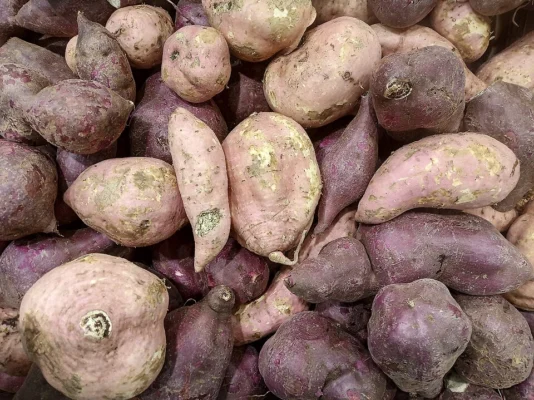
Bonita
A pale-fleshed selection with light tan skins and a comparatively dry eating texture. Its flesh is white to cream with a yellowish cast, rather than the orange of Beauregard. Choose labelled stock if colour and texture are important to your kitchen plans.
Illustrative sweet potato roots; not verified as Bonita or its flesh colour.
Photo: Filo gèn', CC BY-SA 4.0. Resized and optimised; cropped for display. Adapted image under the same licence.
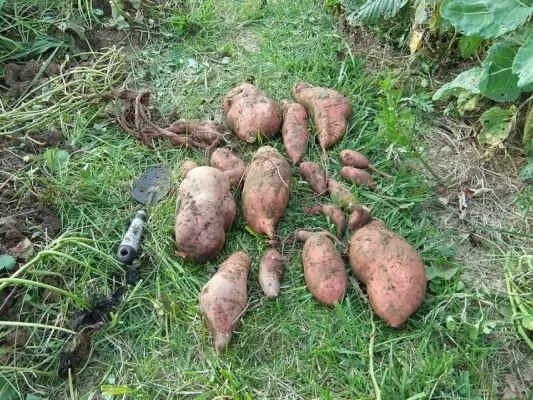
Evangeline
An orange-fleshed type known for sweet flavour. Give it the same careful warm start and long growing period as other sweet potatoes. A greenhouse or polytunnel is a sensible setting for comparing it with another variety in a small trial.
Illustrative sweet potato harvest; not verified as Evangeline.
Photo: Vmenkov, CC BY-SA 3.0. Resized and optimised; cropped for display. Adapted image under the same licence.
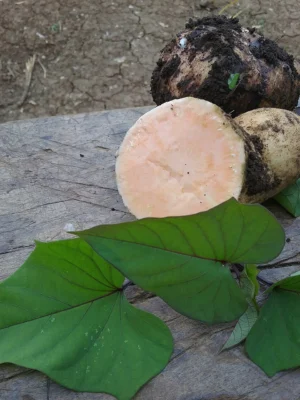
Tahiti
Part of the Treasure Island series, sold under the selection name La17-120, with purple skin and pale flesh. Its trailing edible foliage can also make an attractive container plant, but frequent leaf harvest competes with the underground crop.
Illustrative sweet potato root; not verified as Tahiti.
Photo: LeahLhey, CC BY-SA 4.0. Resized and optimised; cropped for display. Adapted image under the same licence.
Look for a clearly named edible variety, healthy rooted growth and a delivery date that suits your warm growing space. A few well-managed plants are a better first trial than a large order waiting in cold conditions. Allow for a substantial pot or sunny protected bed.
The spreading foliage offers shelter for small garden creatures, so check before moving stems or clearing the crop. Slugs may use that shelter too; inspect young plants and vulnerable roots without treating every visitor as a pest.
Under cover, beneficial predators can help with whitefly and mites when introduced under suitable conditions. Keep their needs in mind before using sprays, and maintain sensible ventilation without leaving tender plants exposed to cold winds.
Published by Buy From Farmers Direct. Growing guidance reviewed 6 October 2026. The seasonal timeline uses the shared BFFD Growers Calendar record; adjust timings to your variety and local conditions.
They can crop in a warm sheltered site, but outdoor results depend strongly on the summer. A greenhouse or polytunnel is usually more reliable. Start with a small trial and keep expectations modest in cool districts.
No. The usual starting material is a slip, a shoot that is rooted to make a new plant. Bought rooted slips or young plants are the simplest option. Ordinary potato chitting and whole-tuber planting instructions do not apply.
Yes. Give one plant a large drained pot with plenty of compost, sunshine and warmth. A pot around 40cm across or larger is a practical trial size; check water frequently and feed during active growth.
Usually in September or October after several warm growing months, but always before frost. Lift carefully because roots can extend away from the stem and their skins are easily damaged. A fixed calendar date cannot guarantee maturity.
Young leaves from a correctly identified culinary Ipomoea batatas can be cooked. Keep picking light if roots are the main crop. Do not confuse them with ordinary potato leaves, which are not edible.
No. Sweet potatoes are sensitive to chilling. Dry sound roots in a warm airy place, then keep them in suitable room conditions and use the home crop promptly. Check for damage or decay rather than expecting long commercial storage.
A warm start, steady summer growth and a careful lift before frost give sweet potatoes their best chance in a UK garden. Begin with a small protected crop, record how it performs and use the result to choose next year’s space and variety.
Explore more growing guides: Courgette, Cucumber, Beans (French).
Want to get food independence, support your local grower, get better prices and shop more privately?
Local food isn’t just something you find. It’s something you protect. A free account helps keep local supply visible, supported, and resilient.

….it takes 30 seconds for food lovers and 5 minutes for suppliers
We built this for people who care where their food comes from. For people who want to remain food secure. For Farmers to get to the local people, who deserve a better income and to deliver a better price for you. For the environmentally conscious and the privacy-conscious. An account simply helps us make the map and supplier reach more useful to you, without changing how open it is. You’re always in control.


Find local food. Stay connected to it. Create a free account to support local producers and be part of a growing food network.


