A walnut is a long-term tree for a garden with room to spare, offering a broad canopy and the possibility of home-grown nuts in autumn. Success starts with choosing a named grafted variety and a sheltered sunny position, then helping the young tree establish. Mature trees need relatively little routine attention, but nut crops depend on pollination, spring weather and enough summer warmth. Plan for the tree’s eventual size before imagining the first basket of walnuts.
Tree for a generous space
Choose a grafted variety
Shelter from spring frost
Autumn nut harvest
Prune lightly in summer
| Botanical name | Juglans regia |
| Family | Juglandaceae |
| Common names | Common walnut, English walnut, Persian walnut |
| Plant type | Long-lived deciduous nut tree |
| Different species | Black walnut is Juglans nigra |
| Position | Full sun with shelter |
| Soil | Deep, fertile, moisture retentive and well drained |
| Main planting season | Late autumn to early spring while dormant |
| Ordinary tree spacing | About 12 to 18m; adjust to the selected cultivar |
| Eventual size | Large; named varieties differ considerably |
| Recommended starting material | Young healthy grafted tree |
| First crop expectation | Often several years; no fixed guarantee |
| Flowers | Separate male catkins and small female flowers |
| Pollination | Wind carries pollen between flowers |
| Self-fertility | Variety dependent; a suitable partner can improve crops |
| Spring vulnerability | Frost can damage leaves, flowers and fruit set |
| Main mature-nut harvest | September and October, depending on season |
| Ripeness clue | Outer husks split and nuts begin to fall |
| Pruning window | Mid-summer to early autumn if required |
| Storage preparation | Remove husks and dry sound nuts thoroughly |
| Plant name | Crop type | Spacing |
Sow indoors
Plant outdoors
Harvest
Polytunnel | |||||||||||
|---|---|---|---|---|---|---|---|---|---|---|---|---|---|---|
| Jan | Feb | Mar | Apr | May | Jun | Jul | Aug | Sep | Oct | Nov | Dec | |||
| Walnut | Orchard fruit | Single 1500cm, In row 1500cm, Row gap 1500cm; typical trees need 12–18m, adjust to cultivar | Plant outdoors | Plant outdoors | Plant outdoors | No activity recorded | No activity recorded | No activity recorded | No activity recorded | No activity recorded | Harvest | Sow indoors, Harvest | Sow indoors, Plant outdoors | Plant outdoors |
Sow indoors: October, November. Plant outdoors: January, February, March, November, December. Harvest: September, October. Polytunnel: no months recorded.
November-March marks a practical dormant planting window, avoiding frozen or waterlogged soil. Container-grown trees can be planted at other suitable times with careful aftercare. October-November sowing is an optional fresh-seed experiment, not the recommended route to a predictable named nut crop. September-October is the main ripe-nut harvest band; maturity depends on variety and weather. Green nuts for pickling are a separate early-summer harvest before the shell hardens, not an extension of the ripe-nut season. There is no polytunnel crop band for this outdoor tree.
Walnuts suit larger gardens, orchards and open spaces where the eventual crown can spread without constant cutting back. They are not a routine patio-pot crop, and even a variety described as compact can become a substantial tree.
Choose a grafted named variety if nuts are the priority. A seedling is an interesting tree-growing project, but its cropping age, size and nut quality are unpredictable. In colder northern districts, treat a good crop as less certain than successful tree growth.
Photo: Globetrotter19, CC BY-SA 3.0. Resized and optimised; cropped for display. Adapted image under the same licence.
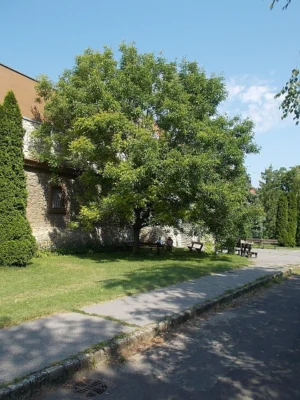
Find a sunny position away from a frost pocket or a very exposed windy edge. A sheltered site helps protect young foliage and flowers, although no position can prevent every spring frost from affecting a crop.
The roots need depth, air and useful moisture. Fertile loam is favourable, but drainage and soil depth matter more than insisting on one exact soil texture. Avoid a planting position that remains saturated through winter.
Allow for the selected tree’s mature crown, roots and access around it. General walnut spacing is around 12 to 18m; a specialist can advise on a smaller named variety and the intended setting. Do not use severe annual pruning as the main way to fit a walnut into too little room.
Think about shade as the tree matures. A vegetable patch that is sunny beside a young walnut may become difficult to crop later. Keep the young tree’s immediate root area free of competing grass and perennial weeds while it establishes.
Photo: Joy Fostick, CC BY-SA 4.0. Resized and optimised; cropped for display. Adapted image under the same licence.
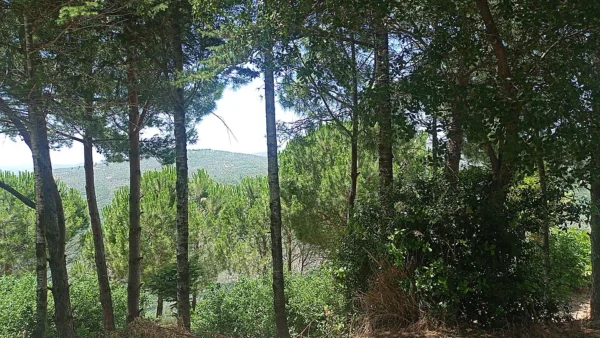
Buy a healthy young grafted tree with a sound root system, avoiding badly pot-bound stock. A smaller tree is usually easier to establish than an oversized specimen. Prepare the position and organise support before planting day.
1.
Confirm the cultivar, likely mature size and pollination requirements with the nursery. Where a second variety is recommended, check compatible flowering rather than simply buying any second walnut.
2.
Plant while the tree is dormant, usually between November and March. Postpone the work if the ground is frozen, saturated or too sticky to prepare without compaction.
3.
Clear a generous area of grass and weeds. Dig a broad hole that accommodates the roots without bending or breaking the main root, keeping the bottom firm rather than unnecessarily deep.
4.
Keep bare roots protected from drying winds while you work. Water a dry container rootball beforehand and handle the roots carefully when removing the pot.
5.
Set the tree with its root flare at the finished soil surface, retaining the nursery planting depth and keeping the graft union above ground. Deep burial does not improve stability.
6.
Backfill with the excavated soil and firm gently around the roots. Avoid creating a pocket of rich compost beneath the tree; a surface mulch is more useful once planting is complete.
7.
Water well and use a suitable stake and flexible tie where support is needed. Add a guard if rabbits or other browsing animals are likely to damage the young trunk.
8.
Mulch the cleared surface, leaving space around the trunk. Check water through the first growing seasons and inspect ties and guards regularly as the stem thickens.

Watering
Water a newly planted tree during dry spells through spring and summer, checking moisture below the surface. Rainfall that wets the topsoil may not reach a recently planted rootball, especially where grass intercepts the water.
Once well established, a walnut usually needs much less routine watering. Prolonged dryness can still stress a young tree or affect developing nuts. Avoid waterlogging and investigate drainage if the ground stays wet rather than adding water on a fixed schedule.

Feeding
Use an annual surface mulch of well-rotted organic matter to help conserve moisture and support the soil. Keep it away from direct contact with the trunk, and maintain a clear area while the tree is young.
If growth is weak on poor soil, a suitable balanced feed in spring may help; follow the label and consider the tree’s condition. Extra fertiliser will not correct deep planting, damaged roots, poor drainage or lack of pollination.

Pruning
Walnuts need little regular pruning. Deal with an unsuitable branch structure while the tree is young, removing only what is necessary. Plan routine corrective cuts from mid-summer to early autumn, when excessive sap bleeding is less likely.
Avoid the usual winter fruit-tree pruning routine and do not hard-prune a mature walnut to force it into a small space. Use a qualified tree professional for large or awkward branches, and seek advice if the tree develops a structural problem.

Winter care
The dormant tree is hardy, but check that young roots remain secure and that stakes, ties and guards are not rubbing or constricting the trunk. Keep drainage working and replace displaced mulch without piling it against the bark.
For the harvested crop, remove the outer husks promptly while wearing gloves because they stain skin. Check a few kernels are filled and sound, then dry nuts thoroughly before cool dry storage. If using an oven for drying, keep it at no more than 40°C; do not pack away damp nuts.
Common walnut has compound leaves divided into several broad leaflets, with a substantial end leaflet. Male flowers hang in catkins, while the smaller female flowers occur separately on the same tree.
Developing nuts are enclosed in green outer husks. The familiar ridged brown shell lies inside that casing, with the edible kernel inside the shell. This guide covers Juglans regia, not the darker, much harder-shelled black walnut, Juglans nigra.
Photo: Pancrat, CC BY-SA 4.0. Resized and optimised; cropped for display. Adapted image under the same licence.
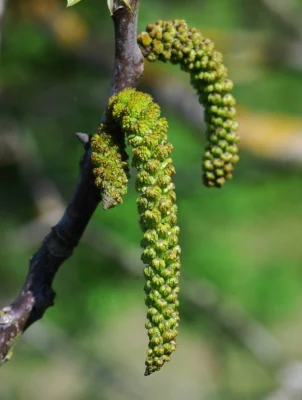
Tree hardiness and dependable nut production are different things. Spring frost can damage flowers even on a well-established hardy walnut, and cool summers may leave kernels poorly developed. Cropping becomes less reliable in many districts north of the Midlands.
Some grafted trees begin bearing after around three or four years, while others take longer. Early cropping is not a promise of a large annual harvest. A healthy tree, suitable pollination and favourable weather all contribute.
Gather ripe fallen nuts frequently in autumn, before wildlife removes them or the outer husks deteriorate. Discard damaged, mouldy or badly shrivelled kernels. Green walnuts for pickling must be collected before shell hardening and prepared using an appropriate preserving recipe; they are not stored like dry ripe nuts.
Photo: Whoisjohngalt, CC BY-SA 4.0. Resized and optimised; cropped for display. Adapted image under the same licence.
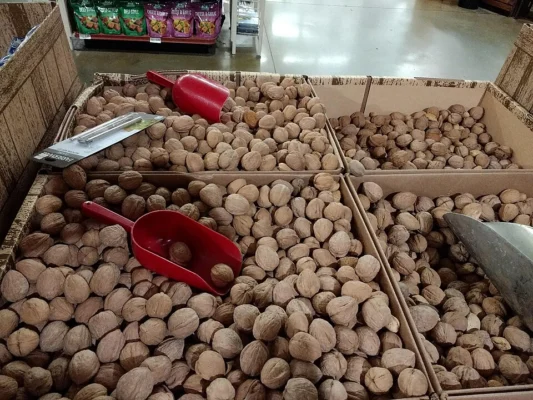
Late frost, inadequate pollen overlap or an unfavourable summer may be responsible. Check the cultivar’s pollination needs and nursery advice before adding another tree. Feeding alone will not solve a flowering-time mismatch or frost damage.
A cool season, drought stress or early leaf loss can reduce filling. Crack a sample before drying the whole harvest. Improve young-tree aftercare and judge results over several seasons rather than assuming a single poor crop identifies one cause.
Walnut leaf blotch is favoured by wet weather and can also damage developing fruit. Collect affected fallen leaves and fruit, and keep young trees growing steadily. Persistent severe symptoms merit identification; not every brown mark is the same disease.
Walnut blister mite can produce swollen areas above the leaf and pale felt-like growth beneath. It usually has little effect on the tree’s vigour and does not need control. Check the pattern before confusing these galls with a serious fruit-damaging infection.
Squirrels and birds can take many nuts. Collect ripe nuts daily where practical and keep the ground accessible. A mature canopy is difficult to protect completely; allow for some losses rather than using loose netting that could entangle wildlife.
Named walnut cultivars are maintained by grafting or budding, normally specialist nursery work. Cuttings root poorly, so buying a young grafted tree is the practical route when the aim is a known variety and an earlier nut crop.
For an experiment, remove the green husk from fresh ripe nuts and sow about 3cm deep in pots of well-drained gritty compost in autumn. Protect the pots from rodents. Seedlings vary and may take many years to crop; they will not reproduce a named cultivar reliably.
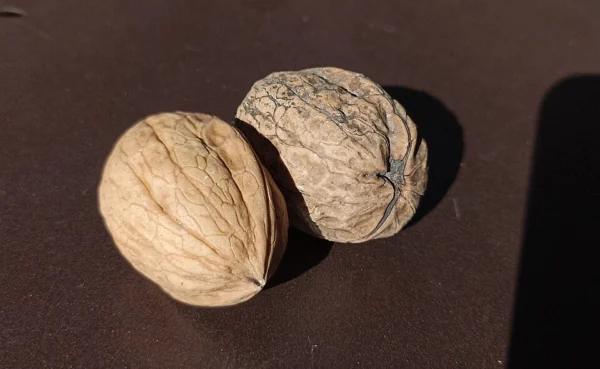
Broadview
A relatively compact, slower-growing walnut that can start cropping while young. It is partially self-fertile, with cropping often improved by suitable cross-pollination. Compact is relative: plan for a sizeable tree and check the nursery’s mature dimensions for the supplied stock.
Illustrative common walnuts; not verified as Broadview.
Photo: Eiku en exil, CC BY 4.0. Resized and optimised; cropped for display.
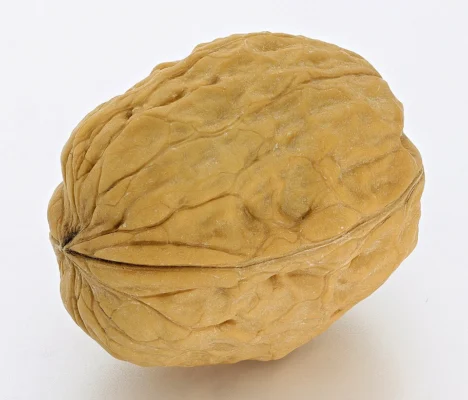
Buccaneer
An upright, comparatively vigorous selection that can set nuts on its own and starts bearing relatively young. Allow plenty of eventual space. A self-fertile label does not prevent late frost or poor summer weather from reducing the crop.
Illustrative common walnut; not verified as Buccaneer.
Photo: Mister rf, CC BY-SA 4.0. Resized and optimised; cropped for display. Adapted image under the same licence.
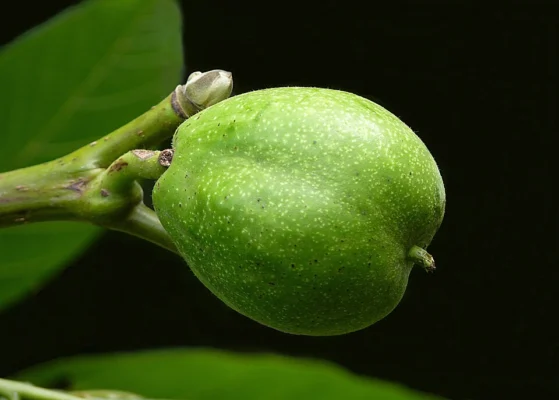
Lara
A moderately vigorous named walnut valued for substantial nuts and productive cropping in suitable conditions. Confirm local suitability and a pollination plan when buying. Give the tree adequate light, soil moisture and room as it develops.
Illustrative developing common walnuts; not verified as Lara.
Photo: Jamain, CC BY-SA 3.0. Resized and optimised; cropped for display. Adapted image under the same licence.
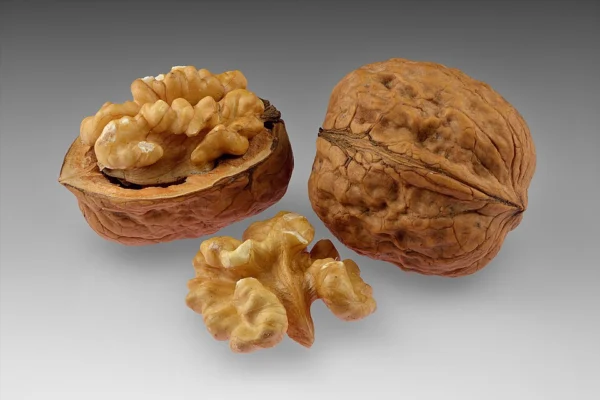
Franquette
A strong-growing French walnut that comes into leaf relatively late. It needs a very generous setting and a suitable pollination partner; Broadview is one nursery-listed option. Choose it for a large space rather than expecting a permanently small garden tree.
Illustrative common walnuts and kernel; not verified as Franquette.
Photo: Ivar Leidus, CC BY-SA 4.0. Resized and optimised; cropped for display. Adapted image under the same licence.
Ask about mature size, grafted status, expected cropping age and pollination before ordering. A smaller healthy tree of a suitable cultivar is a sound start. Plan its final position for decades of growth and allow for the practical work of collecting and drying nuts.
A mature walnut offers a canopy and structure used by garden wildlife, while its nuts are valuable food for squirrels and birds. The flowers are wind-pollinated, so bees are not required to set the crop.
Keep guards and ties secure and inspect them as the tree grows. Avoid loose netting around a large crown, and leave room for wildlife in the wider garden while collecting the nuts you intend to use promptly.
Published by Buy From Farmers Direct. Growing guidance reviewed 6 October 2026. The seasonal timeline uses the shared BFFD Growers Calendar record; adjust timings to your variety and local conditions.
It depends on the variety. Some can set a crop alone, while others need a suitable partner; even partially self-fertile trees may crop better with cross-pollination. Ask the nursery to confirm matching flowering for your chosen cultivar.
A named grafted tree may begin after around three or four years, but timing varies and a substantial crop takes longer. Seedlings are less predictable and can take many years. Good growth does not guarantee an annual nut harvest.
A normal walnut is best treated as a tree for open ground with adequate space. A pot is useful for raising a seedling or holding young stock temporarily, but is not a dependable way to grow a full-sized cropping tree long term.
Keep pruning minimal and make planned corrective cuts between mid-summer and early autumn. Walnuts can bleed heavily if cut at the wrong season and do not respond well to hard pruning. Large work belongs with a qualified tree professional.
The outer husks split and nuts begin to fall in autumn. Gather them frequently, remove husks and check a few kernels are well filled. Dry sound nuts thoroughly before storing them cool and dry.
The tree may grow well, but a dependable nut crop is less certain where springs are frosty or summers cool. Choose a sheltered sunny site and seek local nursery experience. Treat tree survival and kernel ripening as separate expectations.
A walnut rewards careful planning more than intensive yearly pruning. Give a suitable grafted tree space, shelter and good early aftercare, then watch its flowering and harvest over several seasons. Prompt collection and thorough drying complete the work when a sound nut crop arrives.
Explore more growing guides: Chestnut (Sweet), Hazel, Cherry (Dwarf).
Want to get food independence, support your local grower, get better prices and shop more privately?
Local food isn’t just something you find. It’s something you protect. A free account helps keep local supply visible, supported, and resilient.

….it takes 30 seconds for food lovers and 5 minutes for suppliers
We built this for people who care where their food comes from. For people who want to remain food secure. For Farmers to get to the local people, who deserve a better income and to deliver a better price for you. For the environmentally conscious and the privacy-conscious. An account simply helps us make the map and supplier reach more useful to you, without changing how open it is. You’re always in control.


Find local food. Stay connected to it. Create a free account to support local producers and be part of a growing food network.


