Autumn planted onions occupy a bed through winter and repay that patience with bulbs before the main summer crop. Success starts with sets bred for overwintering and soil that drains freely. Plant while conditions are suitable, keep winter weeds in check and prepare for a useful early summer harvest.
Overwintering varieties
Plant in autumn
Good drainage essential
Early summer harvest
Use before maincrop
| Botanical name | Allium cepa, Cepa Group |
| Plant family | Amaryllidaceae |
| Crop | Overwintering bulb onions |
| Usual starting material | Autumn planting onion sets |
| Main planting season | September to October |
| Expected harvest | Usually June to July |
| Position | Full sun |
| Soil | Well drained and fertile |
| Winter requirement | Avoid prolonged waterlogging |
| Individual spacing | 10 to 15cm |
| Rows | 25 to 30cm apart |
| Planting depth | Pointed tip just visible |
| Winter protection | Usually unnecessary in suitable ground |
| Wet soil alternative | Start sets in modules under cover |
| Module transplanting | Spring, when soil conditions improve |
| Watering | As needed during active growth |
| Feeding | Assess growth and soil fertility |
| Storage | Generally shorter than maincrop onions |
| Seed route | Only suitable overwintering varieties |
| Crop planning | Leaves space for a later crop |
| Plant name | Crop type | Spacing |
Sow indoors
Plant outdoors
Harvest
Polytunnel | |||||||||||
|---|---|---|---|---|---|---|---|---|---|---|---|---|---|---|
| Jan | Feb | Mar | Apr | May | Jun | Jul | Aug | Sep | Oct | Nov | Dec | |||
| Onion (Autumn planted) | Alliums | 10 to 15cm apart; rows 25 to 30cm | Polytunnel | Polytunnel | Plant outdoors, Polytunnel | Plant outdoors, Polytunnel | No activity recorded | Harvest | Harvest | No activity recorded | Plant outdoors, Polytunnel | Plant outdoors, Polytunnel | Polytunnel | Polytunnel |
Sow indoors: no months recorded. Plant outdoors: March, April, September, October. Harvest: June, July. Polytunnel: January, February, March, April, September, October, November, December.
Plant suitable sets outdoors in September or October. March and April apply only to transplanting sets started under cover because soil was too wet. Polytunnel months indicate that optional route. No seed band is shown: sets are the default. Harvest is usually June or July.
Choose autumn onions for a sunny bed you can spare through winter. The early harvest leaves time for another crop. Avoid ground needed for an early spring planting.
Hardy foliage does not protect bulbs from waterlogging. For a wet plot, choose an effectively drained raised bed, large container or sheltered module start rather than planting into saturated soil.
Photo: Adoscam, CC BY-SA 4.0. Resized and optimised; cropped for display. Adapted image under the same licence.
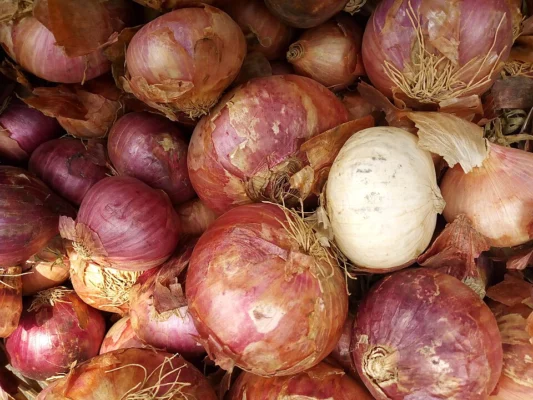
Choose an open, sunny position. Winter daylight is limited, so avoid the north side of a fence or space beneath evergreen shrubs. Remove perennial weeds before planting.
Improve poor soil with mature compost ahead of the crop. Do not bury sets in fresh manure. The surface should allow you to position each bulb without bruising its base.
Drainage needs a practical check. Look at what happens after sustained rain: water should escape rather than collect around the bulbs. A raised surface helps only if surplus water has somewhere to go.
A large container, around 45cm wide and deep, can hold a modest crop. Use suitable peat free compost, keep drainage holes clear and avoid a saucer that holds winter water beneath the pot.
Image from the BFFD media library.
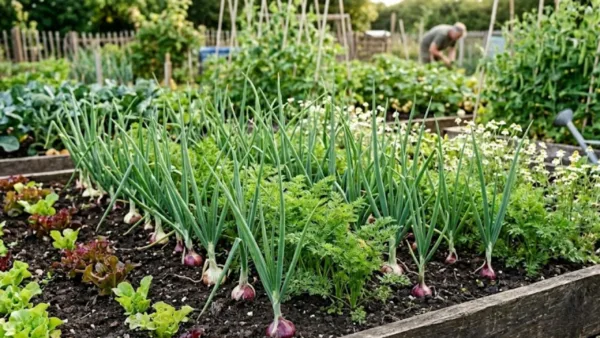
Buy sets clearly labelled for autumn planting or overwintering. Ordinary spring sets are not an equivalent substitute.
1.
Choose a named overwintering variety from a reputable supplier. Inspect sets before planting and discard soft, mouldy or badly damaged bulbs. Keep sound stock cool, dry and ventilated until needed.
2.
Prepare the bed in advance, removing weeds and adding mature compost where needed. Choose a dry enough day to work without smearing or compacting wet soil.
3.
Mark rows about 25 to 30cm apart. Allow 10 to 15cm between bulbs, depending on desired size. Keep enough access to weed the rows without standing on their roots.
4.
Make a small hole for each set and place its basal plate downwards. Leave the pointed tip just visible. Firm the soil gently; do not force bulbs into hard ground.
5.
Water to settle the soil if conditions are dry. Fit securely held temporary fleece or suitable netting if birds are pulling up sets. Check beneath covers regularly.
6.
Label the variety and planting date. Replant sound bulbs disturbed before rooting. Once established, leave them to grow steadily rather than repeatedly lifting them to inspect their roots.
7.
If outdoor soil is unsuitable, plant individual sets in modules under cool, bright cover. Keep roots moist but not saturated. Move into larger cells or pots if roots outgrow the available space.
8.
For the sheltered route, harden plants off and transplant in spring when the bed becomes workable. Preserve the rootballs and normal spacing. This exception should not be confused with the main autumn planting schedule.

Watering
Outdoor onions usually need little watering during wet winter weather. Inspect before adding any. Newly planted sets in a dry autumn may need help establishing, and container crops can still dry out beneath a sheltered overhang.
Resume attentive watering during dry spring growth and bulb development. Aim at the soil. As the crop matures and leaves start to fall naturally, stop routine watering so the onions can ripen.

Feeding
A bed prepared with mature compost may provide sufficient nutrients. On poor soil, an appropriate feed in late winter can support the return to active growth. Follow product instructions and judge the condition of the crop.
Do not feed simply because growth is slow in cold weather. Roots cannot compensate for waterlogging through extra nutrients. Avoid pushing soft, leafy growth as harvest approaches; mature, firm bulbs are the aim.

Pruning
Keep healthy leaves intact throughout the crop. Weed by hand close to bulbs and use a hoe shallowly between rows. Avoid cutting leaves or exposing roots while removing large weeds.
Remove flower stalks when noticed and reserve those bulbs for early use. Do not bend green foliage down to accelerate ripening. Natural yellowing and falling leaves are more useful harvest signals.

Winter care
Check after frost, heavy rain and strong winds. If freezing has lifted a recently planted set, settle it gently once soil thaws. Do not trample or cultivate saturated ground.
Sheltered module plants need light and ventilation through winter. Avoid a warm living room or permanently closed humid cover. Check root space and water carefully, with the intention of transplanting when outdoor conditions improve.
Overwintering onions have hollow green leaves and a swelling base. Modest winter growth accelerates in spring. Winter survival alone does not identify an unknown variety as suitable planting stock.
A rounded flower head on a firm stalk indicates flowering rather than improved bulb maturity. The comparison photographs illustrate onion colours, sizes and growth stages. They do not prove that every pictured onion was planted in autumn.
Photo: Sovlam, CC BY 4.0. Resized and optimised; cropped for display.
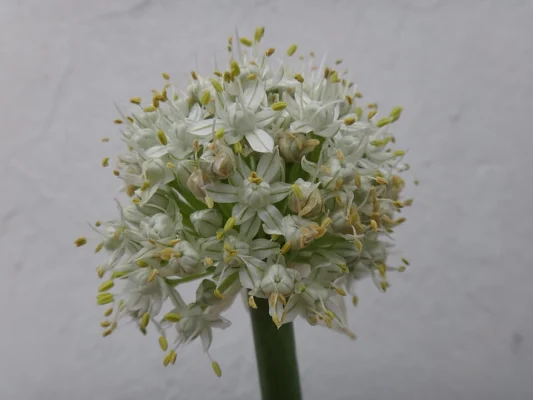
Planting dates shift with local weather. In a mild, freely drained garden, autumn establishment is often straightforward. Exposed sites and colder districts need greater attention to drainage, sound planting stock and the variety's recommended timing.
A wet western winter presents a different challenge from a cold but freely drained bed. If repeated losses follow waterlogging, change the site or method rather than assuming another feed or deeper planting will solve it.
Expect harvest broadly in June or July. Lift when bulbs mature and foliage falls naturally, then dry under cover if weather is unsettled. Autumn onions usually belong earlier in the kitchen's use order than a well cured maincrop storage variety.
Image from the BFFD media library.
Check drainage and inspect surviving bulbs. Soft rotting sets may have spent too long in saturated soil. Use a better drained site or the module route next time, and discard suspect planting stock.
Birds may pull exposed tips before roots develop; frost can also lift sets. Replant sound bulbs gently when soil is suitable and use temporary, securely fitted protection where needed.
Unsuitable varieties and stressful conditions can increase bolting. Check that sets were intended for overwintering. Remove flower stalks and use affected bulbs promptly; they should not form the long storage supply.
Downy mildew can spread during humid conditions. Remove affected plants, improve airflow and avoid keeping suspect bulbs. Where possible, separate overwintered onions from the next spring crop to reduce disease carryover.
White rot can cause root decay and wilting, sometimes with tiny black resting bodies. Remove suspect plants and keep contaminated soil off tools and footwear. A short crop rotation does not eliminate this persistent disease.
Each set normally produces one larger bulb, unlike shallots that divide into clusters. Plan your quantity around the household’s likely early summer use.
Some overwintering onions are also available as seed for late summer or early autumn sowing. That is a distinct route with variety specific timing. Follow the packet rather than assuming any spring seed variety will tolerate the same winter schedule.
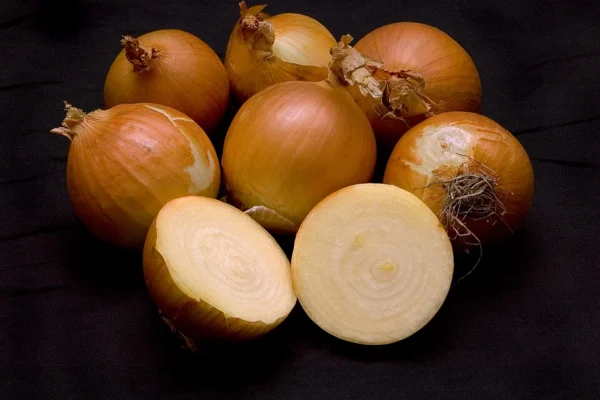
Golden overwintering choices
Senshyu Yellow is one familiar overwintering option. Check the supplier's planting guidance and expected harvest. The golden bulbs pictured are illustrative and are not confirmed as this cultivar.
Photo: Andrew c at English Wikipedia, CC BY-SA 3.0. Resized and optimised; cropped for display. Andrew c
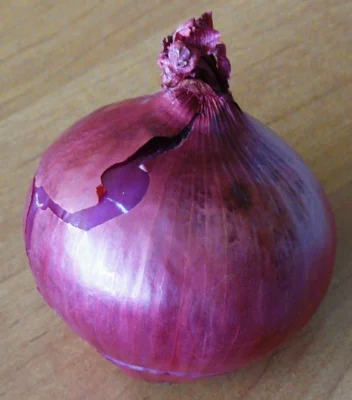
Red does not mean autumn planting
Choose a specifically labelled overwintering red onion for an autumn crop. This photograph shows Red Baron, included as a comparison; it is not a recommendation to use ordinary Red Baron spring sets in autumn.
Photo: MOs810, CC BY-SA 4.0. Resized and optimised; cropped for display. Adapted image under the same licence.
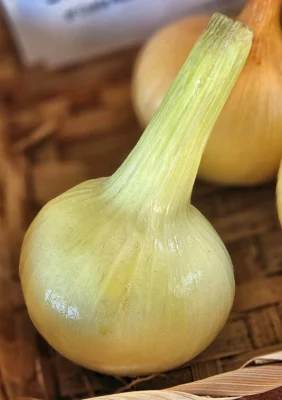
A useful crop rather than a giant bulb
Autumn onions are valuable for their timing. The exhibition onion pictured illustrates a different goal. Do not judge a successful early crop solely against the size of a show specimen.
Photo: Eric Polk, CC BY-SA 4.0. Resized and optimised; cropped for display. Adapted image under the same licence.
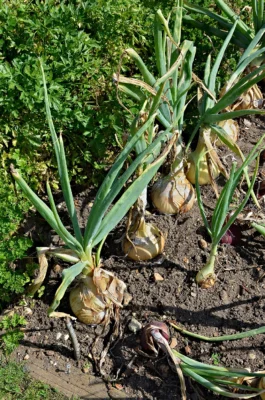
Maturity before storage
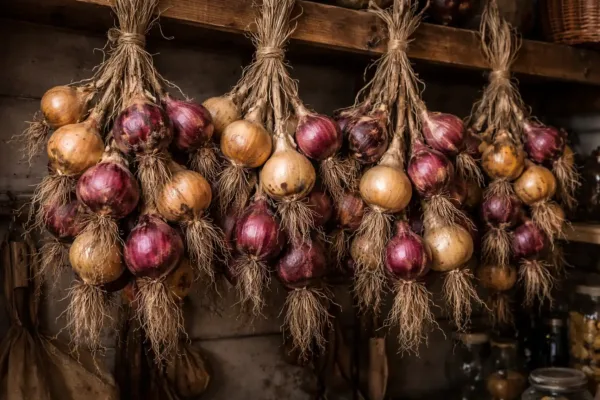
Look for naturally falling foliage and firm bulbs before lifting the main crop. This photograph illustrates maturing onions, with no confirmed variety or planting date. Drying conditions still determine how well the crop keeps.
Photo: JLPC, CC BY-SA 3.0. Resized and optimised; cropped for display. Photo: JLPC / Wikimedia Commons
Choose the next crop before your onions come out. Keep that planting flexible until bulbs are mature, then clear the bed without leaving forgotten onions to regrow among the new vegetables.
Bulb production does not require flowering, although onion flowers can attract insects when deliberately retained. Keep any flowering plants separate from onions intended for early harvest and storage.
Secure bird covers without loose loops and inspect beneath them. Remove unnecessary protection rather than hiding the crop through winter.
Usually in September or October, following the selected variety's instructions and soil conditions. Aim for establishment before severe winter weather without planting into waterlogged ground.
No. Buy stock labelled for autumn planting or overwintering. Ordinary spring sets are not selected for the same schedule and may perform poorly or bolt after winter exposure.
Suitable varieties usually overwinter outdoors in well drained soil. Watch newly planted sets for frost lifting and avoid waterlogging. Temporary covers may help establishment, but permanent wrapping is not the normal requirement.
Choose better drained ground or start sets individually in modules under cool, bright cover. Keep roots healthy and transplant in spring when the bed is workable.
Usually June or July, depending on variety and season. Harvest for storage when bulbs are mature and foliage yellows and falls naturally. Earlier lifted onions can be used fresh.
Do not assume so. They generally store for less time than good maincrop varieties. Dry them thoroughly, inspect regularly and plan to use them before later harvested storage onions.
Give autumn onions the right variety, an open site and winter drainage. Their reward is an earlier kitchen crop and a bed ready for the next part of the growing year.
Want to get food independence, support your local grower, get better prices and shop more privately?
Local food isn’t just something you find. It’s something you protect. A free account helps keep local supply visible, supported, and resilient.

….it takes 30 seconds for food lovers and 5 minutes for suppliers
We built this for people who care where their food comes from. For people who want to remain food secure. For Farmers to get to the local people, who deserve a better income and to deliver a better price for you. For the environmentally conscious and the privacy-conscious. An account simply helps us make the map and supplier reach more useful to you, without changing how open it is. You’re always in control.


Find local food. Stay connected to it. Create a free account to support local producers and be part of a growing food network.


