A full sized peach tree needs a carefully chosen home in Britain. A warm garden can support a productive bush tree, while a sunny wall gives a trained fan a better chance of ripening its crop. Plan for the mature canopy, the annual pruning and the practical business of protecting early blossom before committing the space.
Deciduous fruit tree
Warm sheltered position
Self fertile
Needs annual pruning
Summer fruit
| Botanical name | Prunus persica |
| Plant type | Deciduous stone fruit |
| Growing form | Bush tree or trained fan |
| Light | Full sun |
| Shelter | Essential for reliable cropping |
| Soil | Deep fertile soil with good drainage |
| Rootstock | Check the nursery specification |
| Common rootstock | St Julien A |
| Mature space | Several metres; varies with rootstock and training |
| Fan width | Often about 3.5 to 5m |
| Planting | Preferably November to March |
| Flowering | Early spring |
| Pollination | Self fertile; insects or hand pollination |
| Fruit season | Usually July to September |
| Fruiting wood | Mainly shoots made the previous year |
| Pruning time | Spring or summer, according to form |
| Fruit thinning | About 20cm between retained peaches |
| Watering | Important during establishment |
| Main disease | Peach leaf curl |
| Container suitability | Choose a dwarf cultivar for a patio pot |
| Plant name | Crop type | Spacing |
Sow indoors
Plant outdoors
Harvest
Polytunnel | |||||||||||
|---|---|---|---|---|---|---|---|---|---|---|---|---|---|---|
| Jan | Feb | Mar | Apr | May | Jun | Jul | Aug | Sep | Oct | Nov | Dec | |||
| Peach (Large) | Orchard fruit | Allow several metres according to nursery advice; fans commonly need 3.5 to 5m width | Plant outdoors | Plant outdoors | Plant outdoors | No activity recorded | No activity recorded | No activity recorded | Harvest | Harvest | Harvest | No activity recorded | Plant outdoors | Plant outdoors |
Sow indoors: no months recorded. Plant outdoors: January, February, March, November, December. Harvest: July, August, September. Polytunnel: no months recorded.
Planting marks the preferred dormant season; harvest varies with cultivar. Choose the site carefully because a large tree is difficult to cover.
Well suited to a sunny sheltered garden with room for its eventual spread and an owner prepared to prune each year. A wall fan also makes flowers and fruit easier to reach.
Poorly suited to a frost pocket, an exposed allotment or a cramped courtyard. In a small space, a genuinely dwarf peach is generally more manageable than repeatedly cutting back a vigorous tree.
Photo: Michael Garlick, CC BY-SA 2.0. Resized and optimised; cropped for display. Elsing Hall and Gardens: Potted peach tree in the greenhouse by Michael Garlick
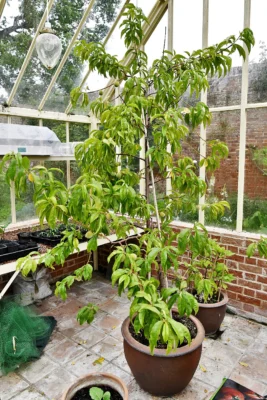
Use the warmest sheltered position available for a bush tree. Consider cold air movement across the garden: a low hollow can lose its blossom crop even when the dormant tree survives winter without difficulty.
A wall facing south or southwest offers useful warmth for a fan. Allow generous width and install permanent support before planting, leaving access to tie shoots and pick fruit without damaging branches.
Avoid ground that remains saturated after rain. Good soil depth matters because a mature tree must support a canopy and crop through dry weather; a narrow pocket between paving and foundations is a difficult home.
A large greenhouse can accommodate a trained peach where space and management permit. Plan ventilation, hand pollination and reliable watering from the outset rather than assuming protection makes the tree maintenance free.
Photo: Fastily, CC BY-SA 3.0. Resized and optimised; cropped for display. Adapted image under the same licence.
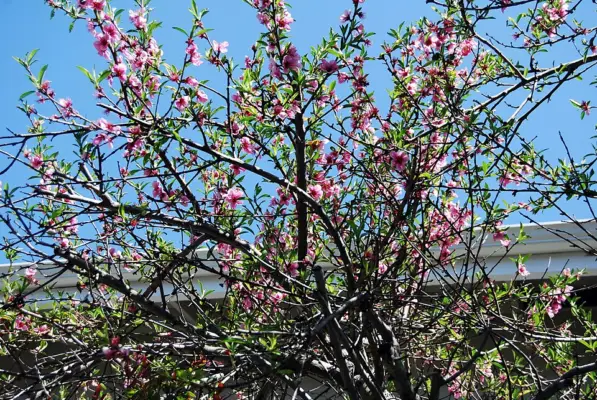
Match the tree to its eventual form before digging. A nursery trained fan saves time at a wall; a well shaped young bush suits an open garden where summer warmth and shelter are dependable.
1.
Confirm the cultivar, rootstock and expected mature spread with the nursery. Large describes the intended tree size, not a guarantee of unusually large individual peaches.
2.
Mark the full growing area and check access for pruning. Keep neighbouring trees far enough away to avoid a shaded, crowded canopy.
3.
Fit wall wires for a fan, or prepare a suitable stake for a bush tree. Installing supports first avoids driving them through newly established roots later.
4.
Water a container tree thoroughly, or briefly soak exposed roots before planting. Keep bare roots protected from wind and sun while the planting hole is prepared.
5.
Dig wide enough to spread the roots comfortably. Set the tree at its previous growing depth, keeping the graft union above soil level and avoiding a deep basin around the trunk.
6.
Backfill with the excavated soil and firm gently. Improve poor soil sensibly across the planting area rather than creating a rich isolated pocket surrounded by compacted ground.
7.
Water thoroughly and secure the tree with a flexible tie. For a wall fan, position the rootball away from the wall's driest edge and guide the branches towards their supports without sharp bends.
8.
Mulch the surrounding soil while leaving the trunk clear. Check moisture through the first growing seasons and reduce any heavy early crop so establishment takes priority.

Watering
New trees need attention during dry spells while roots explore the surrounding soil. Water slowly over the root area so moisture penetrates, then check the soil before the next application instead of relying on a fixed daily routine.
Established trees in open ground are less dependent on watering, but a wall fan may remain in a rain shadow. Watch soil moisture during fruit swelling and avoid repeated cycles of severe drying followed by saturation.

Feeding
An annual organic mulch can support a tree in reasonably fertile soil. Keep it away from the trunk and assess growth and leaf condition before adding fertiliser unnecessarily.
A poor crop can reflect frost, failed pollination, shading or unsuitable pruning. Identify the cause before adding feed.

Pruning
Peaches carry most fruit on shoots formed during the previous season, so pruning should maintain a supply of young replacement wood. An established bush is usually pruned after picking in summer, keeping its centre open and reducing older fruited growth back to suitable younger shoots.
Fans require their own spring and summer training routine. Make cuts in dry weather during active growth, and avoid dormant winter pruning because stone fruit is vulnerable to silver leaf and bacterial canker. Do not remove all young shoots in pursuit of a tidy outline.

Winter care
Check ties, stakes and wall supports while the structure is easy to see. Loosen anything that is beginning to constrict a branch, and repair supports before they must carry fresh growth and fruit.
A clear rain shelter over a wall fan can reduce peach leaf curl when installed before vulnerable spring growth emerges. Keep the ends ventilated. Protect blossom separately from frost; a large exposed bush is much harder to cover effectively.
Peach trees have narrow leaves with toothed edges and pink flowers around the start of spring growth. Their fruit has velvety skin, unlike a nectarine's smooth surface. Fruit colour alone is not a reliable cultivar identification.
An open bush has a permanent framework supporting younger fruiting shoots, while a fan spreads branches across a flat support. Neither shape changes the need to renew fruiting wood; a neglected mature tree often carries its crop increasingly far from the centre.
Image from the BFFD media library.
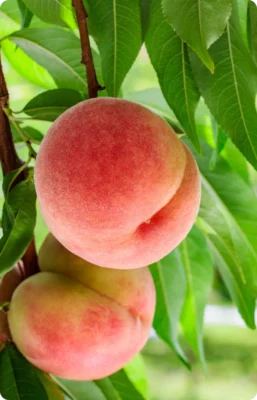
In the mildest sheltered gardens, a bush peach can be a rewarding summer fruit tree. Elsewhere, a wall fan often uses a good site more effectively because flowers, leaves and fruit remain accessible for protection and care.
Cold spring conditions can reduce insect activity even without a damaging frost. Where flowers are reachable, use a soft brush on several dry days to transfer pollen between them. One peach can set fruit because the species is self fertile.
Thin crowded fruitlets while small, leaving roughly 20cm between retained peaches. At harvest, cup and lift ripe fruit rather than pulling branches down. Pick in stages, using softness near the stalk alongside the cultivar's expected colour.
Image from the BFFD media library.
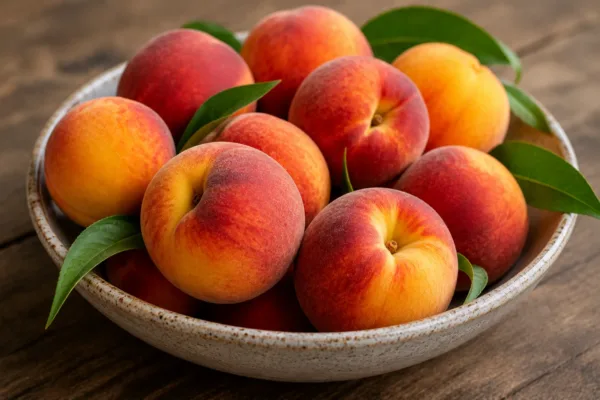
Peach leaf curl infects emerging leaves in suitable wet conditions. Plan rain exclusion before the next vulnerable period, especially on a fan, and maintain the tree's water supply while replacement leaves develop.
Review blossom frost, pollination and pruning before assuming disease. A tree can survive and grow strongly in a position that rarely gives its flowers and fruit the conditions they need.
Too many fruitlets can overwhelm the tree's resources. Thin promptly, examine moisture during swelling and ensure surrounding growth is not shading the canopy.
Remove rotting and mummified peaches and reduce crowding. Handle ripening fruit gently, since wounds and rubbing can provide opportunities for brown rot to develop.
Gumming has several possible causes, including injury and disease. Examine the affected area rather than treating every case alike; seek a diagnosis before removing large limbs or making extensive corrective cuts.
Named peach cultivars are normally propagated onto rootstocks to provide a known combination of fruit and growth. Buying a suitable young tree is the most direct route to a planned garden crop.
A seedling raised from a stone is genetically variable and may take years to fruit. It will not reliably reproduce the parent peach's flavour, season or ultimate size, so allow for that uncertainty if experimenting separately.
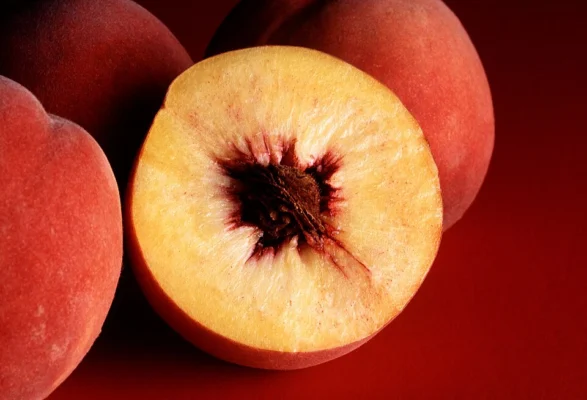
Yellow fleshed peaches
Rochester is one established yellow fleshed choice to discuss with a nursery, including its suitability for your district. The Autumn Red peaches shown illustrate flesh colour and are not presented as Rochester.
Photo: Jack Dykinga, USDA, Public domain. Resized and optimised; cropped for display.
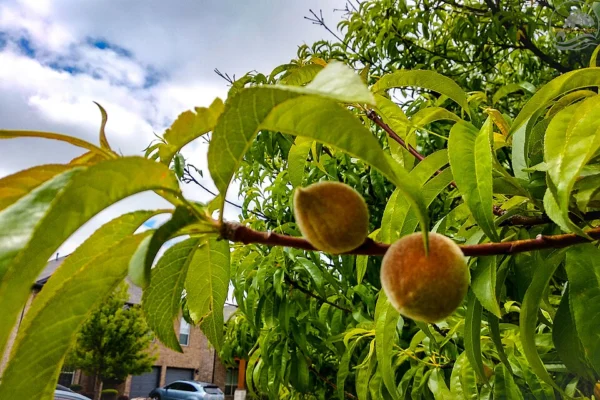
White fleshed peaches
Peregrine is a familiar choice for British gardens and can suit wall training. Ask about the exact rootstock and likely spread. This photograph illustrates peaches on a tree rather than a verified Peregrine specimen.
Photo: Prianxi, CC BY-SA 4.0. Resized and optimised; cropped for display. Adapted image under the same licence.
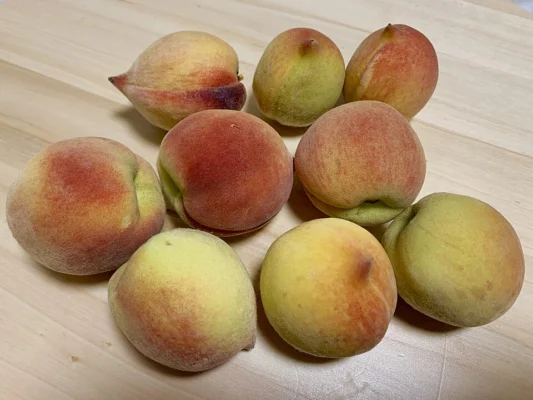
Disease resistance
Some cultivars, including Avalon Pride, offer partial resistance to peach leaf curl. Treat this as one selection factor rather than a promise of immunity. The fruit photograph does not identify that cultivar.
Photo: Prianxi, CC BY-SA 4.0. Resized and optimised; cropped for display. Adapted image under the same licence.
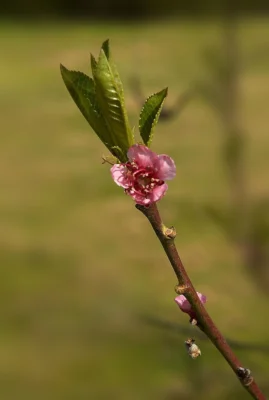
Flowering and local climate
Compare flowering season and local cropping experience alongside flavour. Later blossom can sometimes escape an early frost, but no label guarantees a crop in every spring. The blossom shown is a general peach example.
Photo: Wouter Hagens, Public domain. Resized and optimised; cropped for display.
Speak to a fruit nursery about your soil, shelter and available wall space. A suitable cultivar and growing form are more valuable than a tree that simply looks impressive at purchase.
Accessible peach blossom attracts visiting insects during suitable spring weather. Keep pollinator access in mind when constructing rain shelters or using temporary frost protection.
Protect ripening fruit with securely fitted individual sleeves or taut netting where needed. Inspect frequently and avoid loose material around branches that could entangle birds.
Allow several metres, but obtain the nursery's mature spread for the exact cultivar, rootstock and growing form. A wall fan can require about 3.5 to 5m of width.
A bush can crop in a warm sheltered garden. A fan against a sunny wall often makes better use of warmth and allows more practical blossom and rain protection.
It is a poor long term match. Choose a genuinely dwarf cultivar for a patio container rather than trying to restrain an ordinary vigorous tree through drought and repeated hard pruning.
Usually after harvest in summer, choosing dry weather. Preserve young replacement shoots and avoid routine winter pruning. Fan trained trees need additional seasonal training.
Peaches are self fertile, so another tree is not essential. Suitable weather, insect visits or hand pollination are still needed to transfer pollen successfully.
Tree size cannot compensate for frost damage, poor pollination, insufficient sun or removal of fruiting shoots. Review those factors as well as water and crop thinning.
A large peach needs light, space and healthy young fruiting wood. Plan the growing position, protection and annual pruning before planting.
Want to get food independence, support your local grower, get better prices and shop more privately?
Local food isn’t just something you find. It’s something you protect. A free account helps keep local supply visible, supported, and resilient.

….it takes 30 seconds for food lovers and 5 minutes for suppliers
We built this for people who care where their food comes from. For people who want to remain food secure. For Farmers to get to the local people, who deserve a better income and to deliver a better price for you. For the environmentally conscious and the privacy-conscious. An account simply helps us make the map and supplier reach more useful to you, without changing how open it is. You’re always in control.


Find local food. Stay connected to it. Create a free account to support local producers and be part of a growing food network.


