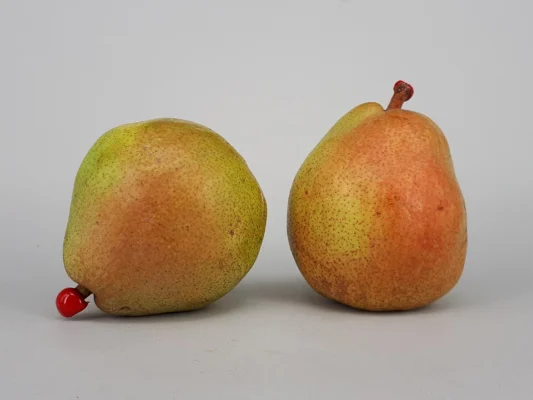
An espalier pear turns a sunny boundary into a productive feature, with a central trunk and orderly tiers of horizontal branches. It saves depth rather than width: give the tree a generous run of wall or support wires, then build its shape patiently. Good results depend on a suitable rootstock, compatible pollination and timely pruning.
Trained fruit tree
Permanent support
Sunny sheltered site
Summer pruning
Autumn harvest
| Botanical name | Pyrus communis |
| Plant type | Deciduous fruit tree |
| Training form | Central stem with horizontal branch tiers |
| Position | Sunny and sheltered |
| Support | Permanent wires or a strong framework |
| Typical height | Around 1.8m, depending on tier number |
| Typical width | About 3.6 to 4.5m on Quince A |
| Rootstock | Quince A commonly suits this form |
| Fruiting habit | A spur bearing cultivar is easiest |
| Soil | Fertile, moisture retentive and well drained |
| Planting | Preferably November to March |
| Wall distance | Plant about 30cm from the base |
| Pollination | Usually needs a compatible pear cultivar |
| Flowers | White spring blossom |
| Harvest | Usually August to October by cultivar |
| Ripening | Pick mature and finish indoors |
| Training cuts | Winter and growing season work |
| Maintenance pruning | Late summer |
| Watering | Check the wall's rain shadow |
| Establishment | Build the framework over several seasons |
| Plant name | Crop type | Spacing |
Sow indoors
Plant outdoors
Harvest
Polytunnel | |||||||||||
|---|---|---|---|---|---|---|---|---|---|---|---|---|---|---|
| Jan | Feb | Mar | Apr | May | Jun | Jul | Aug | Sep | Oct | Nov | Dec | |||
| Pear (Espalier) | Orchard fruit | Commonly 3.6 to 4.5m wide on Quince A; confirm the chosen tree and tier number | Plant outdoors | Plant outdoors | Plant outdoors | No activity recorded | No activity recorded | No activity recorded | No activity recorded | Harvest | Harvest | Harvest | Plant outdoors | Plant outdoors |
Sow indoors: no months recorded. Plant outdoors: January, February, March, November, December. Harvest: August, September, October. Polytunnel: no months recorded.
The calendar shows the preferred dormant planting season and the broad pear harvest period. Training and summer pruning follow the tree's growth stage; the date on its own does not show whether a shoot is ready to cut.
An espalier suits a gardener who enjoys shaping a tree and can revisit it through the growing season. Its flat framework keeps much of the crop accessible without occupying the depth of a bush pear.
It is less suitable where a narrow strip of wall is the only available space or annual pruning is unlikely. A cordon uses less width, while a bush tree offers a different, less formal maintenance routine.
Photo: Ввласенко, CC BY-SA 3.0. Resized and optimised; cropped for display. Adapted image under the same licence.
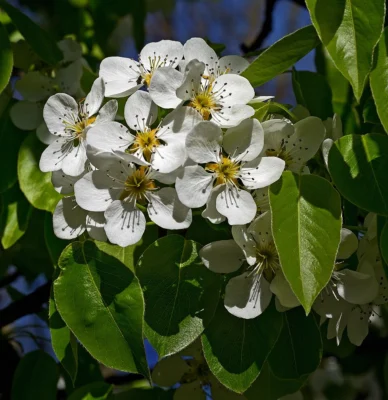
Choose a bright boundary with shelter from strong wind. A warm wall helps fruit ripen, but check that neighbouring fences, trees and buildings do not shade it for most of the day.
Leave space in front for picking, pruning and tying branches. A tree pressed behind a permanent bench or dense shrub border soon becomes awkward to inspect and difficult to train accurately.
Roots need useful soil beyond the wall edge. Avoid a tiny opening in paving, and remember that an overhang can keep the planting area surprisingly dry even during frequent rain.
A framework between posts can also support an espalier. It must remain stable under wind and a mature crop, so choose its location and construction with the finished tree in mind.
Photo: Thoslee, CC BY-SA 4.0. Resized and optimised; cropped for display. Adapted image under the same licence.
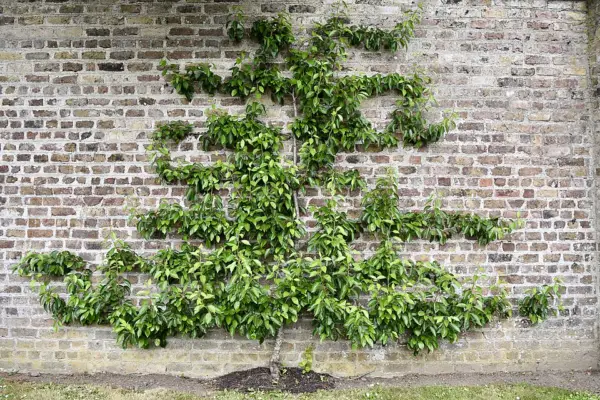
A partly trained tree gives a clear starting structure. Confirm whether the nursery is selling an actual espalier or a young tree merely considered suitable for training, because the work ahead is different.
1.
Choose a compatible rootstock and a cultivar that fruits readily on short spurs. Check the eventual width and arrange a suitable pollination partner before ordering.
2.
Install the permanent support first. Horizontal wires are commonly spaced about 35 to 45cm apart, with clearance behind them for air and ties.
3.
Match wire heights to a partly trained tree's branches. Adjust the support rather than burying the tree more deeply to make its existing tiers fit.
4.
Water the nursery pot thoroughly or briefly soak exposed roots before planting. Keep roots covered while preparing a hole wide enough for them to spread.
5.
Position the tree about 30cm out from a wall and keep its graft union above the soil. Set it at its previous depth rather than covering the lower trunk.
6.
Backfill, firm gently and water well. Mulch the root area without piling material against the stem, and keep competing grass and weeds clear.
7.
Tie the central stem and existing branches using soft ties that allow expansion. Support the intended framework without forcing stiff wood into a sharp bend.
8.
Follow a staged training plan for additional tiers. Keep a record of which shoots form the leader and arms, so necessary growth is not mistakenly removed during summer pruning.

Watering
Check the soil beneath the mulch during dry spells, particularly while the tree establishes. A wall trained pear may receive less rain than the lawn nearby, so assess its own root area.
Water thoroughly when needed and allow excess to drain. Keep moisture dependable as fruit swells; a newly planted tree with shallow exploring roots is more vulnerable than an established specimen.

Feeding
A spring mulch of well rotted organic matter supports soil condition and reduces competition from weeds. On fertile ground, assess growth before adding further fertiliser.
Very strong shoot growth can make an espalier harder to manage. Do not feed heavily simply to fill the next tier quickly; balanced growth and a sound framework are more useful than a rush of soft extensions.

Pruning
Summer prune established espaliers once growth slows and shoot bases become woody. Keep permanent arms. Shorten new shoots arising directly from an arm to three or four leaves beyond their basal leaf cluster; shorten new growth from existing pruned spurs to one leaf beyond that cluster. Do not treat developing replacement arms as fruiting side shoots.
New tiers need a different approach: winter leader cuts stimulate shoots for the next level, which are trained during growth. Young arms are initially held above horizontal, then lowered when appropriate. Follow the tree's stage, keeping framework development separate from spur maintenance.

Winter care
Inspect the framework without its leaves. Replace worn ties, release tight ones and check that wires have not rubbed bark. Photographing the structure provides a useful comparison when deciding which growth to retain.
Winter is the time for planned formative or renovation work, rather than repeating summer cuts indiscriminately. Remove hanging rotten fruit and keep the root area free from material that traps moisture against the trunk.
The defining feature is a vertical leader with matching horizontal arms in tiers. A fan has branches radiating outwards, while a cordon usually carries its short fruiting growth on a single principal stem.
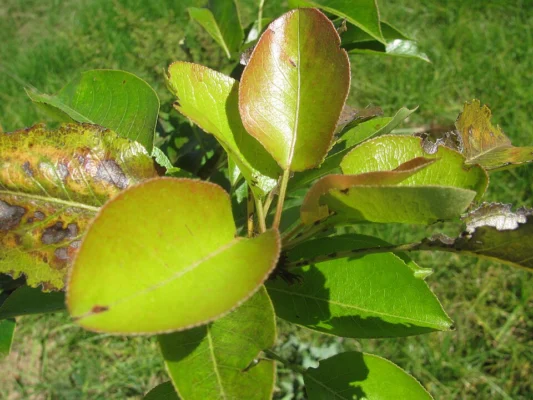
Pear leaves are oval and green, with white blossom in spring. Short knobbly spurs along older wood can carry flower buds; learn to distinguish these from long extension shoots before deciding what to prune.
Photo: Forest and Kim Starr, CC BY 3.0 us. Resized and optimised; cropped for display. Forest & Kim Starr
A sunny wall is particularly valuable in cooler districts, where an earlier ripening cultivar is a sensible choice. Warmth at harvest does not remove the need to consider spring frost when locating the tree.
Most pears crop best with another compatible cultivar flowering nearby. On a reachable espalier, temporary frost protection can help during blossom, but remove it when conditions allow insects to visit.
After natural early summer fruit drop, thin a heavy crop to avoid overloaded spurs and crowded fruit. Pick mature European pears while firm, then ripen indoors in small batches, checking regularly for softness near the stalk.
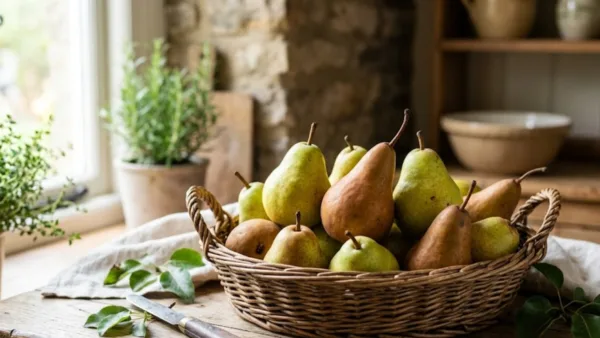
Image from the BFFD media library.
Review the training and pruning routine. The leader can dominate if left unchecked. Avoid cutting every weak branch harder in response; assess the framework and restore balance gradually.
Do not force an unsuitable mature branch across the gap. Identify a suitably placed young replacement or ask for formative pruning advice, accepting that rebuilding a tier takes time.
Check pollination compatibility and spring frost history. Training the tree flat does not make a cultivar self fertile, and additional feed cannot replace damaged blossom.
Orange leaf spots can indicate pear rust; scab can mark and distort fruit. Confirm the problem, remove appropriate infected debris and avoid stripping a heavily affected tree of all its foliage.
Inspect ties and support points frequently. A tie that was loose at planting can later cut into expanding wood, while a heavily loaded unsupported arm may bend beyond its intended position.
The espalier shape is created by training, not inherited from a seed. Start with a named grafted pear on a rootstock suited to the space and intended number of tiers.
A seedling gives uncertain fruit and vigour and is rarely a sensible route to a carefully planned boundary tree. Specialist nurseries can advise on suitable cultivars and any graft compatibility requirements.
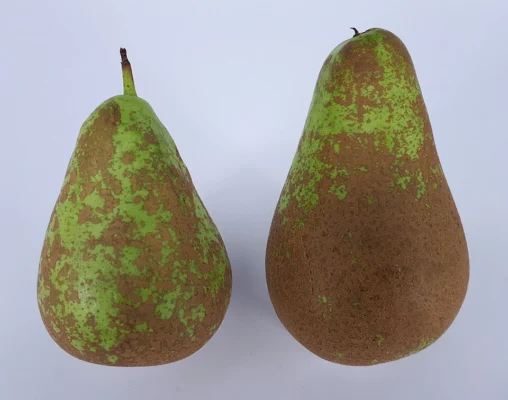
Conference
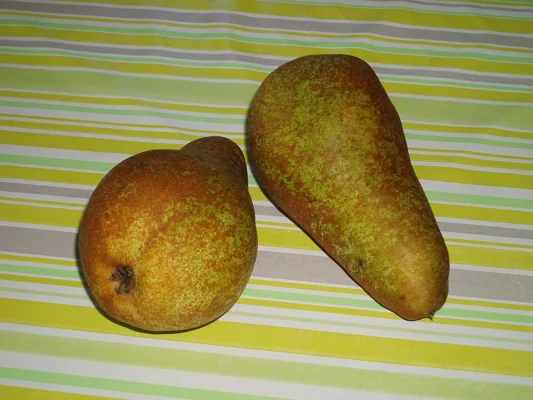
Concorde
Worth comparing where moderate growth and dependable cropping matter. Confirm the supplied rootstock and intended training form rather than assuming the cultivar name guarantees a compact espalier.
Photo: Queeste, CC BY-SA 4.0. Resized and optimised; cropped for display. Adapted image under the same licence.
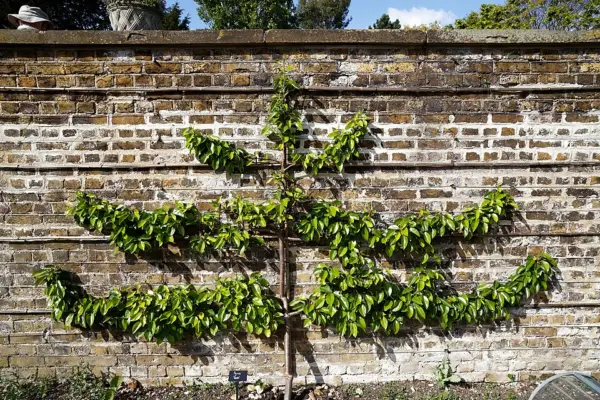
Beth
An earlier pear with small sweet fruit, useful to discuss for cooler gardens. The photograph shows a labelled Beth trained in horizontal tiers, illustrating the form this guide describes.
Photo: Acabashi, CC BY-SA 4.0. Resized and optimised; cropped for display. Adapted image under the same licence.
Give a nursery your available width, support height, soil conditions and nearby pear varieties. Ask for a tree and rootstock combination suited to the framework you intend to create.
Pear blossom gives visiting insects a spring food source, while their movement helps pollination. A mixed garden with flowers through the season supports those visitors beyond the brief pear blossom period.
If fruit needs protection, keep netting clear of branches and secured without loose pockets. Check daily during use, and remove it once the crop has been gathered.
Many on Quince A need roughly 3.6 to 4.5m of width. Rootstock, tier number and training affect the result, so confirm the exact tree's requirements before buying.
Yes, if its cultivar, rootstock and starting structure are suitable. A partly trained tree is easier to understand, while a young maiden needs several seasons of planned formative work.
It is the main maintenance job for an established framework. Creating new tiers and renovating old crowded growth can also require carefully chosen winter work.
Usually a compatible different pear flowering at the same time improves cropping. Check the cultivar's requirements; the espalier shape does not change its pollination biology.
Avoid forcing stiff branches. Train flexible young growth gradually and use supports that do not damage bark. A poor starting structure may need slower rebuilding.
European pears are usually harvested mature but firm and ripened indoors. The interval between picking and eating differs by cultivar, so inspect stored fruit regularly.
A good espalier is built through repeated small decisions: the right tree, sound support and patient seasonal training. Once the framework settles, its orderly branches can deliver blossom and fruit within easy reach.
Want to get food independence, support your local grower, get better prices and shop more privately?
Local food isn’t just something you find. It’s something you protect. A free account helps keep local supply visible, supported, and resilient.

….it takes 30 seconds for food lovers and 5 minutes for suppliers
We built this for people who care where their food comes from. For people who want to remain food secure. For Farmers to get to the local people, who deserve a better income and to deliver a better price for you. For the environmentally conscious and the privacy-conscious. An account simply helps us make the map and supplier reach more useful to you, without changing how open it is. You’re always in control.


Find local food. Stay connected to it. Create a free account to support local producers and be part of a growing food network.