Stocks bring upright spikes of richly scented flowers to borders, pots and vases. The familiar bedding and cutting stocks are forms of Matthiola incana, grown as annuals, biennials or short lived perennials according to the strain and method. This guide's main calendar follows spring sowing for summer flowers, while explaining the separate overwintered route used for some taller stocks.
Scented border and cutting flowers
Check annual or biennial strain
Sunny open position
Single and double flowers differ
Spring sowing for summer display
| Botanical name | Matthiola incana |
| Family | Brassicaceae |
| Common name | Stock |
| Guide scope | Bedding and cutting stocks |
| Different night scented species | Matthiola longipetala |
| Life cycle | Annual treatment, biennial or short lived perennial |
| Typical height | About 25 to 90cm, strain dependent |
| Flowers | Upright scented spikes |
| Colours | White, cream, pink, red, lilac and purple |
| Flower form | Single or double according to strain |
| Light | Full sun |
| Soil | Fertile and freely drained |
| Main sowing | March and April under cover |
| Planting | May and June after acclimatisation |
| Main summer flowering | June to September, by sowing and strain |
| Spacing | About 25 to 30cm for many garden strains |
| Tall cutting types | May need support |
| Propagation | Seed |
| Crop family caution | Shares some brassica pests and diseases |
| Harvest | Flower cutting only |
| Plant name | Crop type | Spacing |
Sow indoors
Plant outdoors
Harvest
Polytunnel | |||||||||||
|---|---|---|---|---|---|---|---|---|---|---|---|---|---|---|
| Jan | Feb | Mar | Apr | May | Jun | Jul | Aug | Sep | Oct | Nov | Dec | |||
| Stock | Not recorded | Single 30cm, In row 30cm, Row gap 30cm | No activity recorded | No activity recorded | Sow indoors, Polytunnel | Sow indoors, Polytunnel | Plant outdoors | Plant outdoors, Harvest | Harvest | Harvest | Harvest | No activity recorded | No activity recorded | No activity recorded |
Sow indoors: March, April. Plant outdoors: May, June. Harvest: June, July, August, September. Polytunnel: March, April.
March and April sowing under cover is the main spring route shown here, followed by planting hardened young plants in May or June. June to September harvest means cutting flower stems, with timing affected by strain and sowing date. March and April cover is for propagation. Some biennial or greenhouse stocks are sown in summer or autumn for flowers the following spring, requiring separate variety instructions and winter care; those optional programmes are not combined into this simple summer crop calendar.
Stocks suit a sunny border edge, a container near a doorway or a cutting patch where their scent can be enjoyed. Choose compact bedding strains for small pots and taller cutting types when stem length is the main aim.
They are useful for a planned seasonal display rather than guaranteed permanent border structure. A plant sold simply as stock may follow a different life cycle from another strain, so check whether you are buying annual summer flowers or an overwintered spring crop.
Photo: Shaun, CC BY 4.0. Resized and optimised; cropped for display.
Choose a bright open position with full sun and enough air around the plants. Sheltered conditions help tall flower stems remain upright, but a still damp corner encourages disease. Avoid deep shade beneath shrubs or a tightly packed border.
Use fertile freely draining soil, improving poor ground with mature organic matter before planting. Stocks dislike saturated roots and crowns. On heavy wet soil, a raised bed or drained container is a better option than a deep compost filled hole.
Consider the crop family when choosing a vegetable plot position. Stocks belong to the cabbage family and can share problems such as clubroot and cabbage root fly. Avoid known clubroot soil and do not dismiss disease risks because the crop is ornamental.
Containers need drainage holes, suitable peat free compost and realistic spacing. Choose a manageable strain and place tall pots where wind will not topple them. Leave room to water the compost without constantly soaking the flower spikes.
Photo: Scott, CC BY 4.0. Resized and optimised; cropped for display.
Start with the right plant and prepare its growing space before planting.
1.
Buy labelled Matthiola incana seed or plants and read the strain's life cycle and height. Night scented stock is a different species.
2.
For the main summer crop, sow in March or April under cover using the packet's depth and temperature instructions. Earlier commercial schedules need appropriate light and equipment. A strong later seedling is preferable to a weak early one.
3.
Use clean trays or modules and suitable seed compost, keeping it moist without saturation. Sow thinly enough to manage seedlings easily. Good hygiene and air movement reduce the risk of losing a crowded tray to damping off.
4.
Give emerged seedlings bright light and cooler ventilated growing conditions appropriate to the strain. Pot on or thin carefully before roots become congested. Hold seedlings by a leaf where handling is necessary, avoiding damage to their stems.
5.
Do not discard seedlings merely because they look slightly different unless you are following a reliable strain specific method for selecting doubles. Flower form can vary within seed crops, and casual colour guesses do not establish which seedlings are valuable.
6.
Harden young plants gradually before planting outside, usually in May or June for this spring sown crop. Adjust to local weather and avoid a sudden move from warmth into cold wind. Prepare supports for taller cutting strains before planting.
7.
Set plants at their previous compost level, commonly around 25 to 30cm apart, following the strain's guidance. Firm gently and water the roots thoroughly. Keep the crown clear and allow air between plants as leaves expand.
8.
Check moisture, pests and support during establishment. Begin flower cutting at a suitable opening stage rather than waiting for every floret to age. Leave healthy growth where a branching strain can produce later flowers, and replace exhausted seasonal plants when needed.

Watering
Keep young plants and seedlings evenly moist while they establish, allowing excess water to drain. Avoid repeated drought checks that limit stem development. Water the roots rather than continually wetting dense flower spikes and leaves.
Pots need closer summer checks than open beds. During cool weather, reduce watering according to the compost's actual moisture. A wilted plant in wet soil may have damaged roots, so inspect before giving another drink.

Feeding
A moderately fertile prepared bed often supplies enough for a good seasonal crop. Where soil is poor, use an appropriate general feed at the labelled rate. Excess nitrogen can produce soft growth that needs more support and is less useful for cutting.
Container plants may benefit from modest feeding once compost nutrients decline. Check moisture and root space first if growth is poor. Do not keep increasing fertiliser to compensate for shade, root disease or a pot crowded with too many plants.

Pruning
Remove fading flower spikes where the strain can produce useful side shoots, cutting cleanly above healthy growth. Some single stem cutting stocks give one main stem and should not be expected to behave like a branching bedding plant.
Avoid blanket pinching of every young stock, because it can spoil the intended stem form of a column or single stem strain. Follow the packet or grower's instructions.

Winter care
The main spring sown annual crop is usually cleared after flowering, with fresh seed sown the following year. Do not assume all stocks are permanent hardy shrubs simply because Matthiola incana can be perennial in suitable conditions.
Biennial and greenhouse strains need their own summer or autumn sowing and overwintering plan. Provide a suitable sheltered or protected position with ventilation, according to the strain. An unheated tunnel can freeze and should not be described as automatically frost free.
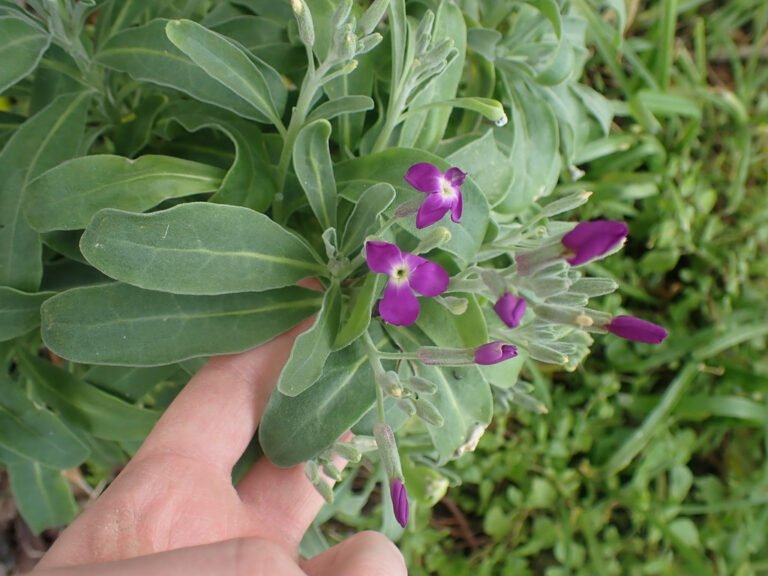
Stocks have grey green leaves and upright clusters of scented flowers. Single flowers show the four petalled pattern typical of the cabbage family, while doubles have extra petals that obscure that simple form. Stem height and branching vary substantially among strains.
Night scented stock, Matthiola longipetala, is a different plant with a looser delicate habit and evening fragrance. Wallflowers are also distinct despite being related. Keep the botanical name with the plant rather than using scent alone for identification.
Photo: Samuel Paitreault, CC BY 4.0. Resized and optimised; cropped for display.
Cool bright growing conditions often suit stocks better than a hot stuffy propagation area. In wet districts, drainage and spacing need particular attention, while exposed sites need support for taller stems. Match the strain to the local season and intended display.
For vases, cut stems when several lower flowers are open and upper buds remain fresh. Remove leaves that would sit under water and condition stems promptly in a clean bucket. Avoid harvesting rain soaked or already browning spikes for a long display.
Use the scent where it can be appreciated, but do not assume ornamental flowers are food. Plants supplied for bedding or floristry may have been treated for that use. This guide's harvesting advice is for decorative stems, not edible flower production.
Photo: Ricardo Lima, CC0 1.0. Resized and optimised; cropped for display.
Damping off thrives in wet crowded trays with poor ventilation. Use clean equipment, fresh seed compost and sensible spacing. Remove affected seedlings and adjust moisture instead of keeping the remaining tray continually saturated.
Flea beetles and caterpillars can damage young brassica family plants, including stocks. Inspect the cause before acting and protect vulnerable seedlings where appropriate. Established plants can tolerate some cosmetic damage without losing the whole display.
Clubroot may be involved, especially where brassicas have struggled before. Remove affected plants and avoid moving contaminated soil. Do not replace stocks in the same infected ground on the assumption that flowers are exempt from vegetable diseases.
Damp crowded conditions favour grey mould and decay. Improve airflow, avoid unnecessary overhead watering and remove affected flowers. Space the next planting sensibly rather than packing plants closely for immediate fullness.
Seed strains vary in their proportion of doubles, and fully double plants generally do not supply seed themselves. Buy a suitable strain when double flowers matter. Do not rename ordinary seedlings or promise every seed will produce an identical flower.
Seed is the usual route for seasonal stocks, with sowing time chosen for the strain and desired flowering season. Use fresh labelled seed and good propagation hygiene. Keep summer annual and overwintered batches clearly separated so aftercare follows the right programme.
Saving seed from fertile single flowered plants can introduce variation, especially in mixtures and hybrids. Fully double flowers generally do not provide the same seed source. Buy reliable seed when a particular colour, height or proportion of doubles is important.
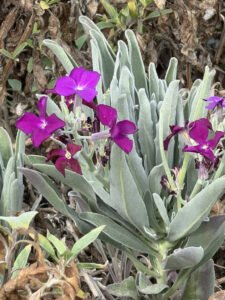
Ten week stocks
A traditional summer annual group for relatively quick flowering from spring sowing. Strains vary in height, colour and doubles, so use the packet's description rather than treating the group as one cultivar.
Single flowered stock species photograph; the named garden strain and flowering schedule are not authenticated.
Photo: Irina Mitine, CC BY 4.0. Resized and optimised; cropped for display.
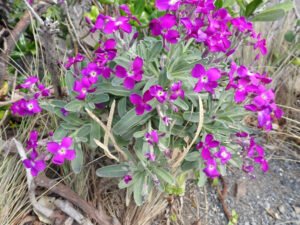
Brompton stocks
Generally managed as biennial stocks for a following season display. They illustrate why a summer annual timetable should not be applied to every stock packet without checking its instructions.
Single flowered stock species photograph; the named garden strain and flowering schedule are not authenticated.
Photo: kiwialli, CC BY 4.0. Resized and optimised; cropped for display.
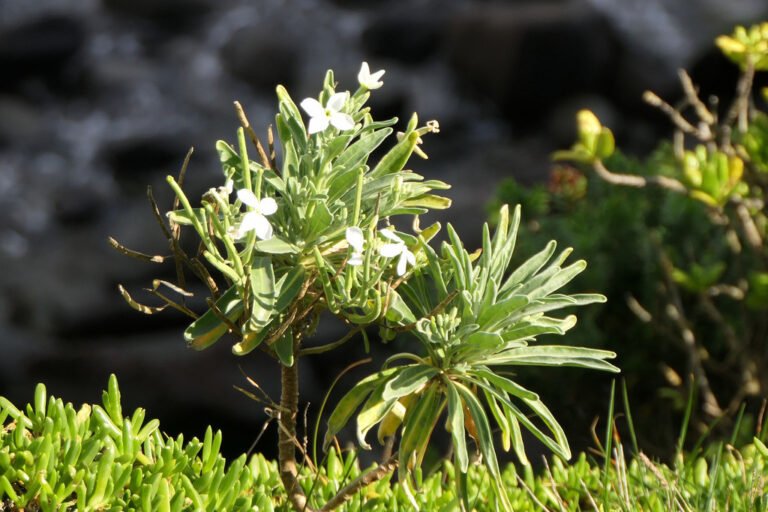
East Lothian stocks
A branching stock group useful where more than one flowering shoot is wanted. Check the offered strain's height and sowing schedule, particularly when comparing it with single stem cutting stock.
Single flowered stock species photograph; the named garden strain and flowering schedule are not authenticated.
Photo: derek_onley, CC BY 4.0. Resized and optimised; cropped for display.
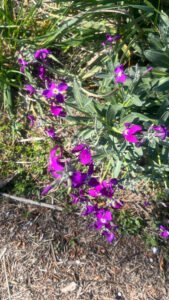
Column cutting stocks
Tall single stem strains are chosen for strong vase stems. They usually need support and should not be pinched automatically; select the colour and flower form from a reliable labelled seed range.
Single flowered stock species photograph; the named garden strain and flowering schedule are not authenticated.
Photo: slob973, CC BY 4.0. Resized and optimised; cropped for display.
Choose stocks by life cycle, height, branching and flower form before colour. Bedding, biennial and single stem cutting strains need different expectations.
Single and less densely double flowers are generally more accessible to visiting insects than heavily doubled forms. If wildlife value matters, retain some open simple flowers and grow other insect friendly plants alongside a cutting crop.
The cabbage family foliage can also feed caterpillars, so inspect damage in context and tolerate what the plants can support. Avoid unnecessary treatment of open blooms and retain useful surrounding habitat for predators and other garden visitors.
Published by Buy From Farmers Direct. Growing guidance reviewed 11 October 2026. The seasonal timeline uses the shared BFFD Growers Calendar record; adjust timings to your variety and local conditions.
Both methods occur, depending on the strain. The main calendar here is spring sowing for summer flowers; biennial and greenhouse stocks need separate instructions.
No. Night scented stock is usually Matthiola longipetala, while this guide covers Matthiola incana bedding and cutting stocks.
Not automatically. Pinching can spoil a single stem cutting strain. Follow the instructions for the particular group you bought.
Many seed strains produce a mixture of flower forms. Buy an appropriate strain if doubles matter, without assuming every seed will produce an identical plant.
Cut when several lower florets are open and upper buds remain fresh. Remove submerged leaves and condition stems in clean water.
No. It means cutting decorative flower stems. This guide does not recommend ornamental stock plants as a food crop.
Start with the right stock strain, grow sturdy seedlings and give the plants sun, drainage and air. Sensible cutting and realistic expectations for branching or winter survival will keep their scented display useful.
Want to get food independence, support your local grower, get better prices and shop more privately?
Local food isn’t just something you find. It’s something you protect. A free account helps keep local supply visible, supported, and resilient.

….it takes 30 seconds for food lovers and 5 minutes for suppliers
We built this for people who care where their food comes from. For people who want to remain food secure. For Farmers to get to the local people, who deserve a better income and to deliver a better price for you. For the environmentally conscious and the privacy-conscious. An account simply helps us make the map and supplier reach more useful to you, without changing how open it is. You’re always in control.


Find local food. Stay connected to it. Create a free account to support local producers and be part of a growing food network.


