Upright stonecrop carries broad heads of starry flowers above fleshy leaves just as many summer plants begin to tire. Pink, red and dusky bronze tones suit grasses and late daisies, while the dry heads can remain attractive through winter. The familiar border plants now belong to Hylotelephium. Give them sun and reasonable drainage, and avoid the rich feeding that encourages heavy, collapsing stems.
Late-season flowers
Hardy perennial clumps
Useful to pollinators
Low feeding needs
Leave winter seedheads
| Botanical identity | Hylotelephium species and hybrids |
| Family | Crassulaceae |
| Plant type | Herbaceous perennial |
| Typical height | 30 to 70cm, by cultivar |
| Typical spread | 40 to 80cm, sometimes more |
| Main flowering season | Late summer and autumn |
| Light | Full sun |
| Soil | Well-drained soil of modest fertility |
| Soil reaction | Acid, neutral or alkaline |
| Winter behaviour | Hardy types commonly survive UK winters |
| Main planting window | March to May or September to October |
| Seed route | Optional spring sowing; seedlings vary |
| Pruning approach | Cut old stems in spring; optional late-May chop |
| Propagation | Division and cuttings |
| Container suitability | Good for a drained patio pot |
| Watering priority | Water while establishing; drought tolerant once rooted |
| Feeding priority | Little or no feed in ordinary ground |
| Wildlife value | Late nectar for pollinating insects |
| Main use | Borders, winter seedheads and cut flowers |
| Important distinction | This guide covers upright border Hylotelephium, formerly Sedum; low creeping Sedum belongs to the separate guide. |
| Plant name | Crop type | Spacing |
Sow indoors
Plant outdoors
Harvest
Polytunnel | |||||||||||
|---|---|---|---|---|---|---|---|---|---|---|---|---|---|---|
| Jan | Feb | Mar | Apr | May | Jun | Jul | Aug | Sep | Oct | Nov | Dec | |||
| Stonecrop | Not recorded | Single 50cm, In row 50cm, Row gap 50cm | No activity recorded | No activity recorded | Sow indoors, Plant outdoors | Sow indoors, Plant outdoors | Plant outdoors | No activity recorded | No activity recorded | Harvest | Plant outdoors, Harvest | Plant outdoors, Harvest | No activity recorded | No activity recorded |
Sow indoors: March, April. Plant outdoors: March, April, May, September, October. Harvest: August, September, October. Polytunnel: no months recorded.
Spring and early autumn are the main establishment windows. March to April seed sowing is optional and will not reproduce every named cultivar. August to October harvest means taking a limited number of ornamental flower stems for fresh or dried arrangements, never a food crop. Established hardy border plants do not need routine polytunnel protection. These month bands are planning windows for a typical UK garden; local frost, altitude, exposure and the season can move the work. Check the plant or seed label before using an optional route.
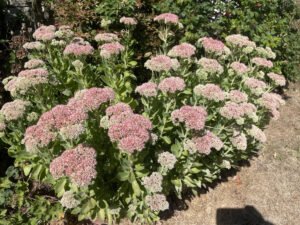
Upright stonecrop is useful in a sunny border where its broad flower heads contrast with fine grasses and narrow spikes.
Choose a compact cultivar for a patio container or smaller garden; larger forms need room for their full mature clump.
Photo: Mary E. Macaulay, P.Eng., CC BY 4.0. Resized and optimised; cropped for display.
Choose a bright open position. Shaded plants can survive but often lean towards the light and carry weaker stems. The early-season clump is attractive before flowers open, so position it where the fleshy leaves can be seen. Later neighbours should complement the broad heads rather than close over them just as their colour develops.
Use drained soil with modest fertility. Improve the wider site if winter water collects; a small gritty planting pocket cannot drain a saturated bed. A raised planting area must let water move away from the whole root zone. Adding a handful of grit beneath one crown does little if the surrounding ground remains saturated, and a very gritty pocket can dry unevenly in summer.
Allow about 50cm for medium border forms, increasing the gap for cultivars expected to spread farther.
A frost-resistant container lets you control drainage on difficult ground. Use a suitable peat-free compost that drains freely without drying instantly.
Photo: Mary E. Macaulay, P.Eng., CC BY 4.0. Resized and optimised; cropped for display.

Begin with correctly labelled upright stonecrop and decide where the mature plant will fit. Preparing the growing space before buying makes the first season easier, especially when young plants need prompt attention.
1.
Select a healthy labelled Hylotelephium suited to the available space.
2.
Plant in spring or early autumn, avoiding frozen or saturated ground.
3.
Clear weeds and prepare the whole root area rather than adding rich manure only to the hole.
4.
Place medium plants about 50cm apart, checking the cultivar’s eventual spread.
5.
Set the crown at its previous soil level and spread loose roots gently.
6.
Firm around the rootball without burying emerging shoots.
7.
Water during establishment; fit unobtrusive supports early if an exposed site requires them.
8.
Leave space to see the new basal shoots when cutting down last year’s stems.

Watering
Water new clumps until their roots enter the surrounding ground. Mature plants in suitable soil usually manage on rainfall except in prolonged drought.
Keep container roots supplied through summer without leaving compost saturated. Fleshy leaves do not make a small pot immune to drought.

Feeding
Avoid routine high-nitrogen feeding in a border: lush stems can collapse under heavy flower heads.
Refresh tired container compost and feed modestly only when needed. Persistent flopping calls for a review of light and fertility.

Pruning
Leave sound dead heads through winter, then cut old stems to the base in spring as new shoots appear.
An optional late-May cut by about half produces shorter, later-flowering stems. Leave part of the clump uncut for a longer display. Cutting only the front half of a group gives a stepped effect: uncut stems flower first behind the shorter later growth. Try this on part of an established plant before applying it to every clump in a new border.

Winter care
Hardy upright stonecrops generally remain outdoors. Winter wet around the crown is a more useful concern than routine wrapping.
Pots should drain freely and can be moved out of persistent rain. Young rooted cuttings need more shelter than established garden clumps.
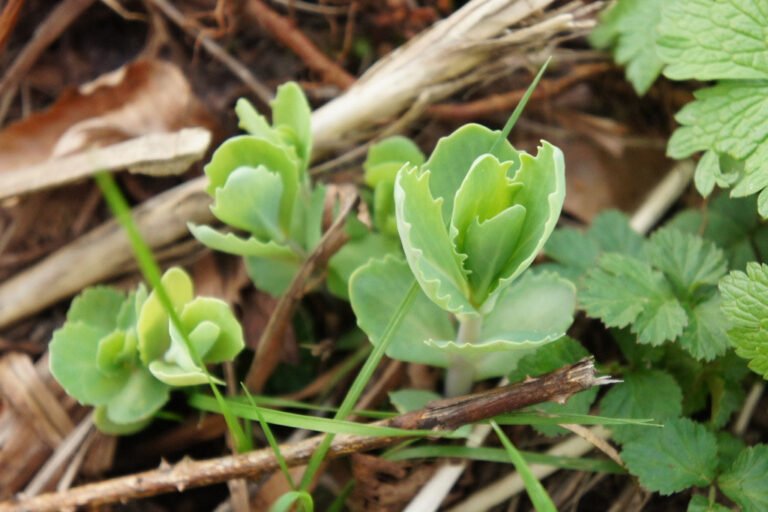
Hylotelephium has fleshy leaves on upright seasonal stems and broad clusters of many small star-shaped flowers. New shoots arise from a basal crown.
These border plants differ in habit from creeping Sedum used on roofs and rockeries. Check the botanical name when buying a plant labelled only stonecrop.
Photo: Alex Press, CC BY 4.0. Resized and optimised; cropped for display.
On rich UK clay, choose the brightest position and avoid unnecessary feeding. Improve drainage across the planting area if water lingers. Do not use winter hardiness alone to choose a site. A plant may survive severe cold yet still make a disappointing display in deep shade. Light and modest fertility are particularly relevant to keeping the broad flower heads upright.
Cut flower stems when their colour and texture suit the arrangement. Leave plenty on the plant for insects and winter structure.
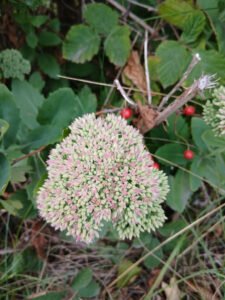
The dry heads can look particularly good beside grasses in low autumn light. Their value continues after the living flowers have finished.
Photo: valentinkempf, CC0 1.0. Resized and optimised; cropped for display.
Excess fertility, shade or a large ageing clump can contribute. Review the site, divide if needed and consider a late-May chop next year.
Check persistent wetness before replacing the plant. Remove failed material and improve drainage; do not put a new crown back into the same saturated pocket.
Slugs and snails can damage emerging growth. Inspect at dusk and protect small divisions while allowing established clumps time to recover.
Dry roots and restricted airflow can worsen late-season symptoms. Water stressed pots appropriately and avoid crowding; minor cosmetic damage rarely justifies drastic action.
Inspect roots for decay or vine-weevil larvae. Establish the cause before adding water or feed, since both can worsen a plant whose roots are already damaged.
Divide established clumps in spring, retaining healthy shoots and roots on each piece. Replant promptly and water until new roots develop. Choose firm outer sections with visible growing points and discard an exhausted centre if necessary. Several substantial divisions are easier to establish than many tiny fragments, especially where slugs graze new shoots or spring weather turns dry.
Root healthy stem cuttings during the growing season. Division and cuttings preserve named cultivars more reliably than seedlings, which may differ in leaf and flower colour.
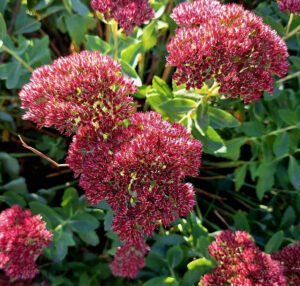
Herbstfreude Group
A familiar group with broad pink heads that deepen towards rusty tones as they age. Give vigorous plants enough space and modest fertility.
Upright stonecrop species or hybrid photograph; Herbstfreude Group identity is not authenticated.
Photo: Marek Hrušovský, CC0 1.0. Resized and optimised; cropped for display.

Brilliant
A Hylotelephium spectabile selection with conspicuous pink flower heads. It suits a sunny border and provides a useful late-season focal point.
Upright stonecrop photograph; Brilliant cultivar identity is not authenticated.
Photo: Konrad J. Hammerl, CC0 1.0. Resized and optimised; cropped for display.

Matrona
Known for dark-toned stems and pink flowers above substantial foliage. Its strong silhouette works well with grasses; mature size still depends on conditions.
Upright stonecrop photograph; Matrona cultivar identity is not authenticated.
Photo: Patrick Le Mao, CC0 1.0. Resized and optimised; cropped for display.

Purple Emperor
A dark-leaved selection for contrast with silver or green neighbours. Good light helps the foliage colour; the photograph is illustrative unless its source names the cultivar.
Green leaved upright stonecrop shown for comparison. Purple Emperor is a dark leaved selection.
Photo: Clive Edgar, CC BY 4.0. Resized and optimised; cropped for display.
Compare the mature size, growing requirements and season of interest before choosing upright stonecrop. Buy clearly labelled, healthy stock and prepare its position in advance. A plant suited to the available light and soil is easier to establish and maintain.
The many small flowers provide feeding opportunities for bees, hoverflies and butterflies late in the season. Keep some heads uncut during their flowering peak. The change from bud to open flower is gradual across a head. A pink-looking cluster may still contain many unopened flowers, so keep observing insect activity before deciding that every coloured head has finished its feeding value.
Standing stems and dry heads add small sheltering spaces over winter. Clear them selectively in spring and avoid unnecessary treatment of flowers being visited by insects.
Published by Buy From Farmers Direct. Growing guidance reviewed 11 October 2026. The seasonal timeline uses the shared BFFD Growers Calendar record; adjust timings to your variety and local conditions.
Many upright border sedums are now Hylotelephium. Creeping Sedum remains a different group with different uses.
Shade, rich feeding or an ageing clump can produce heavy lax stems. More fertiliser is usually not the answer.
Yes, an optional late-May cut by about half can make many upright forms shorter and delay their flowers.
Leave sound heads for winter interest, then cut old stems down in spring as new basal growth appears.
Established hardy forms usually remain outside. Good drainage matters, especially in pots.
Yes, take a limited number for ornamental fresh or dried arrangements. The calendar does not indicate edible harvesting.
Give upright stonecrop an appropriate position, establish it carefully and adjust care to the weather. Keep a simple note of flowering and any problems so that next year’s planting decisions reflect what actually succeeds in your garden.
Explore more growing guides: Verbena (Perennial), Yarrow, Verbascum.
Want to get food independence, support your local grower, get better prices and shop more privately?
Local food isn’t just something you find. It’s something you protect. A free account helps keep local supply visible, supported, and resilient.

….it takes 30 seconds for food lovers and 5 minutes for suppliers
We built this for people who care where their food comes from. For people who want to remain food secure. For Farmers to get to the local people, who deserve a better income and to deliver a better price for you. For the environmentally conscious and the privacy-conscious. An account simply helps us make the map and supplier reach more useful to you, without changing how open it is. You’re always in control.


Find local food. Stay connected to it. Create a free account to support local producers and be part of a growing food network.


