Follow us:

Buying Honey Bees

Natures proud pollinators
Honey bees are live animals living as a colony, and their health affects not only one beekeeper but also surrounding colonies, local beekeepers and the wider environment. A beginner should never rush into buying bees before they have training, equipment, a suitable hive site and local support. This guide explains the main ways people obtain honey bees in the UK, what to check before buying, why local advice matters and how BFFD connects responsible beekeeping with local honey, food provenance and specialist producer visibility.
Buying honey bees in the UK usually means obtaining a nucleus colony, full colony, package of bees or swarm, with nucleus colonies being one of the most common beginner routes. Beginners should seek advice from a local beekeeping association before buying bees, make sure their hive and equipment are ready, ask about colony health, queen origin, temperament, disease history and recent inspections, and register with BeeBase for official bee health support. The National Bee Unit’s guidance on obtaining bees says bees can be obtained as a full colony, nucleus, package or swarm, and GOV.UK says suspected notifiable honey bee pests and diseases must be reported to the National Bee Unit or local bee inspector immediately.

When buying a beehive in the UK, most beginners should first speak to a local beekeeping association and choose a hive type that is common in their area, easy to source parts for and suitable for their strength, site and training support. The British Beekeepers Association says there are different types of hive available, that this can be confusing for beginners, and that the National hive is the most common type in the UK. It also advises beginners to seek help from their local BBKA association when choosing what hive will be most suitable.
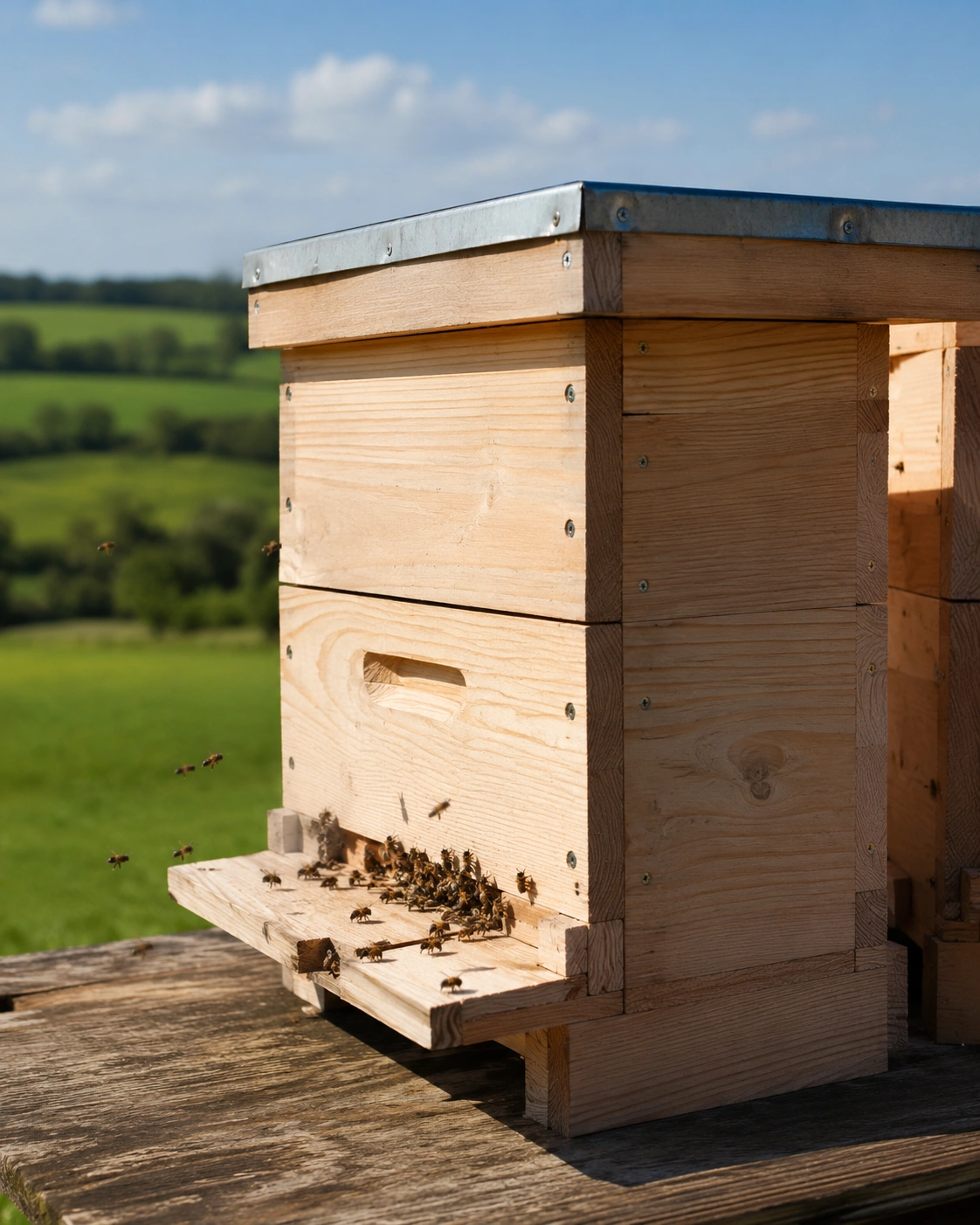
honey bees in a new hive

Why Buying Honey Bees Needs Care

Buying bees is one of the biggest decisions a new beekeeper makes.

A strong, healthy colony can give a beginner a better start. A weak, diseased, bad tempered or poorly matched colony can make beekeeping difficult from the first inspection. The wrong purchase can also create disease risks for other beekeepers nearby.
Honey bee colonies are living systems. They contain a queen, workers, brood, food stores, comb, microorganisms, pests, and sometimes hidden disease problems. That is why buying bees should be done through trusted routes, with proper questions and ideally with support from experienced beekeepers.
The British Beekeepers Association says keeping bees healthy and productive requires knowledge and skill, and that beekeeping is made much easier by belonging to a local BBKA association where beginners can receive advice, tuition and support.

For beginners, the safest order is:

The Main Ways to Obtain Honey Bees

The National Bee Unit explains that bees can be obtained as a full colony, nucleus, package or swarm. Each route has different risks and levels of beginner suitability.

1. Nucleus colony

A nucleus colony, often called a nuc, is a small working colony with bees, brood, comb and a laying queen. It is one of the most common beginner routes because it is smaller than a full colony and can grow into a full hive over the season.

The National Bee Unit’s guidance on nucleus colonies describes honey bee nucleus colonies as usually consisting of five to six brood frames with an adult honey bee population and brood frames. A nucleus colony can be a good starting point, but only if it is healthy, properly prepared and suited to the beekeeper’s hive equipment.

2. Full colony

The WBC hive is the traditional double walled hive many people picture when they imagine a beehive. It can look attractive, but it has more parts and can be more time consuming to handle. It may suit some beekeepers, but beginners should understand the extra work before buying one.

3. Package bees

A package usually contains adult bees and a queen but no established comb or brood in the same way as a nucleus colony. Packages are more common in some countries than others, and beginners should take local advice before choosing this route.


4. Swarm

A swarm is a natural group of bees that has left an existing colony with a queen. Swarms can sometimes be collected by experienced beekeepers or swarm collectors, but they are not always the best route for beginners. The beekeeper may not know the colony’s health, temperament or origin. Beginners should only take on a swarm with experienced support.

Buying Honey Bees

Buying bees locally can make sense for beginners because it often gives better support, easier collection and more practical advice.

Buy Bees Locally Where Possible

A local beekeeper or association may understand the local conditions, forage, common hive types and typical issues in the area. Local support can also be invaluable if the beginner needs help after the bees arrive.

This does not mean every local seller is automatically suitable. Buyers still need to ask questions about health, temperament, queen status, frame type and disease history.

But where possible, beginners should avoid anonymous or poorly explained sales. If the seller cannot explain the colony clearly, that is a warning sign

Avoid Rushing Into Imported Bees

Imports and movement of bees carry biosecurity considerations.


BeeBase has dedicated guidance on importing and exporting live honey bees and bumble bees. GOV.UK guidance also explains that import regulations are an important defence against serious pests such as small hive beetle and Tropilaelaps mite, which are not thought to be present in the UK.


For a beginner, the safest advice is simple: do not buy imported bees, queens or packages without expert guidance and a clear understanding of the rules, health risks and paperwork.


Bees are not just a product. Their movement can affect wider bee health.

Buying bees carries bee health responsibilities
Do not buy bees from unknown, poorly documented or suspicious sources. Bee movement and imports can carry disease and pest risks. If you suspect a notifiable pest or disease, you must report it to the National Bee Unit or your local bee inspector immediately.

Bee Health Questions Before Buying

Before buying honey bees, the buyer should ask about health and inspection history.

Important questions include:

Before buying a hive, ask:
GOV.UK says European foulbrood is a notifiable disease and explains that suspected notifiable pests and diseases must be reported to the National Bee Unit or local bee inspector immediately. BeeBase also states that it is a legal requirement to notify the NBU if a beekeeper knows or suspects their colonies have a notifiable disease or pest.
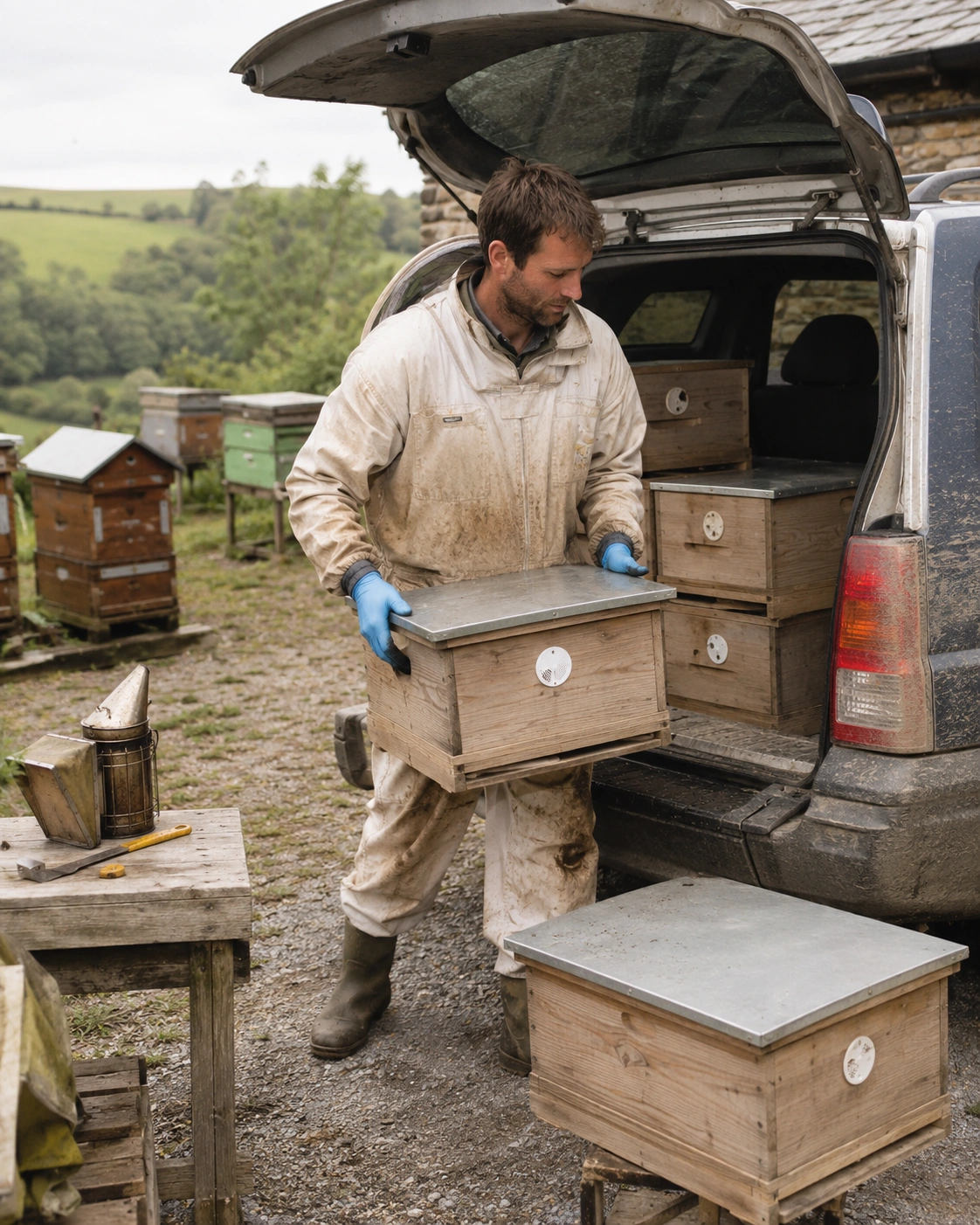
honey bees being transported
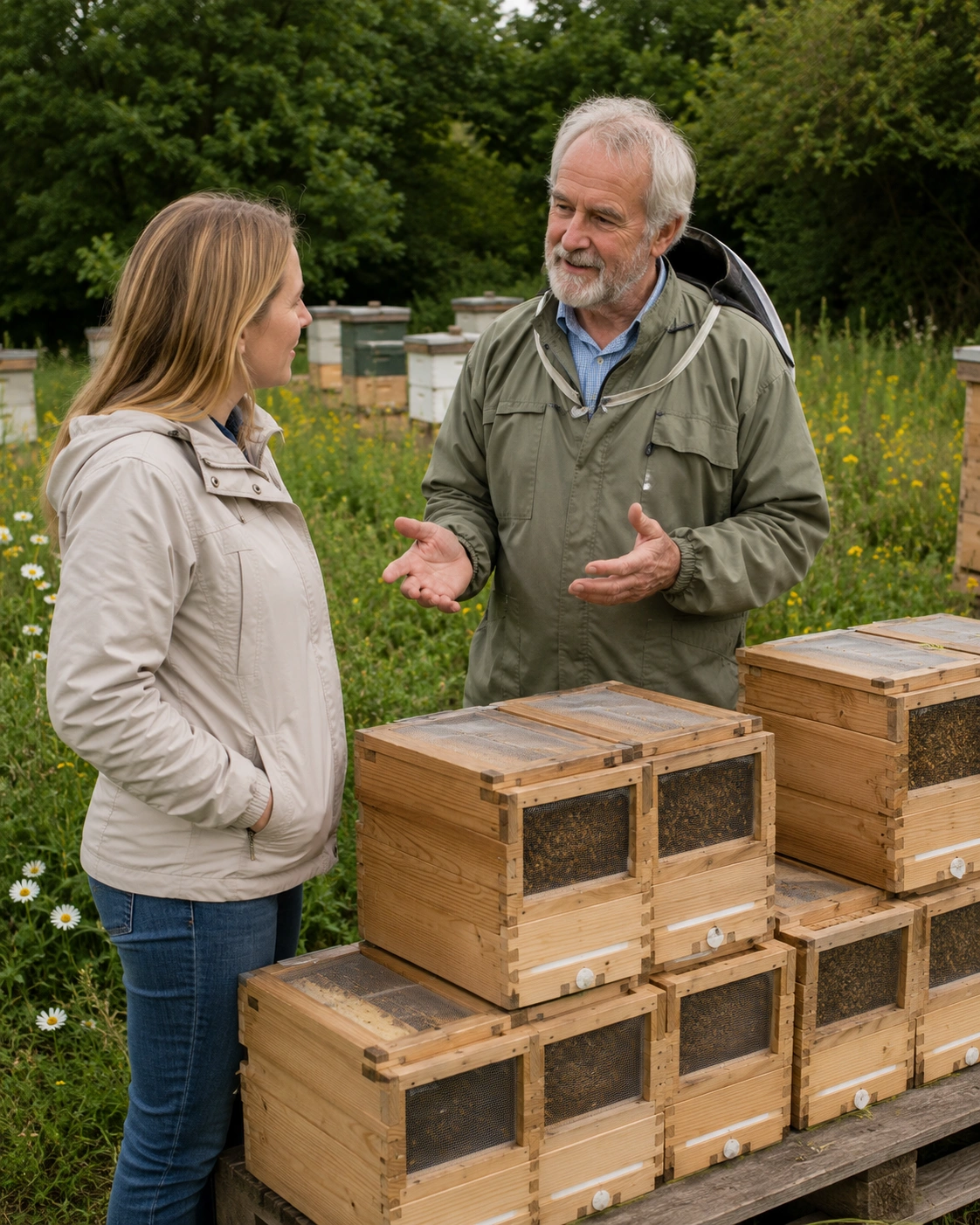
A man explaining honey bees to a new customer

What to Prepare Before Bees Arrive

Do not buy honey bees until the hive and equipment are ready.
Before collection or delivery, a beginner should have:
A beginner should also understand how and when the bees will be installed into their hive. This is best learned directly from an experienced beekeeper.

Price Should Not Be the Main Deciding Factor

Cheap bees can become expensive if the colony is weak, unhealthy or difficult to manage.

A good purchase should be judged by colony health, queen quality, temperament, local suitability, supplier reputation, frame compatibility and support, not price alone.

A responsible supplier should be willing to explain what is being sold. If a listing is vague, rushed, unusually cheap or unwilling to answer sensible questions, avoid it.

A beginner should not improvise this stage. Ask for practical guidance before collection day.
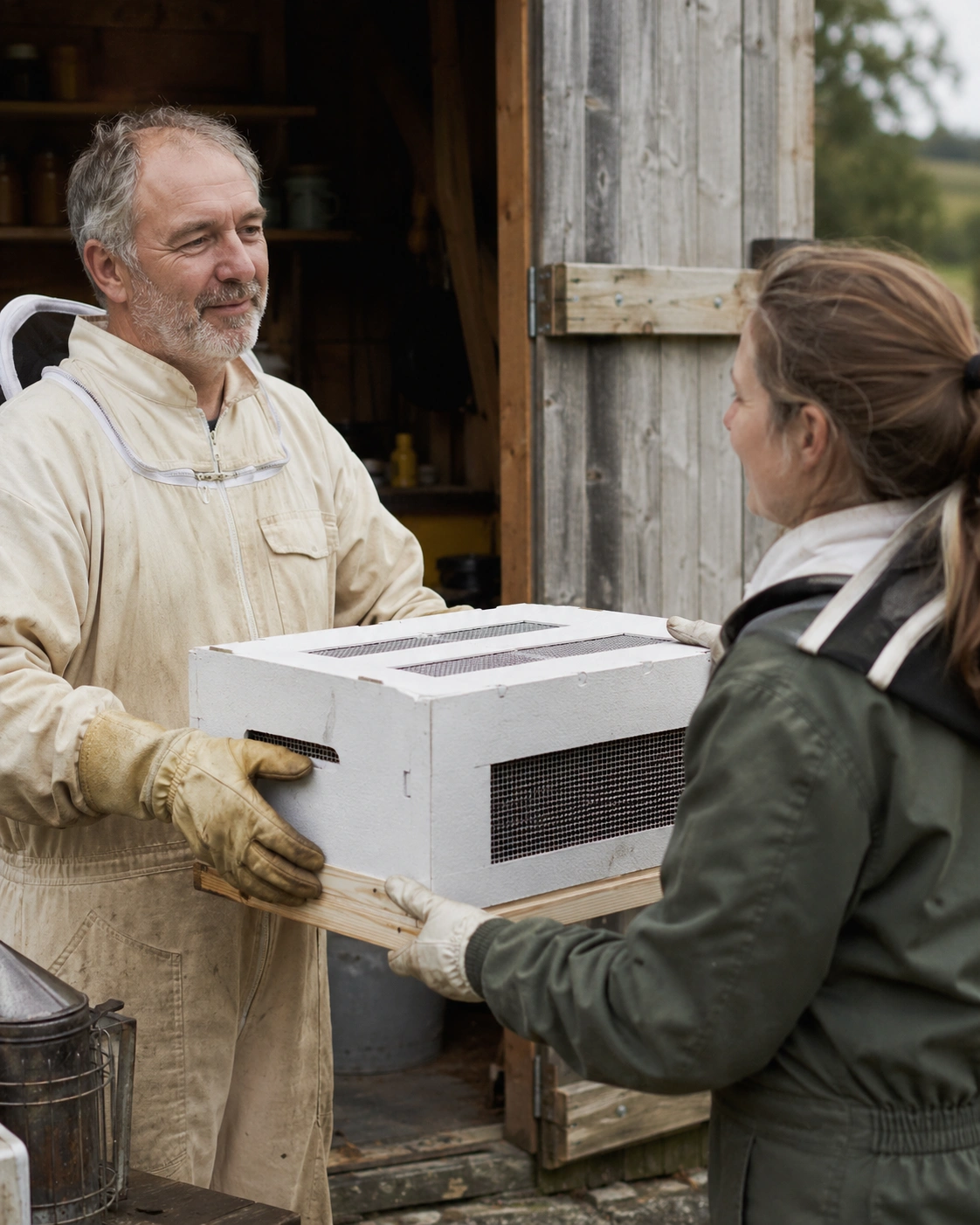
A man handing over honey bees to a customer
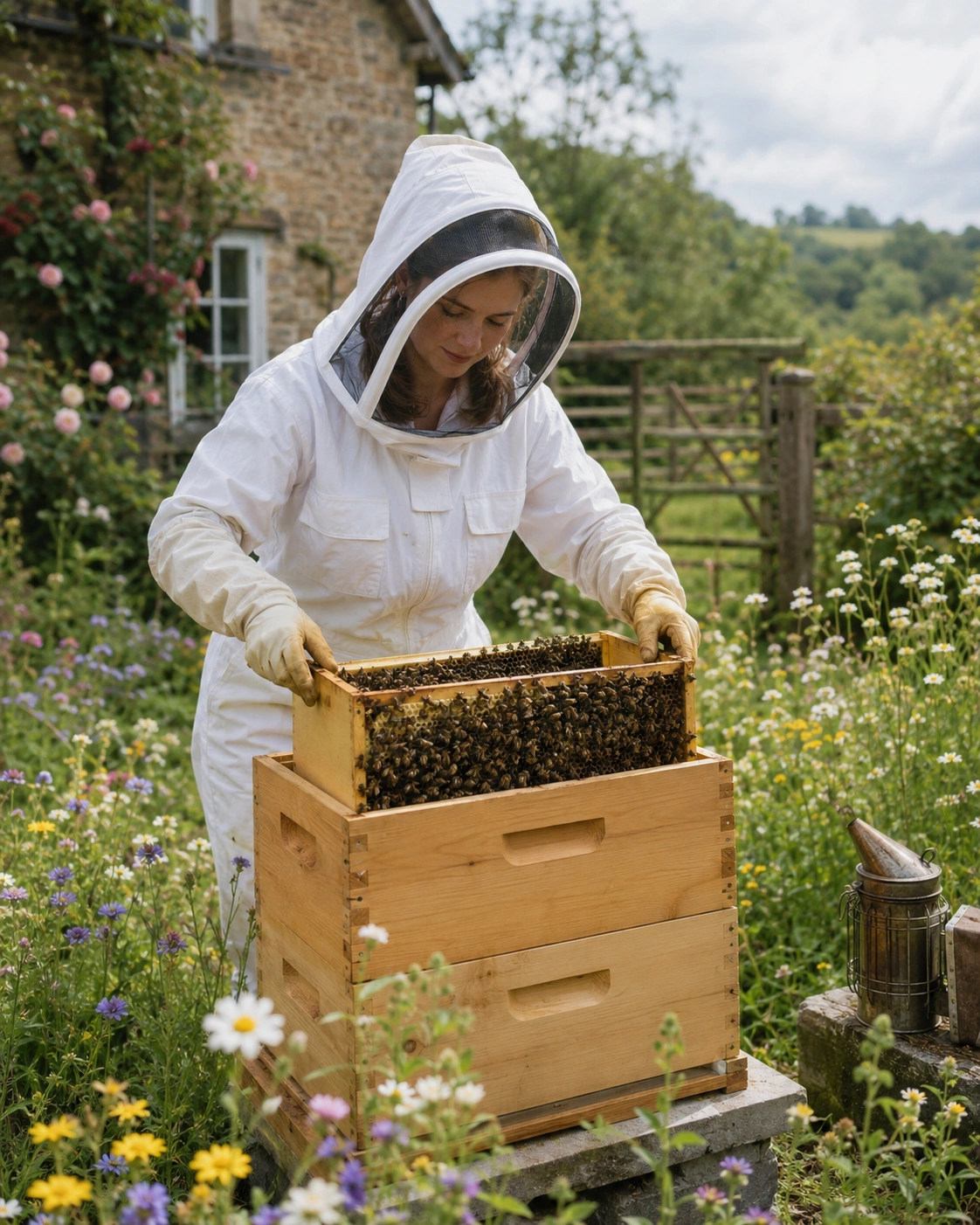
A new beekeeper with bought bees

Buying Honey Bees and BFFD

BFFD does not sell honey bees.

BFFD’s role is to help people understand responsible beekeeping, local honey, producer visibility and food provenance. For people who already keep bees or produce honey, BFFD can help them become easier to find by local shoppers, farm shops, farmers markets and food communities.

A BFFD beekeeper profile can help show:

Buying honey bees is only the start. Responsible beekeeping is the long term work.

Reputable External Sources

1. British Beekeepers Association: Becoming a Beekeeper

Useful for beginner advice, hive types and local association guidance.

2. National Bee Unit: Starting Right with Bees

Official beginner guide covering getting started and equipment considerations.

3. National Bee Unit: Hive Cleaning and Sterilisation

Official guidance on cleaning and sterilising hive equipment.

4. National Bee Unit: Legal Responsibility of Beekeepers

Official guidance explaining the responsibility to notify suspected notifiable pests or diseases.

5. GOV.UK: Honey bees, protecting them from pests and diseases

Official guidance on serious notifiable honey bee pests and diseases.
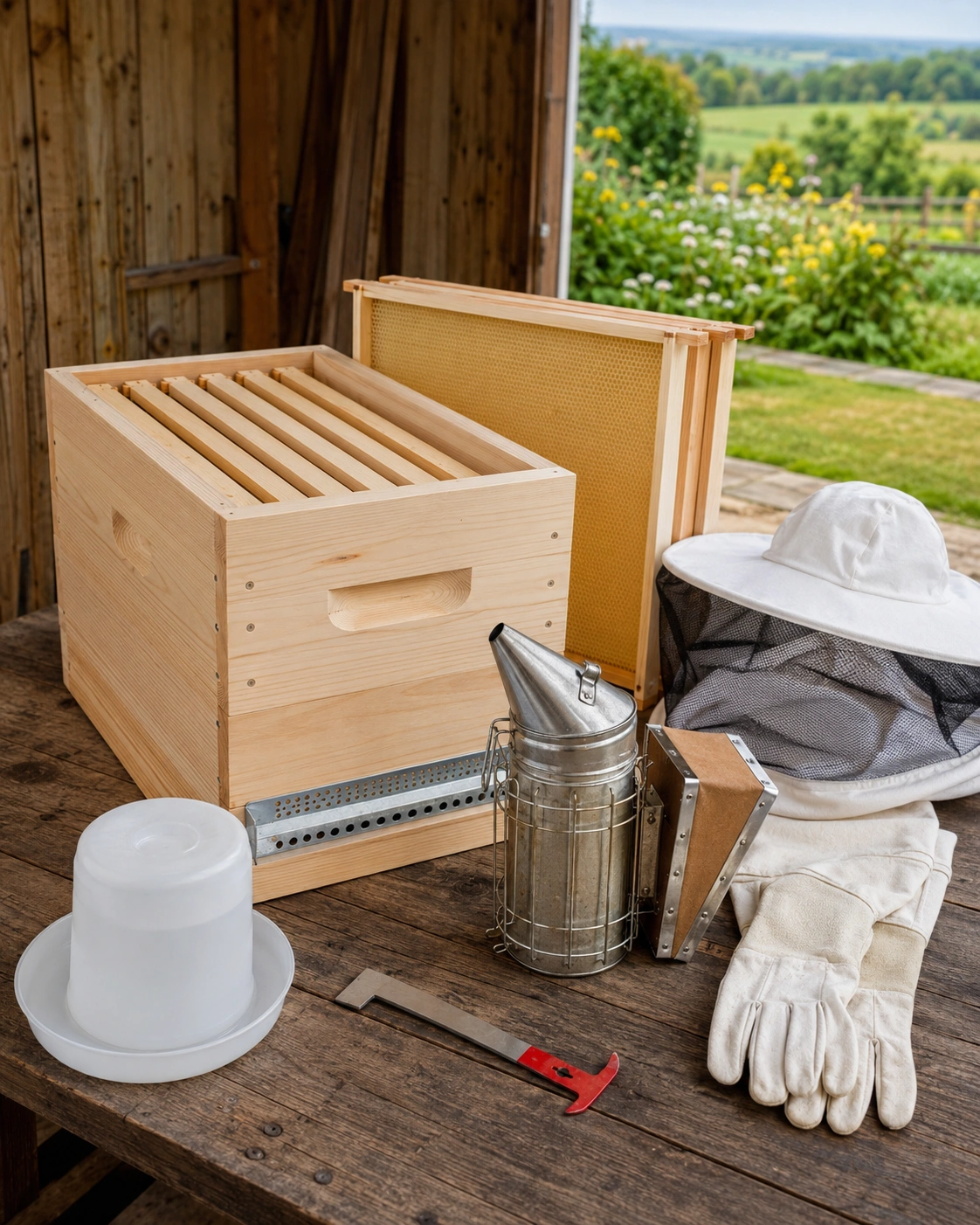
Buying honeybees equipment

* External sources are provided for further reading. BFFD does not provide veterinary, legal, equipment safety or bee health inspection advice. Beekeepers should always follow current official guidance and contact the National Bee Unit or local bee inspector where required.

FAQ

What is a nucleus colony?

A nucleus colony is a small working colony, usually supplied with frames, bees, brood and a laying queen. It can grow into a full colony when managed properly.

A full colony can be more demanding because it contains more bees and needs confident management. Many beginners are better starting with a suitable nucleus colony, with local support.
Only if the seller is reputable, transparent and able to answer detailed questions about health, queen status, frame type, origin and collection or delivery. Avoid vague or suspicious listings.
Ask about queen age and origin, colony temperament, brood health, recent inspections, varroa management, disease history, frame compatibility and after sale support.
A swarm can become a colony, but it is not always ideal for beginners because health, temperament and origin may be unknown. Beginners should only take on a swarm with experienced support.
New beekeepers should register with BeeBase so they can access official bee health information and support. BeeBase is an important tool for bee disease control and beekeeper communication.
BFFD covers buying honey bees because responsible beekeeping supports local honey, pollination, food provenance and specialist producer visibility. The platform helps connect people with beekeepers and honey producers, but it does not sell bees.

Buy Bees Responsibly and Build Your Knowledge First

Honey bees need careful handling, proper equipment and a beekeeper who understands their responsibility. BFFD is being built to help beekeepers, honey producers and local food suppliers become easier to find, understand and support.