Follow us:

HONEY TASTING SESSIONS

Specialist producers are the people who give British food its character, skill and local identity. Honey may just be the pinnacle of specialist production.
A jar of honey can carry the character of flowers, hedgerows, trees, crops, orchards, moorland, gardens and seasons. One honey may taste light, floral and delicate. Another may be dark, rich, herbal or almost caramel like. Tasting honey with a beekeeper or producer gives people a better understanding of where honey comes from, how bees shape local food and why provenance matters. BFFD is being built to help people find local food experiences like honey tasting sessions, beekeeper talks, farm shop events, farmers market demonstrations and producer led learning.
Honey tasting sessions are events or experiences where people taste different honeys and learn about flavour, season, flowers, bees, beekeeping and local provenance. They may be hosted by beekeepers, farm shops, farmers markets, food festivals, local food groups, schools, community projects or specialist producers. A good honey tasting session should help people understand where the honey was harvested, what type of honey it is, how the season affects flavour and how to buy from the beekeeper or supplier afterwards.

When buying a beehive in the UK, most beginners should first speak to a local beekeeping association and choose a hive type that is common in their area, easy to source parts for and suitable for their strength, site and training support. The British Beekeepers Association says there are different types of hive available, that this can be confusing for beginners, and that the National hive is the most common type in the UK. It also advises beginners to seek help from their local BBKA association when choosing what hive will be most suitable.
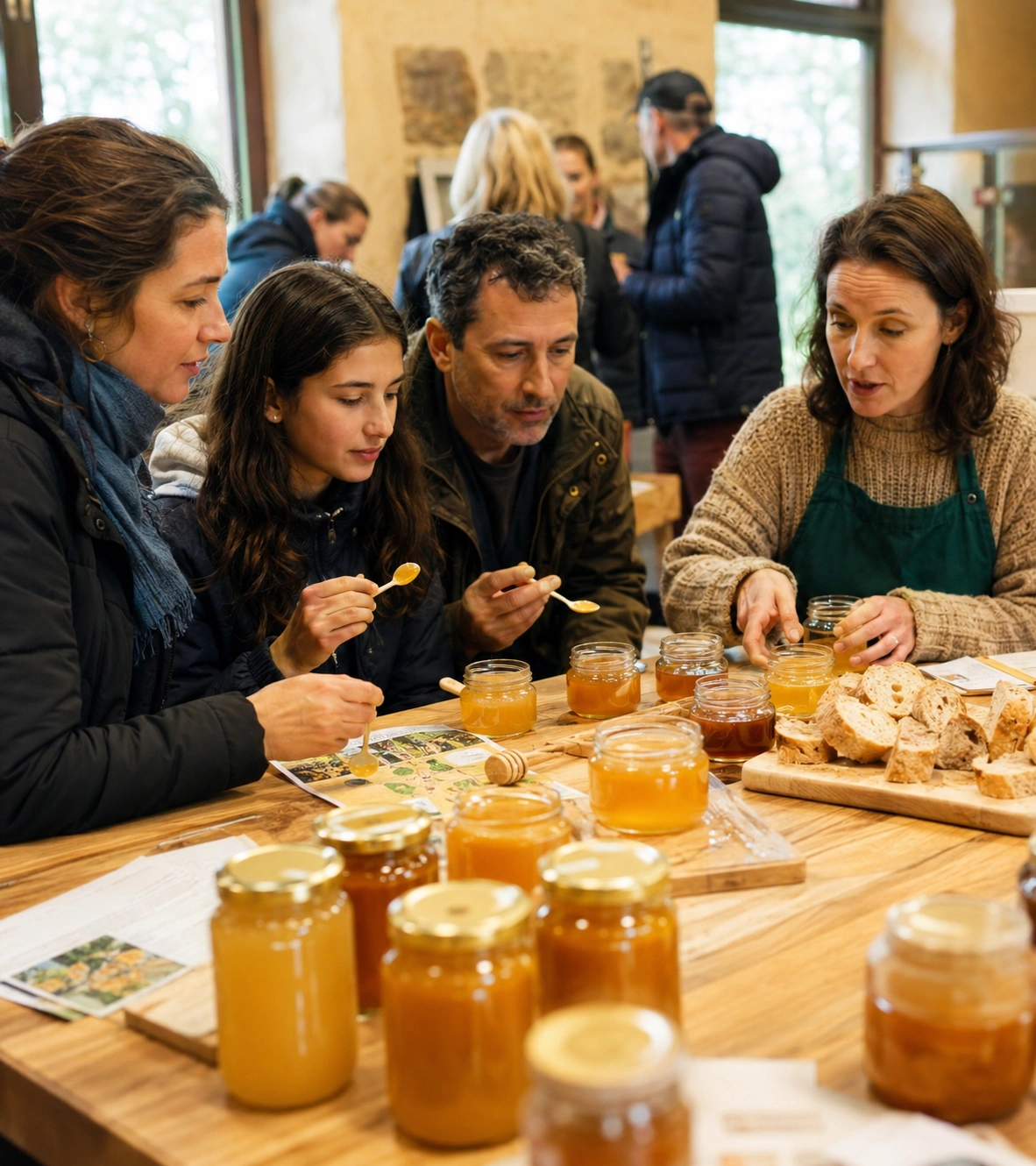
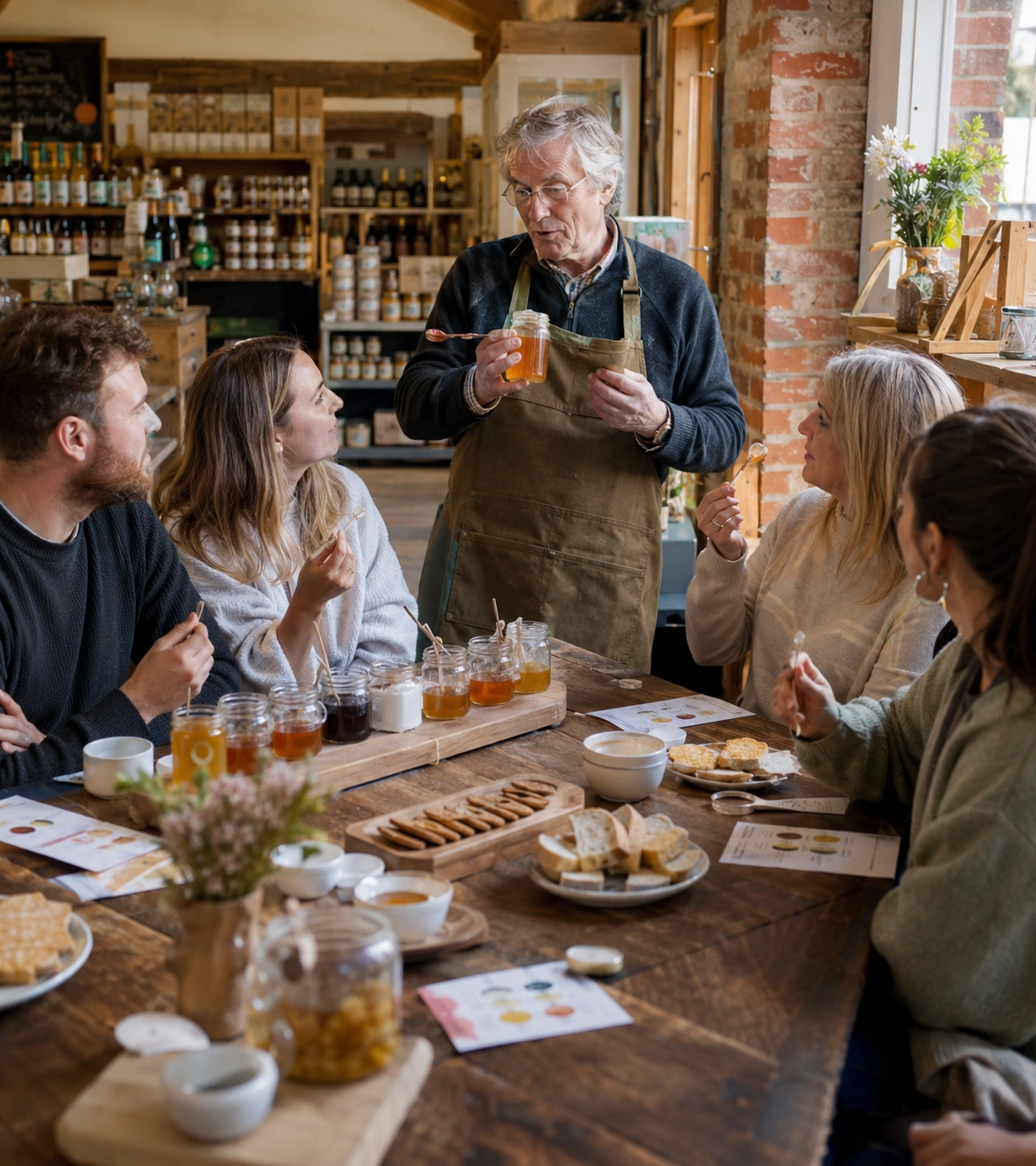
A group doing a honey tasting session

What Honey Tasting Sessions Are

A honey tasting session is usually a guided experience where people try different honeys and learn what makes them different.
The session might compare local honey with British honey, set honey with runny honey, blossom honey with heather honey, or single beekeeper honey with blended honey. It may also explain how bees forage, how honey is harvested, why honey crystallises, and what shoppers should check before buying.
Honey tasting sessions can be simple or more structured. A beekeeper might run one at a farm shop, a farmers market, a school, a community hall, a food festival, a farm open day or through a private group booking.
The purpose is not only to taste honey. It is to understand honey.

Why Honey Tasting Matters

Honey tasting helps people see honey as a local food, not just a sweetener. It lets you understand the product better and let’s you develop a connection with the community.

Many shoppers buy honey from a supermarket shelf without knowing where it came from, who produced it or whether it was blended from multiple sources. A tasting session changes that. It gives people a chance to ask questions, compare flavours and understand how landscape affects food.

Honey tasting can help people learn:

For BFFD, honey tasting sessions fit perfectly into the wider mission: connecting people with food, place and producer knowledge.
Education on Honey tasting sessions

Where to Find Honey Tasting Sessions

Honey tasting sessions may appear in several places.

Local beekeepers

Some beekeepers offer tasting sessions, talks, farm visits or local demonstrations. These may be occasional rather than regular, so they can be difficult to find without a dedicated directory.

Farm shops

Farm shops may host honey tasting days, local producer events, meet the maker sessions or seasonal food tastings.

Farmers markets

A beekeeper selling at a farmers market may offer informal tastings at the stall, or run a more structured session as part of a market event.

Food festivals and agricultural shows

Honey producers, beekeeping associations and local food businesses may appear at larger events where tasting and education are part of the experience.

Schools and community groups

Beekeepers may support food education, pollinator learning, local food projects or community growing events.

BFFD supplier profiles

As BFFD grows, honey producers and beekeepers can use their profiles to show whether they offer tastings, talks, visits, market appearances or seasonal events.

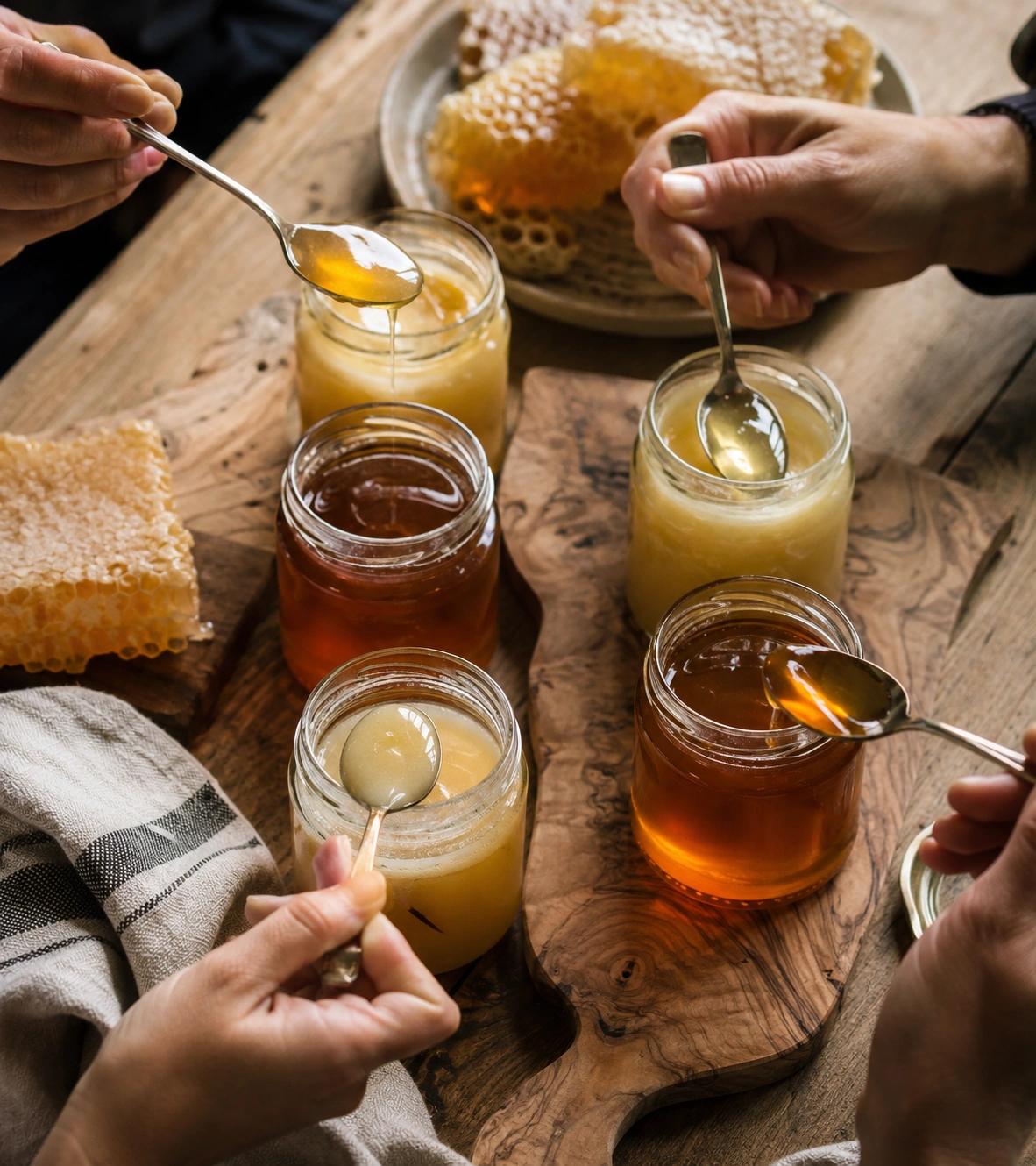
spoons in jars of local honey tasting sessions

What to Expect at a Honey Tasting Session

A honey tasting session should be approachable, interesting and practical.
Depending on the host, it may include:
A good session should not feel like a lecture. It should feel like discovering the story behind the jar.

Types of Honey You Might Taste

Honey tasting sessions often work best when they compare different textures, regions, seasons or floral sources.

Runny honey

Runny honey is smooth, golden and pourable, making it one of the most familiar forms of honey for everyday use. It has not yet naturally crystallised, so it keeps a liquid texture that works well over toast, porridge, yoghurt, pancakes, fruit, cheese boards and warm drinks.

In a tasting session, runny honey is often a good starting point because it allows people to notice colour, aroma and sweetness clearly. Some runny honeys are light and floral, while others can be darker, richer and more rounded depending on the flowers, trees, crops or hedgerows the bees have visited.

Set honey

Set honey is honey that has naturally crystallised and become firmer in texture. This is a normal process and does not mean the honey has gone bad. Over time, many natural honeys will begin to form crystals because of their natural sugar balance.

The texture of set honey can vary. Some set honeys are quite firm and grainy, while others are softer and easier to spread. The flavour is usually just as rich as runny honey, but the firmer texture can make it feel more substantial on toast, crumpets, bread, oatcakes or scones.

Soft set honey

Soft set honey is a smooth, spreadable honey with a creamy texture. It is usually controlled during crystallisation so the crystals remain fine and even, giving it a silky mouthfeel rather than a coarse or grainy finish.

This type of honey is especially popular with people who want honey that spreads easily without dripping. It works well on bread, toast, pancakes, muffins, porridge and breakfast bowls. It can also be useful in baking where a thicker honey is easier to measure and mix.

Comb honey

Comb honey is honey still held inside the natural beeswax comb. It is one of the closest ways to experience honey as it exists in the hive. The honey is eaten with the wax, which gives it a distinctive texture and a strong sense of provenance.

Comb honey is often served in small pieces and can be paired with cheese, bread, charcuterie, fruit, yoghurt or desserts. The wax adds a gentle chew and can carry delicate floral aromas. Some people chew the wax like gum and then discard it, while others eat it whole.

Heather Honey

Heather honey is a distinctive honey linked to heather moorland where available. It is often darker, stronger and more aromatic than lighter blossom honeys. Depending on the source and season, it can have earthy, floral, herbal, woody or slightly smoky notes.

Heather honey is often valued for its intensity. It can have a thicker, almost jelly like consistency, which makes it different from many standard runny honeys. Because of this texture, it may need to be handled differently by the beekeeper during extraction.

Set honey

Blossom or wildflower honey is made from nectar gathered from flowers, trees, hedgerows, gardens, crops and wild plants. It is one of the broadest honey categories because the exact flavour depends on what was flowering within reach of the bees.

A spring wildflower honey may be light, bright and floral. A later summer honey may be deeper, fruitier or more herbaceous. Honey from a rural hedgerow landscape can taste very different from honey gathered near orchards, gardens, clover fields, woodland edges or mixed farmland.
How to Taste Honey Properly

Honey tasting should be simple, but a little structure helps.
Start with lighter honeys before stronger ones. Look at the colour first, then smell the aroma, then taste a small amount slowly. Notice the sweetness, floral notes, texture, aftertaste and whether the flavour changes.

Honey Tasting and Food Provenance

Honey tasting is one of the easiest ways to explain food provenance.

A beekeeper can show how honey connects to flowers, weather, hives, seasons and place. That makes provenance visible. Instead of simply saying “local honey”, the beekeeper can explain where the bees forage, when the honey was harvested and why one jar tastes different from another.
This is especially valuable for children, schools, families and people who want to reconnect with food production.

For BFFD, tasting sessions turn local food from an idea into an experience.
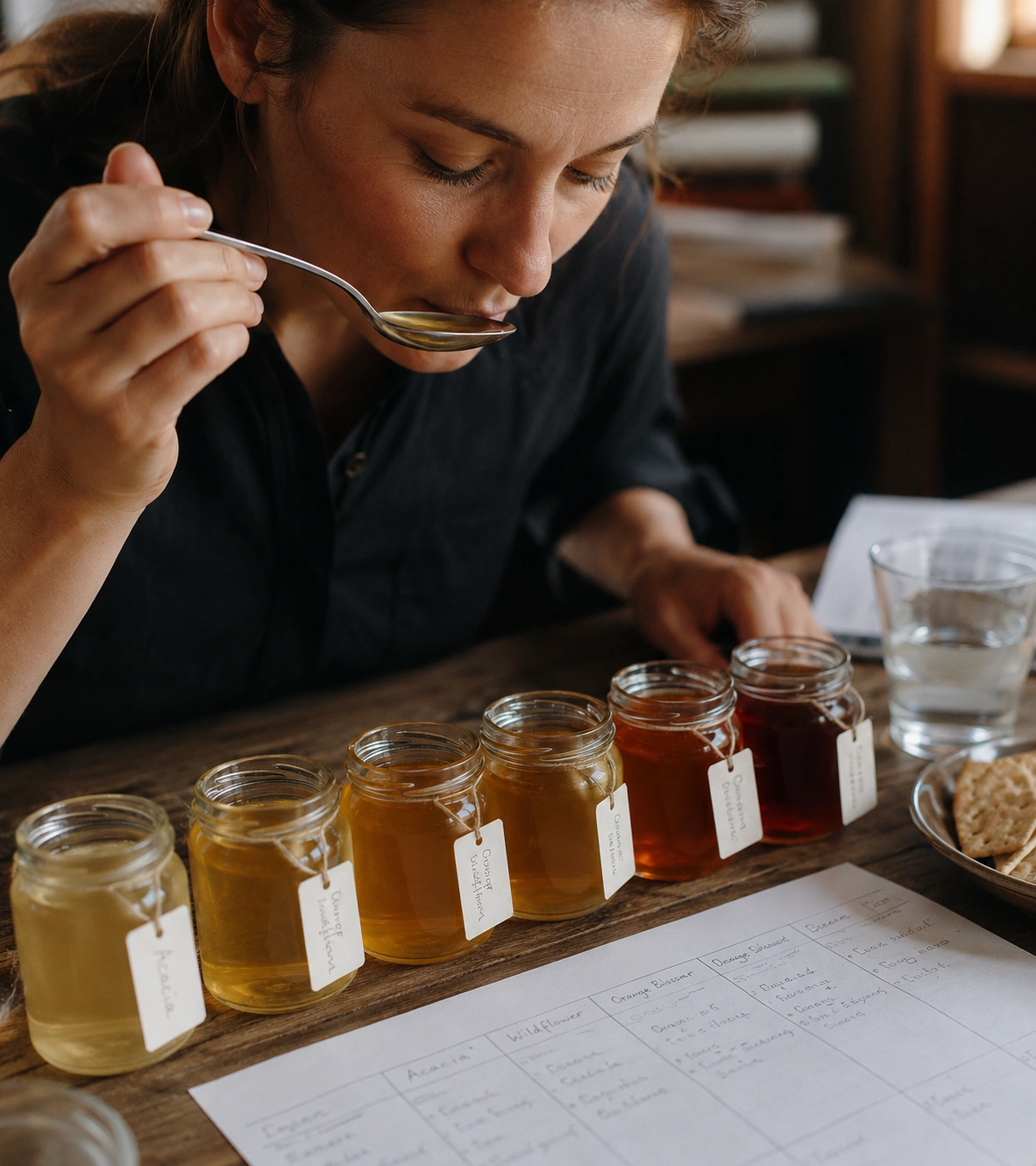
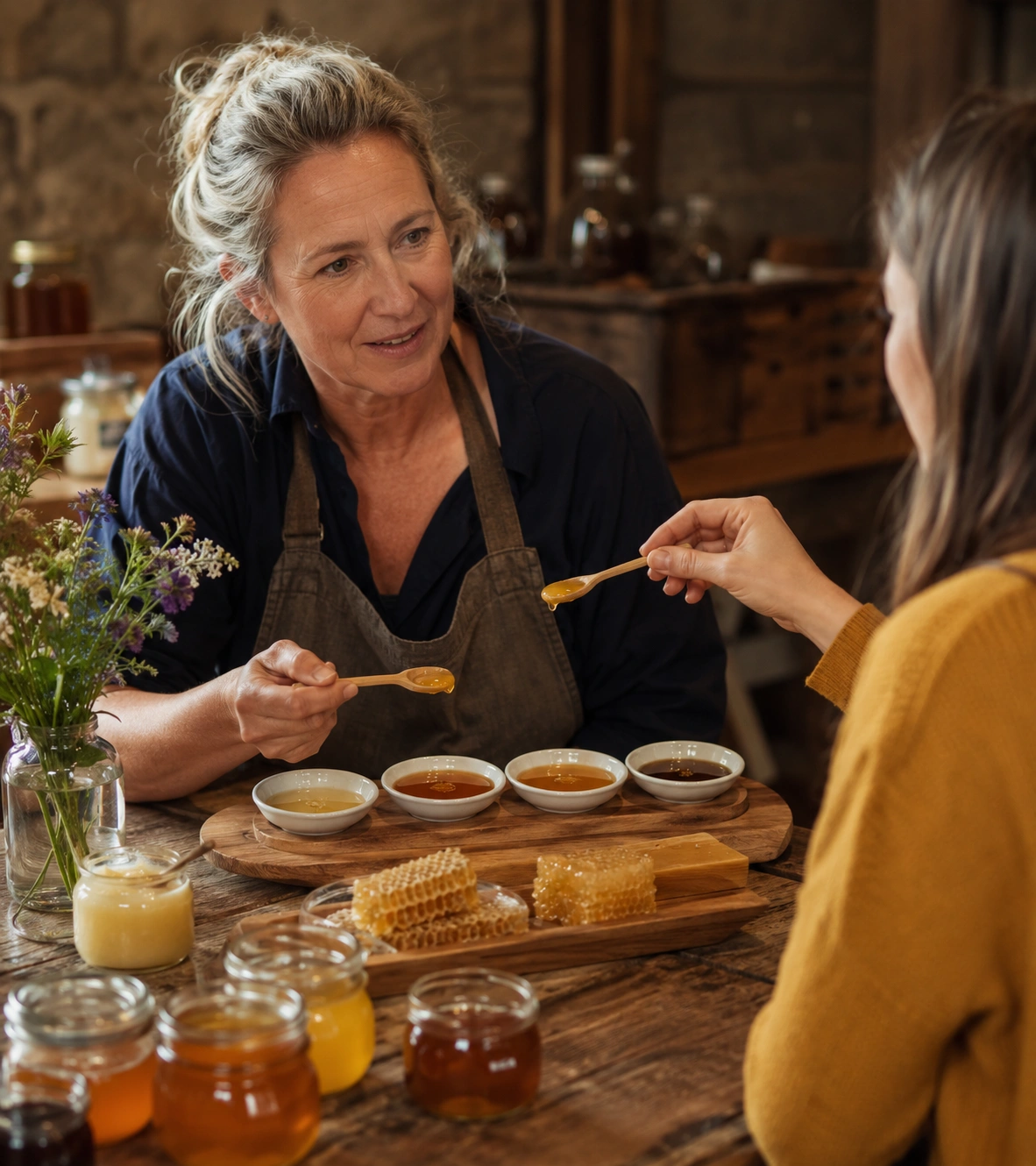
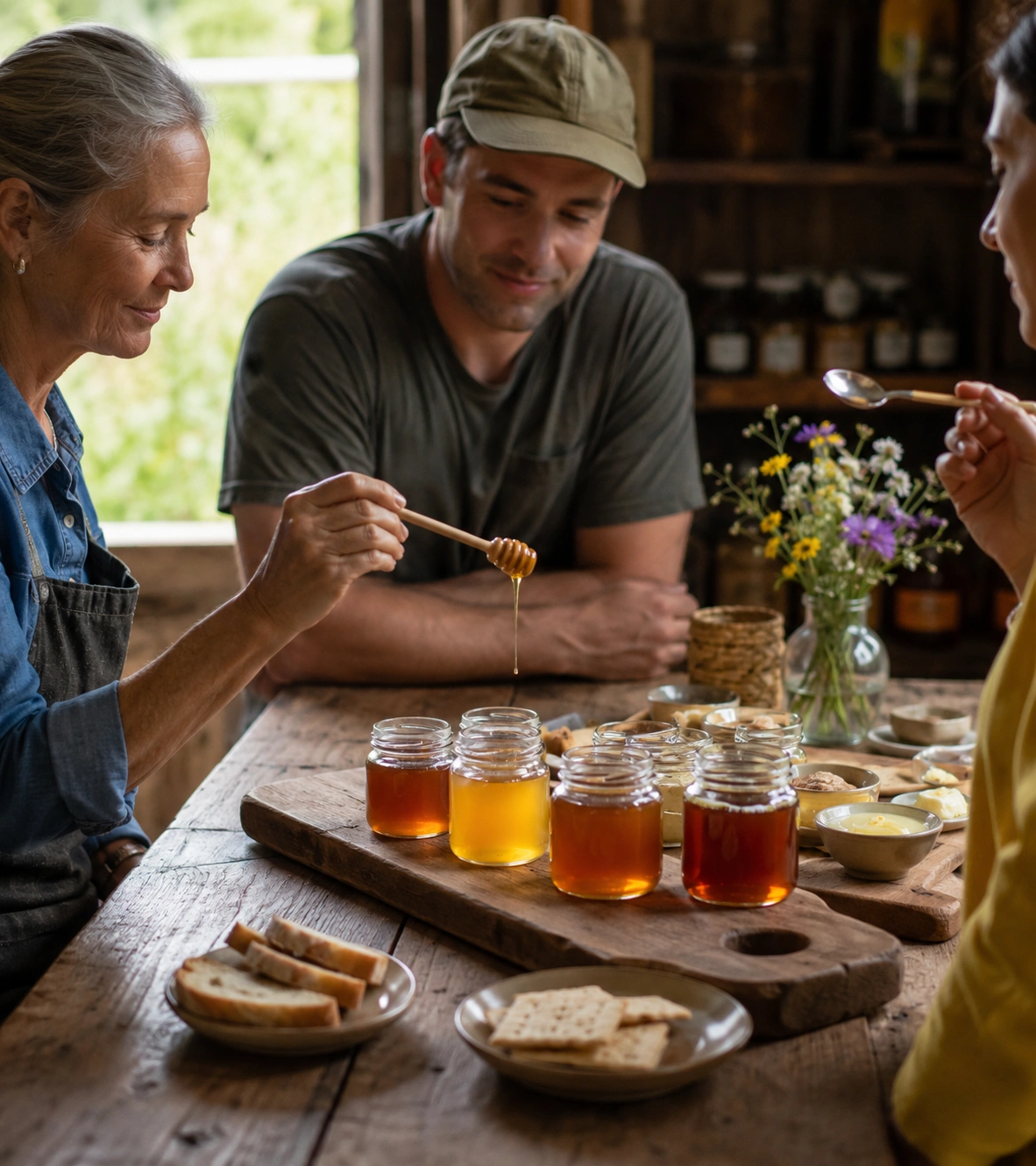
A woman tasting different types of honey
A woman hosting a honey tasting session

Honey Tasting Sessions and BFFD

BFFD is being built to help local food experiences become easier to discover.
Someone searching for honey tasting sessions may want a local event, a beekeeper talk, a farm shop experience, a farmers market tasting, a school activity or a producer led session.
BFFD can help by connecting:

This supports the wider BFFD mission: helping people understand food through place, producers and real experiences.
Honey Tasting and Local Food Tourism

Honey tasting sessions can also support local food tourism.
Visitors increasingly want experiences that feel rooted in place. A farm shop tasting, beekeeper talk, orchard event, farmers market demo or honey and cheese pairing can give people a reason to visit, stay longer and buy directly from local producers.
This matters for rural areas because food experiences can support producers, farm shops, hospitality venues, local attractions and community events.
BFFD can help connect these experiences into a wider local food discovery journey.
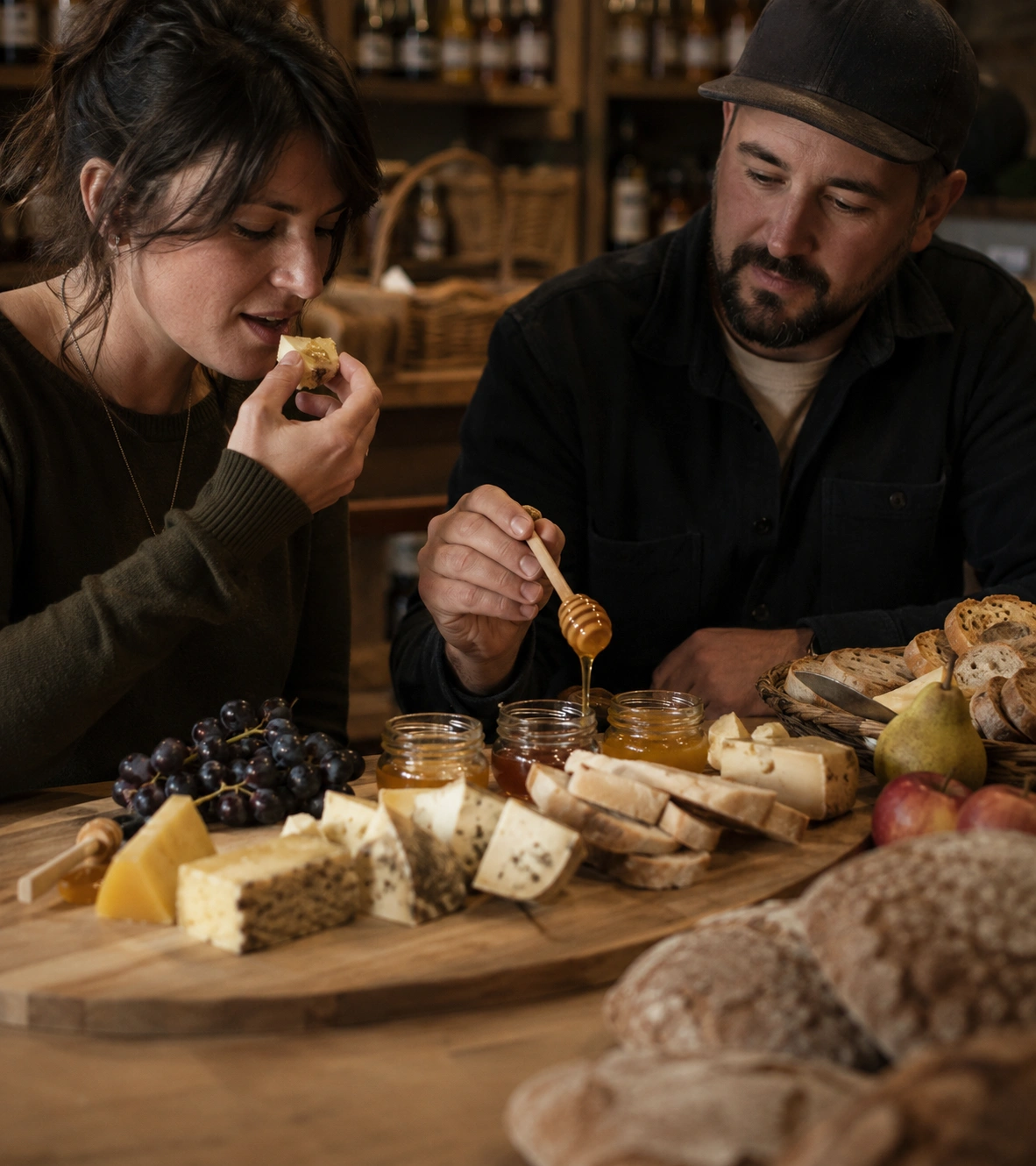
A group at a honey tasting session
A couple at a honey tasting session

What to Ask at a Honey Tasting Session

Good honey tasting sessions encourage questions.
Useful questions include:
These questions help people move from tasting to understanding.

Common Misunderstandings About Honey Tasting Sessions

Honey tasting is not only for experts

Anyone can taste honey and notice differences in flavour, colour, texture and aroma.

Honey tasting is not just selling jars

A good session should educate people about bees, seasons, flowers, provenance and food.

Local honey is not always available all year

Honey depends on the season, colony strength, weather and what the beekeeper can harvest without harming the bees.

Honey tasting can be useful for children, but needs care

Schools and organisers should consider allergies, hygiene and age suitability. Honey is not suitable for babies under one year old.

BFFD does not run every tasting session

BFFD can help users discover beekeepers and events, but individual suppliers or organisers are responsible for their own sessions.
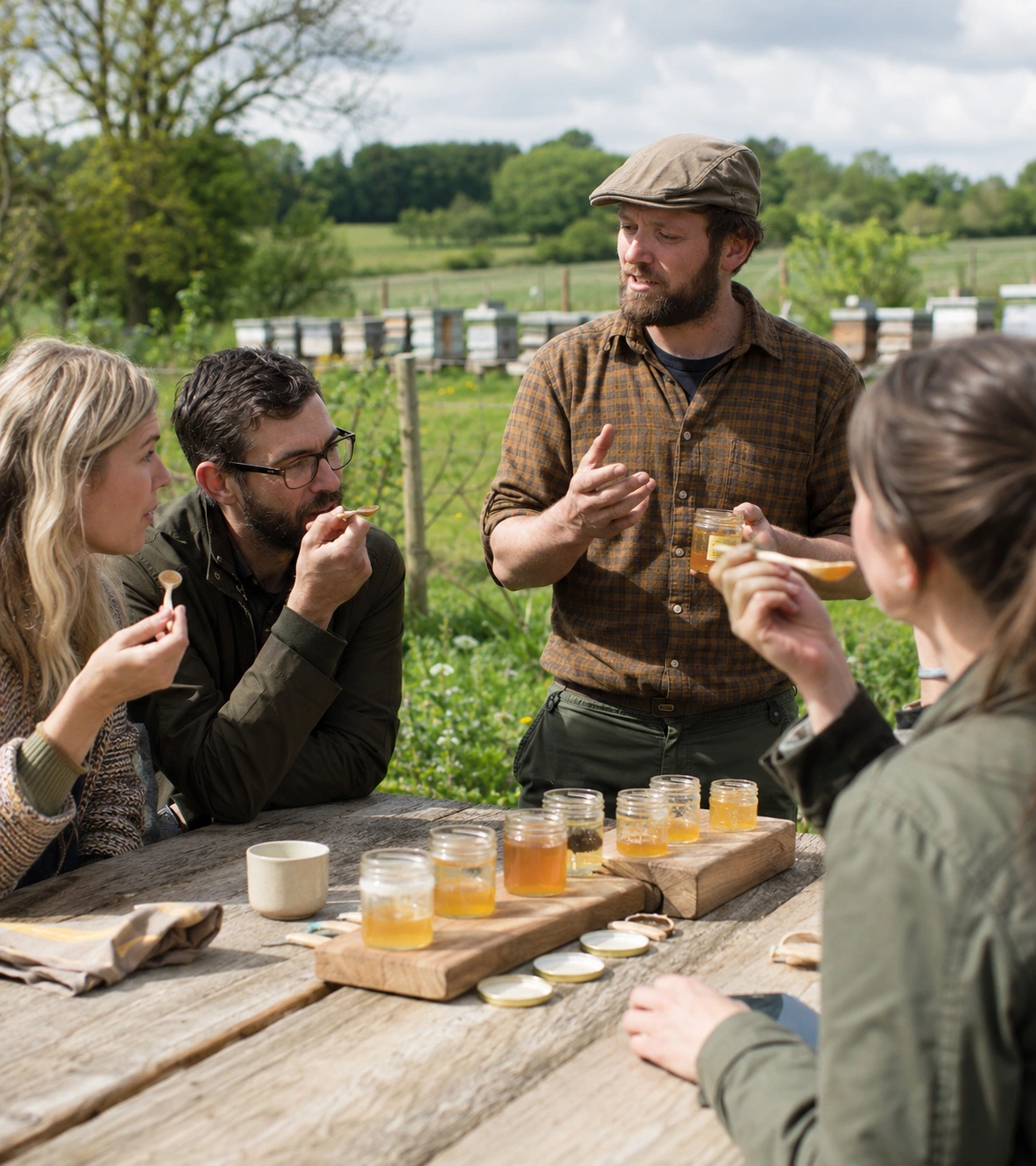
A local bee keeper hosting a honey tasting session
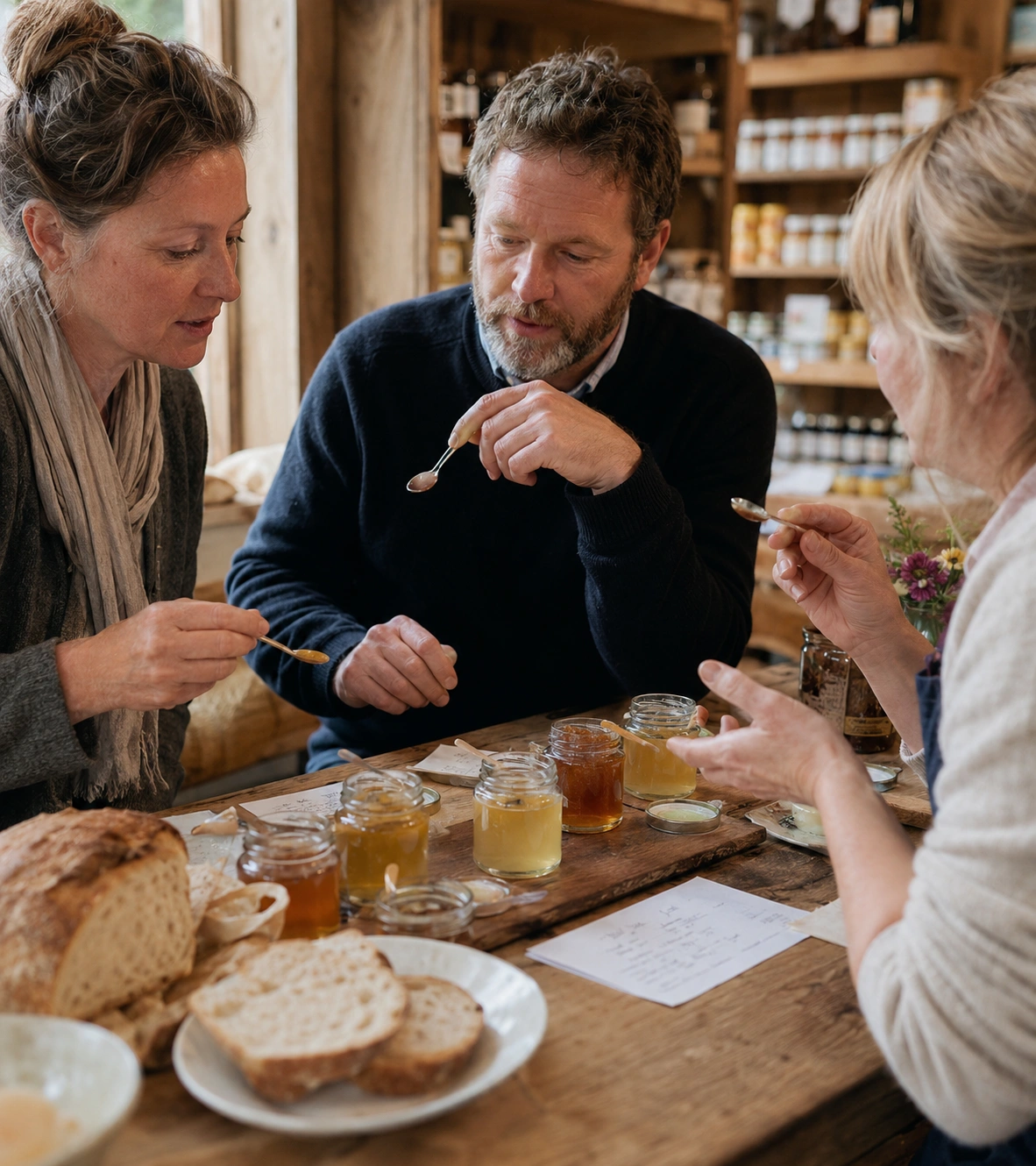
People enjoying a honey tasting session

Buying a Beehive and BFFD

BFFD is not a beekeeping equipment seller, but beehives matter to the wider local food story.

Beekeeping connects directly to pollination, local honey, orchards, flowers, hedgerows, fruit, vegetables, seasonal food and food education. A responsible beekeeper may eventually sell honey, offer honey tasting sessions, supply farm shops, attend farmers markets or teach people about bees.

A BFFD beekeeper profile can help show:

Buying a beehive is only one step. The bigger goal is responsible beekeeping that supports bees, local food and public trust.

Reputable External Sources

Useful for public information about honey, harvesting and bees.

Official bee health and beekeeping resource.

Official guidance on cleaning and sterilising hive equipment.

Useful for honey origin and labelling guidance.

Official guidance on serious notifiable honey bee pests and diseases.
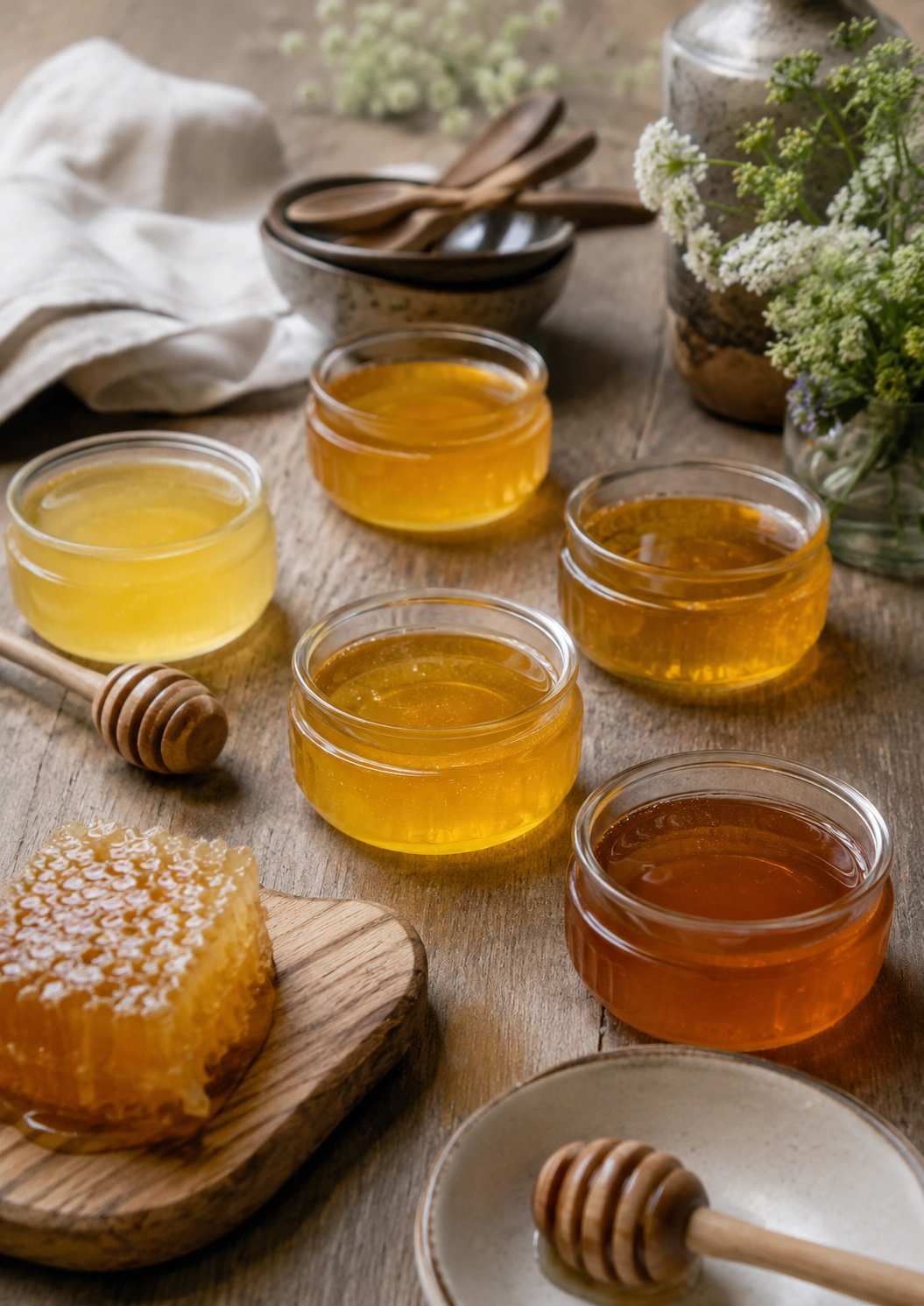
Lots of honey in jars displaying colour difference

* External sources are provided for further reading. BFFD does not provide veterinary, legal, equipment safety or bee health inspection advice. Beekeepers should always follow current official guidance and contact the National Bee Unit or local bee inspector where required.

FAQ

What happens at a honey tasting session?
A honey tasting session usually lets people try different honeys and learn about flavour, texture, flowers, seasons, beekeeping and where the honey was harvested.
You may find honey tasting sessions through local beekeepers, farm shops, farmers markets, food festivals, agricultural shows, community groups and BFFD supplier profiles as the platform grows.
Some may be free as part of a market or farm shop event, while others may be ticketed, private, educational or part of a wider food experience.
Children may be able to attend suitable sessions, but organisers should consider allergies, hygiene, age suitability and permissions. Honey should not be given to babies under one year old.
Ask where the honey was harvested, what flowers influenced it, whether it is local or blended, when it was harvested, how to store it and whether you can buy direct from the beekeeper.
Yes. Honey tasting sessions can help farm shops promote local beekeepers, educate customers and explain why local honey has different flavours, textures and seasonal availability.
BFFD aims to help beekeepers and honey producers show tasting sessions, talks, market appearances, buying options and local events through their supplier profiles.
No. Honey tasting is an experience that helps people compare and understand honey. Buying local honey is the act of purchasing honey from a beekeeper, farm shop, market or local supplier.

Discover Honey Through Place, Season and Story

Honey tasting sessions help people understand the flavour of local landscapes and the work of beekeepers. BFFD is being built to help people find local honey, food experiences, farm shops, farmers markets and specialist producers with clearer links between food, place and trust.