


Duck breast cooks beautifully in an air fryer. The circulating heat renders the fat without frying pans or oven preheating. You get crisp skin and tender meat in about fifteen minutes. The trick is understanding that duck skin contains far more fat than chicken, and the air fryer handles this brilliantly when you prepare the breast properly. If you buy from a local producer, you will taste the difference immediately. Farmgate duck has deeper flavour and better fat quality than anything shipped in from overseas.
What You Need
Start with duck breasts. Two medium breasts will feed two people generously, or three if you serve plenty of vegetables alongside. Look for breasts with thick, even fat coverage. The skin should be pale cream or ivory, not yellowed. Fresh duck from British farms often has a cleaner, firmer fat layer than imported frozen breasts.
Your air fryer needs to reach at least 180°C. Most models sold in Britain go to 200°C, which is ideal. Size matters less than you might think. Even a compact 3-litre basket will fit two duck breasts if you arrange them skin side up without overlapping.
You need a sharp knife for scoring the skin. Blunt knives slip and cut into the meat rather than just the fat. Kitchen scissors work if your knife skills are shaky. A meat thermometer takes guesswork out of doneness, though you can manage without one once you understand the feel of properly cooked duck.
Salt is essential. Fine sea salt works well. Some people add black pepper, five spice, or orange zest, but plain salt on good quality duck is enough. The meat has its own character and does not need masking.
Step-by-Step
Preparing the Duck Breast
Take the duck breast out of the fridge twenty minutes before cooking. Cold meat hitting hot air cooks unevenly. The outside firms up before the inside has warmed through, leaving you with a grey band of overcooked meat around a barely warm centre.
Join Buy From Farmers Direct
Create a free account to discover local farm shops, farmers markets and producers near you, save your favourites, and support British farming directly.
Pat the skin completely dry with kitchen paper. Any moisture on the surface steams rather than crisps. This is where most people lose the battle for crispy skin before they even start cooking.
Score the skin in a crosshatch pattern. Cut through the fat layer but not into the meat itself. Make your cuts about half a centimetre apart. This allows the fat to render out during cooking rather than insulating the skin and keeping it flabby. The fat will bubble up through these cuts and the hot air will crisp the exposed skin.
Season generously with salt on both sides. The skin side needs more. Fat carries flavour differently than meat does, and undersalted duck skin tastes greasy rather than rich.
Cooking in the Air Fryer
Set your air fryer to 180°C. Some people start at 200°C but I have found this cooks the edges too fast on thicker breasts. You can always increase temperature later, but you cannot undo dry edges.
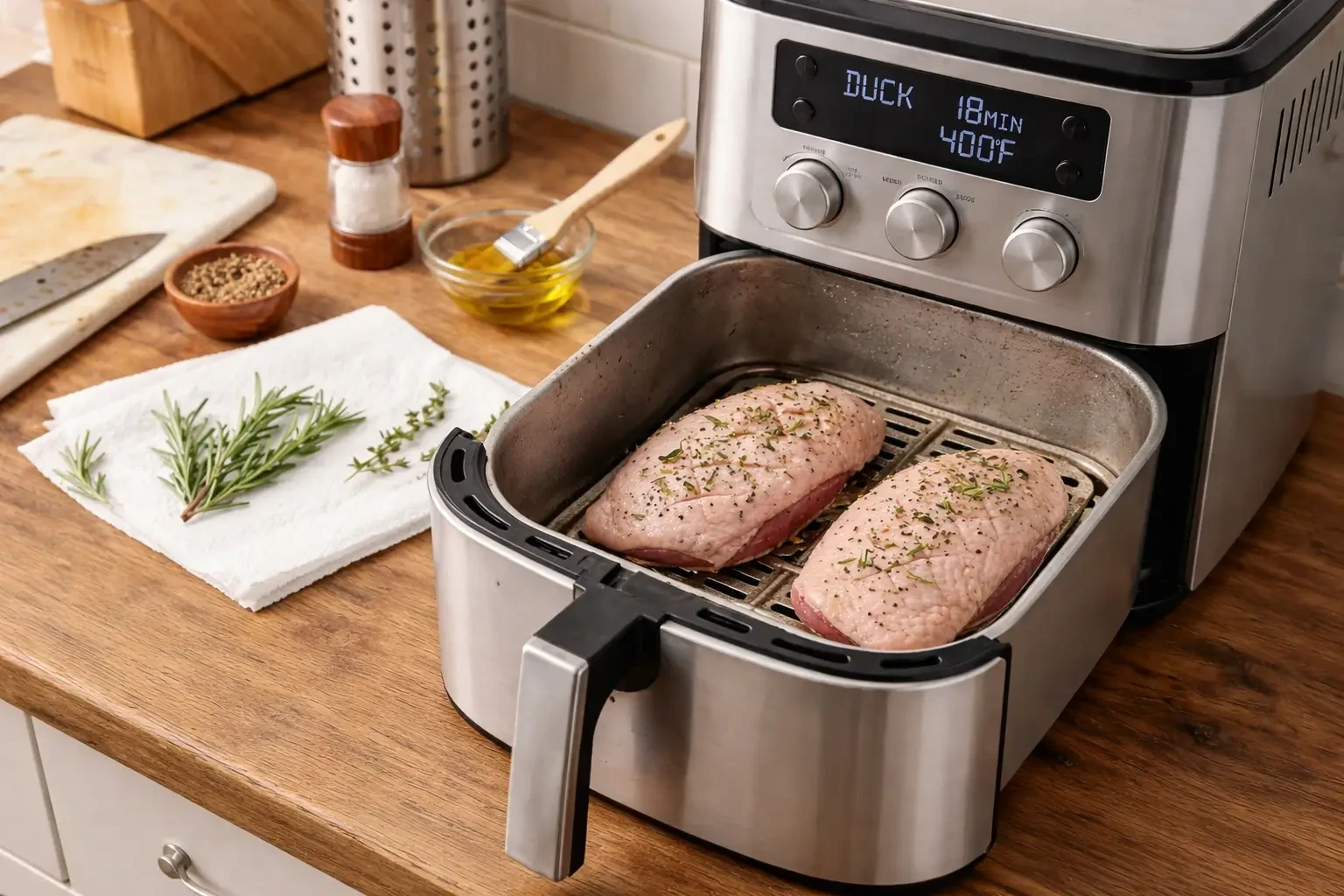
Place the duck breasts in the basket skin side up. Do not crowd them. Air needs to circulate freely around each breast. If they touch, the touching areas will steam and the skin will not crisp properly.
Cook for twelve minutes without opening the basket. The first few minutes render fat, which drips down into the drawer below. The remaining time crisps the skin and cooks the meat. Opening the basket releases heat and adds time you cannot accurately predict.
After twelve minutes, check the skin. It should be golden and crisp. If it looks pale, add another two minutes. If the skin is browning too fast at the edges but still soft in the middle, reduce temperature to 160°C and continue cooking. Every air fryer model distributes heat slightly differently. Learn how yours behaves.
Check internal temperature with a meat thermometer inserted into the thickest part of the breast. You want 52-54°C for rare, 56-58°C for medium rare, 60-62°C for medium. Duck is traditionally served pink, unlike chicken. The meat is safe to eat at these temperatures and tastes better. Well-done duck is dry and livery.
If you do not have a thermometer, press the thickest part of the breast with your finger. It should feel like the fleshy part of your thumb when you touch your thumb to your middle finger. Firmer than raw but with noticeable give. This takes practice but works reliably once you have done it a few times.
Resting and Serving
Transfer the duck breasts to a warm plate and cover loosely with foil. Rest for five minutes minimum, eight is better. Resting allows the muscle fibres to relax and reabsorb some of the juices that have been forced to the surface by heat. Cut into a duck breast straight from the air fryer and pale pink juice runs everywhere. Rest it properly and the juice stays in the meat.
Slice against the grain at a slight angle. Thick slices show off the pink centre. Thin slices look elegant but cool faster on the plate. I usually cut medium thickness, about half a centimetre, which balances appearance and temperature.
The fat that has dripped into the air fryer drawer is liquid gold. Pour it through a fine sieve into a jar and keep it in the fridge. Use it for roasting potatoes or cooking greens. Duck fat keeps for months and adds depth to vegetables that butter cannot match. When you cook vegetables in the same fat rendered from local duck, you connect the whole meal to one producer. That matters more than most recipes acknowledge.
Common Mistakes
Cooking duck breast straight from the fridge is the most frequent error. The outside cooks too fast and you end up with a grey layer of overcooked meat surrounding a cool centre. Twenty minutes at room temperature is not a suggestion. It changes the entire structure of how heat moves through the meat.
Not scoring deeply enough leaves thick fat that never renders. You end up with chewy, greasy skin instead of crisp crackling. Cut through the fat layer completely but watch you do not nick the meat. If you do cut into the meat in one or two places, it is not a disaster, but try to keep your cuts shallow.
Overcrowding the basket creates steam instead of dry heat. Duck releases moisture as it cooks. If breasts are packed tightly, that moisture cannot escape and you get braised duck rather than roasted. The difference in texture is significant. Give each breast space.
Cooking duck to the same internal temperature as chicken is a tragedy. Duck breast at 75°C is grey, dry, and tastes like liver. Duck is red meat, not poultry in the way chicken is. Treat it more like beef. Pink is not just acceptable, it is preferable.
Skipping the resting period because you are hungry wastes everything you did right. Five minutes makes the difference between dry slices and juicy ones. Put your vegetables on plates, pour yourself a drink, let the meat rest. You have waited this long already.
Using wet or poorly dried skin guarantees disappointment. Even if you score perfectly and cook at the right temperature, moisture on the surface prevents crisping. Pat it dry, then pat it again. When you think it is dry enough, give it one more wipe.
Practical Tips
Buy duck from farms where you can ask questions. Small producers often sell specific breeds like Silver Appleyard or Aylesbury, which have different fat content and flavour than commercial Pekin crosses. Gressingham is commonly available and cooks reliably, but a local farm might have something more interesting. The fat quality varies more than you would expect between breeds and raising methods.
Frozen duck breasts work if you defrost them properly in the fridge over twenty four hours. Never use a microwave or warm water. The texture changes and the meat weeps liquid during cooking. If you are buying frozen, check where it was raised. British farms often freeze surplus during peak season, which is different from imported product that has been frozen for transport. If this interests you, how to cook a capon: the proper british guide goes into more detail.
Scoring patterns matter less than scoring depth. Diamonds, straight lines, or crosshatches all work. What matters is cutting through the fat layer completely and spacing cuts close enough that fat can escape. I usually do a simple crosshatch about half a centimetre apart because it is quick and effective.
Temperature settings vary between air fryer brands. If your first attempt cooks too fast or too slow, adjust by 10°C increments rather than changing time. Time is more predictable than temperature across different models. Write down what worked for your specific fryer and use those settings as your baseline.
Season the meat side lightly if you like, but the skin side needs generous salt. Some cooks add spices to the meat side while keeping the skin plain. Five spice works particularly well with duck. So does cracked black pepper or crushed juniper. Orange zest rubbed into the meat before cooking adds a subtle brightness that cuts through the richness.
Pair duck with sharp or bitter flavours rather than rich ones. Duck is already fatty and rich. Serve it with watercress, chicory, pickled plums, or sharp fruit sauces rather than creamy sides. The contrast makes both elements taste better. If you grow your own salad leaves, the peppery ones like rocket or mustard greens work beautifully alongside sliced duck.
Clean your air fryer basket thoroughly after cooking duck. The rendered fat can smoke if left to build up over multiple cooking sessions. A quick wash with hot soapy water while the basket is still warm takes seconds. Leave it and the fat hardens, making the job much harder later.
Thicker breasts need slightly longer cooking. A breast that weighs 200 grams might need only ten minutes, while a 300 gram breast from a mature bird could need fourteen or fifteen. Weight matters more than visual size because density varies. If you are buying direct from a producer, ask them for an approximate weight so you can plan timing.
Skin colour after cooking should be golden to deep brown depending on how long you cooked it. If it is black, your temperature was too high or you left it too long. If it is still pale and soft, it needs more time or higher heat. Trust your eyes. Pale skin will not be crisp no matter how long it has been in there at low temperature.
Save duck fat religiously. It is expensive to buy and you are getting it for free. Roast potatoes in duck fat are better than in any other medium. Pour the fat through a sieve to remove any crispy bits, which can burn during storage. The clear fat will keep in a sealed jar in the fridge for three months easily, longer if you are scrupulous about not introducing moisture.
There’s more where this came from. Browse all our meat, eggs, dairy and livestock guides, or dip into the rest of our cooking and preserving guides.
If you enjoyed this, try these next:
- How to Cook a Duck Breast in a Pan
- How to Cook Pork Loin Steaks So They Are Tender
- How Long to Cook Salmon on the Stove
If you would rather buy direct, our Online Butchers page will point you to local producers.
Cooking with the seasons? Our Growers’ Calendar, included with paid Food Lover and Supplier memberships, shows what is being harvested each month, so you always know what is at its best.
Frequently Asked Questions
Do I need to preheat the air fryer for duck breast?
Preheating helps but is not essential. I preheat for three minutes if I remember, but I have cooked duck successfully in a cold air fryer by adding two minutes to the total time. Preheating gives you more predictable results because the cooking environment is consistent from the start. If you are cooking multiple batches, the second batch will cook faster because the machine is already hot. Adjust your timing accordingly or let the fryer cool for five minutes between batches.
Can I cook duck breast from frozen in an air fryer?
You can but you should not. Frozen duck breast will not crisp properly because ice on the surface turns to steam. The cooking time becomes unpredictable and you usually end up with grey meat and rubbery skin. Defrost in the fridge overnight or for twenty four hours if the breast is particularly thick. If you are genuinely stuck, defrost in cold water in a sealed bag for an hour or two, but this is a compromise. Proper defrosting in the fridge gives you far better control and texture.
Why is my duck breast tough and chewy?
You have overcooked it. Duck breast should be served pink unless you genuinely prefer it well done, in which case accept that the texture will be firmer and drier. Tough, chewy duck has been taken past 65°C internal temperature. The muscle fibres contract, squeeze out moisture, and become dense. Check temperature earlier next time and remove the duck at 56-58°C for medium rare. Resting also affects texture. Skipping the rest period means juices have not redistributed and the meat feels tighter and drier when you slice it. Five minutes rest is not optional.
How do I get the skin crispy without overcooking the meat?
Score the fat deeply, dry the skin thoroughly, and start at a moderate temperature like 180°C rather than blasting it at 200°C. The scoring allows fat to render out, which is essential for crisp skin. If your skin is still soft after twelve minutes but the meat is at temperature, remove the duck to rest and place just the skin side under a hot grill for one minute. Watch it closely because it can burn fast. This is a rescue technique rather than standard practice, but it works. Better scoring and proper drying should prevent you needing it.
What temperature should duck breast be when cooked?
Between 52°C and 62°C depending on how pink you like it. I cook to 56°C for medium rare, which gives you a warm pink centre and tender texture. Below 52°C and the fat has not rendered enough. Above 62°C you are moving into medium and the meat starts losing moisture and tenderness. Duck is not chicken. It does not need to reach 75°C to be safe. The meat structure is different and it is meant to be served pink. If you are uncomfortable with pink duck, cook to 62°C rather than pushing it further, and slice it thinly to make the texture more palatable.
Can I cook other things in the air fryer at the same time as duck?
Only if they cook at the same temperature and benefit from duck fat. Potatoes or root vegetables work well placed underneath or around the duck, where they catch the dripping fat. They will take longer than the duck, so start them first and add the duck partway through. Delicate vegetables like greens or mushrooms will overcook and become greasy. Anything that needs gentle heat or a different temperature should be cooked separately. The air fryer basket is not large enough to create different temperature zones the way an oven can.
Should I marinate duck breast before air frying?
Marinades are unnecessary and can interfere with skin crisping. Duck has enough flavour on its own, especially if you are buying from a producer who raises birds well. Wet marinades prevent the skin drying properly, which ruins your chance at crispy crackling. If you want additional flavour, use a dry rub on the meat side only, keeping the skin side plain with just salt. Marinades make more sense for duck legs or cheaper cuts that benefit from tenderising and added moisture. Breast does not need help.
Good duck starts with knowing where it came from. When you buy direct from a farm, you can ask how the birds were raised, what they ate, and when they were processed. That connection changes how you cook. You pay more attention, waste less, and appreciate the difference in flavour. An air fryer makes duck breast accessible on a weeknight, not just for special occasions. The method is simple enough to use regularly once you understand it. Cook it pink, rest it properly, and save that fat. Everything else is details.
Choosing to buy closer to home starts here. Sign up to Buy From Farmers Direct and start finding local food near you.

Author: Isla Harper
Isla writes about rural life, farm shops, and discovering the best places to buy directly from producers. She enjoys exploring local markets, small farms, and independent growers, sharing stories that highlight the people behind the food. Her work helps readers find trusted places to shop while celebrating the character and community of Britain’s farming landscape.