African wormwood, Artemisia afra, brings finely divided foliage and a strong aromatic scent to a sunny garden. This African shrub needs room to develop and a considered approach to winter care in the UK. Grow it for its foliage in a sheltered border or a container you can protect when temperatures fall.
Full Sun
Free Draining Soil
Aromatic Foliage
Protect from Frost
Room to Grow
| Botanical name | Artemisia afra |
| Plant family | Asteraceae |
| Native range | Eastern and southern Africa |
| Planning space | Allow about 1.5m between plants |
| Position | Full sun |
| Exposure | Sheltered |
| Main interest | Aromatic foliage |
| Flowers | Small pale yellow heads |
| Pruning | After main frost risk |
| UK suitability | Mild sites or winter protection |
| Common names | African wormwood, wild wormwood |
| Plant type | Perennial shrub |
| Height | About 60cm to 2m |
| Growth habit | Bushy, woody at the base |
| Preferred aspect | Sunny south or west facing |
| Soil | Well drained |
| Leaf colour | Green above, pale grey beneath |
| Watering | Regular while establishing |
| Container suitable | Yes, with room and drainage |
| Winter care | Protect in colder gardens |
| Plant name | Crop type | Spacing |
Sow indoors
Plant outdoors
Harvest
Polytunnel | |||||||||||
|---|---|---|---|---|---|---|---|---|---|---|---|---|---|---|
| Jan | Feb | Mar | Apr | May | Jun | Jul | Aug | Sep | Oct | Nov | Dec | |||
| African Wormwood | Herbs | Single 1.50m, In row 1.50m, Row gap 1.50m | No activity recorded | Sow indoors, Polytunnel | Sow indoors, Polytunnel | Sow indoors, Plant outdoors, Polytunnel | Plant outdoors, Harvest, Polytunnel | Plant outdoors, Harvest, Polytunnel | Harvest, Polytunnel | Harvest, Polytunnel | Harvest, Polytunnel | Harvest, Polytunnel | Harvest, Polytunnel | Harvest, Polytunnel |
Sow indoors: February, March, April. Plant outdoors: April, May, June. Harvest: May, June, July, August, September, October, November, December. Polytunnel: February, March, April, May, June, July, August, September, October, November, December.
Use the calendar as a seasonal guide and follow local frost conditions. This guide covers ornamental growing. The Herbs category and harvest row are not advice to eat African wormwood or prepare herbal remedies.
Choose African wormwood if you enjoy textured foliage and have a sunny position with space around it. It can become a substantial shrub, so place it where its branches will not crowd a narrow path or overwhelm smaller plants.
Winter conditions are the main consideration in the UK. The Royal College of Physicians garden records it as half hardy. For a first attempt, a movable container gives you more control than planting into an exposed border. Ask the nursery how its plants have been overwintered locally.
Photo: Abu Shawka, CC0. Resized, optimised and cropped for display.
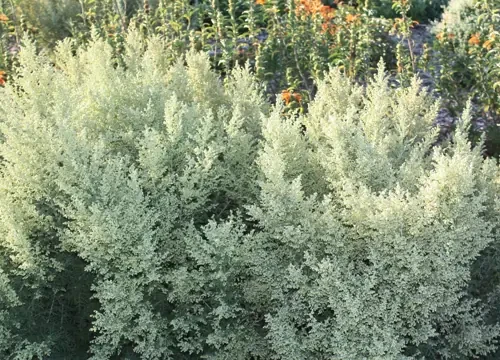
Give the plant a sunny, sheltered site. A warm courtyard or a border near a south or west facing wall can be useful, provided the soil drains and surrounding plants do not shade it.
Allow for the changing light through the season. A position that looks bright in spring may become shaded when nearby trees leaf out. Leave enough space to inspect and prune the plant comfortably.
Avoid soil that stays saturated after rain. If your border is heavy or poorly drained, use a container with open drainage holes and a suitable peat free potting compost. Stand it where surplus water can escape.
The calendar allows 1.5m between plants. Treat that as planning space for a mature shrub rather than an instruction to fill the gap with more young plants. Keep the eventual spread in mind when choosing neighbouring plants.
Photo: Krzysztof Ziarnek, Kenraiz, CC BY-SA 4.0. Resized, optimised and cropped for display.
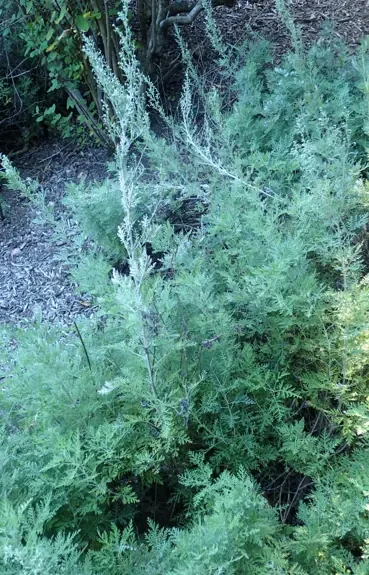
Plant out when local frost risk has passed and the soil is workable. A plant raised under cover needs gradual adjustment to outdoor conditions. Spring planting gives it a growing season to establish before its first winter.
1.
Check the label says Artemisia afra. Other plants sold as wormwood can have different sizes and winter requirements.
2.
Accustom a sheltered young plant to outdoor conditions gradually, bringing it back under cover on cold nights.
3.
Choose its position with mature size in mind. Clear weeds and check that the planting area drains freely.
4.
Water the nursery pot before planting so the rootball is evenly moist and easier to handle.
5.
Prepare a hole wider than the rootball. For a container, choose a stable pot with clear drainage holes.
6.
Ease the plant from its pot and keep the rootball intact. Set it at the same depth as before.
7.
Backfill, firm gently and water thoroughly to settle compost or soil around the roots.
8.
Check moisture and weather regularly while it establishes. Keep nearby weeds from competing with the young plant.

Watering
Water young plants regularly while roots establish. Once established, African wormwood copes better with dry conditions, but a recently planted shrub should not be left to wilt repeatedly.
Check containers by feeling the compost below the surface. Water thoroughly when needed, then let excess drain away. Adjust the frequency to the weather, pot size and rate of growth.

Feeding
Start with suitable compost or reasonably fertile garden soil. A plant in a pot eventually uses the nutrients supplied in its compost, so check the compost label before adding feed.
If additional feeding is needed, use a suitable fertiliser at its labelled rate during active growth. More feed will not correct shade, damaged roots or persistently wet compost.

Pruning
Pruning helps keep this naturally bushy plant manageable. In the UK, wait until the main frost risk has passed and new growth shows where the plant is healthy before cutting it back.
Remove dead or damaged stems and shorten surviving growth to healthy shoots. Use clean, sharp secateurs. Avoid relying on a fixed calendar date in a cold spring, and keep a rooted cutting if the main plant is becoming old or woody.

Winter care
In colder gardens, move container plants into a bright, frost free space before severe cold arrives. Water less while growth is slow, keeping the rootball from becoming either saturated or completely dry.
Check overwintering plants for dead leaves and pests, and ventilate shelter in suitable weather. An unheated polytunnel can still freeze. Keeping young rooted cuttings under protection provides a useful reserve.
Artemisia afra has finely divided leaves and woody lower stems. The upper leaf surface is green, while pale hairs beneath the leaves and on the stems give the plant a softer grey appearance. Its foliage releases a distinctive aroma when handled.
Small, pale yellow flower heads appear in clusters towards the ends of the stems. Their display is modest compared with the foliage. Plants can range from about 60cm to 2m tall in favourable conditions, with their final size influenced by conditions and pruning.
Photo: SAplants, CC BY-SA 4.0. Resized, optimised and cropped for display.
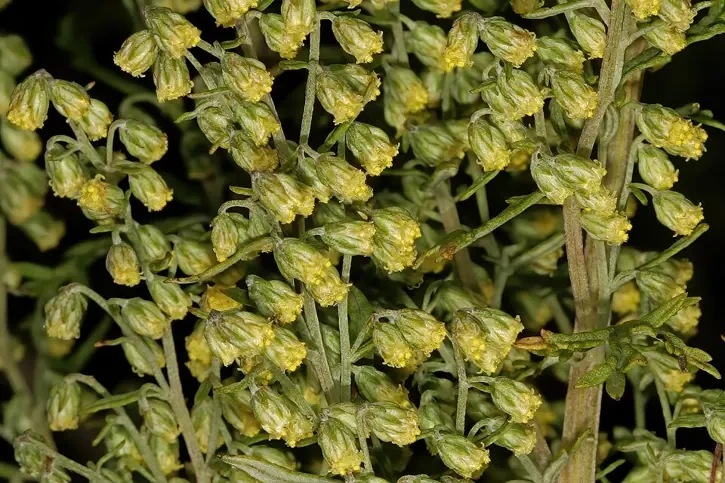
A mild coastal garden offers a more promising setting for an outdoor trial, especially with shelter and free drainage. Even there, local frost pockets and prolonged winter wet can change the outcome.
In colder inland gardens and exposed northern sites, plan for winter protection from the start. A pot that is small enough to move safely, or a protected young replacement, makes that plan more practical.
In wet districts, assess drainage as carefully as temperature. Check where rainwater collects and keep pots from standing in saucers of water. Garden conditions matter more than a county label alone.
Photo: JMK, CC BY-SA 4.0. Resized, optimised and cropped for display.
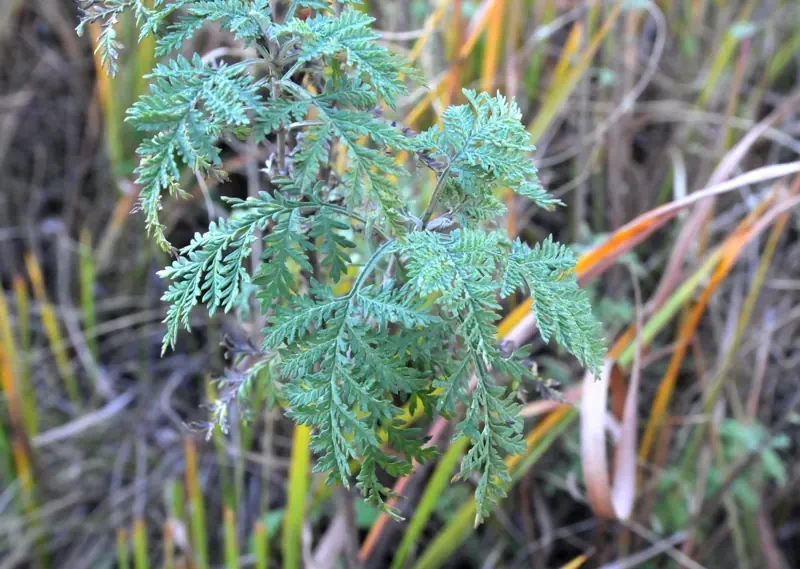
After a hard frost, damaged tips may blacken or die back. Protect a container plant from further cold, then wait for signs of living growth before pruning. Outdoor survival should not be assumed from a single mild winter.
Check the rootball before watering again. Both repeated drought and waterlogged compost can cause decline. Make sure drainage holes are clear and adjust watering to the actual moisture level.
Long, weak shoots can be a reason to reassess light and growing conditions. Give the plant adequate sun and room, and use timely pruning to maintain a balanced shape.
Inspect soft growth and the undersides of leaves when checking the plant. If aphids are present, small numbers can often be tolerated. Remove a troublesome cluster gently and avoid spraying on sight.
If a plant continues to decline after you correct watering and drainage, seek a reliable diagnosis before treating it. Do not take propagation material from unhealthy stems.
Cuttings are a practical way to raise a replacement. Select healthy, non flowering shoots in summer as their bases begin to firm. Cut just below a leaf joint, remove lower leaves and insert into moist peat free cutting compost.
Keep cuttings in bright light away from harsh sun, with humidity and ventilation while they root. Pot them on after a useful root system develops. Protect young plants through their first winter. If using seed, follow the supplier instructions and allow for uneven germination.
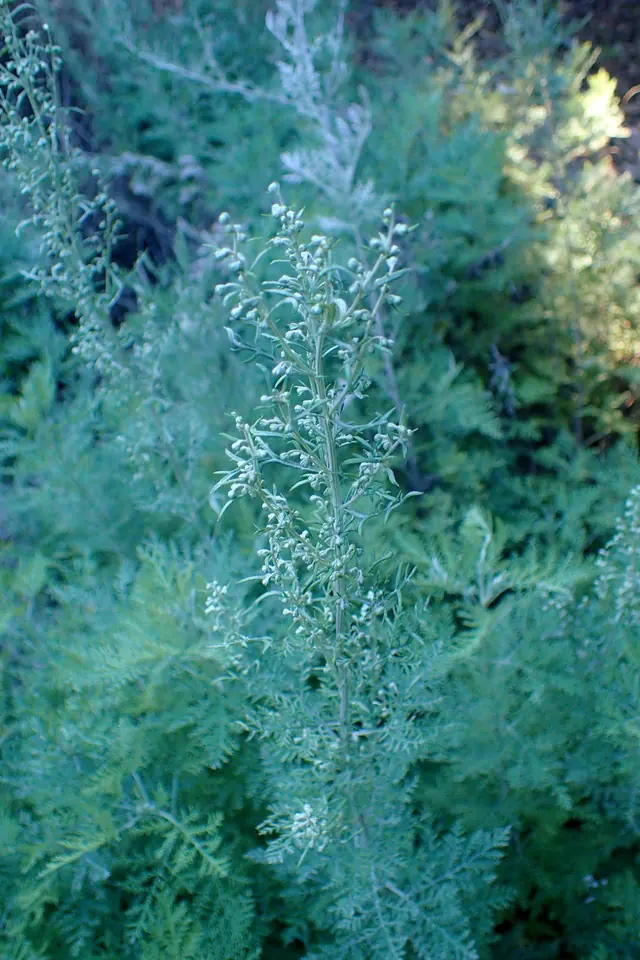
Artemisia afra
This is African wormwood, the species covered by this guide. Look for its divided green and grey foliage and woody base. The following cards show related species and a cultivar for comparison; they are not varieties of African wormwood.
Photo: Krzysztof Ziarnek, Kenraiz, CC BY-SA 4.0. Resized, optimised and cropped for display.
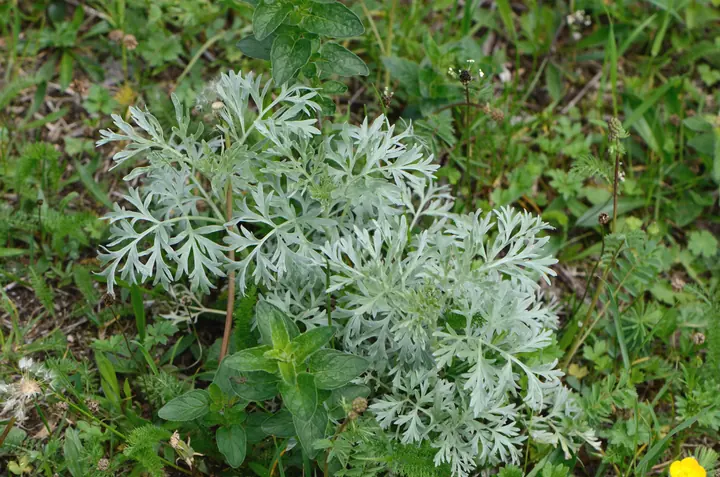
Artemisia absinthium
Common wormwood is a separate, deciduous perennial with aromatic grey green foliage. The RHS lists a height of about 50cm to 1m and a higher hardiness rating than African wormwood. Choose it by its botanical name when comparing plants.
Photo: Nicolas Weghaupt, CC0. Resized, optimised and cropped for display.
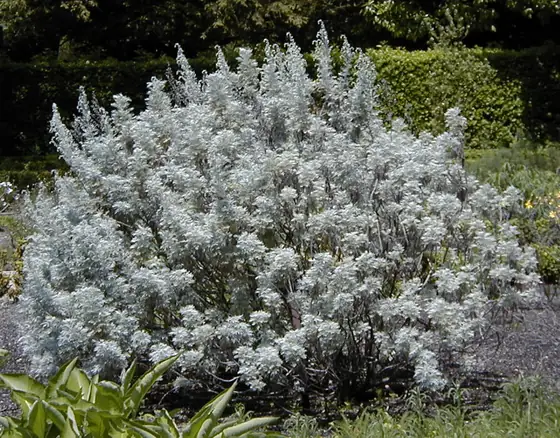
Artemisia arborescens
Tree wormwood is a distinct evergreen shrub with finely divided silver foliage. The RHS lists it at roughly 50cm to 1m tall and wide. It suits a sunny, sheltered position with free drainage and may suffer in harsh winters.
Photo: Cillas, CC BY-SA 4.0. Resized, optimised and cropped for display.
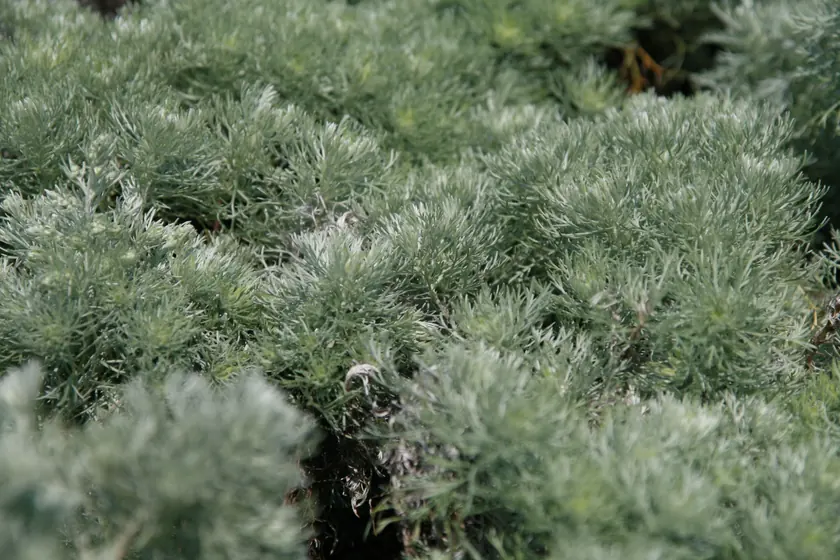
Artemisia schmidtiana ‘Nana’
A compact cultivar of another species, grown for a low mound of soft silver foliage. The RHS lists it at around 10cm tall with a wider spread. It offers a very different scale for a sunny rock garden or border edge.
Photo: David J. Stang, CC BY-SA 4.0. Resized, optimised and cropped for display.
Explore the BFFD map for independent growers and nurseries. Ask specifically for Artemisia afra and discuss its mature size and winter care. Availability can be limited, so check with the grower before travelling.
Use African wormwood as a foliage element within a varied garden. Pair it with plants that provide flowers across several seasons, rather than expecting its small flower heads to carry the whole pollinator display.
Choose companion flowers suited to the same sunny site and leave them enough space. Observing which insects visit your garden is a useful way to improve the planting over time.
It is a perennial shrub, but that does not make it reliably hardy in every UK garden. The Royal College of Physicians garden records it as half hardy. A sheltered site and good drainage help; in colder conditions, use a container you can protect.
Move a manageable pot into bright, frost free shelter before severe cold. Reduce watering while growth slows, without allowing the rootball to dry out completely. An unheated greenhouse or tunnel needs temperature checks because it may still freeze.
Yes, provided the container is stable, has drainage holes and leaves room for root growth. Use suitable peat free compost, monitor moisture and plan how you will move or protect the plant in winter.
Wait until the main frost risk has passed and healthy shoots are visible. Remove dead growth and shorten stems to living shoots to keep a balanced plant. Timing depends on your local spring conditions.
Yes. Healthy, non flowering summer shoots are useful for cuttings. Remove the lower leaves, place them in suitable cutting compost and maintain humidity with ventilation while they root. Keep young plants protected over winter.
No. African wormwood is Artemisia afra, while common wormwood is Artemisia absinthium. Their appearance, size and winter tolerance differ. Always use the botanical name when choosing a plant; this guide covers ornamental cultivation.
Discover independent growers and nurseries on the BFFD map, or return to the growers calendar to explore another plant. Ask your local grower about African wormwood and the winter protection it needs in your area.
Want to get food independence, support your local grower, get better prices and shop more privately?
Local food isn’t just something you find. It’s something you protect. A free account helps keep local supply visible, supported, and resilient.

….it takes 30 seconds for food lovers and 5 minutes for suppliers
We built this for people who care where their food comes from. For people who want to remain food secure. For Farmers to get to the local people, who deserve a better income and to deliver a better price for you. For the environmentally conscious and the privacy-conscious. An account simply helps us make the map and supplier reach more useful to you, without changing how open it is. You’re always in control.


Find local food. Stay connected to it. Create a free account to support local producers and be part of a growing food network.


