Ornamental alliums turn a handful of autumn planted bulbs into a spring display of purple globes, starry flowers and sculptural seedheads. They suit sunny borders, gravel gardens and deep pots. Choose by flowering time as well as height: the familiar May and June alliums can be followed by drumstick alliums in July and August. This guide covers ornamental border plants, rather than onions and garlic grown for the kitchen.
Autumn planting
Sun loving
Hardy bulbs
Pollinator flowers
Good in deep pots
| Botanical name | Allium species and cultivars |
| Family | Amaryllidaceae |
| Plant type | Bulbous perennial |
| Common name | Ornamental onion |
| Main use | Flowers and decorative seedheads |
| Height | Common border types about 40cm to 1m |
| Flower colours | Purple, pink, white, blue or yellow |
| Light | Full sun preferred |
| Soil | Freely draining |
| Soil reaction | Many tolerate acid to alkaline soil |
| Bulb planting | September to November |
| Main flowering | May and June |
| Later flowering | July and August for drumstick alliums |
| Spacing | About 20cm for larger border types |
| Planting depth | Follow bulb size and supplier instructions |
| Container growing | Deep pots with drainage |
| Feeding | Usually little required in garden soil |
| Propagation | Offsets or seed, depending on selection |
| Foliage | Often fades around flowering |
| Kitchen use | Grow ornamental stock for display |
| Plant name | Crop type | Spacing |
Sow indoors
Plant outdoors
Harvest
Polytunnel | |||||||||||
|---|---|---|---|---|---|---|---|---|---|---|---|---|---|---|
| Jan | Feb | Mar | Apr | May | Jun | Jul | Aug | Sep | Oct | Nov | Dec | |||
| Allium (Ornamental) | Alliums | Single 0.20m, In row 0.20m, Row gap 0.20m; small species closer, large heads wider | Polytunnel | Polytunnel | Sow indoors, Plant outdoors, Polytunnel | Sow indoors, Plant outdoors | Plant outdoors, Harvest | Harvest | Harvest | Sow indoors, Harvest | Sow indoors, Plant outdoors | Plant outdoors, Polytunnel | Plant outdoors, Polytunnel | Polytunnel |
Sow indoors: March, April, August, September. Plant outdoors: March, April, May, September, October, November. Harvest: May, June, July, August. Polytunnel: January, February, March, October, November, December.
The calendar’s Harvest row means the flowering and cutting period for this ornamental plant. May to August combines different species; one bulb does not normally flower throughout that whole period. Plant dry bulbs in autumn. Spring planting applies to established plants sold in pots. Seed sowing is optional and much slower than buying flowering sized bulbs. Polytunnel dates indicate optional shelter for pots or seed trays; outdoor border alliums do not require a tunnel, and an unheated one is not frost free.
Alliums are a good choice when you want strong flower shapes without filling the border with dense foliage. Repeated groups can draw the eye through a small garden, while a few large heads create a clear focal point beside softer plants.
Avoid a position that needs frequent digging or summer irrigation. Dormant bulbs are easy to damage with a fork, and persistent wetness increases the risk of rot. Mark their positions before the leaves disappear so autumn planting elsewhere does not disturb them.
Photo: Photograph by Mike Peel (www.mikepeel.net), CC BY-SA 4.0. Resized and optimised; cropped for display. Adapted image under the same licence.
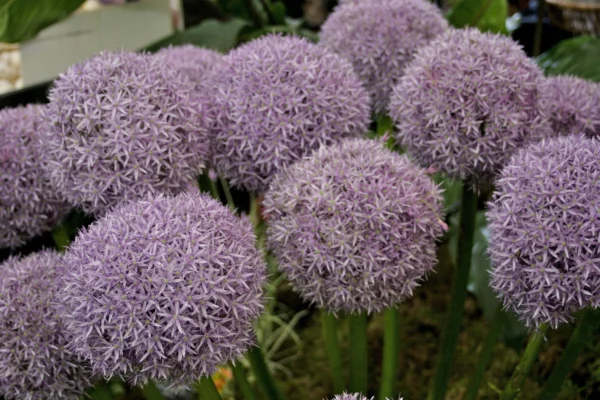
Give the main border alliums a sunny, reasonably sheltered position. Tall flower stems catch the wind, so a bed beside a hedge or open fence is often easier than a completely exposed strip.
Place bulbs among perennials that will soften the view of fading leaves without smothering the flower stems. Look at the height of neighbouring plants in May, rather than judging the bed when everything is dormant.
On heavy soil, prioritise a naturally drained area or raised bed. Improving the whole planting area is more useful than dropping a bulb into a small pocket of grit surrounded by wet clay.
Deep containers make alliums practical on patios. Choose pots large enough for the bulb’s planting depth, roots and stable footing. After flowering, move the pot out of the main display while the remaining leaves finish their season.
Photo: Shuvaev, CC BY 4.0. Resized and optimised; cropped for display.
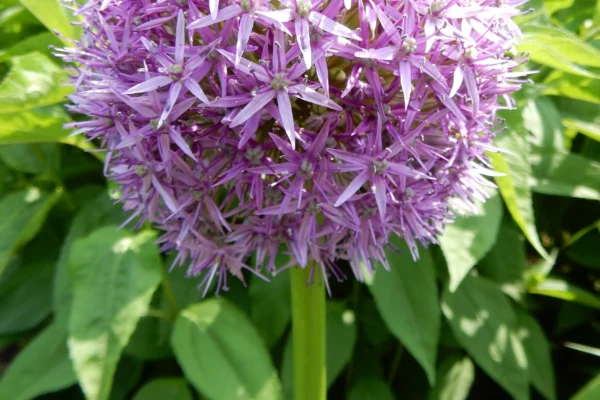
Buy firm bulbs without soft patches or mould, and plant promptly in autumn. Keep different varieties labelled so their spacing and flowering times remain clear.
1.
Choose the variety and check its expected height, flowering month and bulb size.
2.
Clear weeds and choose soil that is workable, not frozen or saturated.
3.
Lay out small groups with enough space for the mature flowerheads.
4.
Follow the supplier’s depth advice; the RHS general guide uses about four times bulb diameter.
5.
Place each bulb with its pointed growing end upwards and base downwards.
6.
Backfill gently and firm the surface without compacting the whole bed.
7.
Add a discreet label so dormant bulbs are not disturbed later.
8.
For pot grown plants bought in spring, retain the rootball and plant at its existing level.

Watering
Established border bulbs usually manage with normal rainfall. During active spring growth, investigate prolonged drought rather than letting a newly planted container dry completely. Check compost with a finger instead of watering automatically every day.
Reduce watering as leaves fade and bulbs become dormant. Do not keep watering an empty looking pot as if it were a summer bedding display. Arrange mixed beds so a thirsty neighbour does not leave the allium bulbs continuously wet.

Feeding
Alliums in ordinary garden soil rarely need a complicated feeding routine. Avoid freshly manured planting pockets and do not use extra fertiliser as a substitute for light or drainage.
If container bulbs will stay for another year, assess the compost and follow a suitable bulb feed’s instructions while leaves are active. Feeding after all foliage has gone cannot compensate for a poor growing season.

Pruning
Leave healthy green leaves to finish naturally, even if their appearance becomes untidy. Companion plants can hide the base. Once foliage has faded and withered, remove it gently without pulling at the bulb.
Cut spent flower stems at the base if you prefer a clean finish, or retain dry heads for structure. Remove seedheads before seed ripens where extra seedlings would be unwelcome. A dry head can also be cut for an indoor arrangement.

Winter care
The common border selections in this guide are hardy outdoors in suitable ground. Their winter requirement is chiefly good drainage. A layer of wet organic material pressed directly over the crown is not a cure for a saturated bed.
Containers face greater temperature swings and can become very wet. Move them into a sheltered position, keep drainage holes clear and use a cold frame or rain shelter where necessary. Maintain ventilation under cover.
Ornamental alliums carry many small flowers on stems radiating from a central point. In the familiar globe types, those stems create a sphere at the top of a largely leafless stalk. Basal leaves may be broad and strap shaped or fine and grassy, depending on the species.
Flowerheads are not all identical. ‘Globemaster’ produces a dense large globe, A. cristophii has an open starry head, and A. sphaerocephalon forms a smaller oval head. Keep labels with purchased bulbs; appearance and an onion smell are not a sufficient basis for using an ornamental plant as food.
Photo: Robert Flogaus-Faust, CC BY 4.0. Resized and optimised; cropped for display.
Autumn planting is the normal UK route to a strong spring display. If bulbs arrive late, inspect them and plant while they remain sound and the ground is workable. Do not wait an extra year merely to reach an ideal calendar date.
Flowering begins at different times in warmer southern gardens and colder northern or upland sites. Plan a sequence using variety labels and experience in your own garden, rather than expecting every allium to bloom in the same week.
In wet districts, a raised bed or container can make site selection easier. In a productive garden, keep ornamental alliums out of ground known to have onion white rot, and avoid moving contaminated soil or tools between beds.
Photo: Photograph by Mike Peel (www.mikepeel.net), CC BY-SA 4.0. Resized and optimised; cropped for display. Adapted image under the same licence.
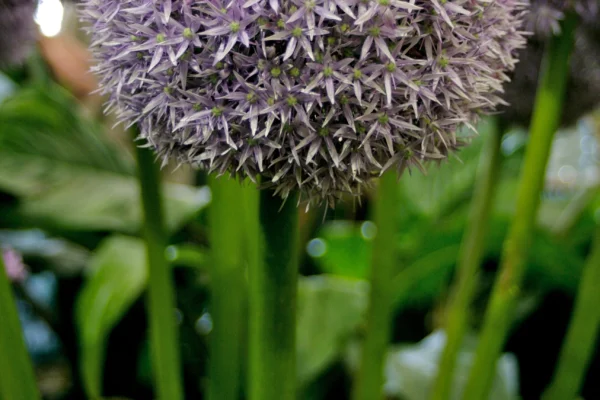
This is normal for many spring flowering ornamental alliums. Check that flower stems remain healthy before assuming disease. Hide the fading base with suitable neighbours and let the leaves complete their natural decline.
Small bulbs, immature offsets, crowding or insufficient light can reduce flowering. Check planting records and the site. Allow young bulbs time to reach flowering size rather than repeatedly lifting them.
Excess moisture is a common cause. Remove affected bulbs and improve the planting conditions. Reusing the same wet pocket without changing drainage is likely to repeat the problem.
Onion white rot may produce white growth with tiny dark resting bodies. Seek a firm identification, avoid transferring soil, and do not replace affected plants with more alliums in the same ground. The disease can persist for many years.
Allium leaf miner can affect ornamental relatives of onions. Inspect leaves and the bulb area for larvae or brown pupae. Remove affected material carefully and consult current RHS guidance before deciding on prevention.
Offsets provide a practical way to increase a successful clump. Once foliage and flowers have died down, lift carefully, separate sound young bulbs and replant with room to grow. Small offsets may need more than one season before producing substantial flowers.
Seed is a longer project. Sow ripe seed following the species instructions, or use stored seed in spring where appropriate. Seedlings can take years to flower and hybrids may not match their parent. Keep named selections separate if predictable colour and size are important.
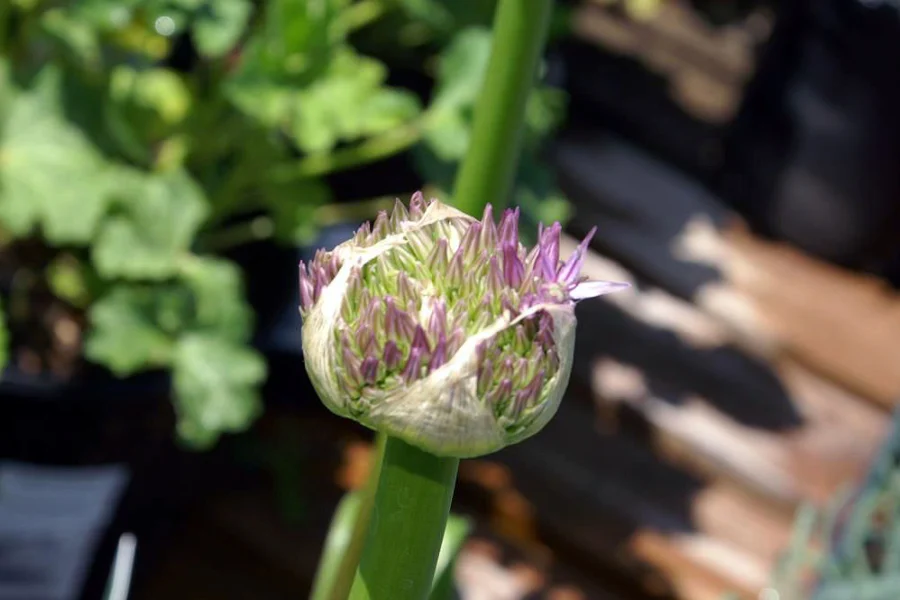
Allium ‘Globemaster’
A bold choice with violet purple globes up to around 20cm across on stems about 80cm tall. Give the flowerheads space to read clearly against simpler foliage. Suitable for a small group with a strong visual role.
Photo: David J. Stang, CC BY-SA 4.0. Resized and optimised; cropped for display. Adapted image under the same licence.
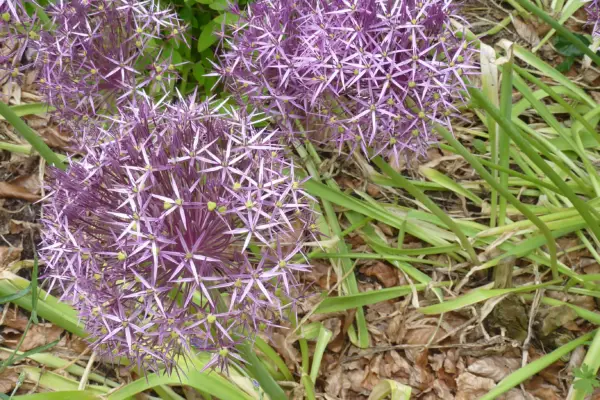
Allium cristophii
Star of Persia has open heads of metallic violet, star shaped flowers, followed by attractive dry seedheads. Usually shorter than the tallest globe types, it works towards the front of a sunny border. Also encountered under the spelling A. christophii.
Photo: Magnus Manske, CC BY-SA 3.0. Resized and optimised; cropped for display. Adapted image under the same licence.
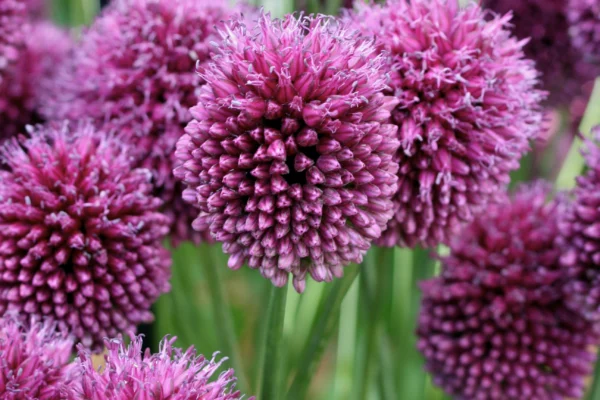
Allium sphaerocephalon
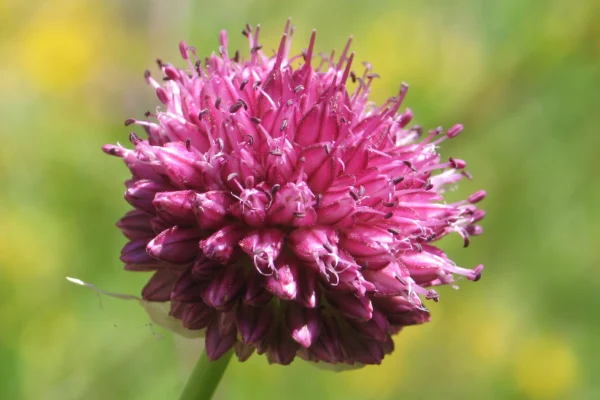
Drumstick allium carries small oval heads that colour from green towards reddish purple. Its July and August flowering extends the allium season. Thread it through grasses or other perennials rather than expecting a giant globe.
Photo: Photograph by Mike Peel (www.mikepeel.net), CC BY-SA 4.0. Resized and optimised; cropped for display. Adapted image under the same licence.
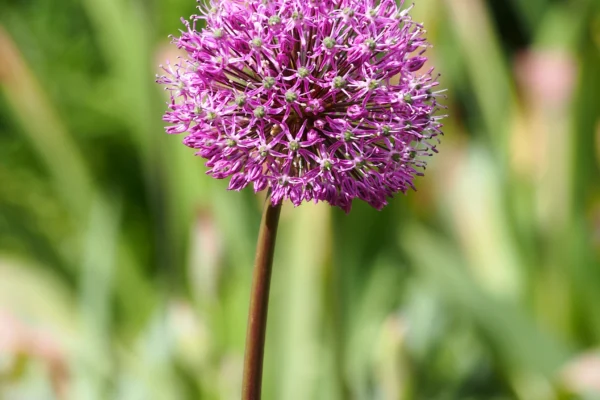
Allium hollandicum ‘Purple Sensation’
A familiar May and June selection with rounded purple heads above slender stems. It is useful for repeating colour through a border and combining with emerging perennials. Allow for foliage that fades around flowering time.
Photo: Agnieszka Kwiecień, Nova, CC BY-SA 4.0. Resized and optimised; cropped for display. Adapted image under the same licence.
Use the BFFD map to discover relevant growers and local suppliers, then ask whether they offer the bulbs or plants you want. Check variety, bulb size and collection arrangements before travelling; stock is seasonal.
The many small flowers in an allium head can attract visiting bees and other pollinating insects. A mixture of flowering times is more useful than choosing every bulb for one brief display.
Keep open flowers free from unnecessary sprays. Combine alliums with other suitable flowering plants before and after their season, and retain some undisturbed habitat elsewhere in the garden.
Published by Buy From Farmers Direct. Sources checked 4 October 2026. Growing references: RHS: How to grow alliums; RHS: Allium ‘Globemaster’; RHS: Allium cristophii; RHS: Allium hollandicum ‘Purple Sensation’; NC State Extension: Allium genus; NC State Extension: Allium hollandicum; NC State Extension: Allium sphaerocephalon; RHS: Onion white rot; RHS: Allium leaf miner. The seasonal timeline uses the shared BFFD Growers Calendar record; adjust timings to your variety and local conditions.
Autumn is the usual planting time, generally September to November while soil is workable. Established plants sold in pots can be planted in spring. Follow the instructions for specialist species.
Yes. Use a deep container with clear drainage holes and enough room for the selected bulbs. Water during active growth as needed, then avoid keeping dormant bulbs constantly wet.
Many ornamental alliums return as perennials in suitable soil. Flowering is less reliable if bulbs rot, become overcrowded or remain too small. Keep a record of successful varieties in your own garden.
Depth varies with bulb size and species. Follow the supplier’s instructions; the RHS general recommendation for border bulbs is around four times the bulb’s diameter. Small bulbs and large bulbs should not all receive the same depth.
You can remove spent flower stems or leave the dry heads for decoration. Let healthy green leaves finish naturally, then clear the withered foliage. Remove seedheads sooner if you want to limit seedlings.
Many ornamental alliums naturally lose their leaves around flowering. Early collapse, distorted growth or a soft bulb needs closer inspection for moisture problems, pests or disease.
Use the Growers Calendar to plan autumn bulb planting and choose a sequence of spring and summer flowers. A few clearly labelled groups will make it easier to see which ornamental alliums return well in your soil.
Explore more growing guides: Agastache, Anemone, Aster (China).
Want to get food independence, support your local grower, get better prices and shop more privately?
Local food isn’t just something you find. It’s something you protect. A free account helps keep local supply visible, supported, and resilient.

….it takes 30 seconds for food lovers and 5 minutes for suppliers
We built this for people who care where their food comes from. For people who want to remain food secure. For Farmers to get to the local people, who deserve a better income and to deliver a better price for you. For the environmentally conscious and the privacy-conscious. An account simply helps us make the map and supplier reach more useful to you, without changing how open it is. You’re always in control.


Find local food. Stay connected to it. Create a free account to support local producers and be part of a growing food network.


