Ornamental gourds turn a summer of vigorous vines into an autumn collection of curious shapes and colours. This guide focuses on decorative gourds, chiefly small fruited Cucurbita pepo, with bottle gourds explained separately. These are display crops, not ingredients: keep ornamental fruit clearly labelled and out of the kitchen harvest.
Decorative fruit only
Warm sunny position
Sow indoors in spring
Give vines room
Harvest before frost
| Main botanical group | Ornamental forms of Cucurbita pepo |
| Bottle gourd species | Lagenaria siceraria |
| Family | Cucurbitaceae |
| Life cycle | Annual |
| Winter hardiness | Frost tender |
| Main use | Autumn decoration and, for suitable bottle gourds, crafts |
| Food use | Do not eat ornamental gourds |
| Light | Full sun |
| Position | Warm and sheltered |
| Soil | Fertile, moisture retentive and well drained |
| Indoor sowing | April and May |
| Optional outdoor sowing | Late May or June in warm soil |
| Sowing depth | About 1.5cm; follow the packet |
| Germination temperature | Usually 15 to 20°C for ornamental mixtures |
| Planting out | Late May or June, after local frosts |
| Indicative plant spacing | 90cm for a typical small fruited mixture |
| Vine space | Allow additional ground or strong climbing support |
| Main harvest | September and October |
| Pollination | Separate male and female flowers need pollen transfer |
| Propagation | Fresh labelled seed is the simplest option |
| Plant name | Crop type | Spacing |
Sow indoors
Plant outdoors
Harvest
Polytunnel | |||||||||||
|---|---|---|---|---|---|---|---|---|---|---|---|---|---|---|
| Jan | Feb | Mar | Apr | May | Jun | Jul | Aug | Sep | Oct | Nov | Dec | |||
| Gourd | Cucurbits | Single 90cm, In row 90cm, Row gap 150cm | No activity recorded | No activity recorded | No activity recorded | Sow indoors | Sow indoors, Plant outdoors | Sow indoors, Plant outdoors | No activity recorded | No activity recorded | Harvest | Harvest | No activity recorded | No activity recorded |
Sow indoors: April, May, June. Plant outdoors: May, June. Harvest: September, October. Polytunnel: no months recorded.
The sowing band combines indoor sowing in April and May with optional outdoor sowing once soil is warm in late May or June. Plant out only after the last frost in your area. September and October are typical decorative harvest months, but ripeness and the forecast take priority. Spacing represents a small fruited mixture; vigorous selections need more room. Protected growing may help bottle gourds in cool districts, but a tunnel is not essential for the main crop described here.
Choose ornamental gourds if you want a seasonal display and have space for wandering stems. A few plants can occupy considerably more ground than their young leaves suggest.
Small fruited mixtures suit a sturdy trellis or a sunny bed. Bottle gourds are a separate, often much more vigorous option that needs a long warm season to mature for drying.
Photo: psyberartist, CC BY 2.0. Resized and optimised; cropped for display.
Use an open sunny position sheltered from cold winds. Deep shade reduces flowering and leaves less warmth for fruit to mature.
Improve the planting area with well rotted organic matter. The roots need reliable moisture, but a bed that stays waterlogged is unsuitable.
Decide whether vines will trail or climb before planting. Install strong support early, with access for watering and for reaching the developing crop.
A modest indoor sowing usually gives a more dependable start than putting seeds into cold spring soil. Keep each packet label with its plants.
1.
Choose seed sold specifically for ornamental growing and check the mature vine size. Keep bottle gourds separate from small Cucurbita mixtures.
2.
In April or May, fill individual pots with suitable peat free seed compost. Water and allow excess moisture to drain.
3.
Sow seeds on their edge, about 1.5cm deep, or use the depth on the packet. Individual pots reduce root disturbance later.
4.
Keep the compost moist at the supplier’s recommended temperature, commonly 15 to 20°C. Germination often takes one to three weeks.
5.
Move seedlings into bright light and protect them from cold. Pot on if needed, handling the root ball carefully.
6.
Gradually acclimatise plants to outdoor conditions. Wait until local frost risk has passed and the soil has warmed.
7.
Plant at the depth used in the pot, commonly around 90cm apart for a small fruited mixture. Follow wider spacing where the packet specifies it.
8.
Water thoroughly, guide shoots towards their support and check for slugs. Alternatively, direct sow in warm soil in late May or June, thinning to the strongest seedling at each station.

Watering
Water at the base when the soil begins to dry, especially while fruit is developing. Check beneath the surface rather than relying on a fixed weekly schedule.
A mulch helps retain moisture. Keep it clear of the main stem, and avoid leaving the root area saturated after heavy watering.

Feeding
Good soil preparation supports the early growth. Where additional feeding is needed, use a suitable fertiliser at its labelled rate.
Once flowering and fruiting are established, a suitable high potassium feed can support the crop. Avoid repeatedly adding nitrogen simply because the vines look vigorous.

Pruning
Guide stems gently while they are young and flexible. Regular attention is easier than untangling a heavy vine after it has set fruit.
Routine hard pruning is unnecessary. Preserve healthy leaves that supply the developing crop, and remove badly damaged material without stripping the plant bare.

Winter care
These plants will not overwinter outdoors. Harvest mature small ornamental gourds before frost, then clear spent vines when their season ends.
Keep drying fruit in an airy, sheltered place. Inspect it regularly and discard any fruit that becomes soft or rotten, rather than storing it against sound specimens.
Small ornamental Cucurbita gourds usually have yellow flowers, rough foliage and fruit ranging from smooth pears to ribbed, warted or winged shapes. A tiny swelling behind a female flower is the developing fruit.
Bottle gourds, Lagenaria siceraria, have white flowers and may produce large rounded or elongated fruits. Shape and flower colour help explain the groups but do not establish that an unknown fruit is safe to eat.
Photo: 阿橋 HQ, CC BY-SA 2.0. Resized and optimised; cropped for display. Adapted image under the same licence.
In cooler districts, start under cover and choose small fruited selections with a realistic chance of maturing. A sheltered southern garden offers a longer outdoor season than an exposed northern plot.
Harvest on a dry day when the fruit has developed its expected colour, the rind is firm and the stalk is drying. Cut with a short section of stem attached; carry the fruit by its body.
Dry small decorative gourds in a warm, well ventilated place, spaced apart and turned occasionally. Fully mature bottle gourds may take three to six months to dry for crafts. Not every small ornamental fruit will remain attractive indefinitely.
Photo: Poyt448 Peter Woodard, Public domain. Resized and optimised; cropped for display.
Check cold, wet compost and root damage. Give seedlings warmth and light, let excess water drain and delay outdoor planting until conditions improve.
Male flowers often come first. Later, poor pollination or cool conditions can cause small fruits to shrivel. Allow insects access to flowers and avoid leaving covers closed over a flowering crop.
Powdery mildew is common on cucurbits, especially when roots are dry. Maintain suitable watering and airflow, and avoid overcrowding the plants.
Inspect for slugs and snails, particularly after planting out. Check at dusk and remove pests where practical, protecting vulnerable seedlings while they establish.
Immature, bruised or crowded fruit is prone to decay. Remove affected specimens promptly and improve ventilation. A wet or soft gourd will not become a sound dried ornament by being sealed away.
Raise plants from seed each spring. A bought, clearly labelled packet makes it easier to know the intended use, growth habit and likely fruit shapes.
Gourds can cross with compatible plants of the same species. This changes the offspring grown from saved seed, not the fruit already growing that summer. Do not use seed from ornamental crosses to produce a food crop.
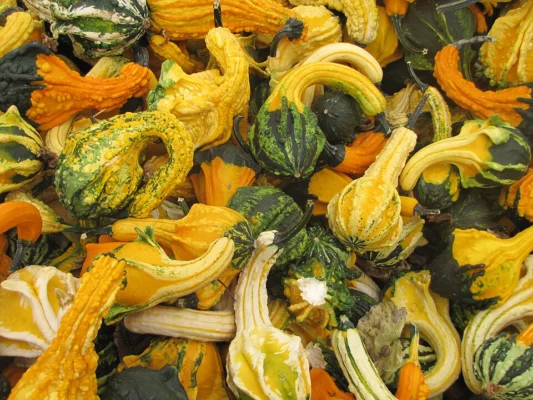
Small ornamental mixtures
Packets offer a range of colours, ridges and textures for autumn displays. Check the stated vine size and treat every fruit in the mixture as decorative.
Illustrative mixed ornamental gourds; the photograph does not represent one named seed mixture.
Photo: Trevor Mattea, CC BY 2.0. Resized and optimised; cropped for display.
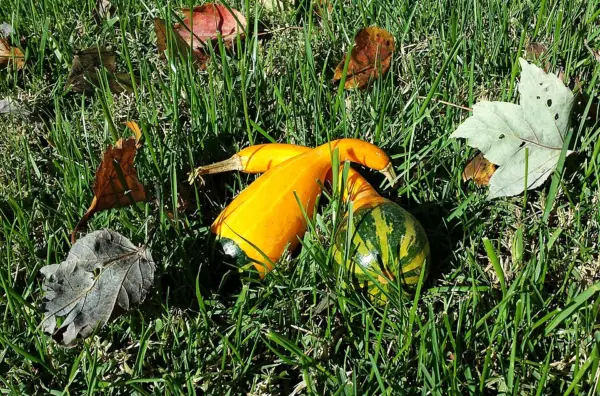
Winged and crown forms
These Cucurbita gourds develop conspicuous points or flanges. Choose a named packet if you want a more consistent shape than a general mixture.
Illustrative winged ornamental gourds; a specific cultivar is not confirmed.
Photo: HalfGig, CC BY-SA 3.0. Resized and optimised; cropped for display. Adapted image under the same licence.
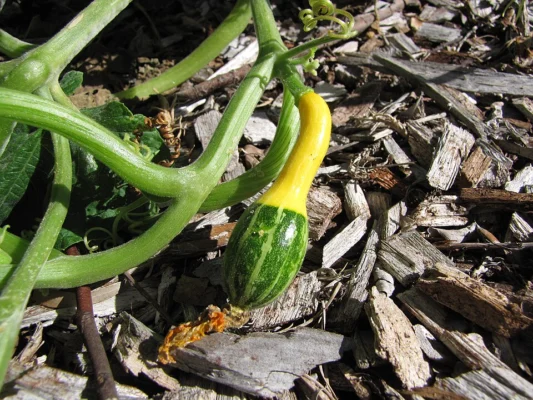
Pear shaped forms
Small pears may combine green and yellow colouring. They offer a simpler outline among warted and strongly ribbed display fruit.
A bicoloured pear shaped ornamental gourd on its vine; the named cultivar is unconfirmed.
Photo: Forest and Kim Starr, Starr Environmental, CC BY 2.0. Resized and optimised; cropped for display.
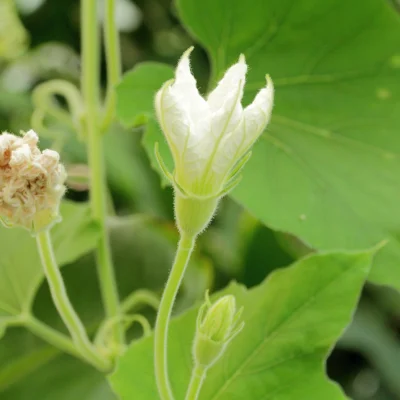
Bottle gourds
Lagenaria siceraria is a different species, grown for mature hard shells in craft selections. Give its vigorous vines strong support and enough warmth to finish the crop.
The white flower of Lagenaria siceraria, rather than a photograph of its fruit.
Photo: C T Johansson, CC BY-SA 3.0. Resized and optimised; cropped for display. Adapted image under the same licence.
Check the species, expected size and intended use before buying. If you want vegetables, choose a specifically labelled culinary variety and follow its own harvesting guide. Mature craft gourds and decorative mixtures are not substitutes.
Cucurbita flowers depend on pollen moving between male and female blooms, with insects doing much of that work outdoors. Allow access when flowers open.
Nearby flowering plants can help provide a longer season of forage. Inspect pests before acting and avoid spraying open flowers where visiting insects are feeding.
Published by Buy From Farmers Direct. Sources checked 6 October 2026. Growing references: Mr Fothergill’s ornamental gourd growing instructions; Chiltern Seeds: small fruited ornamental gourds; RHS squash growing guide; RHS cucurbit problems; RHS Cucurbita pepo profile; RHS bottle gourd profile; RHS: ornamental gourds are not for eating; Sea Spring Seeds: a separately labelled culinary bottle gourd; Johnny’s Selected Seeds: ornamental gourd harvesting and drying; Iowa State University: harvesting and curing gourds; South Dakota State University: cucurbit seed saving and cross pollination; BZfE: distinguishing decorative and culinary pumpkins and gourds. The seasonal timeline uses the shared BFFD Growers Calendar record; adjust timings to your variety and local conditions.
No. Decorative gourds can contain harmful bitter compounds and should stay out of recipes. Some separately labelled bottle gourd cultivars are grown as vegetables, but that does not make ornamental mixtures or mature craft fruit edible.
For the small ornamental mixtures covered here, sow indoors in April or May. Direct sowing is an option in warm soil in late May or June, depending on local conditions.
Yes, with strong support and space for the vines. Check the mature size on the packet. Larger bottle gourds need a particularly robust structure and may require additional support for heavy fruit.
Look for firm mature fruit with developed colour and a drying stalk, often in September or October. Cut small ornamental gourds before frost and avoid bruising them.
Small ornamental gourds need an airy drying period and regular checks. Mature bottle gourds can take three to six months. Size, maturity and ventilation make a large difference.
Cross pollination does not alter the flesh of fruit already developing that season. Compatible crosses can affect plants raised from saved seed later, which is why ornamental seed should not be used to raise an assumed edible crop.