Hyacinths bring strong spring colour and a memorable scent to pots, borders and doorsteps. Garden hyacinths are Hyacinthus orientalis and its cultivars. Plant ordinary bulbs in autumn for outdoor spring flowers, or choose specially prepared bulbs for an earlier indoor display. The two routes need different planting depths and temperatures, but both depend on healthy bulbs and careful watering.
Scented spring flowers
Autumn planted bulbs
Sun and good drainage
Prepared bulbs for indoor display
Ornamental bulbs, not food
| Botanical name | Hyacinthus orientalis and its cultivars |
| Family | Asparagaceae |
| Plant type | Bulbous perennial |
| Usual garden height | Around 20 to 30cm |
| Foliage | Glossy, strap shaped leaves |
| Flower form | Many small flowers clustered around an upright stalk |
| Main outdoor flowering season | March and April, depending on conditions |
| Flower colours | Blue, purple, pink, red, cream and white |
| Fragrance | Often strong and sweet |
| Preferred light | Full sun for reliable repeat flowering |
| Alternative position | Light shade, especially for a seasonal display |
| Soil | Moderately fertile and well drained |
| RHS hardiness | H4 for the common garden cultivars shown |
| Outdoor planting season | September to November; early autumn is preferable |
| Practical garden spacing | About 15cm between bulbs |
| Typical outdoor planting depth | Around 10cm; follow the bulb supplier's instructions |
| Indoor flowering bulbs | Buy bulbs explicitly labelled prepared |
| Indoor rooting stage | Cool and dark before bringing into light |
| Propagation | Offsets; slow to reach flowering size |
| Handling | Wear gloves; bulbs and plants are not edible |
| Plant name | Crop type | Spacing |
Sow indoors
Plant outdoors
Harvest
Polytunnel | |||||||||||
|---|---|---|---|---|---|---|---|---|---|---|---|---|---|---|
| Jan | Feb | Mar | Apr | May | Jun | Jul | Aug | Sep | Oct | Nov | Dec | |||
| Hyacinth | Not recorded | Single 15cm, In row 15cm, Row gap 15cm | No activity recorded | No activity recorded | No activity recorded | No activity recorded | No activity recorded | No activity recorded | No activity recorded | No activity recorded | Plant outdoors | Plant outdoors | Plant outdoors | No activity recorded |
Sow indoors: no months recorded. Plant outdoors: September, October, November. Harvest: no months recorded. Polytunnel: no months recorded.
The planting band covers ordinary outdoor bulbs from September to November, with early autumn giving roots a useful head start. Outdoor flowers usually appear in March or April; the harvest row is blank because hyacinths are ornamental, not a food crop. Prepared bulbs are a separate indoor project, usually started in September for winter flowers. Their cool rooting period and later indoor warmth depend on the cultivar, so Christmas flowering is a target rather than a promise. Seed sowing is not the normal way to reproduce named varieties. The 15cm spacing is a practical garden allowance, and a polytunnel is not needed for routine outdoor cultivation.
Hyacinths suit gardeners wanting a compact spring display near a path or seat. A small group is enough to enjoy the scent, while larger drifts can give a border a strong patch of colour.
They also work well in pots, including gardens with unsuitable soil. Indoor forcing is rewarding if you can provide a cool, dark rooting place and then a bright room away from radiators.
Photo: Wilhelm Zimmerling PAR, CC BY-SA 4.0. Resized and optimised; cropped for display. Adapted image under the same licence.
Choose a sunny position if you want bulbs to return for several years. Light shade can suit a one season display, but deep shade and competition from dense planting reduce the chance of strong future flowering.
Avoid a hollow that stays wet through winter. On poorly drained ground, a raised bed or pot with drainage holes is more dependable than dropping bulbs into a small gravel filled hole surrounded by heavy clay.
Use a container deep enough for the bulbs, their roots and a layer of compost beneath them. Fill it with a suitable peat free, free draining mix and leave space below the rim for watering.
Place indoor flowering pots where their fragrance is welcome. A cool, bright room prolongs enjoyment better than a hot shelf above a radiator. Keep ornamental bulbs separate from food storage and out of reach of children and pets.
Photo: QuazDelaCruz, CC0. Resized and optimised; cropped for display.
Decide whether you are planting for an outdoor spring display or forcing prepared bulbs indoors. Read the pack before starting: ordinary garden bulbs and prepared indoor bulbs are not interchangeable for a timed winter display.
1.
Choose firm bulbs without soft patches, obvious mould or damaged bases. Keep the cultivar label and check whether the bulbs are garden stock or prepared stock for indoor forcing.
2.
Wear gloves when handling bulbs, as their dry skins can irritate skin. Clear weeds from the planting area and loosen the soil without damaging roots of plants already growing nearby.
3.
For outdoor planting, make holes around 10cm deep, adjusting to the supplier's directions for the bulbs supplied. Set the pointed end upwards and leave around 15cm between bulbs in a lasting garden group.
4.
Refill gently and water to settle dry soil. Mark the group so dormant bulbs are not accidentally dug up later. Plant several together where their short stems and fragrance can be enjoyed close by.
5.
For outdoor pots, use drainage holes and suitable compost, keeping the bulbs covered at the recommended garden depth. Stand the pot where water can drain away freely, and protect it from severe cold and prolonged saturation.
6.
For prepared indoor bulbs, use a drained pot of suitable compost or bulb fibre. Set bulbs close together without touching, with their tops showing above the surface. Water carefully rather than flooding the container.
7.
Keep indoor pots cool and dark while roots establish. Around 9C is a useful target; timing varies, often taking about ten weeks. Check moisture regularly and follow the pack rather than moving them indoors simply because a date has arrived.
8.
Once well rooted with shoots around 4 to 5cm long, bring prepared pots gradually into light and then a bright, cool display position. Continue modest watering, turn pots occasionally and support a leaning flower stem if necessary.

Watering
Outdoor bulbs in the ground usually receive enough winter rain. Water during prolonged dry weather while leaves are growing, especially after flowering when the bulb is rebuilding its reserves. Avoid keeping the soil permanently soggy.
Check pots throughout active growth, including the cool rooting stage of indoor bulbs. Water when needed and let excess drain. Once leaves yellow naturally, reduce watering; dormant bulbs do not need the same moisture as growing plants.

Feeding
Good garden soil often supplies enough nutrients for the first display. If repeat flowering weakens, consider light, drainage and leaf care before adding fertiliser. Improving poor soil with well rotted organic matter is useful before planting.
Container bulbs benefit from a suitable potassium rich liquid feed during spring growth, following the label, continuing while leaves remain green after flowering. Do not feed a dormant bulb or add fertiliser to a bulb vase of water.

Pruning
Cut the faded flower stalk back near its base, leaving all healthy leaves intact. Let the foliage work until it yellows and withers naturally. Cutting it off with the flowers removes the bulb's means of rebuilding for next year.
No shrub style pruning is needed. If a heavy flower spike leans, support it gently with a discreet stake inserted beside the bulb. Avoid pushing a cane through the bulb or tying the leaves into a tight bundle.

Winter care
Garden hyacinths can remain outdoors in suitable ground through winter. The common cultivars shown are rated H4, so exposed pots in severe weather benefit from shelter or insulation around the container while still draining freely.
Indoor forcing needs a cool rooting stage, not constant warm room conditions from planting onwards. Keep checks regular in a shed or other dark place: neglected pots can dry out even when the air feels cold.
A garden hyacinth produces broad glossy leaves around a fleshy flowering stalk. Many small, waxy flowers form a crowded spike, each opening into recurved lobes.
Grape hyacinths belong to Muscari and have much smaller, beadlike flowers. Water hyacinth is an unrelated aquatic plant. Use the botanical label when buying so that the plant and its growing needs match this guide.
Photo: 4028mdk09, CC BY-SA 3.0. Resized and optimised; cropped for display. Adapted image under the same licence.
Outdoor flowering is usually centred on March and April, with warm sheltered gardens often ahead of colder districts. Choose one cultivar for a consistent colour block, or mix several.
A hyacinth vase offers a close view of the developing roots. Support the bulb above the water, keeping its base dry, and top up as roots take water. Give it the same cool, dark start before gradually increasing light and warmth.
After an indoor display, let the leaves complete their growth and plant the bulbs in suitable garden ground. They may need recovery time, and later spikes are often looser than their first show. Buy fresh prepared bulbs when a dense, timed indoor display matters.
Photo: Mokkie, CC BY-SA 3.0. Resized and optimised; cropped for display. Adapted image under the same licence.
Warm conditions too early can upset the balance between roots, leaves and flowers. Check that bulbs had a proper cool rooting stage, then move the display to a cooler room. For the next batch, follow the cultivar's preparation schedule.
A warm room, poor light or a heavy flower spike can cause leaning. Use a brighter, cooler position, rotate the pot and add a gentle support beside the bulb. Do not try to correct weak stems with extra fertiliser.
Rot is more likely where bulbs are damaged or remain too wet. Remove soft or clearly diseased bulbs and check drainage and watering. Start replacements with sound stock and fresh suitable compost rather than reusing a waterlogged display.
Slugs and snails can damage tender growth. Check after dark, tolerate light feeding and move individual feeders away from vulnerable pots where practical. Keep habitat for their predators elsewhere in the garden; gritty barriers are not a reliable cure.
Squirrels may investigate freshly worked soil and lift bulbs. A securely fitted wire mesh cover can protect a pot or planting area while roots establish. Allow room for shoots and remove or adjust protection before it restricts growth.
When bulbs are dormant in summer, healthy offsets can be separated and grown on in suitable compost. Keep their labels and avoid damaging the basal plate. Small offsets need time to build up before they can produce a full flower spike.
Named cultivars are maintained by bulb propagation, not ordinary saved seed. Specialist methods such as scooping are slower projects requiring careful hygiene, with flowering several years away. Buying good bulbs is the simpler route for an autumn planting scheme.
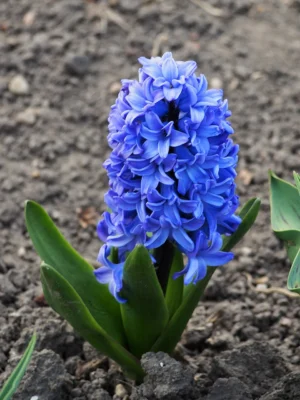
Delft Blue
A familiar mid blue hyacinth reaching around 30cm. Its dense scented spikes give a clear spring colour block. For an indoor winter display, buy a prepared batch rather than assuming every bulb of this cultivar has been treated.
Delft Blue photographed in Wrocław University Botanical Garden.
Photo: Agnieszka Kwiecień, Nova, CC BY-SA 4.0. Resized and optimised; cropped for display. Adapted image under the same licence.
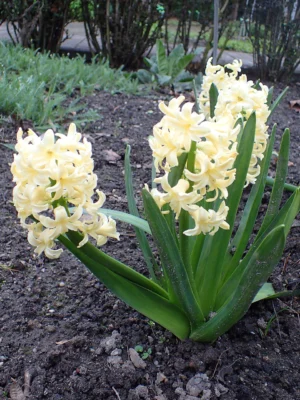
Carnegie
A white flowered choice around 30cm tall, with waxy blooms and glossy leaves. It can soften a mixed colour pot or form a pale group in a border. Good drainage remains essential even in a sheltered position.
Carnegie hyacinths photographed in Wrocław University Botanical Garden.
Photo: Krzysztof Ziarnek, Kenraiz, CC BY-SA 4.0. Resized and optimised; cropped for display. Adapted image under the same licence.
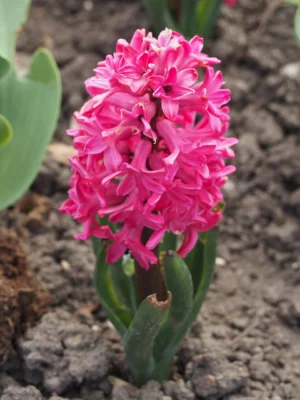
Jan Bos
Rich reddish pink flowers and a compact height around 25cm make this a strong colour accent. The flowers are highly scented, so a pot near a doorway can be enough to enjoy it without a large planting.
Jan Bos photographed in Wrocław University Botanical Garden.
Photo: Agnieszka Kwiecień, Nova, CC BY-SA 4.0. Resized and optimised; cropped for display. Adapted image under the same licence.
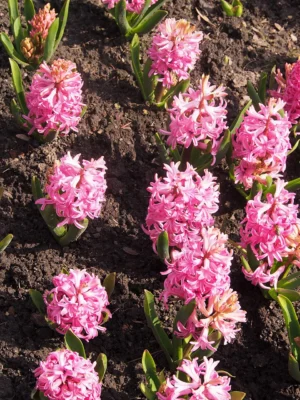
Pink Pearl
Deep pink flowers with paler edges form broad spikes above green foliage. Plants usually reach around 20 to 30cm. It is also sold for forcing, where the correct prepared bulbs and rooting period matter more than the name alone.
Pink Pearl planted in Wrocław University Botanical Garden.
Photo: Agnieszka Kwiecień, Nova, CC BY-SA 4.0. Resized and optimised; cropped for display. Adapted image under the same licence.
Compare colour, scent and planting purpose before ordering. Garden bulbs provide spring flowers outdoors; prepared bulbs are the starting point for an earlier indoor show. Buy healthy named stock and keep the growing instructions with each batch.
Include hyacinths within a varied spring planting rather than relying on one short flowering display for wildlife. Open flowers at different times of year give visiting insects more choices, alongside places to shelter and nest.
Protect individual vulnerable bulbs when needed, while accepting some garden animal activity. A few chewed leaves do not justify treating a whole border, and secure physical protection should be checked as shoots develop.
Published by Buy From Farmers Direct. Growing guidance reviewed 6 October 2026. The seasonal timeline uses the shared BFFD Growers Calendar record; adjust timings to your variety and local conditions.
Plant ordinary garden bulbs in early autumn, usually September or October, with November still possible in suitable conditions. Prepared indoor bulbs are often started in September, following their pack's timing for winter flowers.
They have been temperature treated for earlier indoor flowering. They still need a cool, dark rooting period after planting, followed by a gradual move into light and warmth. Ordinary garden bulbs are less suitable for a timed Christmas display.
They can return in sunny, well drained ground if their leaves are allowed to die back naturally. Later flower spikes may be smaller and looser. Bulbs forced indoors may need time to recover after moving into the garden.
Yes, in a suitable bulb vase that holds the bulb above the water. Keep the water just below its base, top up as needed and begin with a cool, dark rooting stage. Do not leave the bulb itself sitting in water.
Leave green leaves in place. Remove the faded flower stalk, continue sensible watering and allow foliage to yellow naturally before tidying it away. The leaves help replenish the bulb.
No. These are ornamental plants, and eating them can cause illness. Keep bulbs separate from onions and other food, and wear gloves when handling them because the skins can irritate skin.
Match the bulb to its purpose, give roots time to establish and protect the green leaves after flowering. A little autumn preparation brings colour and scent close to home.