A clump of chives near the kitchen gives you fresh onion flavoured leaves whenever a meal needs a little lift. This hardy perennial is useful in pots, herb beds and vegetable borders. Give it moisture, room to renew its leaves and an occasional division, and it can provide small harvests for years.
Hardy perennial herb
Good for small pots
Edible leaves and flowers
Sun or light shade
Easy to divide
| Botanical name | Allium schoenoprasum |
| Family | Amaryllidaceae |
| Plant type | Bulbous herbaceous perennial |
| Typical leaf height | Around 30cm, varying with selection |
| Leaf shape | Slender, hollow and cylindrical |
| Flavour | Mild onion |
| Flower colour | Usually pink or purple; some selections are white |
| Position | Sun or partial shade |
| Soil | Moist but well drained |
| Indoor sowing | March to April |
| Outdoor sowing | Spring, commonly April to May |
| Planning spacing | 25cm between small clumps |
| Planting season | Spring or early autumn in suitable conditions |
| Harvest window | Spring to autumn once established |
| Seed grown first harvest | Usually later than established plants |
| Winter behaviour | Leaves normally die back |
| Propagation | Seed or division |
| Routine renewal | Divide crowded clumps every few years |
| Container care | Water regularly and maintain drainage |
| Wildlife value | Flowers visited by pollinating insects |
| Plant name | Crop type | Spacing |
Sow indoors
Plant outdoors
Harvest
Polytunnel | |||||||||||
|---|---|---|---|---|---|---|---|---|---|---|---|---|---|---|
| Jan | Feb | Mar | Apr | May | Jun | Jul | Aug | Sep | Oct | Nov | Dec | |||
| Chives | Herbs | Single 25cm, In row 25cm, Row gap 30cm | No activity recorded | No activity recorded | Sow indoors, Plant outdoors, Polytunnel | Sow indoors, Plant outdoors, Harvest, Polytunnel | Sow indoors, Plant outdoors, Harvest | Harvest | Harvest | Harvest | Plant outdoors, Harvest | Harvest, Polytunnel | No activity recorded | No activity recorded |
Sow indoors: March, April, May. Plant outdoors: March, April, May, September. Harvest: April, May, June, July, August, September, October. Polytunnel: March, April, October.
The shared calendar shows March to May sowing, spring and early autumn planting, and April to October harvesting. The early harvest months refer to established plants; new seedlings need time to build a healthy clump. A tunnel is optional for spring starts or an extended autumn leaf crop. Outdoor plants are hardy and do not need winter heating.
Chives suit growers who want a useful herb without dedicating a large bed to it. One established pot can provide regular garnishes, while several clumps let you rotate harvesting and leave some flowers for insects.
They are a good choice for a border edge you can reach easily. A permanently dry gravel bed is less useful for tender leaf production than a moisture retentive herb bed. Common chives are different from garlic chives, which have flat leaves and later white flowers.
Photo: JarroNevsbaru, CC BY 4.0. Resized and optimised; cropped for display.
Choose sun or light partial shade and a place where watering is straightforward. A small herb pot can be overlooked behind larger patio plants, so keep it visible and within easy reach.
Prepare soil by removing persistent weeds and adding mature garden compost where needed. Chive roots can become tangled with couch grass or other spreading weeds, making later division more difficult.
Use a container with drainage holes and sufficient compost around the roots. A very small nursery pot may keep a plant alive briefly but offers little protection from summer drying.
In a mixed planter, pair chives with plants that accept similar moisture conditions. Avoid assuming that all herbs prefer the same dry soil simply because they share a culinary use.
Photo: H. Zell, CC BY-SA 3.0. Resized and optimised; cropped for display. Adapted image under the same licence.
Bought plants or divisions give the quickest start. Seed is useful when you want several clumps for an edging or a larger herb patch.
1.
Choose fresh seed, a healthy potted plant or a sound division from an established clump. Label named selections clearly.
2.
Prepare a weed free bed or a drained pot filled with suitable peat free compost. Water dry compost before sowing or planting.
3.
Sow seed shallowly, around 0.5 to 1cm deep, in spring. Keep it lightly moist and give indoor seedlings good light.
4.
Allow seedlings to establish before thinning or moving them. Small groups can develop into useful clumps rather than being separated into single fragile shoots.
5.
Acclimatise indoor raised plants before moving them outside. Choose a mild planting spell rather than exposing soft growth abruptly to cold wind.
6.
Set a plant at its existing growing depth and firm gently around the roots. Use about 25cm between clumps as a starting point.
7.
Water well after planting and check the root zone while new growth establishes. Keep competing weeds from crowding the young clump.
8.
Wait for a useful amount of healthy leaf before taking the first small harvest. Leave enough growth for the plant to continue building strength.

Watering
Keep young plants and pots evenly supplied with water. Established clumps in the ground tolerate more variation, but repeated drought produces poorer leaves and can bring the crop to a temporary halt.
Water the compost or soil directly and check that excess water can escape. A pot that remains heavy and saturated needs its drainage checked before further watering.

Feeding
A light dressing of mature compost around established outdoor clumps can help maintain the soil. Keep bulky mulch clear of the centre rather than burying the small bulbs.
Container plants may need an appropriate diluted feed during active growth, following the product label. Repotting or division is more useful than repeatedly feeding a root bound clump.

Pruning
Snip leaves with clean scissors, leaving a short base to regrow. Take a portion of the clump at a time when you need only a garnish, and allow it to recover between larger cuts.
Remove spent flower stems if you want to limit seedlings. Let part of a planting flower for insects and the edible blooms, while cutting a separate clump for softer leaves.

Winter care
Outdoor leaves normally yellow and die back as growth slows. Remove dead material when convenient and keep the pot or bed draining freely. Dormancy does not mean a healthy plant has died.
Mark the position of small clumps so they are not dug up accidentally during winter work. Resume watering and harvesting in response to spring growth, rather than a fixed date alone.
Common chives make dense tufts of fine cylindrical leaves from small bulbs. The rounded pink or purple flower heads stand above the foliage. Flowering stems feel firmer than the soft leaves used for chopping.
The bulb photograph shows the base and roots of chive plants. Use labelled cultivated plants for the kitchen; an onion scent or a similar leaf shape on an unknown garden plant is not enough to establish that it is edible.
Photo: Wilhelm Zimmerling PAR, CC BY-SA 4.0. Resized and optimised; cropped for display. Adapted image under the same licence.
In southern and urban gardens, growth may begin early in spring. Keep pots watered during warm spells and do not assume a plant near the back door receives enough rain beneath an overhang.
In northern, upland or exposed gardens, expect a later start and a shorter autumn picking period. An established outdoor clump can return reliably without being forced into early growth indoors.
On heavy wet soil, improve the growing position or use a drained container. On light sandy soil, organic matter and regular checks during dry weather help maintain useful leaf growth.
Photo: Janak Bhatta, CC BY-SA 4.0. Resized and optimised; cropped for display. Adapted image under the same licence.
Check moisture and the age of the leaves. Trim tired growth from a healthy established clump, water appropriately and allow fresh leaves to develop before another substantial harvest.
Lift and divide when conditions are mild and the soil is workable. Replant healthy smaller pieces with space between them, rather than returning the entire crowded root mass to the same small pot.
Inspect affected foliage and remove badly damaged leaves. Allow space and airflow, avoid crowding pots together and maintain steady growth. Do not mistake normal winter dieback for a spreading leaf disease.
Examine drainage and roots. A saturated pot can leave roots short of air. Correct the growing conditions and use healthy divisions if the original clump has deteriorated.
Flower heads can set seed. Remove them before seed dispersal where this is unwelcome, or move correctly identified young seedlings while they are small.
Divide an established clump in spring or early autumn. Lift it carefully, separate healthy sections with roots and shoots, and replant promptly at the former depth. Water until the divisions settle.
Seed offers a straightforward route to more ordinary chives. Named cultivars may not come true from collected seed, so divide a true labelled plant if you want to keep its particular characteristics.
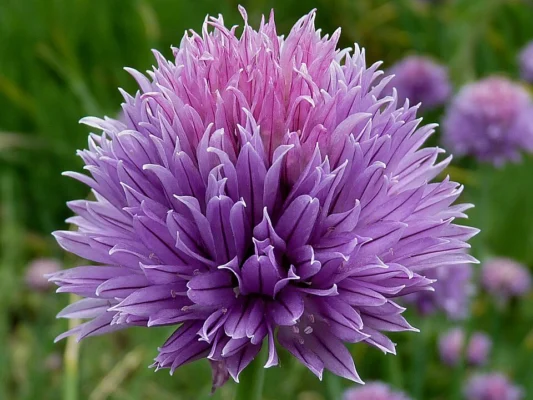
Common chives
The familiar purple flowered herb is a practical starting point for a kitchen pot or short edging. Seed raised plants vary a little, but a healthy clump provides plenty of useful leaves.
Common chive flowers; no named cultivar is claimed.
Photo: Jamain, CC BY-SA 3.0. Resized and optimised; cropped for display. Adapted image under the same licence.
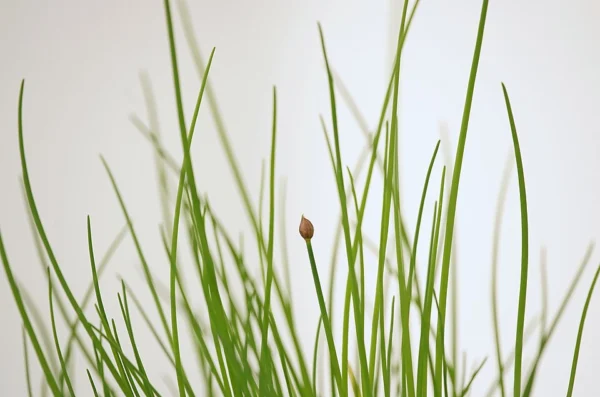
Forescate
A selection valued for its larger pink flower heads as well as edible foliage. It is worth considering where the herb bed is part of an ornamental border.
Illustrative chive foliage and bud; this specimen is not confirmed as Forescate.
Photo: Alexandar Vujadinovic, CC BY-SA 4.0. Resized and optimised; cropped for display. Adapted image under the same licence.
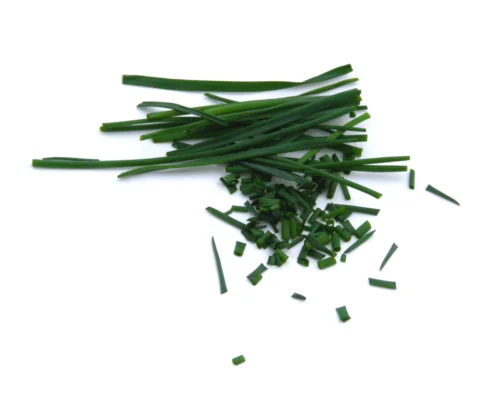
Silver Chimes
A white flowered selection with tubular onion scented leaves. Obtain a correctly labelled plant if the pale flower colour is central to your planting plan.
Illustrative harvested chive leaves, not a photograph of Silver Chimes flowers.
Photo: Lydia Jacobs, CC0. Resized and optimised; cropped for display.
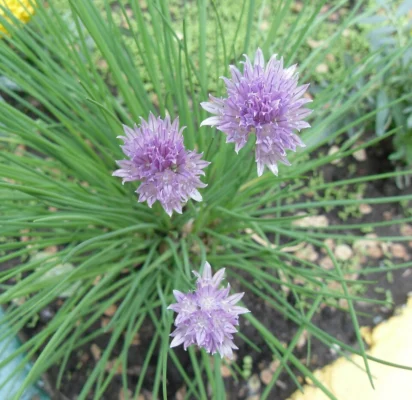
Rising Star
A compact selection suited to containers, with mild onion flavoured leaves and lavender pink summer flowers. Choose a pot with room for the clump to expand.
Illustrative flowering common chives; the cultivar is not confirmed.
Photo: ИринаЯ, CC BY-SA 4.0. Resized and optimised; cropped for display. Adapted image under the same licence.
Look for fresh foliage, firm roots and a clearly labelled plant. Seed is economical for several clumps, while a named potted selection gives a clearer expectation of flower colour and habit. Plan a suitable pot or prepared planting space before bringing it home.
Chive flowers are useful to visiting insects. Keep one clump mainly for flowers if you harvest heavily from another, so the two uses can sit comfortably together.
In a mixed herb border, combine different flowering seasons to provide interest beyond the chive display. Do not rely on chives alone to prevent pest damage to neighbouring vegetables.
Published by Buy From Farmers Direct. Sources checked 6 October 2026. Growing references: RHS chives growing guide; Garden Organic chives; RHS Forescate; RHS Silver Chimes; RHS Rising Star. The seasonal timeline uses the shared BFFD Growers Calendar record; adjust timings to your variety and local conditions.
Yes. Common chives are perennial. Their leaves usually die back in winter and new growth appears in spring, provided the bulbs remain healthy and the soil drains adequately.
Yes. Use a drained pot with space for the clump to grow, water it during dry weather and divide or repot when it becomes congested.
Established plants can provide leaves from spring onwards. Seedlings need time to build strength, so begin with small cuts when there is enough healthy growth and allow recovery between harvests.
You can leave flowers for insects and for edible garnishes. Remove spent stems to limit self seeding, or dedicate separate clumps to flowering and regular leaf harvesting.
Common chives have fine hollow leaves, an onion flavour and usually purple flowers. Garlic chives have flatter leaves, a garlic flavour and white flowers later in the season.
Seasonal leaf dieback is normal. Mark the clump, keep it from sitting in saturated soil and look for new growth in spring before deciding whether it has failed.
Keep a small clump within reach, harvest a little at a time and divide it when growth becomes crowded. Chives reward this simple routine with fresh leaves and a useful summer flower display.