Jonquils bring small, scented spring flowers above slender leaves. The name covers Narcissus jonquilla and the garden jonquilla group, rather than every daffodil. They grow from autumn planted bulbs and suit borders, pots and suitable areas of grass. Choose a named variety, give the bulbs good drainage and leave their foliage to rebuild after the flowers fade.
Fragrant spring flowers
Hardy outdoor bulbs
Plant in early autumn
Let leaves die back naturally
Ornamental plants, not food
| Botanical scope | Narcissus jonquilla and garden jonquilla cultivars |
| Family | Amaryllidaceae |
| Garden classification | Jonquilla and Apodanthus cultivars are Division 7 |
| Species classification | Narcissus jonquilla itself is listed in Division 13 |
| Plant type | Deciduous bulbous perennial |
| Typical height | About 15 to 40cm, depending on variety |
| Leaves | Usually very narrow, often cylindrical or rushlike |
| Flower arrangement | Several small flowers may share one stem |
| Flower colours | Yellow, cream and white combinations |
| Scent | Many are strongly fragrant |
| Main flowering window | March to May across varieties and locations |
| Species flowering | Narcissus jonquilla usually flowers in late spring |
| RHS hardiness | H6 for the species and named cultivars shown |
| Preferred light | Sun or light shade |
| Soil | Well drained, with moisture during active growth |
| Preferred bulb planting | September and October |
| Typical bulb spacing | About 10 to 15cm |
| Outdoor planting depth | Set the bulb base about three times its height below the surface |
| Propagation | Separate healthy offsets as foliage fades |
| Handling | Harmful if eaten; wear gloves when handling |
| Plant name | Crop type | Spacing |
Sow indoors
Plant outdoors
Harvest
Polytunnel | |||||||||||
|---|---|---|---|---|---|---|---|---|---|---|---|---|---|---|
| Jan | Feb | Mar | Apr | May | Jun | Jul | Aug | Sep | Oct | Nov | Dec | |||
| Jonquil | Not recorded | Single 15cm, In row 15cm, Row gap 15cm | No activity recorded | No activity recorded | No activity recorded | No activity recorded | No activity recorded | No activity recorded | No activity recorded | No activity recorded | Plant outdoors | Plant outdoors | No activity recorded | No activity recorded |
Sow indoors: no months recorded. Plant outdoors: September, October. Harvest: no months recorded. Polytunnel: no months recorded.
The planting band shows September and October, the preferred early autumn window for dry bulbs. Plant sound late purchases promptly while soil is workable rather than storing them until spring, but later planting can weaken the next display. Flowering falls broadly between March and May across the group, with Narcissus jonquilla itself generally a late spring flower. The harvest row is blank because this is an ornamental bulb, not an edible crop. Named varieties are normally grown from bulbs, so no routine seed band is shown. Hardy garden jonquils need no polytunnel. The 15cm spacing suits lasting small groups, with closer temporary pot displays managed separately.
Jonquils suit a gardener who wants spring scent without tall flower stems. Small groups fit near paths or in pots, while naturalising varieties can build into loose colonies if their leaves are left undisturbed.
They are less suitable for a lawn that must be closely mown immediately after flowering. Choose a border or a grass area where the foliage can remain for at least six weeks and until it yellows naturally.
Photo: Dominicus Johannes Bergsma, CC BY-SA 4.0. Resized and optimised; cropped for display. Adapted image under the same licence.
Choose sun or light shade with enough spring moisture for roots and leaves. A position beneath deciduous trees can work if it is not too dry or crowded with roots, and receives light before the canopy closes.
Avoid waterlogged soil and deep year round shade. A raised bed or a well drained container is useful where winter wet is persistent. Prepare the whole planting patch, rather than making isolated pockets that collect water.
In grass, place groups where their fading leaves will be acceptable. Plan access and mowing before planting. Naturalising describes a garden effect here, not a reason to plant into wild habitats.
For pots, choose drainage holes and enough depth for roots beneath the bulbs. Use suitable peat free compost and place the container where it can drain freely.
Photo: Frank Vassen from Brussels, Belgium, CC BY 2.0. Resized and optimised; cropped for display.
Buy labelled jonquilla bulbs if the small scented flower form is what you want. Common names vary between suppliers, so check the cultivar or botanical name rather than relying on a picture of any yellow daffodil.
1.
Select firm, healthy bulbs from a reliable supplier. Reject soft, badly damaged or mouldy stock, and keep each variety labelled if you are planning groups with different heights or flowering times.
2.
Plant in early autumn, ideally during September or October. Keep bulbs cool and dry only while waiting briefly for suitable conditions; do not leave them in a warm room until their roots and shoots deteriorate.
3.
Wear gloves and keep bulbs separate from onions and other food. Mark out groups in the border or grass, allowing roughly 10 to 15cm between bulbs for a lasting planting.
4.
Prepare workable soil and remove perennial weeds. On poor ground, incorporate well rotted organic matter without creating a rich, soggy pocket. Choose another site or a raised container if drainage cannot be made suitable.
5.
Make each hole about three times the bulb's height deep, measured from the soil surface to its base. For example, a bulb 4cm tall sits at the bottom of a hole about 12cm deep, leaving soil above its tip.
6.
Place the bulb pointed end upwards, with its base resting securely on the soil. Refill gently, replace turf if planting in grass and water dry ground to settle it around the bulb.
7.
For a seasonal pot, bulbs can sit closer than in a permanent border, but should not touch each other or the pot sides. Leave room for watering and label the pot before placing it outdoors.
8.
Check pots for moisture through winter and spring. When flowers appear, enjoy them in place or cut a few stems while retaining leaves. After flowering, keep the plants growing until foliage yellows naturally.

Watering
Established bulbs in the ground usually manage with rainfall. In a prolonged dry spell, water while leaves are active, including after flowering. Early drought can stop leaves working before the bulbs have rebuilt reserves for next spring.
Container bulbs dry out more quickly and need checking throughout their growing season. Water when compost begins to dry and allow excess to escape. Gradually reduce watering once the foliage is naturally yellowing, rather than keeping dormant bulbs wet.

Feeding
On reasonably fertile garden soil, an occasional mulch of well rotted garden compost can be sufficient. If flowering declines, first check drought, shade, crowded bulbs and premature leaf removal rather than assuming every problem needs more fertiliser.
Feed container plants with a suitable potassium rich liquid feed during active growth, following its label. Continue after flowering while leaves are green, then stop as they die back. Extra feed cannot repair a rotten or virus affected bulb.

Pruning
Remove faded flower heads unless you deliberately want seed. Leave the leaves untied and exposed to light: folding them into knots reduces the useful leaf area just when the bulb needs it.
Wait at least six weeks after flowering and until foliage has yellowed before cutting or mowing it. In mixed borders, later emerging plants can soften the appearance, but should not smother the leaves while they are still growing.

Winter care
The species and the four cultivars shown are hardy outdoor bulbs, rated H6. Routine heated protection is unnecessary. Keep containers clear of standing water and check that drainage holes remain open through wet winter weather.
Shoots may appear before the main spring display. Leave established outdoor plants in their normal position rather than moving them into a warm room to accelerate growth. Paperwhite narcissus sold for winter forcing need different treatment and are outside this guide.
Jonquils are members of the daffodil genus Narcissus. The flowers have six spreading outer segments around a central cup, often with several blooms on a slender stem. Narrow leaves and fragrance are characteristic, although cultivars vary.
Narcissus jonquilla is a species; garden jonquilla cultivars form a wider group with related ancestry. Their ornamental bulbs and foliage must not be eaten. A common name or a quick glance at the leaves is not a safe way to identify food plants.
Photo: Javier martin, CC BY-SA 3.0. Resized and optimised; cropped for display. Adapted image under the same licence.
Flowering shifts with the variety, local weather and exposure. Quail can start in March or April, while later choices and the species carry the display into late spring. One clump will not flower continuously across the whole group's season.
Cooler northern or exposed gardens may flower later than sheltered southern sites. Give bulbs a suitable position and judge progress by their leaves and buds, rather than moving them or feeding heavily because another garden is already in flower.
This is often called blindness. Drought after flowering, cutting leaves too soon, shade, shallow planting or overcrowding can all contribute. Match the remedy to the cause: retain leaves, water dry ground and divide crowded clumps at the appropriate time.
Basal rot and other decay can damage bulbs. Remove affected plants and avoid storing soft or injured bulbs. Where basal rot has occurred, replant healthy stock in a different suitable site rather than repeatedly replacing bulbs in the same patch.
Narcissus bulb fly larvae can eat the centre, leaving weak grasslike leaves or no growth. Examine suspect bulbs and remove affected plants. Firming soil around bulbs after foliage dies helps close access routes, and healthy purchased stock reduces introduction risks.
Virus infection can cause streaking, distortion and weak growth. Similar symptoms have other causes, so seek a reliable diagnosis if unsure. Do not divide and share suspect bulbs; confirmed infected plants should be removed because there is no curative treatment.
Slugs and snails sometimes feed on fresh growth. Check for feeding activity after dark before taking action. Tolerate minor damage and protect particularly vulnerable pots with targeted hand removal, while retaining shelter for predators elsewhere in the garden.
Divide healthy clumps as their leaves fade in early summer. Lift carefully, separate bulbs and offsets that come away easily, and replant sound mature bulbs at the appropriate depth. Keep small offsets labelled in a nursery area or pot.
Seed raising is a slower specialist project and offspring of named cultivars may differ from the parent. For a matching group of a chosen jonquil, use healthy offsets or buy labelled bulbs. Never propagate from plants with unexplained streaking or declining vigour.
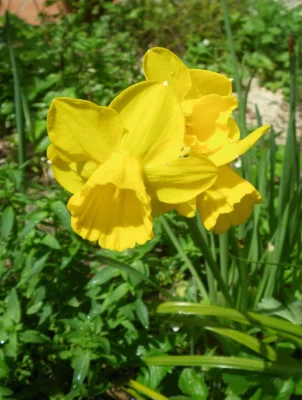
Quail
A bright yellow choice reaching around 40cm, with several fragrant flowers possible on each stem. It gives a stronger patch of colour than the smallest jonquils and works in borders or suitably sized pots.
Quail photographed in the Real Jardín Botánico, Madrid.
Photo: Cillas, CC BY-SA 4.0. Resized and optimised; cropped for display. Adapted image under the same licence.
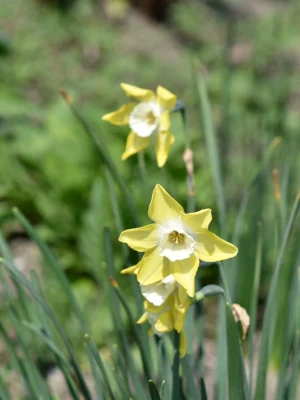
Pipit
Usually around 25cm, with lemon yellow flowers whose cups fade towards creamy white. The changing centre gives a gentle two tone effect. Choose it for a low group where the detail can be seen closely.
Pipit identified by the photographer, showing pale cups and yellow outer segments.
Photo: NasserHalaweh, CC BY-SA 4.0. Resized and optimised; cropped for display. Adapted image under the same licence.
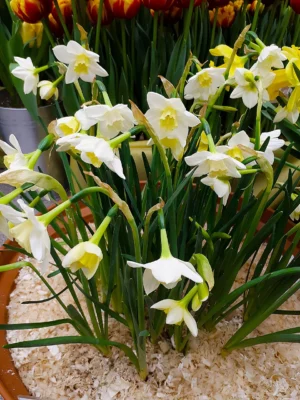
Sailboat
White outer segments frame pale lemon cups that fade as flowers mature. Reaching around 40cm in favourable conditions, it is a useful scented choice for a pale spring planting and can flower into April or May.
Sailboat identified in the source photograph from a botanical garden exhibition.
Photo: Александровы АГ, CC BY-SA 4.0. Resized and optimised; cropped for display. Adapted image under the same licence.
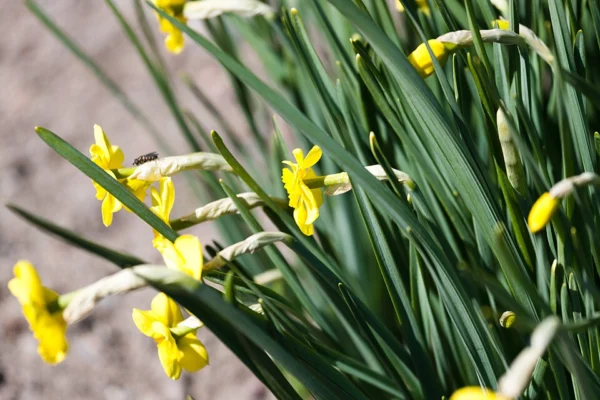
Sun Disc
A dwarf choice around 15cm tall, with rounded yellow flowers that become paler around the edge. It suits the front of a border or a small pot where taller neighbouring plants will not hide its flowers.
Jonquilla flowers in Stockholm, catalogued by the source as Sun Disc.
Photo: Blik, CC BY-SA 4.0. Resized and optimised; cropped for display. Adapted image under the same licence.
Compare height, flower colour and the supplier's flowering season, then buy healthy bulbs early enough to plant in autumn. Choose positions where foliage can die back naturally.
A spring bulb display works best for wildlife as part of a garden with flowers across many seasons. Include accessible flowers nearby and leave some undisturbed habitat; strong scent alone does not tell you how valuable a cultivar is to insects.
Bulb flies are a small subset of the hoverfly family. Most hoverflies benefit gardens through pollination, predation or recycling, so diagnose damage at the bulb instead of treating every hovering insect as a threat.
Published by Buy From Farmers Direct. Growing guidance reviewed 6 October 2026. The seasonal timeline uses the shared BFFD Growers Calendar record; adjust timings to your variety and local conditions.
Jonquils are part of the daffodil genus Narcissus, but the name is more specific. It usually refers to Narcissus jonquilla and garden jonquilla cultivars with narrow leaves and often several scented flowers per stem.
The group flowers broadly from March to May, depending on variety and location. The species Narcissus jonquilla is usually a late spring flower. Check the named variety rather than expecting one clump to cover the whole season.
For a lasting outdoor planting, set the bulb base about three times its height below the surface. A bulb 4cm high therefore needs a hole about 12cm deep. Follow specific supplier guidance for unusually small bulbs or temporary displays.
No. Leave them untied for at least six weeks after flowering and until they yellow naturally. Green leaves are replenishing the bulb; removing them too early can reduce next year's flowers.
Yes, the hardy species and cultivars covered here normally remain outdoors in well drained ground. Pots need good drainage. Paperwhite narcissus sold for indoor winter flowering are a different group and should not be treated as equivalent.
No. Narcissus plants are harmful if eaten, and their sap can irritate skin. Wear gloves when handling bulbs and plants, keep them separate from food and store bulbs in clearly labelled containers away from children and pets.
Plant healthy bulbs early, enjoy their spring scent and give the leaves time to finish their work. Well placed jonquils can then become a familiar part of the garden each spring.